I want to make a sound-driven game. No need to give a lot of meaning to this game, just to explore sounds and memorise them as you play.
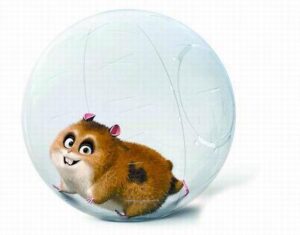
The main character of the game is a hamster who likes to explore sounds, and during the game you need to be inside a transparent but fuzzy plastic ball all the time, and you need to crawl and roll the plastic ball like a hamster. Use the cues you hear at the beginning of the game to find similar sounds. All the sounds will be blurred because of the plastic ball, so we have to keep crawling and exploring the map to find the most similar sounds.
Once all the sounds have been found, the hamster can climb out of the plastic ball and press the button in front of it, and the sounds will be combined to form a melody.
This allows the player to explore the sounds in a fun and relaxing atmosphere, and at the end of the game to experience the charm of the sounds.
Gameplay:
Sound exploration, memorising sounds.
Audience:
All ages
Game Idea:
1. Be a little hamster who likes sounds and get a creative sound by your own efforts in a frequent day.
2. It is also a good exercise game for people with hearing loss. Learn and grow through play.
An introduction to hearing loss.
The so-called auditory perception refers to the process in which an individual transmits auditory information to the central nervous system of the brain, processes it correctly, and then responds correctly. Human hearing is divided into hearing breadth, hearing attention, hearing discrimination and so on. Children with auditory perceptual disorders may have poor auditory discrimination, so that they cannot hear the content of other people’s speeches clearly; they may have problems with auditory breadth, that is to say, they cannot hear what other people say completely; or they may have received the auditory information completely, but when they transmit it to the brain, they do not transmit the complete information, but lose part of it.
A child with an auditory loss may not hear what is said to him or her, may only be able to complete part of several instructions, may have a lower than normal memory for numbers, or may often forget what their parents or teachers have said to them. Children with auditory disorders often also have vestibular disorders, and tend to be vestibularly retarded. Improvement of auditory perception requires sensory integration and attention training, during which vestibular and auditory perception are strengthened.
Linghan Mei