We need to stylistically compartmentalise the sounds in each room so that we can facilitate the sound design once we have finished recording the sound of the items. For the recording equipment we used Sennheiser MKH30 and Nwumann KM184.
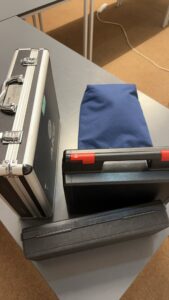
During the recording process we had no access to a variety of toys made of the same material, so we used a lot of objects made of the same material to mimic the sound of the toys. For example, the sound of a spring bouncing up and down, I used the plastic film of a make-up box to vibrate and record a similar sound with better sound quality. For the sound of the sand hammer shaking, we chose to record the sound of the rice colliding in the shaking box instead.
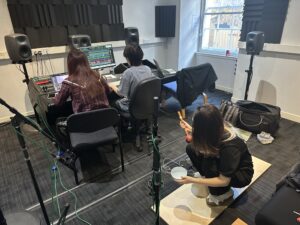
What really took time to experiment with was the sound of the hamster’s footsteps. We were going to record four different sets of footsteps, so that we could apply them to the hamster’s walk in the game. Considering that most of the time the hamster’s nails rub on the ground when walking, we used both the fingertips and the included fingernails, and at different speeds, to walk on a solid board to mimic the hamster’s walking sounds.
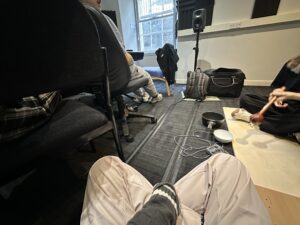
After this recording we have completed the first and second rooms, and we will soon complete the third room with various water sounds.