To-do list
- Design the first view – hamster sounds: walking, running and other possible sounds, such as picking up or putting down objects, selecting objects, moving to the next level, etc.
- Set up the basic gameplay in unity, such as moving the hamster, selecting objects.
- Determine the rooms for the different levels.
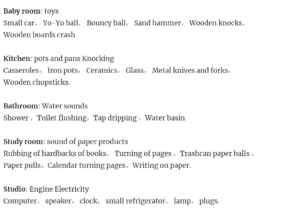
- Determine the room style and corresponding object sounds for different levels. For example, kitchen, baby room, study room, etc. The possible objects and the corresponding sound elements.
- Find palettes or textures that are each different in style but have a unity overall.
- Envision the concepts and themes of the final sound design and how the different endings and collectible elements will be realized. Do research and references.
- The definition of the style of the voice-over, as well as the writing, recording and editing of the lines.
- mini-game design.
- the setting of higher levels of difficulty.
Project Game Title
After a thorough proposal and discussion, my group and I decided to set the name of the game to Hamster Hear, where Hear is both a verb and the name we gave the hamster.
This name not only has a double meaning but also captures the core gameplay and features of the game very well. Firstly, as a verb, “Hear” points directly to the game’s reliance on sound to recognise and select objects, highlighting the importance of hearing in the gameplay experience. Secondly, the use of “Hear” as the hamster’s name adds a sense of personalisation and intimacy, making it potentially easier for players to remember and love the character.
In addition, the name is concise, easy to remember, and easy to understand, which makes it easy to attract players. It effectively conveys the main idea of the game, while also being fun and creative, which may help it stand out from other games. Overall, we all agree that this is a very appropriate and attractive name for the game.