On February 4th, our tutor Andrew guided us through an engaging workshop on audio-visual interaction in Atrium. The session provided a hands-on opportunity to explore how sound and visuals can influence each other, offering valuable insights for developing immersive and interactive projects. Below is an overview of the setup and process we experienced during the workshop.
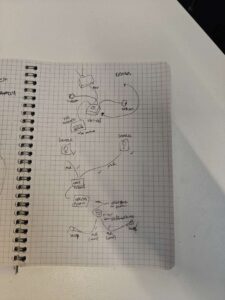
Visual Setup:
- We used MAX software to present and manipulate video effects.
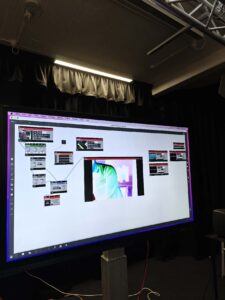
- Two cameras were connected to the computer to capture visuals, while their built-in microphones recorded audio. The captured audio influenced the visual effects.
- Parameters controlling the video effects in the MAX patch were mapped to a physical controller, enabling real-time adjustments.
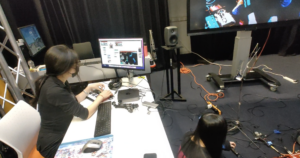
Audio Setup:
- Two Genelec speakers were placed on either side of the monitor for audio output.
- Two condenser microphones were used for sound recording.
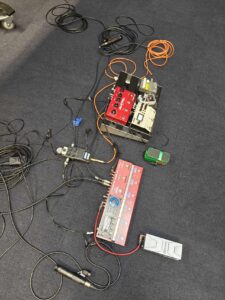
- Andrew prepared various vocal and instrument effect modules, along with a Boss RC-600 loop station. These were connected to create diverse sound effects.
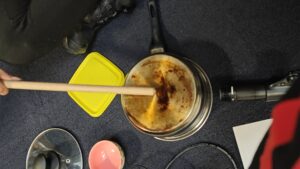
- Kitchen utensils were also used as foley materials for sound creation.
Workshop Process:
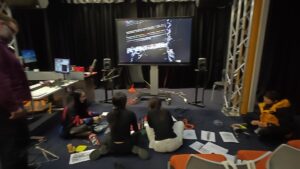
- One participant controlled the MAX patch to create different video effects.
- Two participants experimented with creating sounds using the microphones.
- Two others managed the loop station and effect modules to generate dynamic and varied soundscapes. These sounds influenced the visual effects in real time.
- Participants creating sound effects observed the visuals on the monitor to match or enhance them with suitable sounds, or explored ways to create more exciting audio.
- Throughout the workshop, we rotated roles, allowing each participant to experience different aspects of the project. This rotation enabled everyone to gain a comprehensive understanding of how each role contributes to the overall audio-visual interaction.
- By switching between controlling the MAX patch, creating sounds, managing effects, and observing the interplay between audio and visuals, we developed a deeper appreciation for the collaborative nature of the project and the unique challenges and creative opportunities each role presented.
This collaborative project demonstrated how sound and visuals can interact and influence each other, allowing everyone to actively participate and enjoy the process. The workshop was highly engaging, providing us with inspiration on how to develop immersive and interactive elements in our own projects. The role rotation aspect enhanced our learning experience, fostering a more holistic understanding of audio-visual interaction.