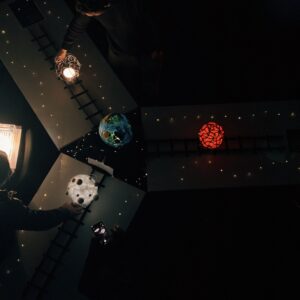
We minimized external light sources to create a serene, cosmic environment. Upon entering the space, visitors were invited to become a metaphorical force—controlling the tides of the universe. Abstract video projections representing tidal forces were displayed on both sides of the exhibition.
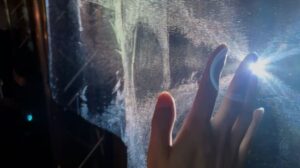
To achieve the desired visual effect, we experimented with various projection fabrics—testing different colors and textures. In the end, we chose semi-transparent black gauze curtains to hang around the space. This material allowed the projections to softly appear on the curtains while also illuminating the central installation. We carefully adjusted the projector positions multiple times to ensure the imagery fully covered the curtains while avoiding direct interference with the viewers’ line of sight, offering an optimal viewing experience.
As visitors moved through the space, their motion created gentle air currents that caused the gauze curtains to sway. This movement made the projected visuals ripple like water, turning the room into a tidal planet breathing in sync with the universe—immersing the audience in the sensation of tidal force.
At the front, the water ripple projection passed through the semi-transparent gauze and continued onto the wall behind. This visual alignment formed a continuous line with the central planet installation, creating a poetic visual echo.
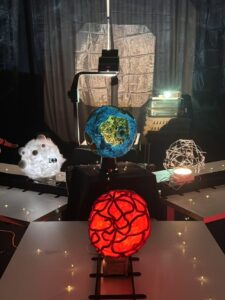
For the central installation, we slightly elevated the main star on a black platform and allowed the fabric to cascade down like a veil. Star lights were added to simulate clusters of twinkling stars surrounding four planets. Three of the planets were arranged in a triangular formation around the central star and faced the entrance, as if welcoming the visitors. With warm orange-yellow lighting and ambient music, the entire installation felt like a dreamlike cosmic scene quietly waiting in the depths of space.