
From Museum to Loom: Reconnecting with
Rani Gaidinliu’s Woven Heritage
Lanchamei Monica Golmei
The project I was part of focused on digital repatriation and cultural revival through the lens of Rani Gaidinliu’s material heritage. Hailing from the Kabui/Rongmei Naga community, Gaidinliu was not only a leader of the anti-colonial movement but also preserved indigenous customs, belief systems, and crafts that were at risk of fading. Several objects related to her life—including textiles, ornaments, tools, and script—are now in store at the Pitt Rivers Museum in Oxford, collected during the colonial era.
I joined the project titled “Decolonizing the Museum: Digital Repatriation of the Gaidinliu Collection from the UK to India” as a research assistant based in Manipur. My role focused on the fieldwork, documentation, and cultural interpretation. The fieldwork was originally scheduled to begin in May 2023, but just as we completed our first virtual meeting with the project team member, Manipur was swept into violent ethnic unrest. The imposition of a curfew and internet shutdown in the state paralyzed normal life.
Once the situation stabilized slightly, I was asked to begin translating a catalogue of textiles and basketry from English to Kabui/Rongmei. For this, I collaborated with Akham Gonmei, a retired AIR newsreader with deep knowledge of Rongmei vocabulary and cultural nuance, and CK Thuanreipou. Their insight helped preserve the accuracy and authenticity of the names and descriptions during translation.
Searching for Weavers Willing to Remember
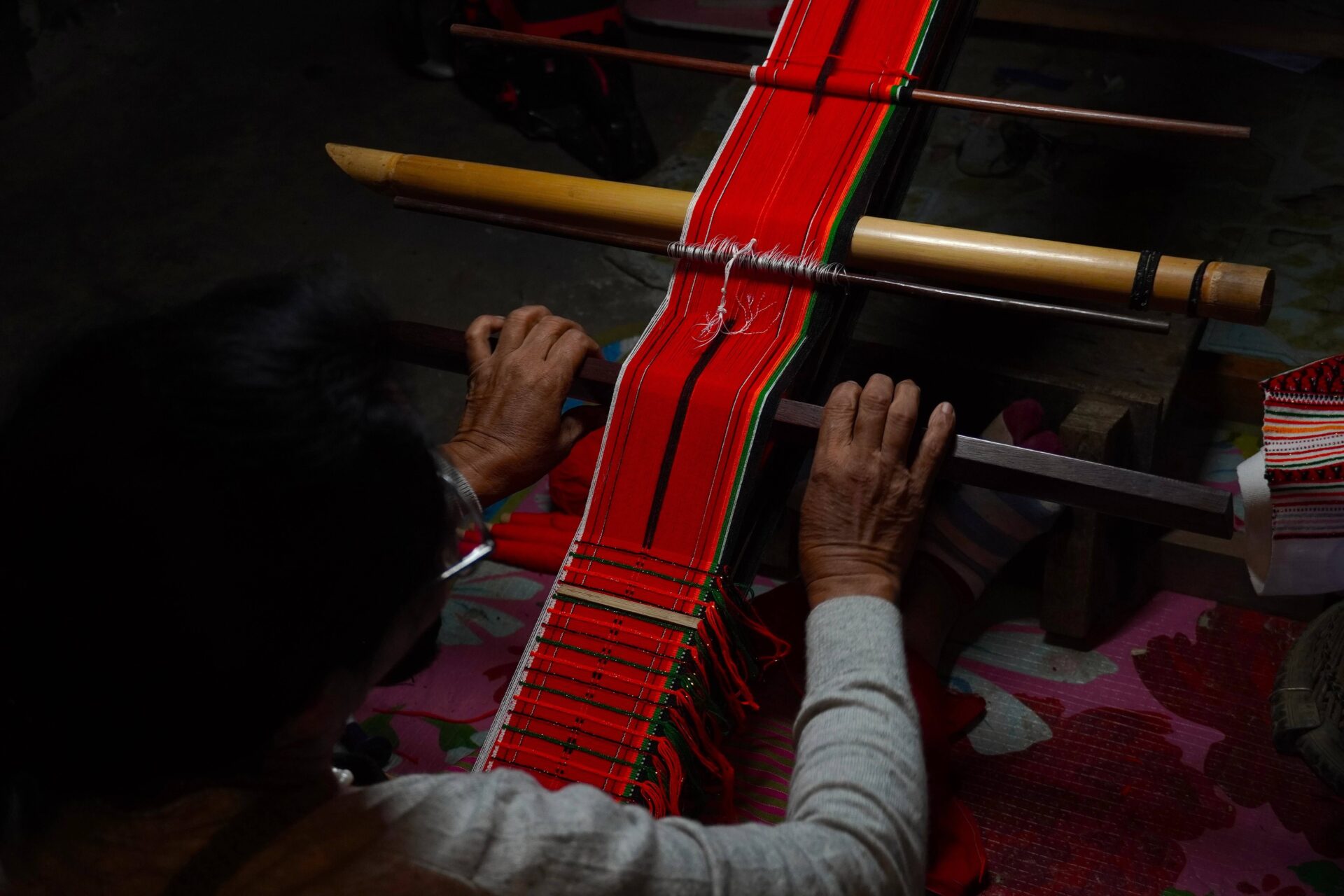
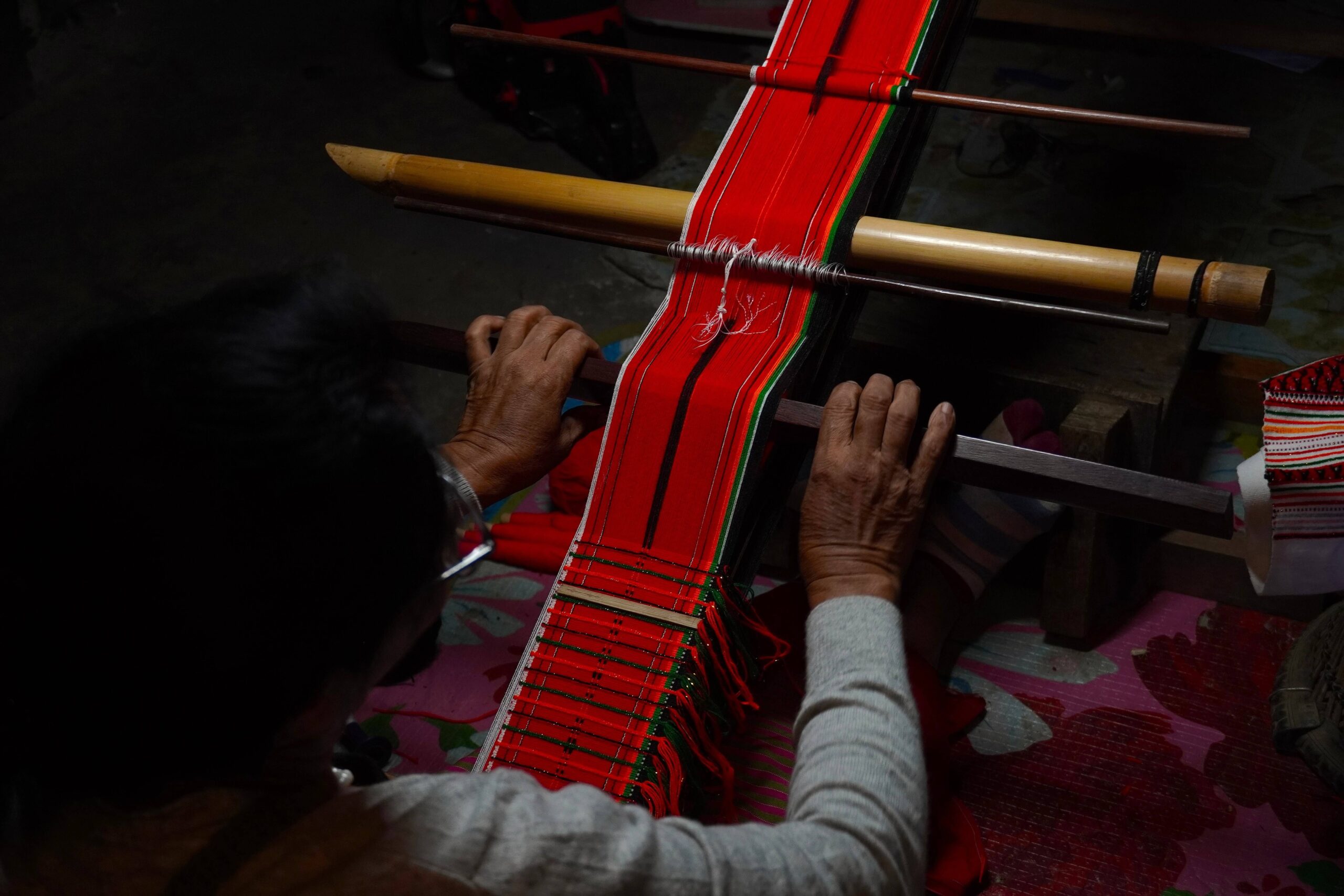
The next task—replicating six traditional garments—presented another challenge. I first asked around in my home village of Kakhulong. The elders recognized the patterns in the photographs, but very few were confident they could replicate them exactly.One weaver told me, “We know these designs, but we haven’t woven them in decades.”
Another woman responded, “If you want me to make it exactly the same, bring me the original cloth. It’s impossible to replicate an object authentically based on photographs alone.” The problem wasn’t just time—it was memory. The intricate motifs in these cloths had faded from practice, even as the basic shapes remained familiar.
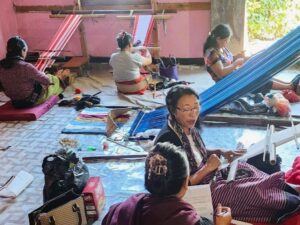
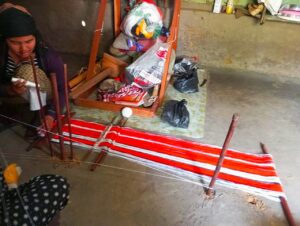
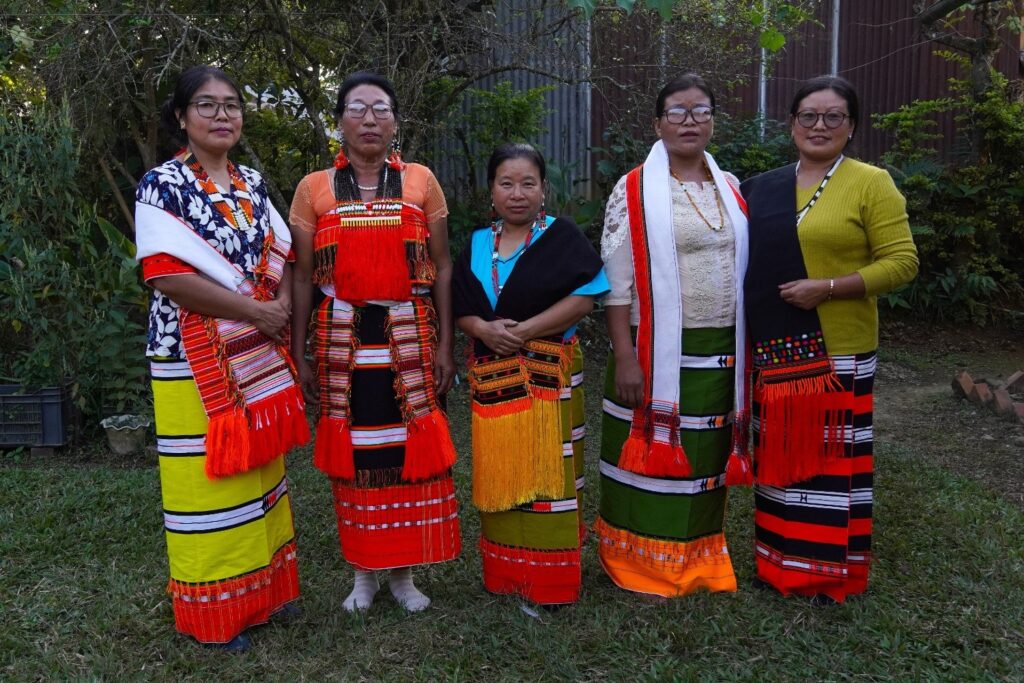
Eventually, I traveled to Zuron village, in Henglep constituency, Churachandpur district—a Kabui/Rongmei village where weaving is still widely practiced, especially by married women who take it up during their free time from agricultural work.
There, I introduced myself and the project. Upon hearing that the designs belonged to Rani Gaidinliu, the women responded with a mix of excitement, honor, and pressure. Five weavers—PG Abilu, PG Chamdanthailu, Kalungailu Gangmei, Ningreiliu Phaomei, and PG Dimjeanglu—agreed to take up the work. A seasoned basket maker, PG. Meijendai, from Thenjang village, Henglep constituency, Churachandpur district, also agreed to replicate the basket.
Motifs Remembered and Rediscovered
As the weavers studied the museum photos, a conversation of memory, loss, and continuity unfolded.
PG Chamdanthailu remarked, “There were eight to ten different motifs, but now we use only two or three motifs per cloth. It’s easier, faster, and that’s what sells.” Kalungailu Gangmei added confidently, “Even if the motif isn’t in use now, if we can study the pattern from both sides—front and back—we can figure it out. We’ve been weaving our whole lives.”
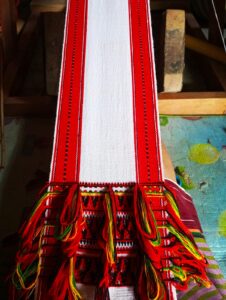
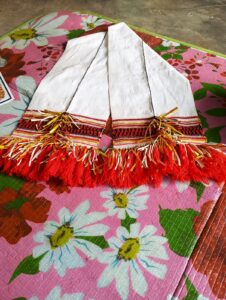
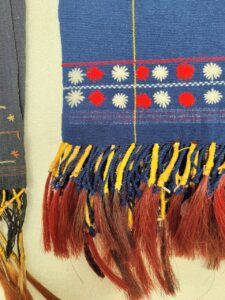
Ningreiliu Phaomei pointed out that while many motifs on the borders looked familiar, “One or two are hard to identify in the pictures. If we had the real cloth, it wouldn’t be a problem.” She added that “weaving had always been part of our lives, passed down from our mothers and grandmothers.”
PG Abilu expressed something deeper:
“We might be the first ones in decades to make this again. Now that I’ve seen it and woven it, I’ll keep a sample for myself. If anyone wants the original motif design in the future, I can make it—and maybe even earn a bit more,” she laughed.
Though some motif names have been forgotten over time, this project allowed weaving to serve as a powerful tool for cultural revival, bringing long- lost tradition back into living memory. For these women, it was not just a project—it was cultural restoration.
Challenges with Materials: Then and Now
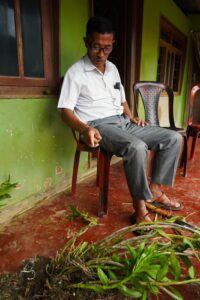
The next hurdle was material. The original clothes were made from natural cotton and dyed with jungle-sourced ingredients like tree bark, berries, or roots. But the yarns available today are synthetic, and traditional dyes are nearly impossible to source.
A distinctive yellow fringe in one of the cloths was traditionally made from the dried stem of a wild orchid, locally known as kumpong in the Kabui/Rongmei dialect. These stems are rare in local markets. Through a friend, I connected with Kidire Gonmei in Macheng village in Noney district who helped us collect the orchid stems from the forest. He explained that there are over 50 varieties of wild orchids and that identifying the correct one without flowers is difficult.
In another textile, the presence of animal hair woven into the fabric suggested the use of natural, locally sourced materials. After confirming the textile with elders, I turned to my mother, a retired employee of the Veterinary Department. Through her network, we sourced horsehair, which I later washed and dyed red using a commercial available hair dye to match the original piece.
The Basket Puzzle: Puichep or Nik?
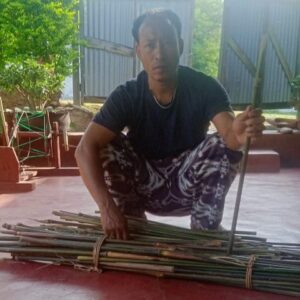
At first, the basket replication seemed straightforward. PG. Meijendai, the basket weaver, began working with puichep (standard bamboo strips), but midway he called me to say he was mistaken—the basket in the photo was not made of puichep but nik, a smaller, more flexible variety of bamboo.
Nik was not available in Churachandpur or Imphal
markets. Eventually, he arranged to retrieve it from Lungkao, the birthplace of Rani Gaidinliu. Due to transport limitations, it took nearly a month to collect and bring the material. The finished basket bore a strong resemblance to the original museum piece.
What This Work Taught Me
This fieldwork taught me that the real museums aren’t just in Oxford or Delhi. They’re in the stories and hands of everyday people—like the women who weave because their mothers taught them or the basket maker who could identify material just by touch.
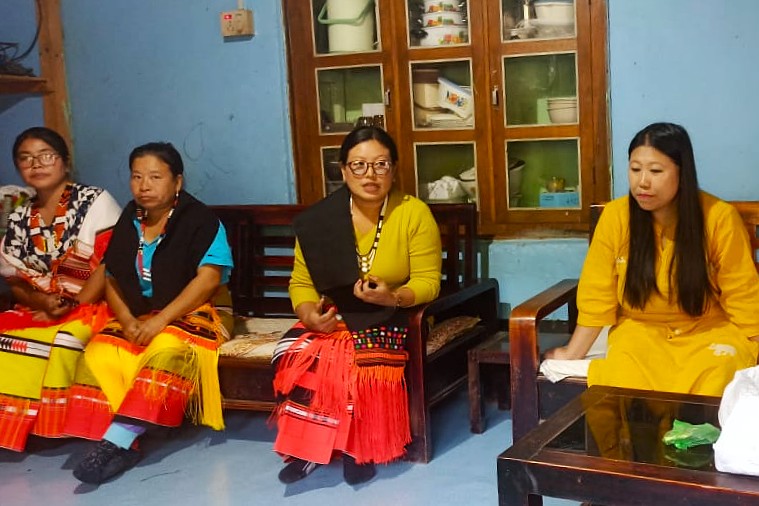
Some of these crafts have faded not because of disinterest, but because of displacement—of markets, memory, and materials. And yet, as I witnessed firsthand, there’s still a strong heartbeat of tradition in Kabui/Rongmei villages.
What was once seen only in archival photos was brought back—not exactly the same, but alive in new hands.
Perhaps the most powerful moment came from PG Dimjeanglu, who smiled and said, “Now that I’ve seen and made this old design again, I will keep it. It won’t disappear again from our loom.”



Great and thanks to Miss.Lanchamei Golmei Monica for her great contribution for our society. And thanks for my name mentioned in your write-up.
Thank you for appreciating the great work being done by the research associates in this project. And thank you for working with us – your weaves truly brought the Gaidinliu Collection to life.