Andrew Larkins
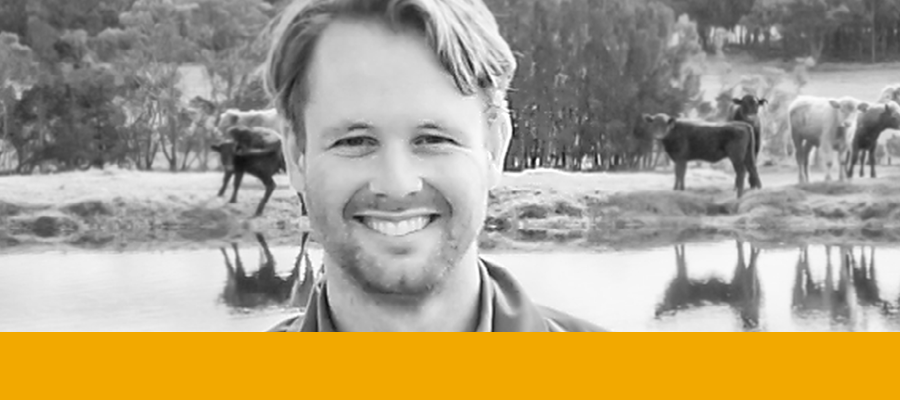
Andrew’s career journey began in veterinary clinics, but today he wears multiple hats as an epidemiologist, lecturer and non-executive director of an animal welfare charity. Inspired by his Edinburgh degree, Andrew is a One Health advocate tackling challenges that affect humans, animals and environment alike.
Name: Dr Andrew Larkins
Degree course: MSc One Health
Year of graduation: 2018
At the moment
What is your current role, and how did you get there?
I currently hold a few different roles. I’m an epidemiologist with the Western Australian Department of Health, adjunct lecturer at Murdoch University and non-executive director with Vets Beyond Borders, an animal welfare charity.
It’s been a progressive move from a clinical veterinarian to government veterinarian, then into research and public health. It really all began with starting my MSc in One Health at the University of Edinburgh. During my part-time studies I was able to secure a role as a government field veterinarian. Here I was able to apply first-hand the skills I was learning during the coursework, particularly around epidemiology. The wider coursework, introduction to One Health, and publication of my dissertation saw me accepted for a PhD at Murdoch University and eventually move into a role as foodborne disease epidemiologist. This is one of the few areas in Australia where we are really able to operationalise One Health and show the clear benefit of taking a multidisciplinary approach that looks to balance human, animal, and environmental health.
What inspired your interest in this field?
Working as a clinical veterinarian I had always been interested in the health of animals in populations. Be it cows in a herd or dogs in a city. I saw first-hand how management practices and the decisions made by people have a significant effect on the health of animals. Often these decisions are made without the best information or knowledge, or due to a person’s personal circumstances. The One Health approach encourages us to consider the context that decisions are being made in, their root causes, and their flow-on effects. Considering human, animal and environmental health as parts of larger systems really made sense to me.
Career journey
What were some key milestones in your career journey?
One of the largest milestones in my career was publishing my first peer-reviewed scientific paper. Not just because I had my first paper published, but because I was able to complete my MSc dissertation with a research project that was based on real-world experience. I felt that I had put my new learnt skills to good use for people and animals that I knew.
In 2013, I volunteered at an animal welfare organisation in India as a clinical veterinarian working primarily on dog population management and rabies vaccination. Advocacy and funding for animal welfare organisations is always a challenge and this is part of the reason why I took on the role of non-executive director with Vets Beyond Borders. My MSc dissertation in 2018 assessed the economics of the dog population management and vaccination programme with respect to controlling human rabies. We were able to show that the programme was highly cost-effective and should be considered as a model programme for others around the world. Finally published as a standalone scientific paper in 2020, it remains one of the first and only economic case studies for the control of dog-mediated rabies by an animal welfare organisation using both dog population management and vaccination.
How did your time at the University shape your professional path?
My time studying the MSc One Health highlighted the variety of different paths there are for veterinarians and the value of non-specialists in human, animal and environmental health. Our cohort was a diverse group of veterinarians, physicians, allied health professionals, environmental scientists and more. My MSc One Health has opened the door to a global network of scholars and stakeholders who all have the goal of improving human, animal, and environmental health. It has directly led me to opportunities such as being a participating member of the United Against Rabies Forum that supports countries across the world to end human deaths from dog-mediated rabies.
Can you share a standout achievement or moment you’re proud of?
One achievement of note would be receiving the award for ‘Best One Health Dissertation in 2018’ from the University of Edinburgh. During my dissertation, I was working full time as a government veterinarian and thought that I could have done so much more with the project. I was slightly disheartened by the end that I may have disappointed my supervisors and collaborators, and missed an opportunity to make a significant contribution. Our course coordinator, Neil Anderson, emailed me to ask that I keep an eye out for some mail. I thought that this must have been some administrative documentation or similar. Instead, I received a hand-written letter and engraved pewter Quaich acknowledging the award. This touching gesture and uniquely Scottish award are something that I treasure closely as recognition for preserving with a goal. The Quaich was particularly special given my half-Scottish heritage and grandfather from the Highlands whose first language was Gaelic.
Industry insights
What are the biggest challenges and opportunities in your field right now?
Both the biggest challenge and opportunity facing many fields right now is the rapid progression and adoption of artificial intelligence (AI). The speed at which AI has evolved and is being adopted is staggering. There are endless opportunities to use AI to solve some of the world’s biggest problems, however, will its use be equitable? We saw an increasing disconnect and many unethical decisions biased towards high-income countries during the COVID-19 pandemic. I worry that the potential inequitable distribution of AI may widen this gap. There is a huge risk that its use may go unchecked and lead society down unwanted rabbit holes, unless there is a strong social stance and global governance arrangements.
What trends or innovations are shaping the future of your industry?
AI is shaping the future of human, animal and environmental health. Both positively and negatively. There is the opportunity to increase our knowledge with advanced data analytics at scale and rapidly improve health. From identifying novel therapeutic agents for treatment to spotting the next pandemic before it takes off. However, in practice I see too many generative AI models being used by non-technical experts who do not have the baseline knowledge and skills to know if they are being given the right answers or if they are directing the models down the right path.
While we need to accept that AI is here to stay and will be used, we cannot underestimate or disregard the importance of fundamentals. Without the first principals, critical thinking, reasoning and logic that are taught through academic institutes, we may be led blindly into decisions and a future that we do not truly understand until it is too late.
Alumni wisdom
What do you wish you had known at the start of your career?
You don’t need to know it all. Yes, we need technical expertise and a base of knowledge, but no single person has the answer. Even if they did, they wouldn’t be able to implement it on their own. Personal relationships and common values will, more often than not, outweigh technical expertise.
What advice would you give to students or alumni looking to enter your field?
Listen to all the voices in the room and get to know your peers and scholars. As a society, it seems that we are retreating into isolated digital and virtual worlds. Take the chance and strike up a conversation with another student at the face-to-face One Health Summer School and make the time to engage and build relationships, particularly when studying online.
Are there any books, podcasts, or resources that have influenced you?
There are two books that have influenced my career, or at least I’m trying to follow their lessons in my career. These are: A History of Global Health: Interventions into the Lives of Other Peoples by Randall M. Packard, and The Social Determinants of Health: Looking Upstream by Kathryn Strother Ratcliff.
Based on both books, I try to engage with those who are living and owning the problem and see how I can support them, rather than being the uninvited expert. They also encourage readers to look at our society and systems and identify the root causes of issues, rather than continuing to repeat the mistakes of our past.
More
🔗 Vets Beyond Borders (external)
All opinions expressed in this article are those of the individual and do not necessarily reflect those of the University of Edinburgh.
The University of Edinburgh is not responsible for the content and functionality of any linked external websites and nor does a link imply any endorsement.