Ivo Gormley
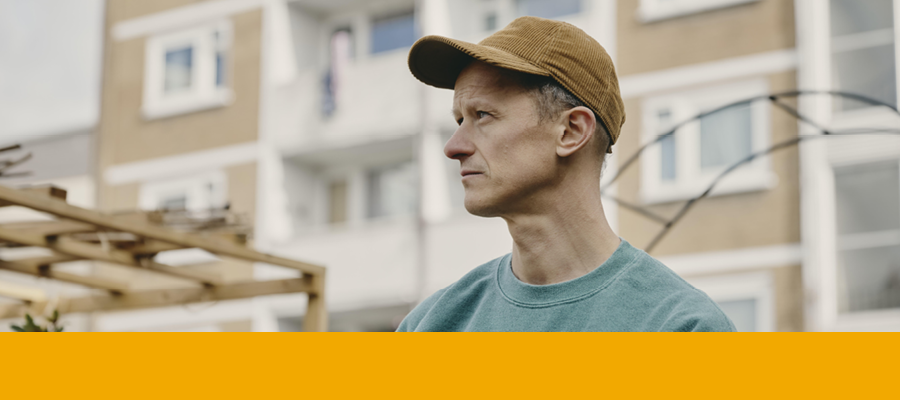
GoodGym began in 2009 when its founder and Edinburgh alumnus, Ivo Gormley, decided to run to visit an elderly neighbour instead of running on a treadmill. His idea to combine fitness with social good has grown into a charity with runners in over 60 towns and cities in the UK.
Name: Ivo Gormley
Degree course: MA Social Anthropology
Year of graduation: 2005
At the moment
What is your current role, and how did you get there?
Following university, I was making documentaries. I had done my 4th year fieldwork on the comedy scene in Chicago and made a film about the Second City, a major comedy theatre. This gave me the confidence to speak to strangers and turn it into a story. I then made documentaries for the NHS and local authorities before eventually doing one for TV. Around 2008 I had stopped exercising (I played frisbee and basketball at Edinburgh) and I didn’t want to go to the gym. Instead, I started running to deliver the newspaper to an older neighbour called Terry – he was housebound and isolated. We would have a chat a couple of times a week half way through my run and over the years we became good friends. I thought this idea of using exercise to help do useful things could be expanded and that’s what I’ve been doing ever since. Any practical task for the benefit of the public, we turn it into a workout. We now have groups of runners in over 60 cities and boroughs all over the UK, we’ve done more than 400,000 good deeds for a huge range of community projects and many thousands of older people. We now have plans to start in Edinburgh too.
What inspired your interest in this field?
I think anthropology showed me lots of different ways of doing things, different ways of organising human life. There’s no fixed way of existing. I think this gave me an interest in the social and cultural structures that influence our behaviour and made me think about how these can be shaped to make us behave well and sensibly collectively. I’ve long been inspired by Wikipedia as a model of collective human endeavour that manages to distil diverse input to a continually improving record of human knowledge. What other systems could we create that give the conditions for this collective collaboration? Working on the basis that people would like to contribute to making their community a better place if it didn’t cost them extra time, I’ve tried to build a movement that makes the most of how satisfying (and fun) it is to do something that helps someone else.
Career journey
What were some key milestones in your career journey?
I set up GoodGym in 2009, became a fellow of the Clore Social Leadership Programme in 2012, which helped me transition to working for GoodGym full time. We became a charity in 2015 and have been expanding ever since.
How did your time at the University shape your professional path?
I think studying anthropology gave me an openness to exploring different ways of doing things. Whenever you think there is a universal norm, there’s always a culture somewhere that does it differently. I think this flexibility of thought and willingness to challenge the cultural norms has been an important part of making GoodGym happen.
Can you share a standout achievement or moment you’re proud of?
The thing I’m proudest of is the community that exists in GoodGym – though we know there are thousands of friendships, many marriages even and hundreds of thousands of connections made, the sense of warmth and openness I think is what I’m most proud of.
Industry insights
What are the biggest challenges and opportunities in your field right now?
With growing screen time, and young people particularly feeling disconnected and a lack of hope, it feels there is more uncertainty about the future than there has ever been in my lifetime. We see people being reluctant to do things that help to make all of our lives better, we’re more scared to try new things and we feel less optimistic so we’re less likely to try and do something hard.
What trends or innovations are shaping the future of your industry?
In the world of running there’s a huge boom of social running and I think that’s really exciting. It’s a simple, real-world and low-barrier thing to do and I think it’s a really positive response to the attention-grabbing of phones and apps. I hope that GoodGym is part of a long-term trend that recognises that valuable human experience comes from doing (often difficult) things together. I think doing this with groups that disrupt demographic boundaries is particularly powerful and can build a level of trust that is fundamental to healthy collective living.
Alumni wisdom
What do you wish you had known at the start of your career?
I think it would have been useful to know that people generally want to help. At the beginning you get told “no” a lot and constantly feel like it’s very hard. Generally, I have found once you’ve been able to get people experiencing what you’re trying to do, they want to help. It’s getting them there in the first place that’s hard.
What advice would you give to students or alumni looking to enter your field?
Making things happen from scratch is incredibly exciting and rewarding, if you notice things you care about and think no one is changing, have a go at changing it yourself on a small scale. I think it’s easy to be distracted by scale, and wanting to be big. Working on a small scale and really understanding what you’re trying to change and how you’re trying to change it is the key to any successful long-term social enterprise.
More
All opinions expressed in this article are those of the individual and do not necessarily reflect those of the University of Edinburgh.
The University of Edinburgh is not responsible for the content and functionality of any linked external websites and nor does a link imply any endorsement.