Any views expressed within media held on this service are those of the contributors, should not be taken as approved or endorsed by the University, and do not necessarily reflect the views of the University in respect of any particular issue.
Skip to content

You are invited to drop in on our Discovery Day on Monday, 23 February, from 10:00 am to 2:00 pm at the Main Library. This event offers a valuable opportunity to engage with the exceptional resources available to support the development of dissertations and theses as part of our broader Dissertation and Thesis Festival.
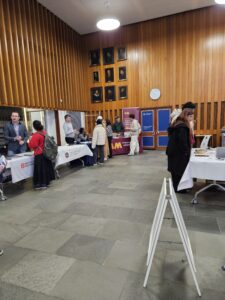
Students engage with stalls at Discovery Day in October 2025 at the Main Library.

At Discovery Day, you will have the chance to meet representatives from leading  database publishers (databases that allow you to fully research your topic), receive expert guidance, and pick up some freebies! Our Academic Support Librarians (ASLs) will be present to assist you in navigating library resources, inform you about upcoming festival events, and offer tailored advice to support your academic progress. Colleagues from Research Data Support and Digital Skills will be there to help you find out more about support for your dissertation and thesis work. And from 1-2pm, one of our Royal Literary Fund Fellows (RLFF) will be on hand so you can find out more about writing support available to you from the Library.

...continue reading "Discover the resources that will enhance your dissertation or thesis at Discovery Day"

Black and white image of a pile of books
Image by Photorama from Pixabay

Grey literature can be a rich resource when researching for a literature review or dissertation topic. It can help you find current and emerging research, viewpoints of individuals such as patients and consumers, and more in depth or practical coverage of topics.

It can also help you to mitigate against 'publication bias’, where studies showing positive research results are much more likely to be published in journals. A search for grey literature will help to ensure that all relevant results, even if negative, are located.

'Grey literature' refers to a wide range of information which is not formally or commercially published, and which is often not well represented in library research databases. Here we’ll give several top tips for finding and using grey literature. ...continue reading "What is grey literature and where to find it"

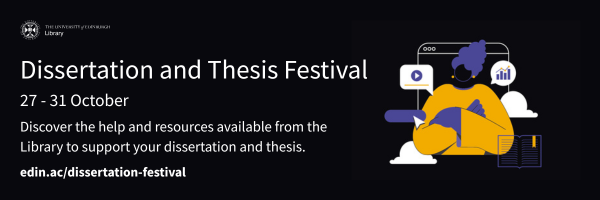
Unlock the potential of your dissertation or thesis at Discovery Day!

Join us on Monday 27 October, 10am–2pm at the Main Library for Discovery Day, your chance to explore the amazing resources available for your dissertations and theses during our Dissertation and Thesis Festival. ...continue reading "What will you discover at our Discovery Day?"

Are you developing a search strategy for a systematic review or other evidence synthesis? Here we have collated a list of useful training and guidance resources to help you.

An image of a cartoon laptop.
Image by José Miguel from Pixabay

The Learn course LibSmart II: Advance Your Library Research has a whole module on Literature Searching for Systematic Reviews.  LibSmart II can be found in Essentials in Learn. If you don’t see it there, contact your Academic Support Librarian and we’ll get you enrolled. You can work through LibSmart at your own pace, and return whenever you need.

For self-paced training on the whole process of conducting a systematic review, Cochrane Interactive Learning has modules created by methods experts so you build your knowledge one step at a time.

If you are a student conducting a systematic review, we can highly recommend the book Doing a Systematic Review (2023). With a friendly, accessible style, the book covers every step of the systematic review process, from planning to dissemination.

We also have several recorded presentations on systematic reviews on our Media Hopper channel, including Building complex searches for systematic reviews and How to test your systematic review searches for quality and relevance as well as introductions to databases like Medline and Web of Science.

For even more advice about systematic review searching, see the library’s subject guides on Systematic reviews

-----

What's so different about a systematic review search strategy?

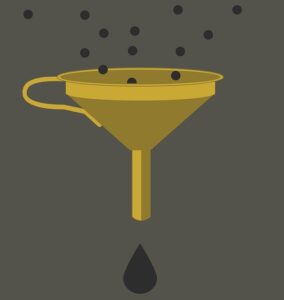
An image of a funnel.
Image by Mugé from Pixabay

According to the Cochrane Collaboration, a leading group in the production of evidence synthesis and systematic reviews;

systematic reviews are large syntheses of evidence, which use rigorous and reproducible methods, with a view to minimise bias, to identify all known data on a specific research question.1

This is done by a large, complex literature search in databases and other sources, using multiple search terms and search techniques. This might include Boolean operators, truncation, phrase searches, and database subject headings. Find out more about these search techniques on the Library subject guide to Literature Searching.

Traditional literature reviews, such as the literature review chapter in a dissertation, don’t usually apply the same rigour in their methods because, unlike systematic reviews, they don't aim to synthesise all known data on a topic. Literature reviews can provide context or background information for a new piece of research, or can stand alone as a general guide to what is already known about a particular topic2.

-----

You can contact your Academic Support Librarian for advice on literature searching, using databases, and managing the literature you find.

-----

References

  1. Higgins, J., et al., Cochrane Handbook for Systematic Reviews of Interventions version 6.4 (updated August 2023). 2023, Cochrane.
  2. Mellor, L. The difference between a systematic review and a literature review, Covidence. 2021. Available at: https://www.covidence.org/blog/the-difference-between-a-systematic-review-and-a-literature-review/. (Accessed: 20 March 2024).

Welcome, and welcome back, to all students starting the new academic year this week!

Whether you are one of the many descending on campus or one of our online or distance learners logging in from across the globe, we hope you make full use of our library resources, services and facilities while you are at the University.

Photograph of the front of the Main Library building showing the Library sign and students outside.
Main Library

Our newly refreshed Library website has everything you need to know about the Library, while our Library subject guides help you find the resources you may need for your subject area.

But here are 5 things to help you get the best out of our (or your) library in 2024-25. ...continue reading "5 things: getting the best out of your library"

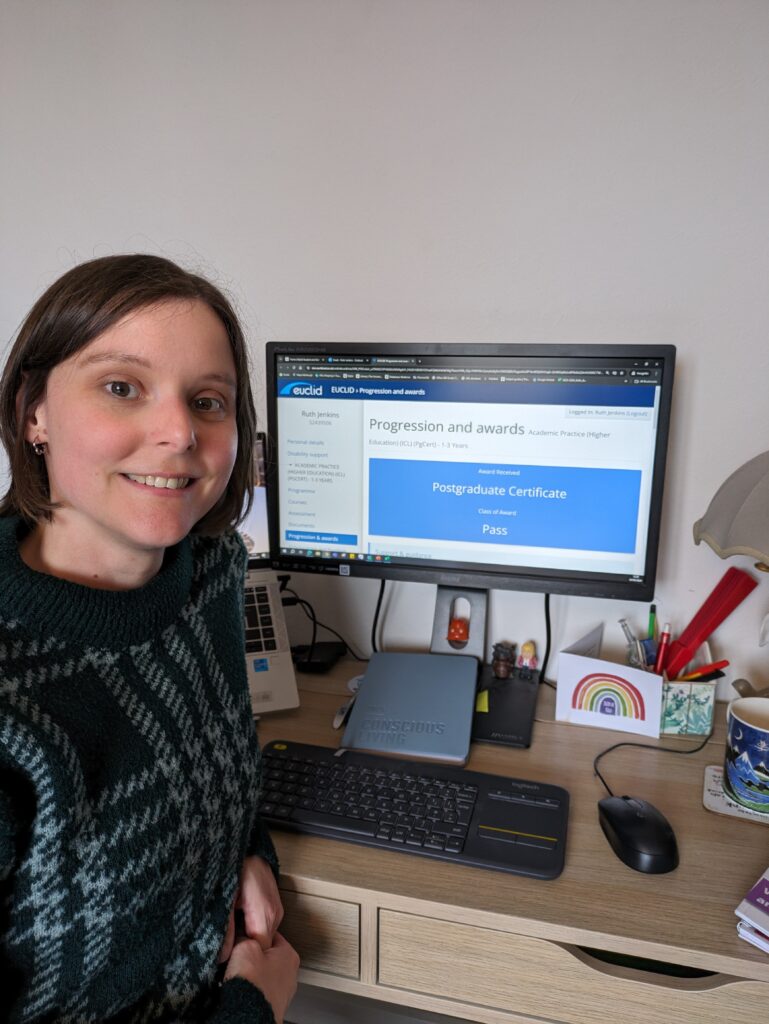
Ruth Jenkins FHEA

We recently celebrated the success of the latest member of the Academic Support Librarian team to gain Fellowship of the Higher Education Academy, Ruth Jenkins. I caught up with colleagues to find out more about what this qualification means to them. ...continue reading "Professional Recognition for Library teaching with the Higher Education Academy"

Are you a new or exisitng staff member who would like to find out more about the University's libraries?

Join an Academic Support Librarian on a 20 to 30-minute in-person tour of one of our ten Library sites. Find out about key library services, including EdHelp, borrowing, printing, and study spaces. Discover the general print collections at the Library and explore the subjects covered. Suitable for staff in all roles.

To book a tour, visit Event Booking.

Schedule of library tours:

Main Library

17 January @ 14:00, 22 January @ 09:30, 6 February @ 10:30, 6 March @ 14:00, 2 April @ 10:30, 8 May @ 14:00, 12 June @ 14:00 (additional tours to be confirmed)

Art and Architecture Library

5 March @ 09:15


Edinburgh College of Art Library

18 January @ 09:15, 6 February @ 09:15, 9 April @ 09:15, 7 May @ 09:15, 11 June @ 09:15


Law Library

19 January @ 11:00, 12 February @ 10:00, 21 March @ 11:00 (additional tours to be confirmed)


Moray House Library

25 Jan @ 11:00, 22 Feb @ 11:00, 21 Mar @ 11:00, 25 Apr @ 11:00, 23 May @ 11:00, 20 June @ 11:00


Noreen and Kenneth Murray Library

14 Feb @ 15:00 (additional tours to be confirmed)


New College Library

30 Jan @ 16:00, 27 Feb @ 16:00, 26 Mar @ 16:00 (additional tours to be confirmed)


Royal Infirmary Library

26 Jan @ 10:00, 7 Feb @ 10:00, 26 March @ 09:30 (additional tours to be confirmed)


The Lady Smith of Kelvin Veterinary Library

24 Jan @ 14:00 (additional tours to be confirmed)


Western General Hospital Library

25 Jan @ 10:00, 19 Mar @ 12:30, 22 May @ 13:00

Journal of Information Literacy logo

As well as bringing you news and updates from the library, we like to use this blog to report on some of the Continued Professional Development activities we get up to as Academic Librarians. This week several members of our team attended a webinar presented by the Journal of Information Literacy on the topic of Writing about Information Literacy, and we found it to be both useful and inspiring so we thought we'd share some of our key findings.

The session opened with a brief introduction to JIL, who they are and what they do. JIL is the professional journal of the CILIP Information Literacy Group, and if you've not encountered them before then they are a well respected publication in UK information literacy:

Founded in 2007, the Journal of Information Literacy (JIL) is an international peer-reviewed journal and is aimed at librarians, information professionals and academics who teach and/or research aspects of information literacy. The journal includes articles from established and new authors that investigate many different areas of information literacy, including school, academic and national libraries, health care settings, and the public sector such as the workplace and government.

A few of our team had previously attended sessions run by Editor-In-Chief Dr Alison Hicks and Managing Editor Dr Meg Westbury at the LILAC conference, so we knew we were in for an hour of useful tips, tricks and key information for submitting to this (but also any) journal.

The presenters addressed different types of submission they might accept in JIL, including Research Articles, Project Reports and Book or Conference Reviews, and briefly described the requirements for each. They looked at the submission process (and why it might feel that it takes so long!) and also suggested how to respond to feedback in a useful and concise way. There were lots of tips about how to stay focused, and a book recommendation for those of us who are worried about the best writing environment:

Sword, H. (2017) Air & light & time & space : how successful academics write / Helen Sword. Cambridge, Massachusetts: Harvard University Press.
You can find this book at the Main Library, details via DiscoverEd.

Meg also suggested writing Tiny Texts as a way to get started, which you can read more about on the slides which they presented as part of the 'Getting Your Writing Groove Back' session from the 2022 LILAC conference.

Overall those of us in the virtual room felt it was a really valuable hour which made academic writing seem accessible and useful to us as library practitioners. Unlike our colleagues in the States, publishing academic work is not a requirement for our jobs here. However we do engage in professional development activities to ensure we're well informed about new developments particularly across the academic library sector, and reading and contributing to journals is just one of the ways we can do that. While it can seem difficult to make time to write and publish alongside our day jobs, the team at JIL seem to be more than willing to help develop fledgling writers and would be a great port of call for anyone looking to get started in writing about the Information Literacy initiatives in their institution. This session was presented in collaboration with the Information Literacy Group's New Professionals team, though we would probably say it was useful for anyone considering writing up their work for publication - we certainly found it useful as not-so-new professionals!

If you're interested in reading and writing more journal articles about library work, why not consider joining the Library Journal Club? We welcome members from any area of Library Services who have an interest in reading and critically discussing publications about libraries. We meet regularly both in person and on Teams, and have a trip to the Library of Mistakes planned for December! You can find us on Teams here.

Here we are midway through the first semester, and you may start to feel like you should be looking ahead to your end of semester assessments. Often students feel a bit overwhelmed before their first hand in, but here at the library we're keen to help you feel confident from the start. Read on to find out why LibSmart is one of the best ways to prepare for your research and writing....

1. LibSmart shows you the basics of finding information in easy-to-follow lessons

Split into five simple sections, LibSmart I takes you through everything you need to find good material to base your assignments on. You'll learn about how to search the library catalogue, how to double check your course reading, and suggestions of where to go for follow up resources.

2. You can dip in and out of it any time that suits you

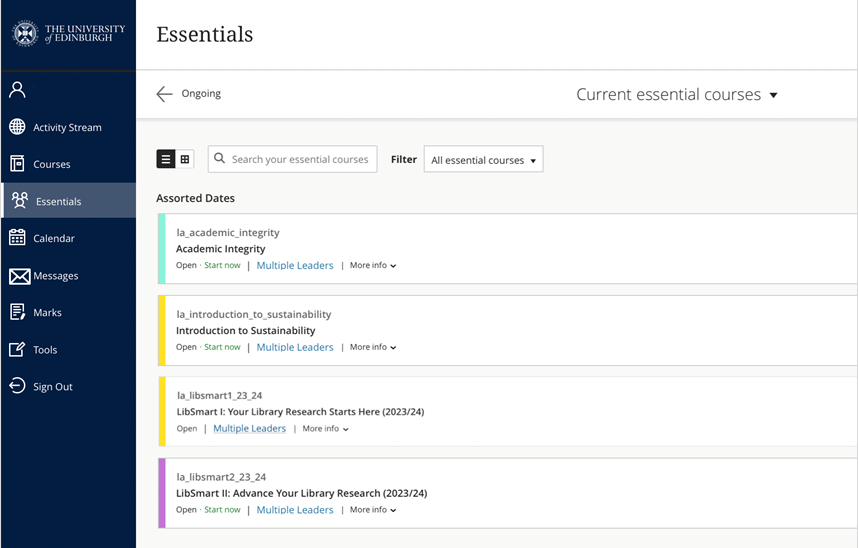
One of the great things about LibSmart is all new students are already enrolled! You just need to log in to learn and click on the 'Essentials' tab on the left to find it. It's there whenever you need it all year long, so if you're feeling like you need to be productive at 11pm one evening then log on and complete a module. We're sure you'll either learn something new or you'll feel more confident that you're on the right track.

3. The whole of LibSmart I can take less than one afternoon to work through

We designed LibSmart I so that it's not a huge effort for you to complete. We know your time is precious and that you may have classes to get to, work shifts to make or social activities that are a huge and important part of your student experience. We wanted to make the information in LibSmart as accessible as possible, and while you can take it at whatever pace you like, we know that some students like to rattle through it in just one day. Whichever route you chose, we appreciate the time you spend there.

4. You'll learn valuable skills on how to get started with referencing

Referencing is one of the top enquiries we Academic Support Librarians receive - people are confused by it or don't understand what, where and how to do it properly. LibSmart I has a really useful introductory module that can help you get to grips with the foundations of referencing, and offers top advice on how to find the right style and systems for you. If you're feeling stuck with where to start then this is the place to go.

5. It's so much more than just library stuff! 

We know it's a lot to ask students to spend a few hours on looking specifically at library catalogues and databases especially when this isn't prescribed reading on any particular course. However, students who've spent time on LibSmart believe it's really made a difference to their experience as a student.

When I signed up, I assumed the course was just an introduction to the library but it has really been a guide to how academic research works. I wonder if more people would have signed up for this if they had realised it was not just a tour of the library to see where the books were kept. Along with the one hour "Study Skills" course I did, which was also surprisingly useful in its content, I feel I got as much learning from these free courses as the main one I paid for.


If you're interested in giving LibSmart a go, you can find out more on our website.

Alternatively if you're keen to get started straight away, just visit Learn and click on the Essentials tab on the left hand navigation. It's all there ready for whenever you need it!

Screenshot of Learn Ultra platform, displaying the Essentials tab where LibSmart can be found

LibSmart banner, which contains the university crest in white on a black background to the left of the image. The word 'Library' is written beneath the crest. In the centre of the image is a photo of students sitting outside the Main Library on central campus on stone benches, and the Library sign is visible. To the right of the banner is the library branding which looks like geometric shapes in white and electric blue on a back background.

We're very excited to let you know that from this year onwards all students at Undergraduate and Postgraduate level will automatically be enrolled in our LibSmart online information literacy course! If you've not encountered LibSmart before, it's a great way to get to grips with finding and using information available to you via the Library. It's asychronous which means you can dip in and out whenever suits you across the year, and we tend to find people use it either at the start of term when they need to start looking reading material up, or right before they start research for their assignments.

LibSmart I is our foundation level course, helping students get a good baseline in using our library catalogue, searching for reading materials for courses, and understanding the best places to go for help. We also talk about referencing and plagiarism, something students will need to understand at every level of university life.

LibSmart II is a bit more specialised - it takes a subject-specific look at different topics that people find tricky to work with, such as systematic reviews, data mindfulness and digital news sources. We walk you through different types of resource and processes for working with this information, and hopefully leave you feeling confident of where to start with your assignment or research project. We recommend you complete LibSmart I first, but if you're feeling confident and ready to dive in to LibSmart II then you're welcome to start wherever you like!

And if the achievement of completing a module alone doesn't bring you joy, we also award you some lovely digital badges for each module you complete. You can save them and use them as evidence of the self-directed learning you've completed via LibSmart - something that could look very attractive to future employers!

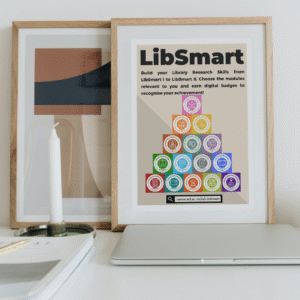
Picture of LibSmart digital badges in a wooden picture frame leaning against a wall
Earn digital badges for every module you complete in LibSmart I and II.

To access LibSmart, simply follow these steps:

  1. Visit www.learn.ed.ac.uk
  2. Log in using your UUN (normal university username and password)
  3. On the left hand navigation, select 'Organisations'
  4. Locate LibSmart I: Your Library Research Starts Here (2023/24) from the list, or LibSmart II: Advance your Library Research (2023/24). 
  5. Click into the course and start working your way through!

If you would like some further information on LibSmart you can find out more on our LibSmart webpage which includes information about the modules available and a look at what previous students have found most useful about the course. Of course if you have any questions please leave us a comment or email us. 

css.php

Report this page

To report inappropriate content on this page, please use the form below. Upon receiving your report, we will be in touch as per the Take Down Policy of the service.

Please note that personal data collected through this form is used and stored for the purposes of processing this report and communication with you.

If you are unable to report a concern about content via this form please contact the Service Owner.

Please enter an email address you wish to be contacted on. Please describe the unacceptable content in sufficient detail to allow us to locate it, and why you consider it to be unacceptable.
By submitting this report, you accept that it is accurate and that fraudulent or nuisance complaints may result in action by the University.

  Cancel