Any views expressed within media held on this service are those of the contributors, should not be taken as approved or endorsed by the University, and do not necessarily reflect the views of the University in respect of any particular issue.
You are invited to drop in on our Discovery Day on Monday, 23 February, from 10:00 am to 2:00 pm at the Main Library. This event offers a valuable opportunity to engage with the exceptional resources available to support the development of dissertations and theses as part of our broader Dissertation and Thesis Festival.
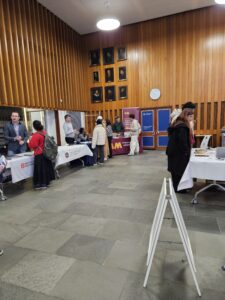
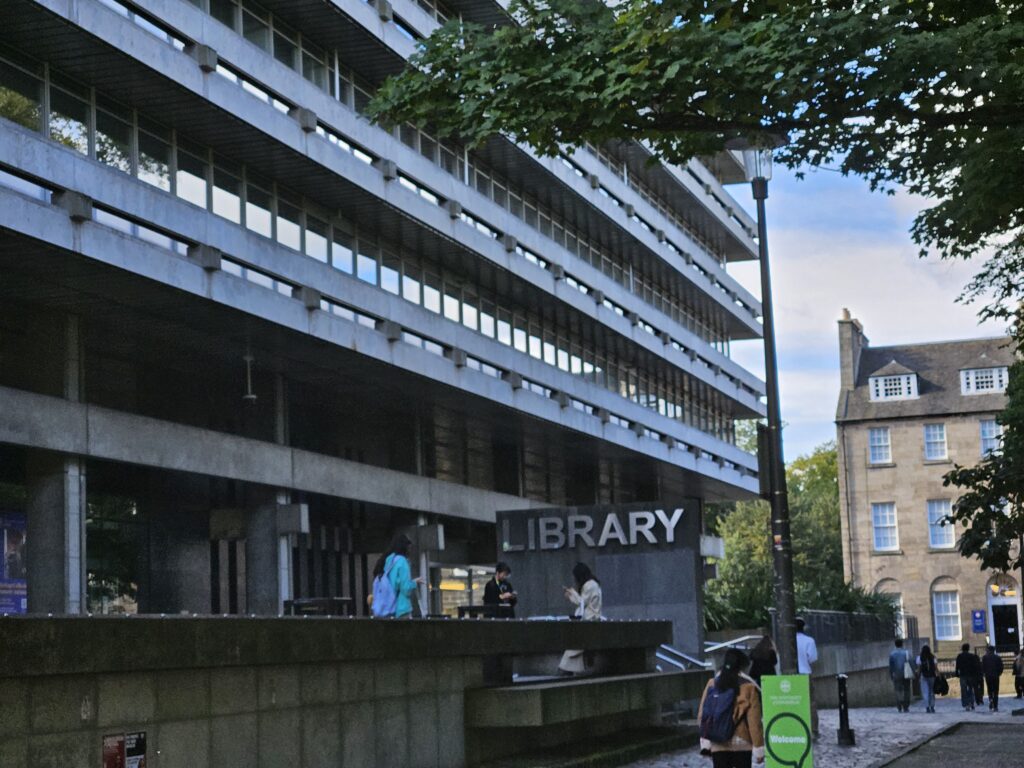
Students engage with stalls at Discovery Day in October 2025 at the Main Library.
At Discovery Day, you will have the chance to meet representatives from leading database publishers (databases that allow you to fully research your topic), receive expert guidance, and pick up some freebies! Our Academic Support Librarians (ASLs) will be present to assist you in navigating library resources, inform you about upcoming festival events, and offer tailored advice to support your academic progress. Colleagues from Research Data Support and Digital Skills will be there to help you find out more about support for your dissertation and thesis work. And from 1-2pm, one of our Royal Literary Fund Fellows (RLFF) will be on hand so you can find out more about writing support available to you from the Library.
Grey literature can be a rich resource when researching for a literature review or dissertation topic. It can help you find current and emerging research, viewpoints of individuals such as patients and consumers, and more in depth or practical coverage of topics.
It can also help you to mitigate against 'publication bias’, where studies showing positive research results are much more likely to be published in journals. A search for grey literature will help to ensure that all relevant results, even if negative, are located.
'Grey literature' refers to a wide range of information which is not formally or commercially published, and which is often not well represented in library research databases. Here we’ll give several top tips for finding and using grey literature. ...continue reading "What is grey literature and where to find it"
Semester one is almost over and exams are looming! As the exam period approaches, it’s natural to start feeling the pressure build. But remember, you’re not alone!
At the University of Edinburgh, there are plenty of resources and services designed to support you every step of the way. In this post, we’ll highlight five key ways the library can help – from available study spaces and digital resources to helpful guides and wellbeing support – so you can make the most of your revision and head into exams feeling confident and prepared.
1) Study space, study space everywhere but not a place to sit?
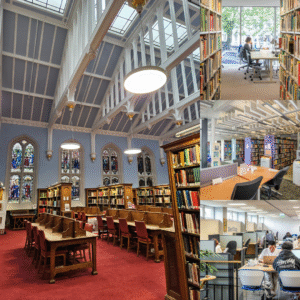
Clockwise from left: New College Library, ECA Library, Noreen and Kenneth Murray Library, and Moray House Library.
It can feel like this sometimes during the revision and exam period, particularly if you are a regular at the Main Library or Law Library. But there are lots of study spaces across our campuses that you have access to, including some temporary additional study space during the exam period.
While the Main Library is a favourite for many, there are 8 other site libraries that you have access to (with your student card). These range from old-fashioned, picturesque libraries, to modern libraries with light and space and also include a library in what used to be a swimming pool.
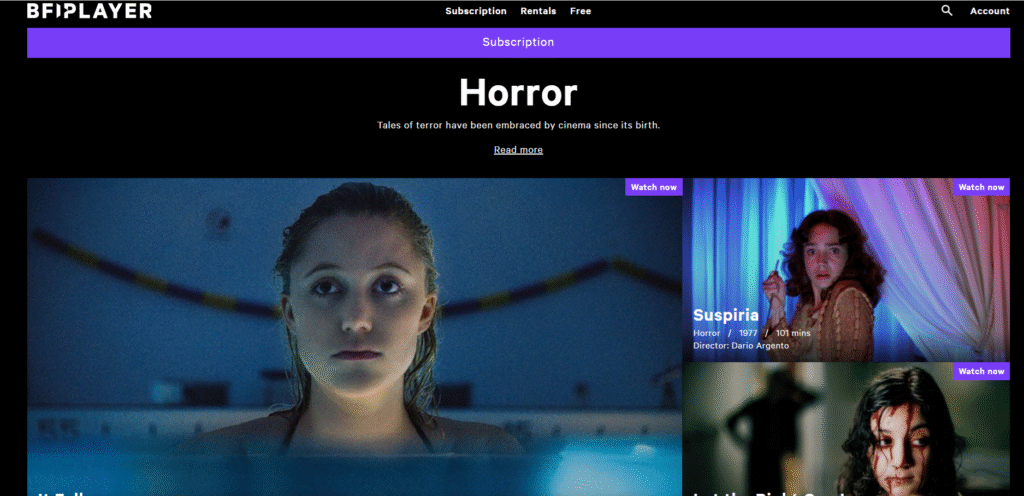
With Halloween just around the corner, it’s the perfect time to get cosy and watch some truly creepy horror movies. Luckily, if you’re a student or staff member at the University of Edinburgh, you’ve got free access to BFI Player, packed full of wicked horror films (and other films) that’ll give you all the chills and thrills you’re after. From classic spooky tales to modern scares, there’s something for everyone who loves a good fright!
So grab some snacks, turn off the lights, and settle in for a scary movie marathon without ever leaving your room. Whether you’re watching solo, hanging out with friends, or just want to discover some fantastic horror flicks, the BFI Player’s got your Halloween covered with some seriously creepy must-sees.
Unlock the potential of your dissertation or thesis at Discovery Day!
Join us on Monday 27 October, 10am–2pm at the Main Library for Discovery Day, your chance to explore the amazing resources available for your dissertations and theses during our Dissertation and Thesis Festival. ...continue reading "What will you discover at our Discovery Day?"
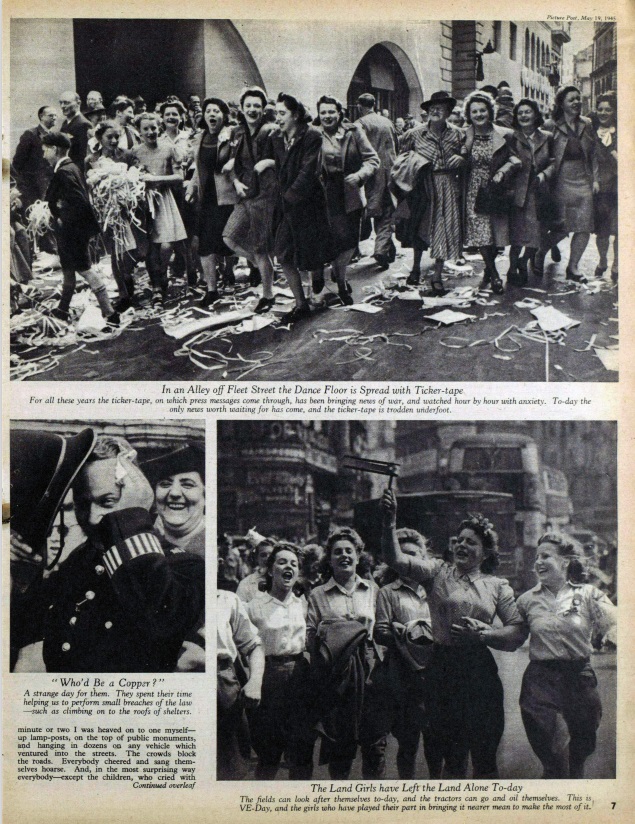
Today, 8 May 2025, marks the 80th anniversary of VE Day (Victory in Europe Day) when people in Britain and Allied nations across the world celebrated the unconditional surrender of Germany in the Second World War. While it was not the end of the conflict (it was August 1945 before the war against Japan ended) the sense of relief for people who had been living under total war for 6 years was huge. In Britain VE Day was declared a national holiday and people took to the streets to celebrate and commemorate in a huge release of collective tension. This blog posts pulls together just a small selection of our digital library resources that will help you find out more about VE Day, the events leading up to it and the aftermath.
What did the papers say?
Mentions of VE Day or Victory in Europe Day start before the 8th May, as people were aware of and anticipating the likely German surrender. So some preparations were already underway and some people began to celebrate early, on the 7th, when in Britain it was announced on the radio that the war in Europe was over.
From "This was VE-Day in London." issue of Picture Post, May 19, 1945. Picture Post Historical Archive, 1938-1957.
Are you developing a search strategy for a systematic review or other evidence synthesis? Here we have collated a list of useful training and guidance resources to help you.
The Learn course LibSmart II: Advance Your Library Research has a whole module on Literature Searching for Systematic Reviews. LibSmart II can be found in Essentials in Learn. If you don’t see it there, contact your Academic Support Librarian and we’ll get you enrolled. You can work through LibSmart at your own pace, and return whenever you need.
For self-paced training on the whole process of conducting a systematic review, Cochrane Interactive Learning has modules created by methods experts so you build your knowledge one step at a time.
If you are a student conducting a systematic review, we can highly recommend the book Doing a Systematic Review (2023). With a friendly, accessible style, the book covers every step of the systematic review process, from planning to dissemination.
According to the Cochrane Collaboration, a leading group in the production of evidence synthesis and systematic reviews;
systematic reviews are large syntheses of evidence, which use rigorous and reproducible methods, with a view to minimise bias, to identify all known data on a specific research question.1
This is done by a large, complex literature search in databases and other sources, using multiple search terms and search techniques. This might include Boolean operators, truncation, phrase searches, and database subject headings. Find out more about these search techniques on the Library subject guide to Literature Searching.
Traditional literature reviews, such as the literature review chapter in a dissertation, don’t usually apply the same rigour in their methods because, unlike systematic reviews, they don't aim to synthesise all known data on a topic. Literature reviews can provide context or background information for a new piece of research, or can stand alone as a general guide to what is already known about a particular topic2.
-----
You can contact your Academic Support Librarian for advice on literature searching, using databases, and managing the literature you find.
-----
References
Higgins, J., et al., Cochrane Handbook for Systematic Reviews of Interventions version 6.4 (updated August 2023). 2023, Cochrane.
Thanks to a request from staff in History, the Library currently has trial access to the newly launched extension years for The Scotsman Historical Archive from ProQuest Historical Newspapers. While the Library already has access to The Scotsman Archive covering the years 1817-1950, the new extension module increases coverage up to 2002.
Welcome, and welcome back, to all students starting the new academic year this week!
Whether you are one of the many descending on campus or one of our online or distance learners logging in from across the globe, we hope you make full use of our library resources, services and facilities while you are at the University.
Main Library
Our newly refreshed Library website has everything you need to know about the Library, while our Library subject guides help you find the resources you may need for your subject area.