Any views expressed within media held on this service are those of the contributors, should not be taken as approved or endorsed by the University, and do not necessarily reflect the views of the University in respect of any particular issue.
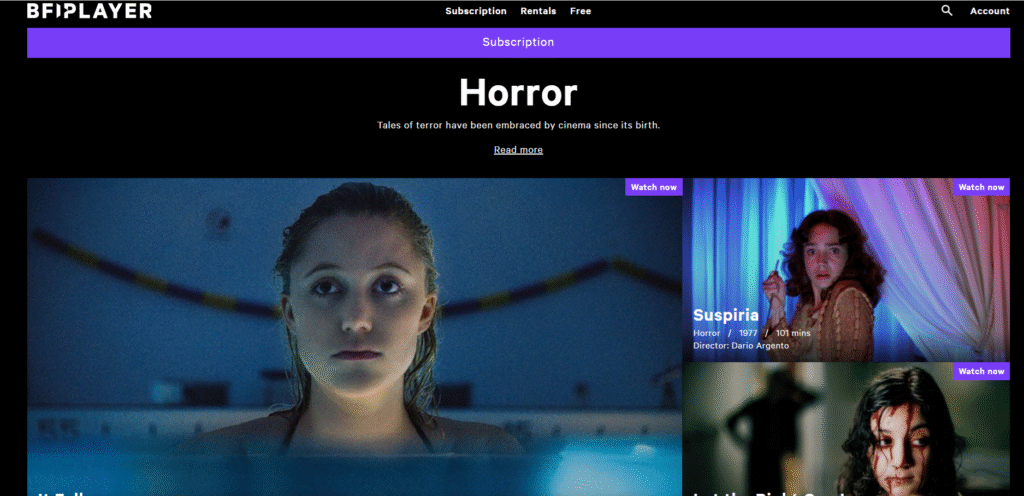
With Halloween just around the corner, it’s the perfect time to get cosy and watch some truly creepy horror movies. Luckily, if you’re a student or staff member at the University of Edinburgh, you’ve got free access to BFI Player, packed full of wicked horror films (and other films) that’ll give you all the chills and thrills you’re after. From classic spooky tales to modern scares, there’s something for everyone who loves a good fright!
So grab some snacks, turn off the lights, and settle in for a scary movie marathon without ever leaving your room. Whether you’re watching solo, hanging out with friends, or just want to discover some fantastic horror flicks, the BFI Player’s got your Halloween covered with some seriously creepy must-sees.
Unlock the potential of your dissertation or thesis at Discovery Day!
Join us on Monday 27 October, 10am–2pm at the Main Library for Discovery Day, your chance to explore the amazing resources available for your dissertations and theses during our Dissertation and Thesis Festival. ...continue reading "What will you discover at our Discovery Day?"
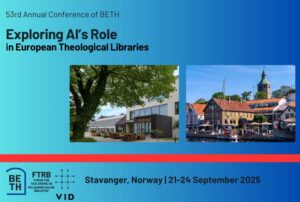
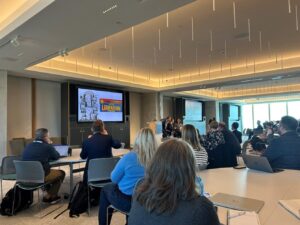
I was privileged to attend the BETH = Bibliotheques Europeennes de Theologie conference in Stavanger, Norway, 20-23 September 2025, which had the theme of exploring AI’s role in Theological libraries. I really appreciated the practical nature of many of the papers in this conference, which highlighted projects and processes using AI that had been implemented in libraries. I also felt that there was also a second theme or undercurrent, that of highlighting the human value of libraries and the books they contain.
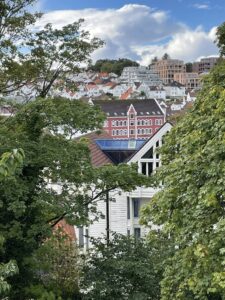
View down into Stavanger
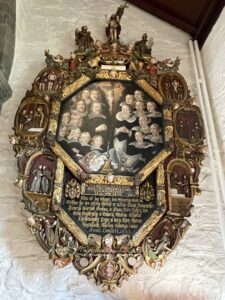
Before we dived into AI, there was a walking tour of Stavanger, starting at Stavanger Cathedral, the oldest cathedral in Norway at 900 years old. Stavanger is located in what is known as the ‘Bible Belt’ of west and south Norway, and used to be called the mission city of Norway because it sent out so many missionaries. I was impressed by several richly detailed epitaphs with paintings of the deceased with their family. Our tour also took in St Peter’s Church, a more ‘regular’ Norwegian church, where a rehearsing worship band created an atmospheric visit. Our last ‘church stop’ was at a historic ‘prayer house’, an upstairs room used as a meeting room by non-conformist churches that sprang up after the Dissenter Act in 1845 allowed Christian gatherings other than the established Church of Norway. Today it is used as a youth church meeting place by the Church of Norway. Our tour took in Stavanger’s streets of painted wooden houses, harbour and hilltop views. We ended up at the conference location, VID Specialised University, where we were greeted by lovely Norwegian waffles and coffee.
Historic epitaph, Stavanger Cathedral
The first day of the conference closed with a film showing of Le Poids des livres : la bibliothèque de Port-Royal. In preparation for the Bibliothèque de Port-Royal's move to new premises in 2022-23, two filmmakers, Camille de Chenay and Adrien Pierre, followed the life of the library for six years. The documentary film that resulted is a love song to the library and a powerful piece of advocacy about the value of the library and the human stories it holds and creates. It’s not currently available on YouTube as it’s being shown at film festivals but it should be in the future – I really recommend that you watch it!
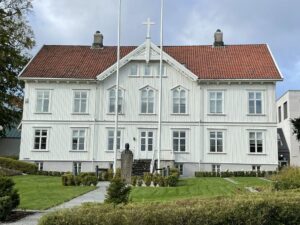
Historic Mission school building, VID Specialized University
Hannah Pope from VID Specialised University kicked off the papers about AI by exploring the role of the librarian. She suggested that we may feel saturated by suggestions about AI, and be struggling between knowing that it is important but also hearing that it is problematic. AI is a tool – or rather, a whole bunch of them – but the difficulty is that we may not be able to pick up and put down that tool at will. It’s appearing all the time in our environment, in a “gold rush” of AI not necessarily in our control. Ignoring AI is no longer an option. We are still in the early stages of understanding AI, and it is similar to the advent of the World Wide Web, so it could be argued “That all turned out fine.” But AI – Gen AI – is an explosion, of bots, deep fakes, and disinformation. Often in the library we’re expected to be ambassadors for AI, but often conversations around AI lack nuance and understanding of the complexities – there is a role for the information professional here. Librarians are ideally positioned to have a foot in both camps, to challenge and adopt.
The Academic Support Librarians are a learning team, who have attended professional development events in line with the prioritised themes in our team workplan. Ishbel Leggat attended the RLUK conference in Liverpool in March, where she learned “how colleagues at other institutions are embedding AI skills into the curriculum, how Generative AI is changing the HE landscape and how AI could be used to optimise library-related working practices”. The AI theme in our workplan was also explored by Anna Richards at the BIALL (British and Irish Association of Law Librarians) conference, with a view on how AI tools are being used in legal practice and library-led support. Jane Furness attended the CALC online conference in May which enabled her to “build my ability to contribute to and support the work of the ASL EDI group and in my support of ECA students and staff.” In June, SarahLouise MacDonald and Rania Karoula attended the SCURL Conference in Aberdeen which had an EDI focus, where they learned about “new avenues for research based on relevant presentations (specifically on radical hospitality and supporting diverse communities).” And Ruth Jenkins attended the LILAC Library Information Literacy conference in Cardiff, bringing back notes that were shared with team colleagues “… who picked up on different talks and themes so our conversations were different every time.” We share our learning with library colleagues in the ASL blog : https://libraryblogs.is.ed.ac.uk/asl/ ...continue reading "What we learned from our conferences : Academic Support Librarians and professional engagement"
Did you know that Academic Support Librarians (ASLs) work year round, even while most students are on their summer break? Here at UoE we have courses starting at different times throughout the year so some members of our team have already been hard at work helping students get settled in and familiar with Library Services right at the beginning of their university journey in Edinburgh.
For example, we have a lot of students who arrive for pre-sessional courses such as the 'Essentials of English for Academic Purposes’ who began in July in order to complete some language courses before their PG study begins. We like to meet these students and make sure they're familiar with which resources will be relevant for them, and how to ask for help in the very early part of their course so the information stays with them no matter what they go on to study.
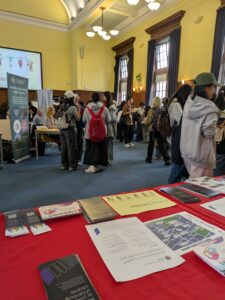
ASLs had a stall at the Community Fairs organised by The Centre for Open Learning (COL) in July
We've been providing library introductions for new and returning students in the College of Medicine and Veterinary Medicine, and we’ll soon be welcoming the latest cohort of Professional Graduate Diploma in Education (PGDE) students who will be arriving on the Holyrood campus on Monday 18th August. This group of students traditionally start before other cohorts and spend limited time on-campus as they go out on school placements at the start of the academic year.
To facilitate early arrival on-campus, Ishbel (ASL for Moray House School of Education and Sport) has liaised with Programme Directors for PGDE Primary & Secondary to find out how many new students are expected to arrive for the 2025-26 session (PGDE Primary: 100 approx. & PGDE Secondary: 145-160 approx.) She has liaised with the Moray House Library EdHelp Team and with Pam Wells at the Main Library to arrange for student ID cards to be sent to Moray House Library in advance, which allows PGDE students to collect cards before ‘official’ card collection events take place during Welcome Week. This year, we’ve also had assistance from Jade Fenton (Graduate Library Trainee) and Tim Gray to arrange for Library tote bags to be delivered to Moray House Library in time for PGDE student arrivals.
We'll also welcome Access students in August. Access courses are designed for adults who are returning to learning after a break and will go on to Undergraduate work in the future - they begin almost a full month before welcome week and continue on for two semesters.
We often talk about how there's no one-size-fits-all scenario for our students and that's because there's so many different courses, circumstances and timetables to account for in our planning. This is just one example of how we're trying to make sure everyone has a valuable and meaningful library experience no matter when they join us!
To add to our recent schedule of conference reports, last month several members of our
The 'Sir Duncan Rice Library', University of Aberdeen by Stanley Howe, CC BY-SA 2.0 <https://creativecommons.org/licenses/by-sa/2.0>, via Wikimedia Commons
team attend the Scottish Confederation of University & Research Libraries (SCURL) Conference on the 19th of June, which took place in the striking Duncan Rice Library at the University of Aberdeen.
We were delighted to see that the conference had such an interesting programme focused on the great work member teams are doing across the country to promote inclusivity and diversity of access. Sessions included topics such as 'Radical Hospitality: how can academic libraries support seekers of refuge?' and 'Higher Education librarians and social class background'. There were poster presentations from various member libraries taking action in their own settings, and keynotes from Dr Rachel Shanks, Interdisciplinary Director for Social Inclusion and Cultural Diversity at the University of Aberdeen as well as Beth Hellen-Montague, Head of Library & Information Services, The Frances Crick Institute and author of Practical Tips for Equality, Diversity and Inclusion in Libraries (which is available as an ebook via DiscoverEd).
While all the talks were valuable, Beth spoke very knowledgeably on the practical work of becoming an EDI focused librarian, and while much of what she had to say regarding taking action (that all actions help, we don't need one person doing inclusion perfectly but rather to take advantage of the positions, groups and access we already have), she also introduced new-to-us concepts such as the Academic Wheel of Privilege which we plan to consider in our future work. This can help us in making assessments regarding building our collections, but also how we approach the cultures around our educational systems and student backgrounds. It also links directly to the work Darren Flynn discussed in his session on social class in academic librarianship.
For more information about the Academic Wheel of Privilege and how it can be used for research, see the FORRT website.
We love to see a strong EDI strand in any conference we attend, and look forward to bringing our learnings from this event to discussions at our ASL EDI group and the wider L&UC EDI network too.
SarahLouise McDonald & Rania Karoula Academic Support Librarians
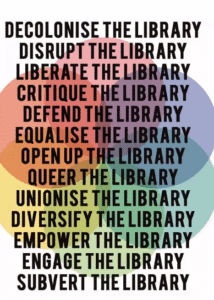
Critical Approaches to Libraries Conference poster
I attended the online CALC25 [Critical Approaches to Libraries] Conference from 13 – 15 May 2025. The programme, slides and recordings are available at https://sites.google.com/view/calcconference/calc2025 It was great to see Alice our Strathclyde placement student there too.
As you would expect from a conference on critical librarianship the programme topics were wide-ranging and diverse. Topics included professional identity, slow librarianship, supporting neurodivergent colleagues, information imperialism, and justice-orientated librarianship. I would highly recommend this affordable conference. It is £15 for 3 days and you can choose to donate a £15 entrance fee for another participant who can then attend for free. Most of the sessions were recorded and are on Youtube or the above website.
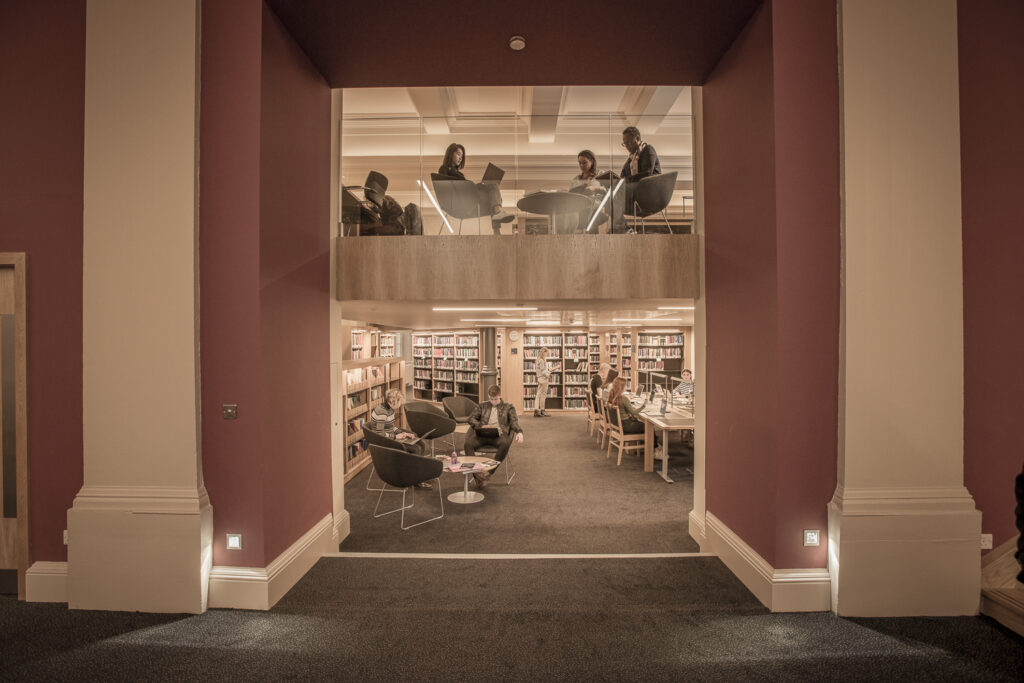
University of Edinburgh Law Library Senate Room to Mezzanine View with Students
This year, I was lucky enough to attend the British and Irish Association of Law Librarians (BIALL) conference for the very first time—and I hope it won’t be my last! From the moment I arrived, I was struck by how welcoming and friendly the event was. Thanks to the buddy scheme, I connected with librarians from across the profession, opening doors to future opportunities for sharing knowledge and ideas.
One of the big themes at all library conferences this year is Artificial Intelligence (AI), and BIALL was no different. As one of the AI leads in our team, I was keen to learn how AI tools are being used in legal practice and library-led support. The sessions didn’t disappoint.
I was delighted to be invited to Pittsburgh, Pennsylvania this year to speak at the Atla 2025 Annual meeting. It’s actually the second time I have been to a library conference in Pittsburgh “the steel city”, the first was to an ARLIS art librarians conference over 20 years ago. This time Pittsburgh was looking very green with cool damp weather, cooler than the June heatwave happening at home in the UK.
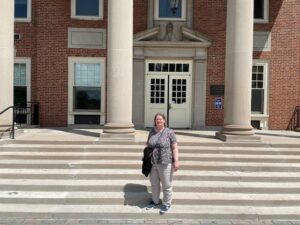
On the steps of Pittsburgh Theological Seminary
My conference experience began with a visit to Pittsburgh Theological Seminary (PTS)’s Clifford E. Barbour Library. Having just shown a group of PTS Doctor of Ministry students around my library, New College Library, the previous week, I was keen to visit the library of this partner institution. Like New College Library back at the University of Edinburgh, this library had recently been completely decanted for a full refurbishment, with priorities including increased light, improved air conditioning and redeveloped learning and social spaces. This was not the only similarity between PTS’s Library and my own library, which both use Library of Congress classification and support training for Presbyterian ministry. ...continue reading "Challenges, Changes and Collaborations– American Theological Library Association conference, Pittsburgh June 18-21 2025"
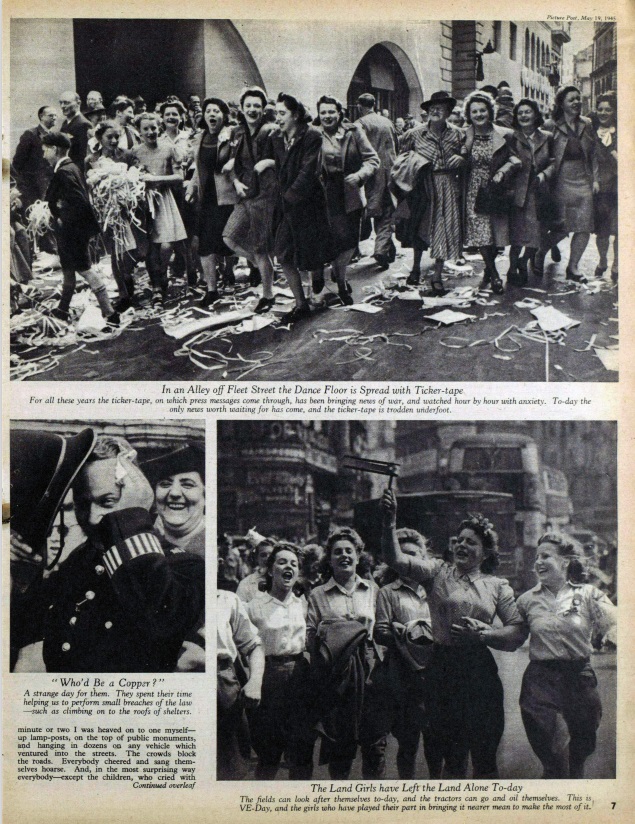
Today, 8 May 2025, marks the 80th anniversary of VE Day (Victory in Europe Day) when people in Britain and Allied nations across the world celebrated the unconditional surrender of Germany in the Second World War. While it was not the end of the conflict (it was August 1945 before the war against Japan ended) the sense of relief for people who had been living under total war for 6 years was huge. In Britain VE Day was declared a national holiday and people took to the streets to celebrate and commemorate in a huge release of collective tension. This blog posts pulls together just a small selection of our digital library resources that will help you find out more about VE Day, the events leading up to it and the aftermath.
What did the papers say?
Mentions of VE Day or Victory in Europe Day start before the 8th May, as people were aware of and anticipating the likely German surrender. So some preparations were already underway and some people began to celebrate early, on the 7th, when in Britain it was announced on the radio that the war in Europe was over.
From "This was VE-Day in London." issue of Picture Post, May 19, 1945. Picture Post Historical Archive, 1938-1957.