
Any views expressed within media held on this service are those of the contributors, should not be taken as approved or endorsed by the University, and do not necessarily reflect the views of the University in respect of any particular issue.
Skip to content

Here we are midway through the first semester, and you may start to feel like you should be looking ahead to your end of semester assessments. Often students feel a bit overwhelmed before their first hand in, but here at the library we're keen to help you feel confident from the start. Read on to find out why LibSmart is one of the best ways to prepare for your research and writing....

1. LibSmart shows you the basics of finding information in easy-to-follow lessons

Split into five simple sections, LibSmart I takes you through everything you need to find good material to base your assignments on. You'll learn about how to search the library catalogue, how to double check your course reading, and suggestions of where to go for follow up resources.

2. You can dip in and out of it any time that suits you

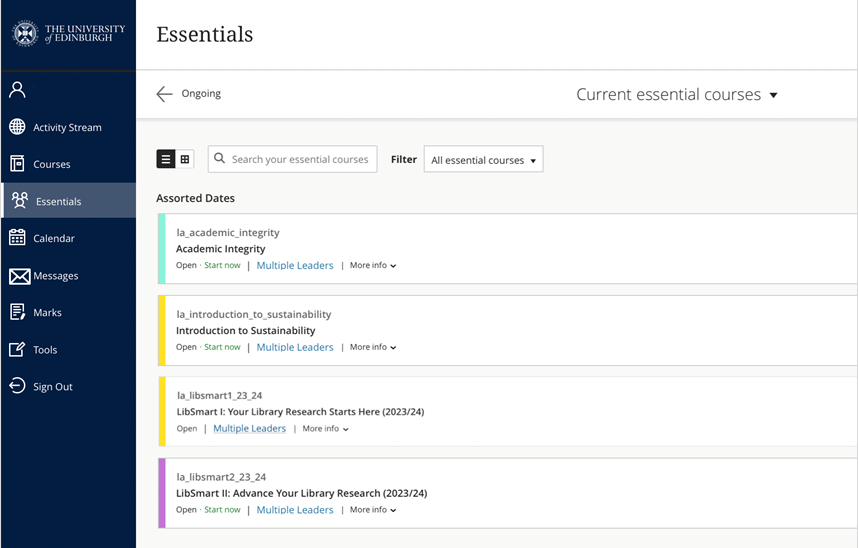
One of the great things about LibSmart is all new students are already enrolled! You just need to log in to learn and click on the 'Essentials' tab on the left to find it. It's there whenever you need it all year long, so if you're feeling like you need to be productive at 11pm one evening then log on and complete a module. We're sure you'll either learn something new or you'll feel more confident that you're on the right track.

3. The whole of LibSmart I can take less than one afternoon to work through

We designed LibSmart I so that it's not a huge effort for you to complete. We know your time is precious and that you may have classes to get to, work shifts to make or social activities that are a huge and important part of your student experience. We wanted to make the information in LibSmart as accessible as possible, and while you can take it at whatever pace you like, we know that some students like to rattle through it in just one day. Whichever route you chose, we appreciate the time you spend there.

4. You'll learn valuable skills on how to get started with referencing

Referencing is one of the top enquiries we Academic Support Librarians receive - people are confused by it or don't understand what, where and how to do it properly. LibSmart I has a really useful introductory module that can help you get to grips with the foundations of referencing, and offers top advice on how to find the right style and systems for you. If you're feeling stuck with where to start then this is the place to go.

5. It's so much more than just library stuff! 

We know it's a lot to ask students to spend a few hours on looking specifically at library catalogues and databases especially when this isn't prescribed reading on any particular course. However, students who've spent time on LibSmart believe it's really made a difference to their experience as a student.

When I signed up, I assumed the course was just an introduction to the library but it has really been a guide to how academic research works. I wonder if more people would have signed up for this if they had realised it was not just a tour of the library to see where the books were kept. Along with the one hour "Study Skills" course I did, which was also surprisingly useful in its content, I feel I got as much learning from these free courses as the main one I paid for.


If you're interested in giving LibSmart a go, you can find out more on our website.

Alternatively if you're keen to get started straight away, just visit Learn and click on the Essentials tab on the left hand navigation. It's all there ready for whenever you need it!

Screenshot of Learn Ultra platform, displaying the Essentials tab where LibSmart can be found

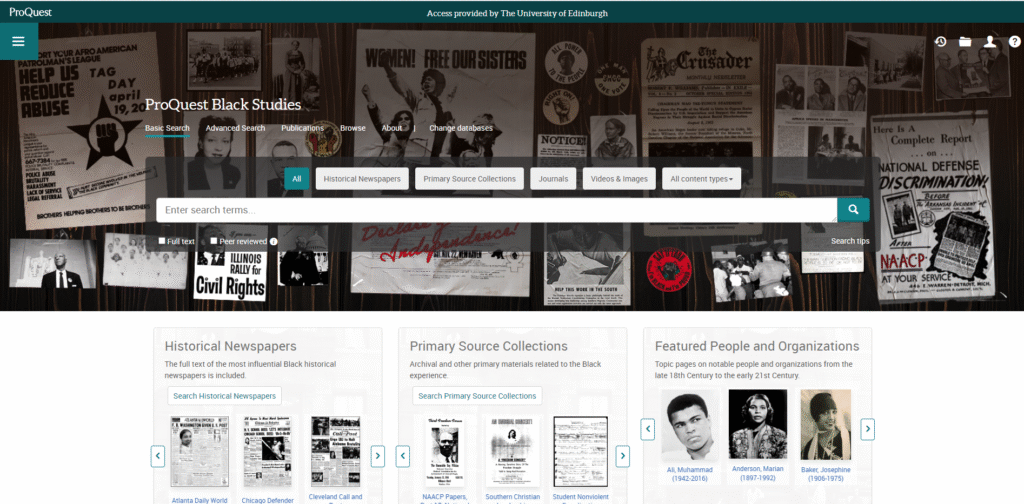
As part of Black History Month at the Library, we have trial access to ProQuest Black Studies. Developed with faculty, scholars and librarians, ProQuest Black Studies brings together award-winning content into one destination that can be used for research, teaching, and learning.

Screenshot of ProQuest Black Studies homepage.

You can access ProQuest Black Studies via the E-resources trials page.

Trial access ends 15th November 2023.

ProQuest Black Studies combines primary and secondary sources, including leading historical Black newspapers, archival documents and collections, key government materials, videos, writings by major Black intellectuals and leaders, scholarly journals, and essays by top scholars in Black Studies. ...continue reading "Trial access: ProQuest Black Studies"

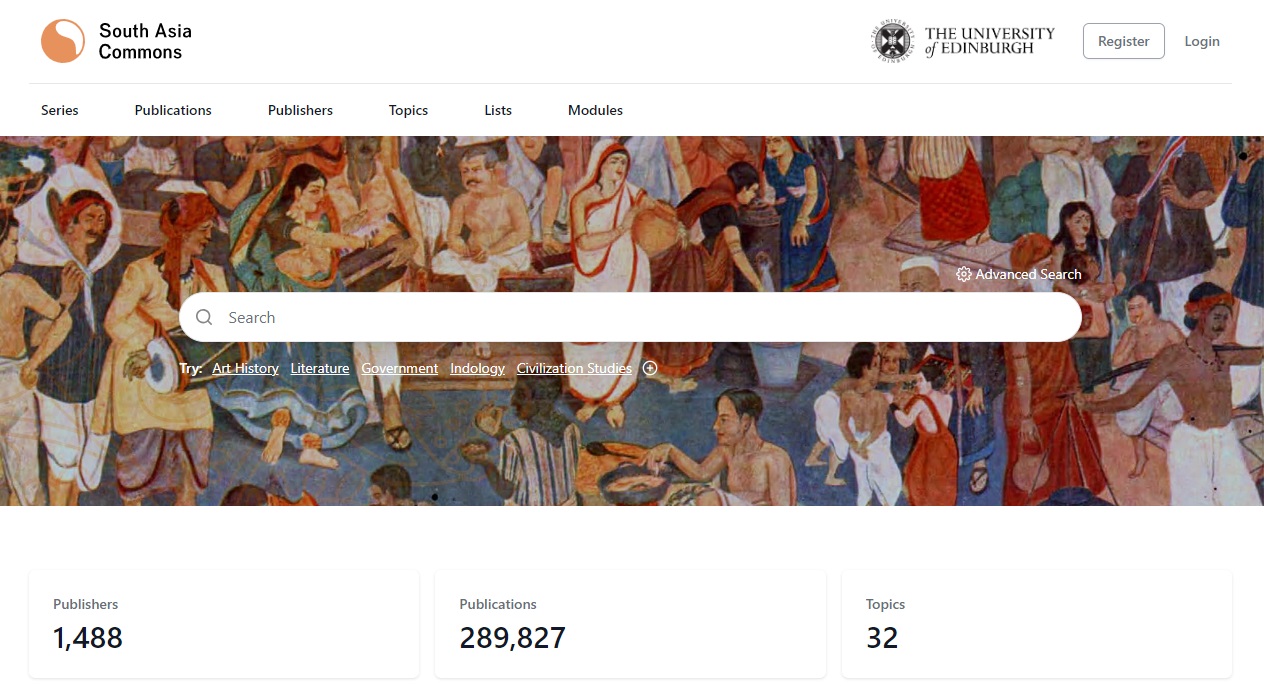
From 18 July to 17 August it is South Asian Heritage Month, a chance to celebrate and raise the profile of British South Asian history, arts, culture and heritage. This year's theme is #StoriesToTell, celebrating the stories that make up the diverse and vibrant South Asian community.

Sometimes, to understand your own story or those of others, you have to look back and in this blog post we are highlighting just a small number of digital archives you can access through the Library that allow you to learn more about South Asian history and the stories that have shaped our present and future.

South Asia Commons (formerly South Asia Archive)

...continue reading "Stories To Tell: South Asian Heritage Month"

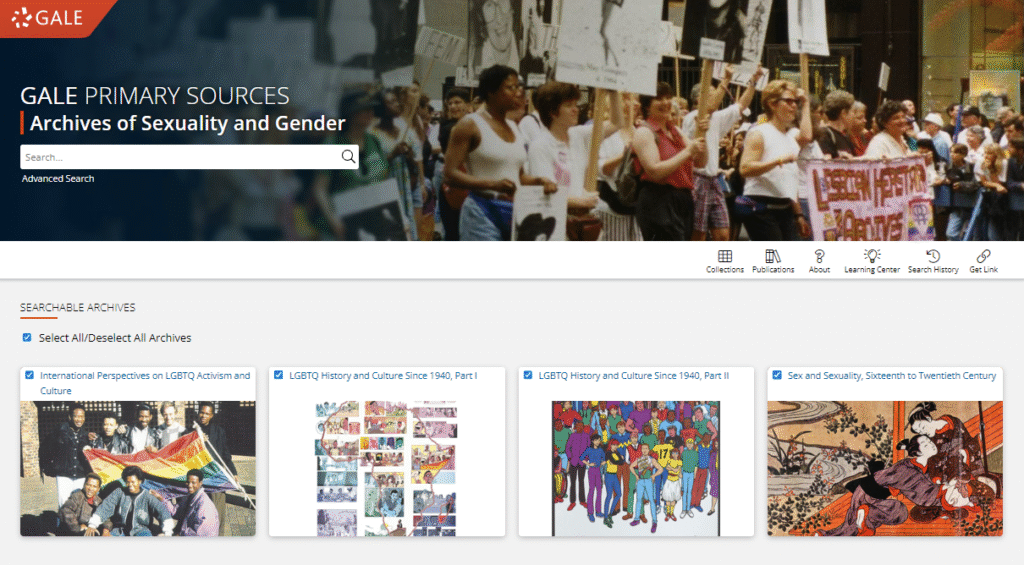
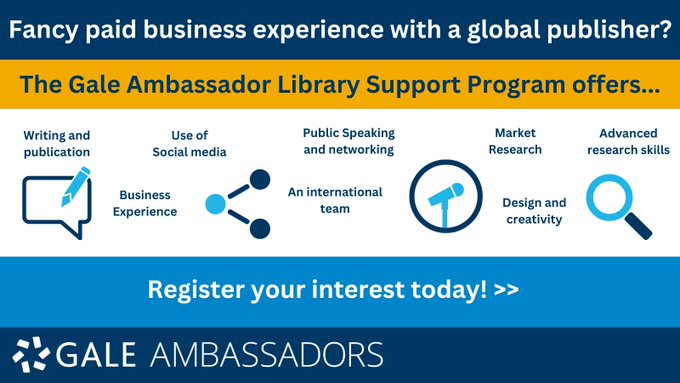
Interested in paid business experience with a global publisher? The Gale Ambassador Library Support Program may be just what you're looking for!
The deadline for applications has been extended, so you now have until 13 August 2023 to apply.

Through the Library you have access to a wide range of digital archives and digital primary source databases to help you with your learning and research. ...continue reading "Student job opportunity!"

The summer vacation period officially started this week! And while many of you are probably thinking the last thing you want to do is use the Library over the summer break, there will be a large number of students who will need to (or just want to) use the Library during the summer vacation period to continue with their studies or research.

So if you are one of the many who is planning on using Library facilities or services over the summer then read on. And for those of you who are not planning on doing this, we'd recommend you read on anyway (particularly if you have not returned books you have borrowed from the Library).

1) The Main Library and all our site libraries remain open throughout the summer vacation period.

Opening hours and staffed hours will be reduced in many libraries so check the opening hours website before you visit and follow the Library on social media for any updates - Instagram, Twitter, Facebook. ...continue reading "5 things to remember if using the Library this summer"

Metal sign outside the Main Library, taken from a low angle at the bottom of the stairs. The word Library is spelled out in silver coloured letters mounted on a large stone wall.
UNIVERSITY OF EDINBURGH CENTRAL CAMPUS, LIBRARY.

Everybody’s talking about AI and Chat GPT – what will they mean? I attended an event on 20.4.2023 organised by the Information School Sheffield University which explored this question for libraries.

Dr Andrew Cox introduced the session, reminding us that chatbots & AI have featured heavily in the news recently, and of course have existed in scifi for some time.

What might AI look like in the library?

From what we’ve learnt about AI it will have a wide and deep impact on library service and backend operations and library information literacy. We’ll see new features like library chatbots, text and datamining support and automation of systematic reviews. Knowledge discovery of collections will change, with a new paradigm of search : instead of giving a list of results, ChatGPT will give an answer. Users expectations of what a search looks like will change dramatically. There may be an impact on library jobs (although the decline of the librarian has been forecast for many years since the arrival of the internet, and librarians have evolved and thrived). Changes to the workforce will probably be complex and driven by sector.

Fundamentally we should remember that AI is only as good as the data it relies upon. Our library expertise in finding and managing data in a complex information landscape, and in determining the provenance and quality of data remains key. Also, libraries’ work in supporting sharing, openness and interoperability of data is vital as this data becomes available for AI to use.

...continue reading "Artificial Intelligence : where does it fit into library strategy?"

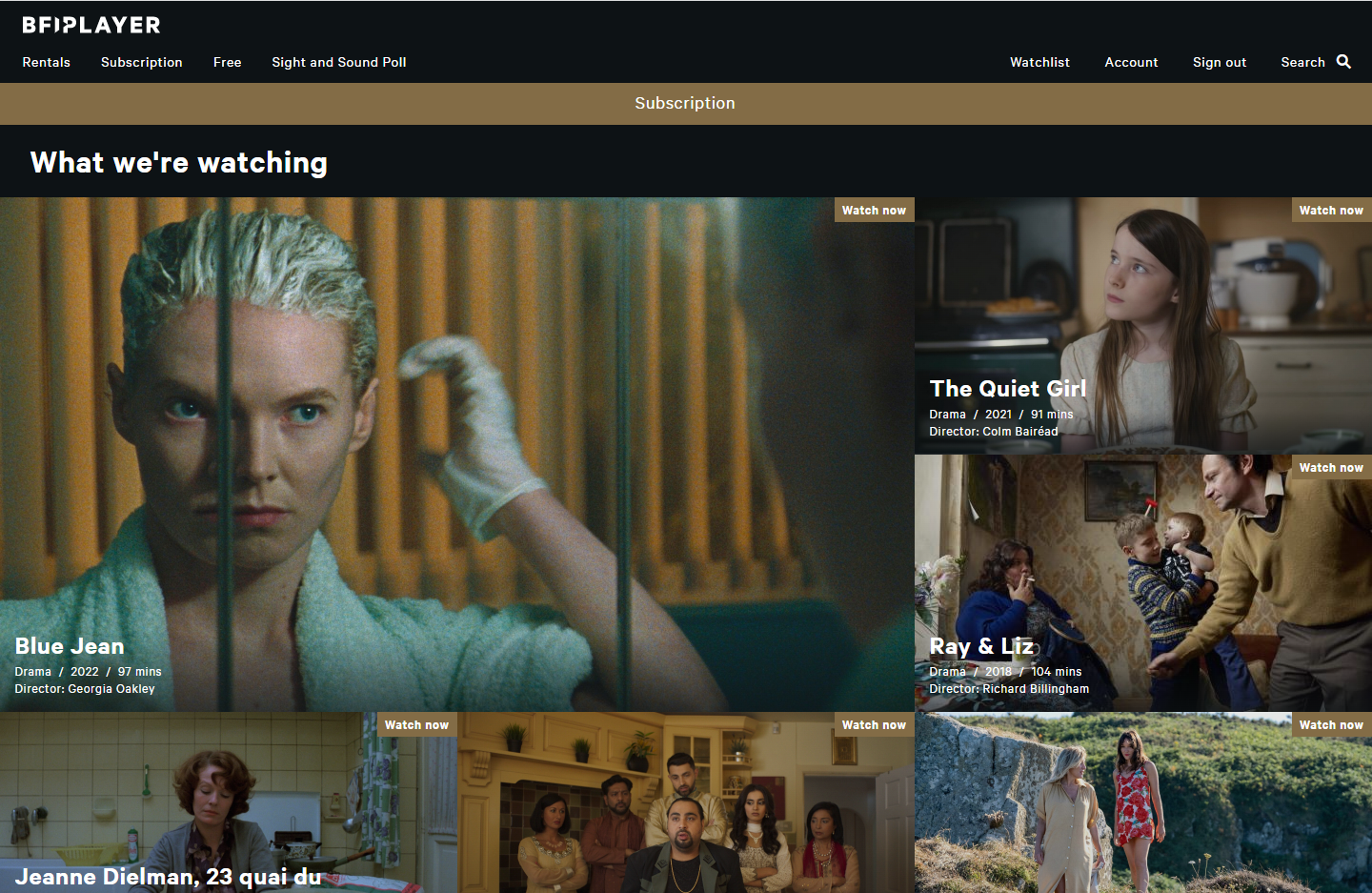
*The Library now has full 1 year access (until 30 Sept 2024) to BFI Player via a deal with JISC. You can access it from our Databases A-Z list, Film Studies databases list, Video Resources A-Z and DiscoverEd. Note if you already had a BFI Player account linked to our pilot subscription before 1 Oct 2023, you will need to relink your account following instructions given at the above access points.*

We are happy to let you know that the Library has a pilot subscription to the fabulous BFI Player, a video on demand service from the British Film Institute (BFI). Access is available to us until the end of August 2023.

BFI Player streams acclaimed, landmark and archived films. Reflecting the BFI’s wider cultural mission the focus is on British and European independent films but it does also include international releases. And it allows you to access classic and cult films from across the decades. ...continue reading "New to the Library: BFI Player"

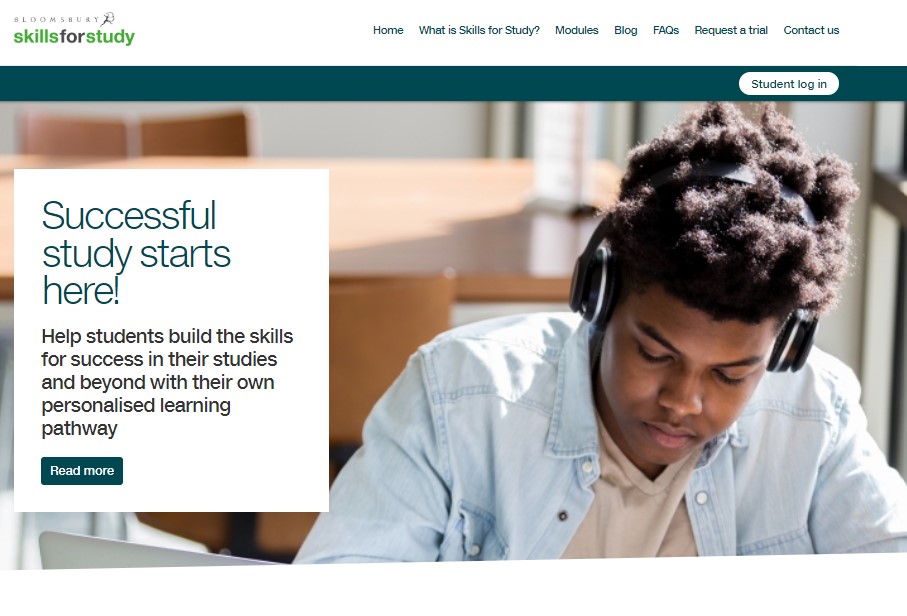
As we're midway through the second semester, many eyes are turning to assignments and thinking ahead to final exams. Did you know that we've recently secured a trial of the interactive resource Skills for Study?

Screengrab from the homepage of the Skills for Study website. An image of a student studying with headphones on is overlaid with some text which reads 'Successful study starts here! Help students build the skills for success in their studies and beyond with their own personalised learning pathway.'

Based on the bestselling The Study Skills Handbook by Stella Cottrell, Skills for Study offers an interactive and personalised solution to help students hone their academic skills while developing skills required by employers:

  • Confidence with Numbers
  • Getting Ready for Academic Study
  • Referencing and Understanding Plagiarism
  • Critical Thinking Skills
  • Group Work and Presentations
  • Research Principles
  • Employability and Personal Development
  • Projects, Dissertations and Reports
  • Time Management
  • Exam Skills
  • Reading and Note-making
  • Writing Skills

Each of the modules comes complete with exercises, activities, and module assessments along with supplementary videos, articles and blogs. We know how popular the Study Skills Handbook is for students from a range of disciplines, so here's how to access this interactive resource:

That's it, it's that easy! More information about the trial is available on the E-Resources trials page. Our trial ends on the 24th April so have a good look before then, and if you want to offer any comments on this or any of our other E-Resource trials then please consider filling in the trial feedback form.

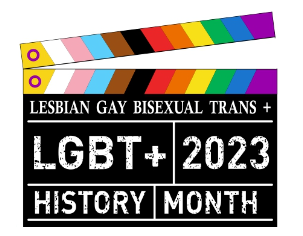
February is LGBT+ History Month and this year's theme is #BehindThe Lens. This aims to celebrate "LGBT+ peoples’ contribution to cinema and film from behind the lens. Directors, cinematographers, screen writers, producers, animators, costume designers, special effects, make up artists, lighting directors, musicians, choreographers and beyond." (LGBT+ History Month, 2023)

To help you learn more we've pulled together just a small selection of Library resources that will allow you to start to look 'Behind the Lens'.

Books and more books (we are a Library after all)
Films, TV, documentaries, etc.
Doing your own research

Books and more books (we are a Library after all)

Front cover of 'The Oxford Handbook of Queery Cinema'.Why not start with The Oxford handbook of queer cinema as an introduction. This hefty tome covers a wide variety of topics including silent and classical Hollywood films, European and American independent and art films, post-Stonewall and New Queer Cinema, global queer cinema and new queer voices and forms.

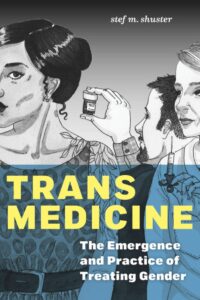
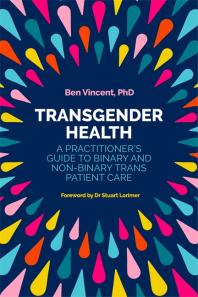
New queer cinema: A critical reader considers the filmmakers, the geography, and the audience of New Queer Cinema. While Queer cinema in Europe brings together case studies of key films and filmakers in this area. Sapphism on screen: Lesbian desire in French and Francophone cinema focuses even more specifically on films made by male and female directors working in France and other French-speaking parts of the world. In a queer time and place: Transgender bodies, subcultural lives is the first full-length study of transgender representations in film but also art, fiction, video and music. Whereas LGBTQ film festivals: Curating queerness pays homage to the labour of queer organisers, critics and scholars. ...continue reading "Behind the Lens: LGBT+ History Month"

Digits for 2023 are written in black and stand against a purple city skyline. There is a ladder leaned against the 0, and a person who has climbed up and is using a telescope to look into the distance.
Image by RosZie on Pixabay

Whether you're the type of person who makes New Years resolutions or not, we hope you'll consider resolving to get comfortable with referencing this year. We have lots of resources available to help you with citations in your assignments, and we know it's something many students struggle with and so can often leave to the end of their work. Some top tips for getting ahead of the referencing panic:

  1. Record the information you read as you go. You can do this using a reference manager, bookmarking tools in your browser or DiscoverEd, or good old pen and paper. Whatever method you're comfortable with, starting off with good organisation will help you down the line.
  2. Leave more time than you think you'll need. Do you usually give yourself a day or two before the assignment deadline to sort references? Double it! Triple it! Build in contingency time for writing up and correcting references - and for asking for help if you need it - and if you end up not needing all that time then submit early and then reward yourself with a treat for being ahead of the game!
  3. Be consistent. There are lots of referencing styles out there (you may already be familiar with Harvard, APA, Chicago, OSCOLA), but whichever one you use for your work, be consistent in how you reference. Make sure you have all the component parts of each type of reference and then style them in the same way each time - this helps you spot when information is missing as well as looking good.
  4. Use the tools available to you. This includes reference managers like Endnote, Zotero and Mendeley (or any others!), or even 'quick' citation engines like ZoteroBib or Cite This For Me. We highly recommend you use Cite Them Right Online which is a database we subscribe to for all staff and students to use - it will show you how to construct references for every type of material in a huge range of styles. Not sure how to reference a personal email, a blog post or a youtube clip? Use Cite Them Right to check! NOTE: Please make sure you check any reference that is created by a citation tool, as they are not guaranteed to be accurate.
  5. Get help in plenty of time! Still feeling lost at sea? We've got training sessions on the MyEd booking system and also recordings on Media Hopper (click on '174 media' below the title card for the full list of videos) designed specifically to help you. There's also part of the LibSmart online information literacy course dedicated to the basics of referencing, and we have a whole subject guide on the topic. If all else fails, contact your Academic Support Librarian and ask for a one-to-one appointment where we can sit down with you and work through the problems you're facing.

Do you have any top tips for referencing? We'd love to hear them, you can leave them in the comments or tweet us @EdUniLibraries

css.php

Report this page

To report inappropriate content on this page, please use the form below. Upon receiving your report, we will be in touch as per the Take Down Policy of the service.

Please note that personal data collected through this form is used and stored for the purposes of processing this report and communication with you.

If you are unable to report a concern about content via this form please contact the Service Owner.

Please enter an email address you wish to be contacted on. Please describe the unacceptable content in sufficient detail to allow us to locate it, and why you consider it to be unacceptable.
By submitting this report, you accept that it is accurate and that fraudulent or nuisance complaints may result in action by the University.

  Cancel