
Any views expressed within media held on this service are those of the contributors, should not be taken as approved or endorsed by the University, and do not necessarily reflect the views of the University in respect of any particular issue.
Skip to content

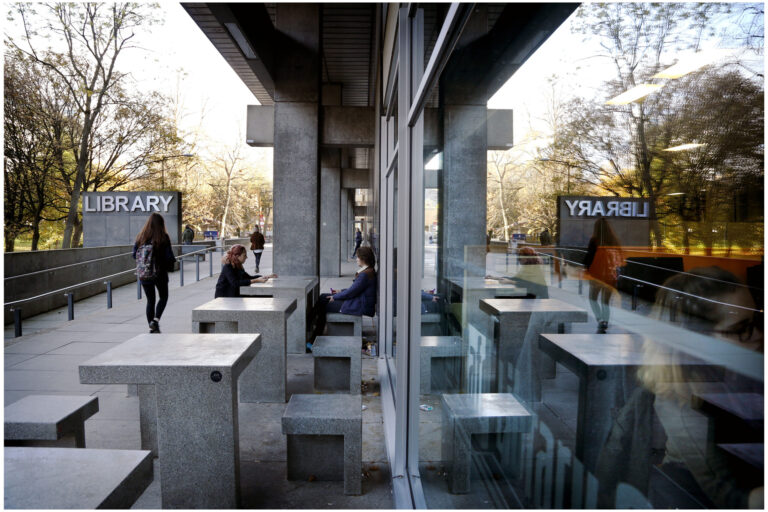
Study spaces in the Veterinary Library.
Study spaces in the Veterinary Library by Zofia Matuszczyk

Yes, exams are important. We know. But we also want you to remember that at the end of the day, it is your wellbeing that is the most important. 

We all know how stressful exams can be and how they can negatively affect our wellbeing. As the Library, we try not only to support you in learning but also to support your wellbeing, especially at these times. Thus, we've put together some resources from the Library that you might find helpful when trying to escape your exams for a moment, get some well-deserved rest and gain the energy and strength to continue with your revisions and exams. 

Listen to music 

Did you know the Library offers you access to databases that allow you to listen to millions of songs from pop and rock to classical music? You can check them out here. 

Visit our museum and art collections 

While it's not always possible to physically visit a museum or gallery, you can still do a lot of exploring of the University collections online. If you, however, have some time to physically go somewhere, we also recommend the National Museum of Scotland or the Scottish National Gallery. Both are free and within the walking distance of George Square! Remember that to visit Scottish National Gallery, you must book a ticket beforehand. 

Enjoy a film or drama performance 

You can access a wide range of TV programmes, documentaries, films, drama, and theatre performances through the Library. Check out what Box of Broadcasts (BoB) has to offer! 

Read some fiction 

Reading may be the perfect escape from your exams. Our databases give you access to millions of positions! 

Meditate 

Meditation is one of the best ways to relax. Have you tried mindfulness or spiritual meditation? Maybe now is the time to do so! 

And if you feel stressed because you cannot get a seat in the main library, make sure to check out the additional study spaces available. 

Zofia Matuszczyk
Communications Officer Intern
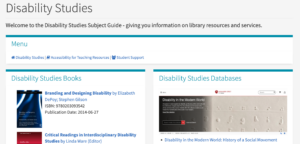
The Subject Guides are a useful tool in getting started with your research. Whether you’re an Engineer or a Classicist, they contain a wealth of information for navigating library resources, including journals, databases, and bibliographies, available to students here at the University of Edinburgh. Part of my role as Digital Engagement Intern involves reviewing and creating guides within the remit of Equity, Diversity, and Inclusion, and I’m delighted to share our newest Subject Guide in Disability Studies.

Preview of the Disability Studies Subject Guide

This guide has been created to both assist students in the academic study of Disability and highlight ways the University can support you with any additional learning needs you might have. We’ve included access information for students using the Main Library, advice on how to make your device more accessible, and details of several groups and societies for students to get involved with. As well as supporting students, we’ve also included various materials to assist staff in creating more accessible learning environments, signposting additional training and resources available at the University. 

We hope that this guide will serve as a helpful tool for students and staff to access the support that’s available by bringing these resources together in one guide that will continue to grow over time. If you have any feedback or suggestions on ways this guide can be improved, then we would love to hear from you! 

You can access the Disability Studies Subject Guide to clicking on the link or navigating to the webpage at the following URL: https://edinburgh-uk.libguides.com/disabilitystudies. 

Tristan Craig
Digital Engagement Intern (Equity, Diversity and Inclusion)

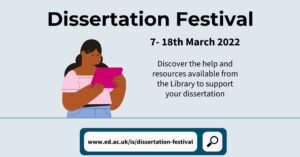
Dissertation. A word that scares and confuses many students, including me. It seems like a difficult and mysterious concept that most of us must deal with at some point on our academic journey. I have been wondering for a long time if there is any way I can make the whole experience of writing it at least a bit easier and less scary. I must admit that this year’s dissertation festival has provided me with a lot of tools and information to do just that.

During the dissertation festival, I attended three sessions: Introduction to reference managers, Improve your research skills with SAGE Research Methods, and DataLiteracy for Beginners. They were all very informative, both for students currently writing their dissertation, but also for students like me, who are only beginning to think about their dissertation now.

The first event was an overview of four reference managers. I really enjoyed the fact that the presentation did not only cover one reference manager but as many as four. This gave me a chance to get a feel of all of them and choose my favourite one (which, I must admit, has got to be EndNote). The second event covered SAGE Research Methods database, which I was not aware of before, yet I found it to be a very useful resource. The last event I attended emphasized the importance of critical thinking while dealing with various kinds of information, especially the statistics part of it.

I enjoyed all the events a lot! The only thing I would change about these, would it be their form. I prefer to attend in-person events, especially after covid ‘trauma’ that we have all experienced – it would be nice to see all the presenters and attendees offline. But well, one cannot have everything, maybe next time!

Overall, I recommend every student to attend the next edition of the dissertation festival, whether they are in their fourth, third or second year. All events provided me with great tools that I will not only use while writing my dissertation but also other coursework.

Zofia Matuszczyk
Communications Officer Intern
1

Where to start?

Following on from my general tips for finding resources and navigating the online library, this blog post will cover why you should check out Subject Guides, and highlights some resources, old and new, that you may not already know about for studies. 

When you are looking for resources, remember not everything in the Library collection is on DiscoverEd, so it’s best to check out your Subject Guide.  

Subject Guides bring together all the most relevant library resources for a subject or topic. These guides, put together by Academic Support Librarians (ASLs), are always a good place to start when you’re looking for resources.   ...continue reading "Finding Resources: Subject Guides"

1

The Online Library is a vast resource. Whatever you study, you will find what you need in the Library collections. For all that it is wide and wonderful, however, I know (from personal experience) navigating the Online Library can be overwhelming. Read on for tips on where to look for resources and how to get the best out of the Online Library... 

Subject Guides 

Subject Guides are a great place to start your search for resources. If you haven’t already, head over to the Subject Guides list and find all the most relevant library resources for your subject and more... 

Check out our blog dedicated to Subject Guides for more information, coming soon...
...continue reading "Finding Resources: Navigating the Online Library"

In my last post I shared six things I wish I’d known sooner about the Library. But there’s more to university life than studying! Even though in the depths of essay season you might feel like you should be paying rent to the Library staff rather than your landlord, when you’re working hard it’s important to remember to rest and play too! So here are five tips for taking care of yourself and enjoying your time at Edinburgh... 


1. Get out and about 

An evening swim at Portobello...

Edinburgh is one of the most stunning cities in the UK (I’m not at all biased). It is also one of the greenest cities – with more green space than any of the UK's other big cities. We literally have a 650-acre Highland-esque landscape ten minutes’ walk from central campus... visit Holyrood Park if you haven’t already! 

If you’re lucky enough to be living in the city during your studies, make the most of it. Grab a few pals and plan a hike up Blackford Hill after a big essay deadline – or a meander through the Meadows after a library session. Maybe even take a cold plunge at Portobello Beach before your morning tutorial. I found getting away from screens and into nature one of the best ways to rest and escape throughout my studies.   ...continue reading "Things I wish I’d Known: Work, Rest, Play"

Photo: Paul Dodds

As a recent graduate from Edinburgh, you can imagine I’ve spent the summer reminiscing and reflecting on my time at university. Over my four years studying Geography I spent a lot of time in the Main Library, whiled away hours on DiscoverEd, and thought I had the whole library thing down. Reader, I barely scratched the surface.

For the past few months I’ve been lucky enough to intern with the Academic Support Librarian team at the university. I have found myself learning things about the Library I wish I’d known sooner – and remembering things that I discovered during my studies that made it all a bit easier.  

This blog will cover some ideas for how to get the best out of the Library, where you can go to broaden your reading and research, and things that will make studying easier (*cough* reference manager *cough*). 

So, to save you some time, here are six things I wish I’d known sooner about the Library... ...continue reading "Things I Wish I’d Known: Graduate Reflections on using the Library"

1

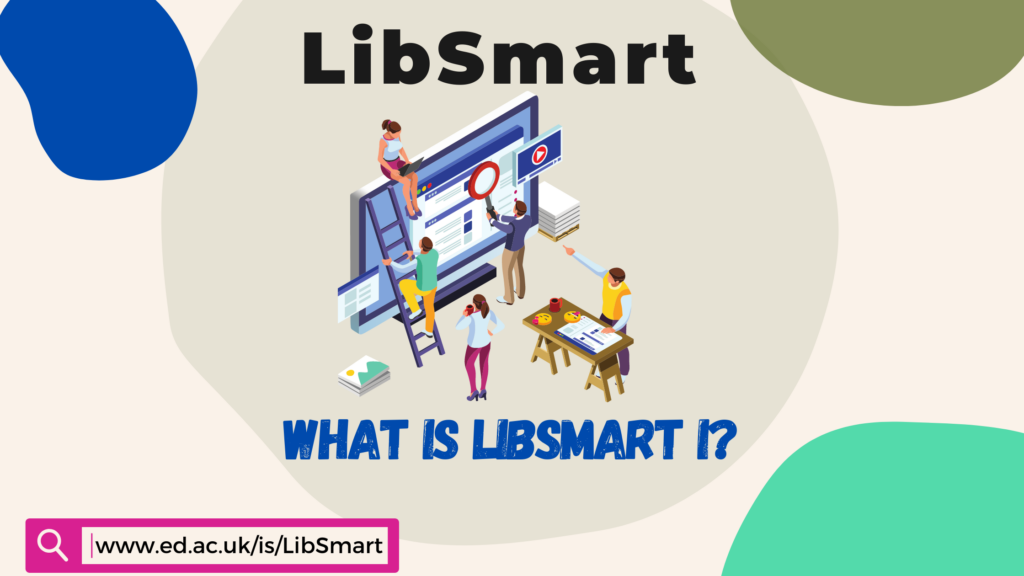
LibSmart I is designed to give you an introduction to library resources for your study and research! The course enables you to take control of your learning as you self-enrol (click here to find out how) and choose the modules you cover. I personally love the flexibility of the course as you can recall the information provided by LibSmart easily on Learn.

Image of Students studying in the library.
Students studying in the library [Paul Dodds copyright of the University of Edinburgh]

So what does LibSmart I review? 

In short, by completing LibSmart I you will develop your information literacy skills and understand what library support is available to you. For a more detailed overview keep reading or better yet check out the course for yourself!

A brief overview of LibSmart I and its learning objectives 

Within the LibSmart I course there are five modules that cover key areas:

  • Introduction to using the library
  • Your information landscape
  • Finding and retrieving information
  • Managing information
  • Referencing and avoiding plagiarism

LibSmart I banner

With each topic, you will gain the confidence and knowledge to effectively research and use resources provided by the Library. My favourite module would be “Finding and retrieval”, I found the tips on research strategy construction and explanation to Boolean operators have been extremely useful when exploring a topic area. 

The course has clear goals that you can use to guide your learning and ensure you are finding the support you need. There are also activities and reflective quizzes to help you consolidate your learning to discover the subject matter you need. When you've completed the course you'll also be awarded a Digital Badge, which you can use to show off your newfound expertise. 

Ready to get started?

Visit the LibSmart webpage to find out more about how to self-enrol for this course. If you've completed LibSmart I, you also read more about how to build on these skills with the next level of research support in LibSmart II!

If you have any questions or concerns about LibSmart you can contact us via the EdHelp portal.

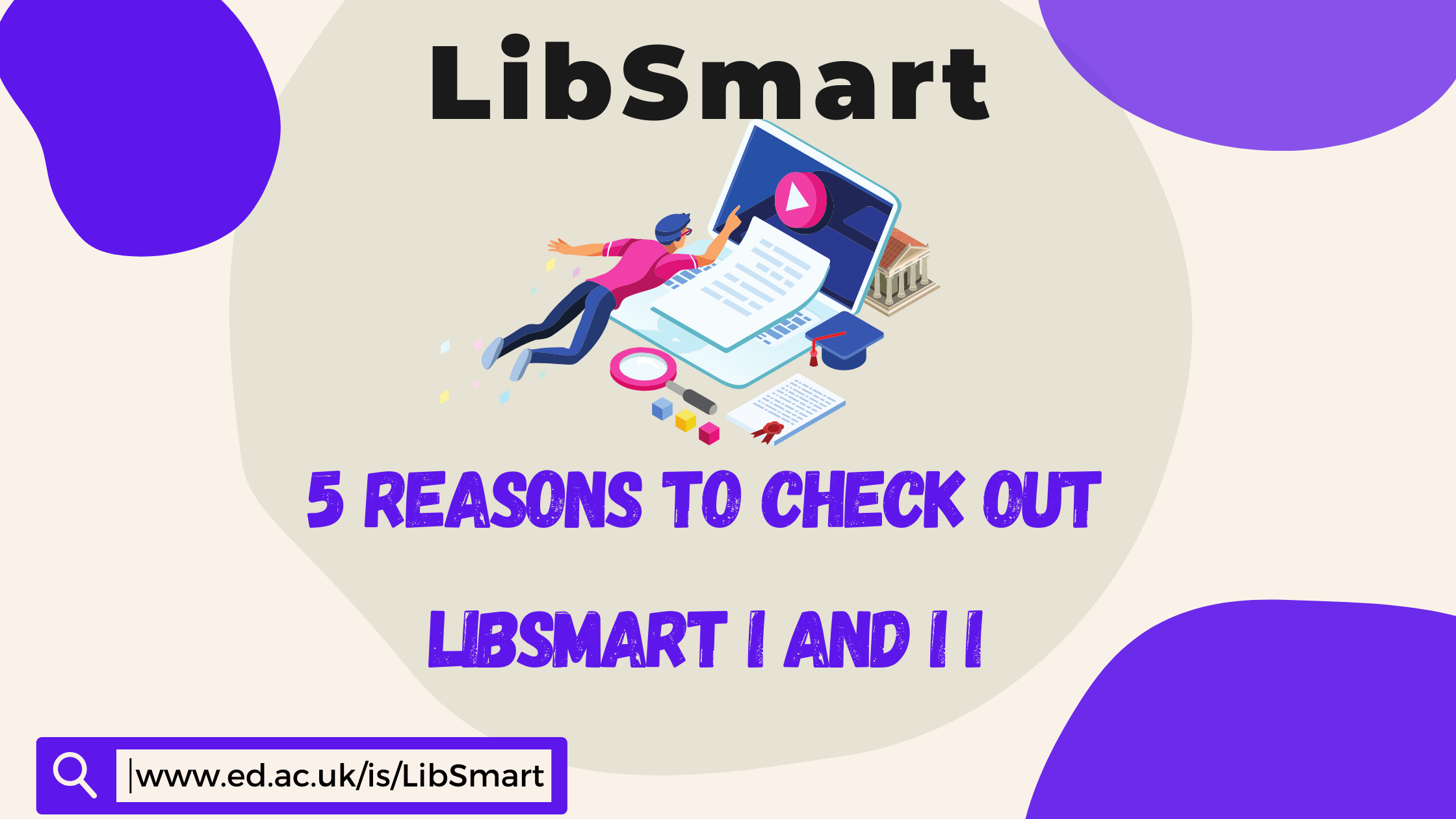
(text) 5 Reasons to Check out LibSmart I and II

Introduction

If you haven’t heard about LibSmart I and II yet - then what have you been doing?! 

To quickly summarise, LibSmart I and II are fully flexible, self-enrol Learn courses designed to help you get started and advance your library resource knowledge. If the description has got you intrigued and you want to know more, do not worry! In this blog, I will give you five reasons why LibSmart I and II can be beneficial to your studies, general university knowledge and digital skills development.

1. Builds awareness on library offerings

Edinburgh University’s Library and University Collections (L&UC) has a range of awesome resources - I am sure you will be aware of  DiscoverEd, Special Collections and physical library locations like the Main Library. Well, the department has two new assets by the names of LibSmart I and II. They will help you discover other library-related services that will help you build your information literacy skills.

Image outside the Main Library entrance on George Sqauare
The Main Library entrance on George Square. [Taken by Paul Dodds, copyright of the University of Edinburgh]

2. Increases your knowledge: LibSmart helps you be more productive

The information contained in LibSmart will not only boost your awareness of library resources but also guide you, so you can use these resources effectively! Throughout the modules, there are activities and quizzes to help you consolidate your knowledge and test yourself.


3. Supports subject specialism 

With LibSmart I you build a foundation of knowledge so you can confidently use library resources when researching for a report or topic. LibSmart II enables you to “advance your library research”, supporting you as you complete your thesis or dissertation. The modules in LibSmart II are subject-specific so you can tailor your learning to your project needs. See the image below of the 10 different modules tackled in LibSmart II. 


4. Fully-flexible 

As mentioned earlier, LibSmart has been created so that you can work independently and interact with the modules as and when you wish. By working at your own pace, you can make the most out of the courses, ensuring you understand the content available. You can still interact with others who are completing the course and Academic Support Librarians (ASLs) using the discussion board whenever you want, so you gain thoughtful insights into the material you are learning. 


5. Earn Digital Badges 

The final reason you should enrol onto LibSmart is because you have the opportunity to be rewarded for the work you complete with Digital Badges! After finishing a module and subsequent quiz you will be notified that you have earned a LibSmart eBadge that you can share on various digital platforms such as LinkedIn, Facebook, Twitter, or a website. 

Image of all LibSmart Badges with text "Choose the modules relevant to you and earn digital badges to recognise your achievement!"
LibSmart badges

Introduction

Despite being in my fourth and final year, I am still constantly discovering resources offered to students by the University! Most recently, I attended a Library Bitesize course for "Online Resources for Literary Studies".

In the past, I have completed Bitesize courses. However, they were in person and not subject-specific. For those interested, it was on referencing and avoiding plagiarism (and I would highly recommend it)! Therefore, this was a bit of a new experience for me and I did ask myself when signing up how learning about literary resources would benefit me. However, by the end of the session, I was extremely glad I went! Reading this blog you will understand why and hopefully be encouraged to attend a session for yourself.

The Session

The session was hosted on blackboard collaborate by Academic Support Librarian (ASL) Shenxiao Tong.  It was easy to follow and informative – and fortunately, there were no technology issues during the event!


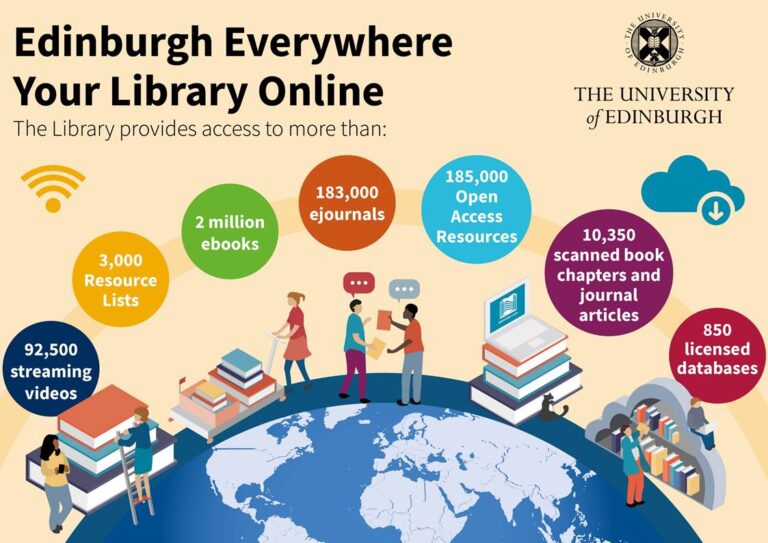
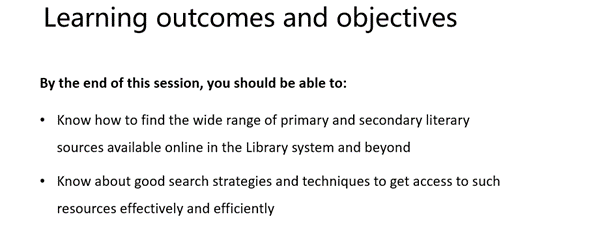
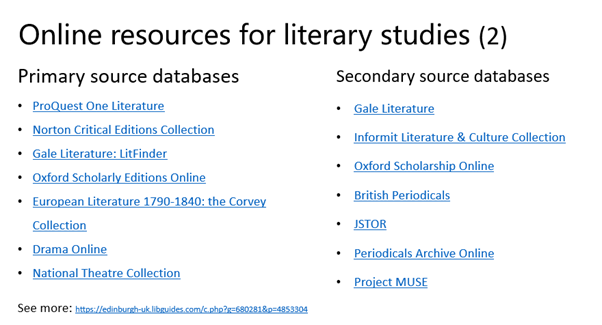
The session began with a helpful introduction to the online library resources made available to university staff and students. It is easy to forget that the Library has such a vast collection of e-books, databases, streaming videos and e-journals. The definitions of primary and secondary resources were also provided! This allowed the rest of the presentation to flow as I was shown which databases to use for primary and secondary resources, with demonstrations given on key resources. Other online resources were also covered including internet resources like google scholar, bibliographies and book reviews. Throughout the session, the usefulness and drawbacks of the different materials were highlighted meaning you would be able to draw your own conclusions to what resource would be most effective for you. This tied in well with the conclusion of the presentation which covered next steps such as how to construct your own research strategy!


Conclusion

You can never go wrong learning new digital skills and resources that can help you with your work! Even if you don't explicitly need to know about these literary resources for your studies - they may be useful for your extracurricular activities! Plays, poems and novels can all be found using the resources covered in the Bitesize session I attended. If you still aren't convinced, why not look at what other topics Library Bitesize sessions cover, and I am sure you will find a subject that information needs!

css.php

Report this page

To report inappropriate content on this page, please use the form below. Upon receiving your report, we will be in touch as per the Take Down Policy of the service.

Please note that personal data collected through this form is used and stored for the purposes of processing this report and communication with you.

If you are unable to report a concern about content via this form please contact the Service Owner.

Please enter an email address you wish to be contacted on. Please describe the unacceptable content in sufficient detail to allow us to locate it, and why you consider it to be unacceptable.
By submitting this report, you accept that it is accurate and that fraudulent or nuisance complaints may result in action by the University.

  Cancel