🎯 Group Curatorial Brainstorming Session
Exhibition Duration: One Week
Curatorial Focus: Vitality / Lightness / Nature / Renewal / Slowness / Symbiosis
Treating breath and air as shared resources and relationships, air flows through the space, connecting states between humans and nature, environment and emotion.
The exhibition aims to pose the question: Who feels more comfortable in a space, and who must constantly adapt to it? By focusing on bodily differences, accessibility, emotional regulation, and environment, the exhibition space is transformed into a perceptible, adjustable respiratory system, inviting visitors to interact with the works in a more relaxed and immersive way.
Artistic Forms: Breathing rhythm visualization installations / Video / Visual perception installations / Painting, etc.
Features: Low-density display / Tactile experiences / Close-range interaction / Accessibility facilities / Inclusive design for diverse groups (e.g., multi-level displays, wheelchair-accessible pathways, accessible restrooms)
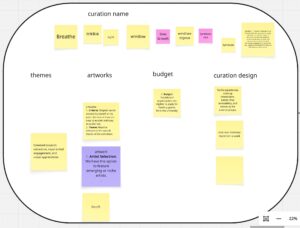
Slow Growth adopt slowness as a curatorial strategy, focusing on its temporality, care labor, and micro-ecosystems. This approach manifests through adjustments to artworks or installations, documentation walls (recording exhibition changes and audience feedback), and materials that change over time (such as installations exhibiting changes in light, shadow, humidity, etc.).
The exhibition space is organized linearly, connecting distinct works and spatial points. This linearity also symbolizes relationships between different forms of life—such as human movement, plant growth, tidal fluctuations, and more. Visitors can progressively explore the exhibition along this path.
In selecting works, due to budget constraints, we may prioritize pieces created by group members, classmates, or emerging artists. This approach ensures we can secure permissions for the works within a reasonable budget, making exhibition setup and communication more convenient. As the exhibition emphasizes interactivity and sensory experiences, we aim to incorporate works that engage tactile, auditory, visual, or spatial participation.Organized by a student team, this exhibition may seek funding support from the university. Resources will primarily cover basic decorative materials, lighting and sound equipment, projection systems, exhibition design materials, and related expenses.
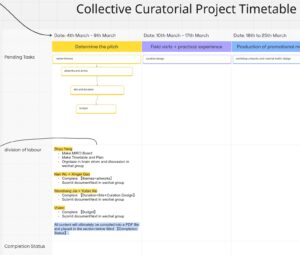
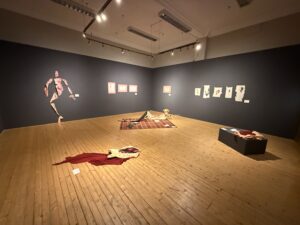
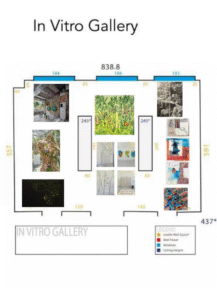
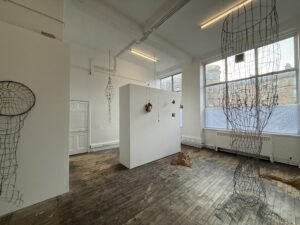
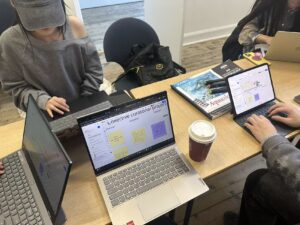
Group Work Records and Exhibition Space Design:
🎨 Appreciation of Nature-Related Artworks
Artist: Kristel Bodensiek (University of Edinburgh student)
Title: Tide and Temper
Material: Glass and Steel
Size: 130 × 230 × 70 cm
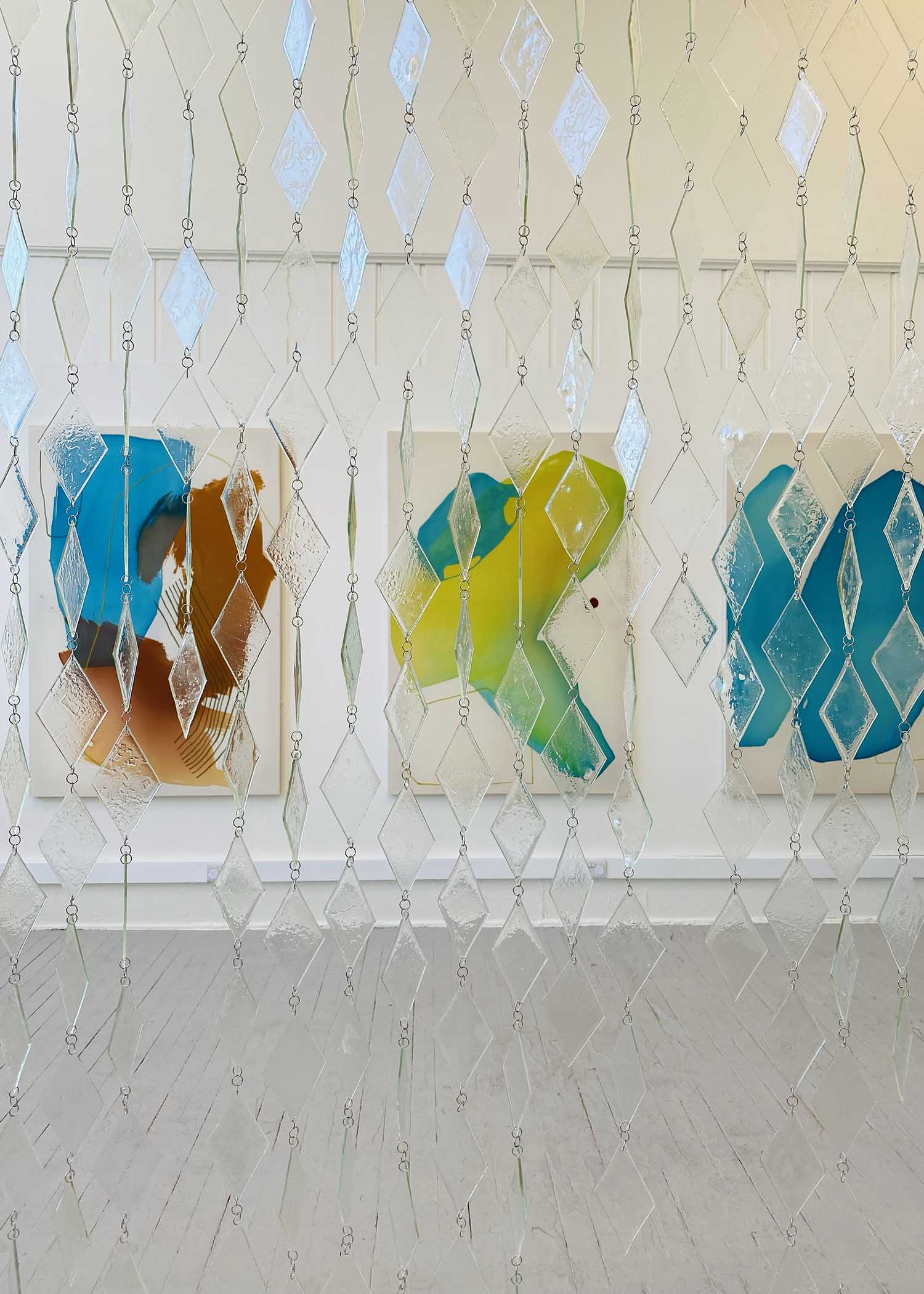
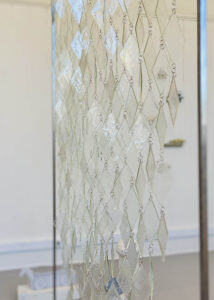
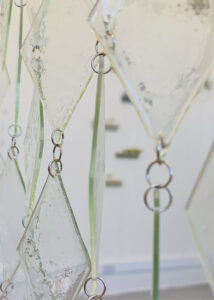
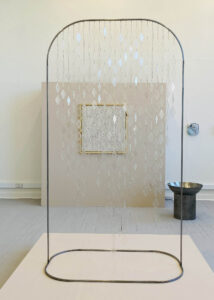
Composed of over 300 glass fragments, the work is hand-assembled into a suspended structure using steel rings. The glass was fired at temperatures exceeding 1000°C, creating softened edges and a crystalline surface texture. Tide and Temper explores the subtle relationship between humanity and nature: nature is not merely an external landscape but an experience that can be reimagined through materials, light, and space.
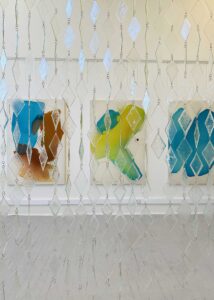
Inspired by the calming effect of rain and waterfalls on the human mind, the artist selected glass as a material symbolizing nature’s transformative processes. Repeating glass elements form a rain-curtain-like structure. As viewers move through the installation, light reflects and refracts off the glass surfaces, creating ever-shifting visual effects.
Rather than directly recreating natural landscapes, the work simulates nature’s rhythms and states through material and spatial experience. Viewers’ movements, shifting light, and the subtle sounds between glass panels collectively form a continuously evolving sensory environment. This allows visitors to rediscover the rhythms and tranquility of natural phenomena within the exhibition space.
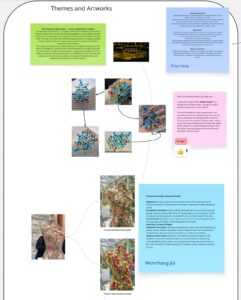
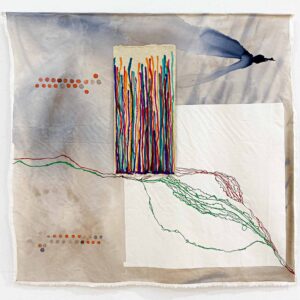
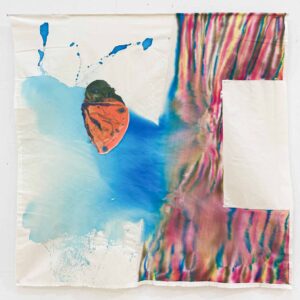
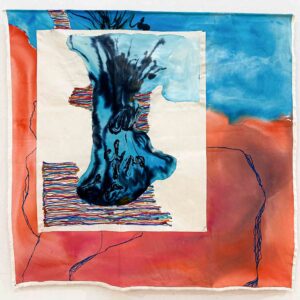
Annabelle Pelaez (University of Edinburgh student) focuses her work on landscapes and natural details. She pays special attention to often-overlooked tiny elements in nature, such as ripples on water surfaces, insect traces on leaves, and the fleeting moment when raindrops pause on plants. Through painting and mixed media, she seeks to transform these microscopic natural phenomena into visual imagery, thereby reawakening viewers’ awareness of the natural environment.
Through microscopic observation, the artist gains a new perspective on natural landscapes while revealing the impact of human activity on the environment. Her series—including Sandy Wastes, Pools, Melting, and Circle Crops—typically use ink, acrylic, and mixed media on fabric or paper. Fluid lines and abstract structures depict natural forms like water currents, sedimentary layers, and surface textures. By emphasizing nature’s microscopic life force, she invites viewers to reconnect with the natural world, using abstract imagery to draw attention to overlooked details.



Leave a Reply