During the preparatory work and class discussions in the second week, I read the article Mapping the Contexts of Contemporary Curating: The Visual Arts Exhibitionary Complex[1] and clarify the standard categories of art exhibitions (site-specific works, topics originating outside art, and events/participatory activities), exhibitionary formats (discursive, educational, paracuratorial, open-plan, participatory), curatorial style (infrastructural activism, collective, activist, creative commons, curating as medium). Moreover, I emphasised performative and participatory events that public desire for. This was previously overlooked by me, and is also relatively absent within the art world[2]. Consequently, during post-class exhibition visits, I focused particularly on these issues of public interactivity and public demand.
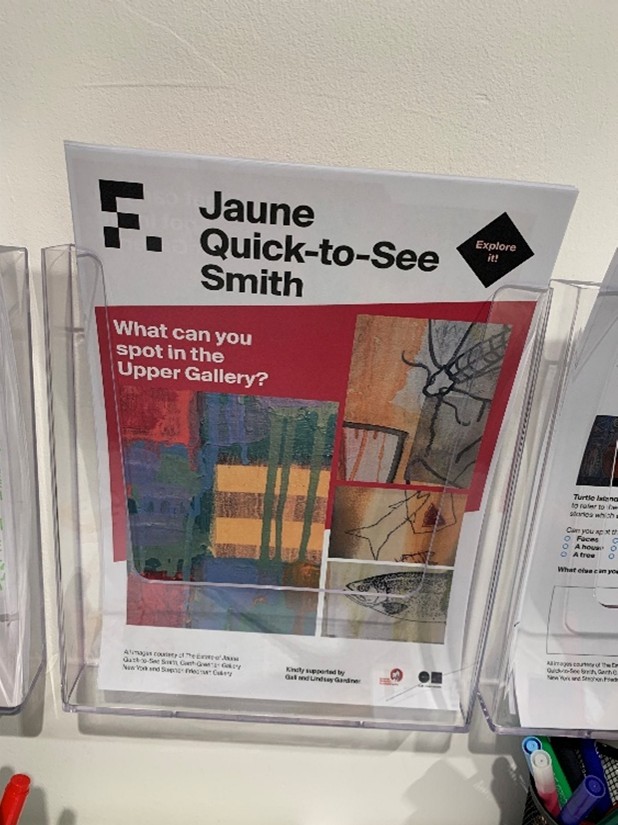
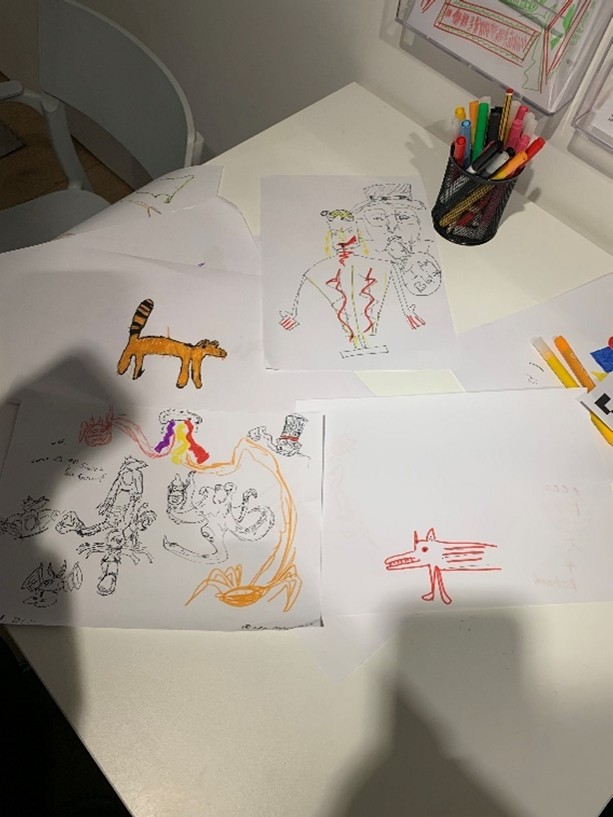
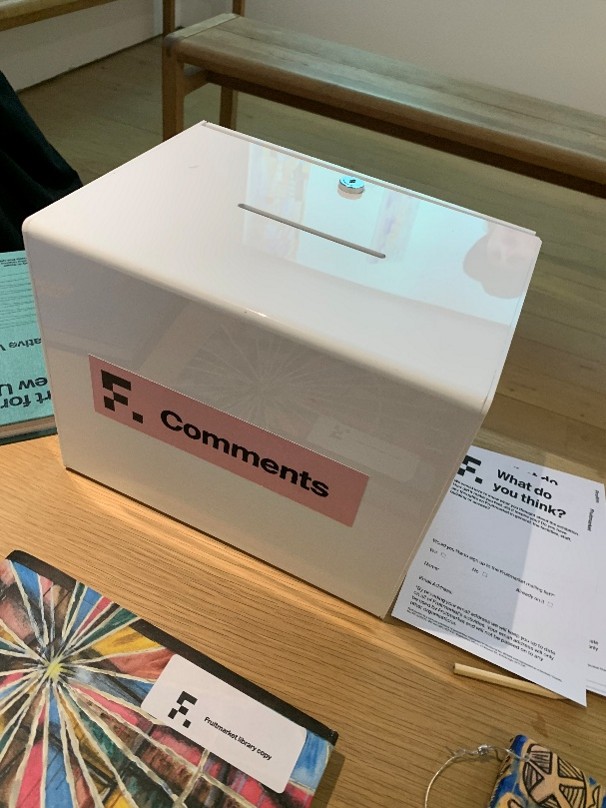
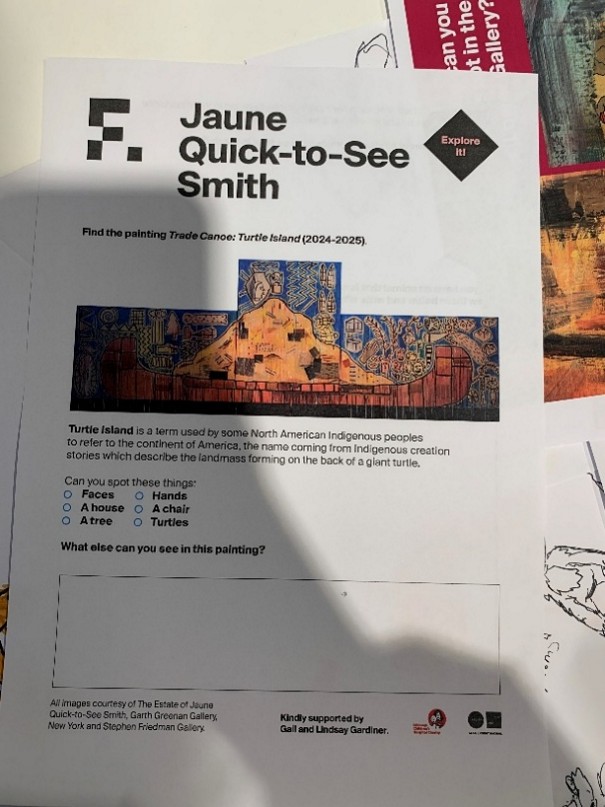
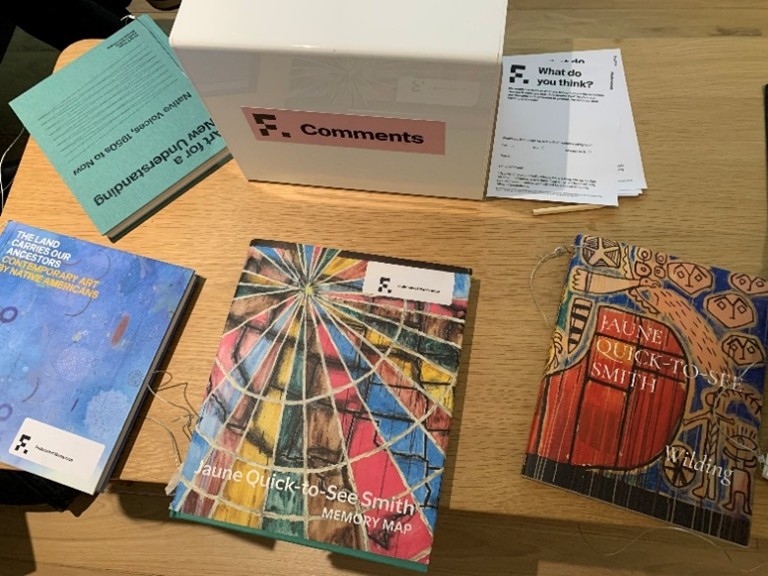
In the second week, I visited the Jaune Quick-to-See Smith Wilding exhibition at Fruitmarket Gallery[3]. After viewing this exhibition, I learnt numerous techniques to enrich my own exhibitions and enhance audience interaction. For instance, setting up a drawing area for children and posing questions such as: ‘Did you spot these images in the exhibition and artworks? Then providing a partial image for them to recall and sketch. Alternatively, not giving a standard image at all, allowing them to use their imagination before seeking out these details personally. This approach not only sparks children’s interest in the exhibition but also offers valuable feedback on how they perceive art through their innocent perspective, thereby informing improvements to the exhibition. I also learnt to set up comment boxes and questionnaires to gather more precise feedback on the exhibition and the artworks.
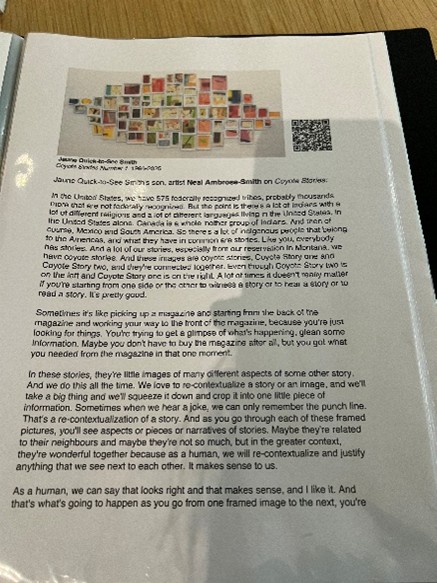
However, some shortcomings of this exhibition also provoked thought. For instance, the tables in the video screening area were placed with numerous lengthy articles, books, and artwork descriptions – material that visitors could hardly be expected to read attentively. Viewing the videos and reading carefully are incompatible activities. Visitors would typically choose to abandon reading such extensive texts, thus rendering the curatorial efforts wasted.
[1]  Terry Smith, Mapping the Contexts of Contemporary Curating: The Visual Arts Exhibitionary Complex, Journal of Curatorial Studies, Vol. 6, Number 2, 2017, 177.

……curators seek to adapt not only to the wishes of artists but also to the demands of the entertainment industries, the public desire for performative and participatory events, and the image hunger of Internetizens.

[2] Terry Smith, Mapping the Contexts of Contemporary Curating: The Visual Arts Exhibitionary Complex, 179.

……curatorial thinking about publics, audiences, participants and collaborators is rather less developed than it is when it comes to professional roles, types of exhibitions, exhibitionary formats, and curatorial styles.

[3] Jaune Quick-to-See SmithWilding - Fruitmarket

Jaune Quick-to-See Smith wanted the exhibition to engage with the history and politics of land stewardship. Smith was as interested in who owns, controls and cares for the land in Scotland as she was in land rights in the US, part of her dedication to justice and visibility for Native American people.