

Meet the team: MSc Clinical Animal Behaviour
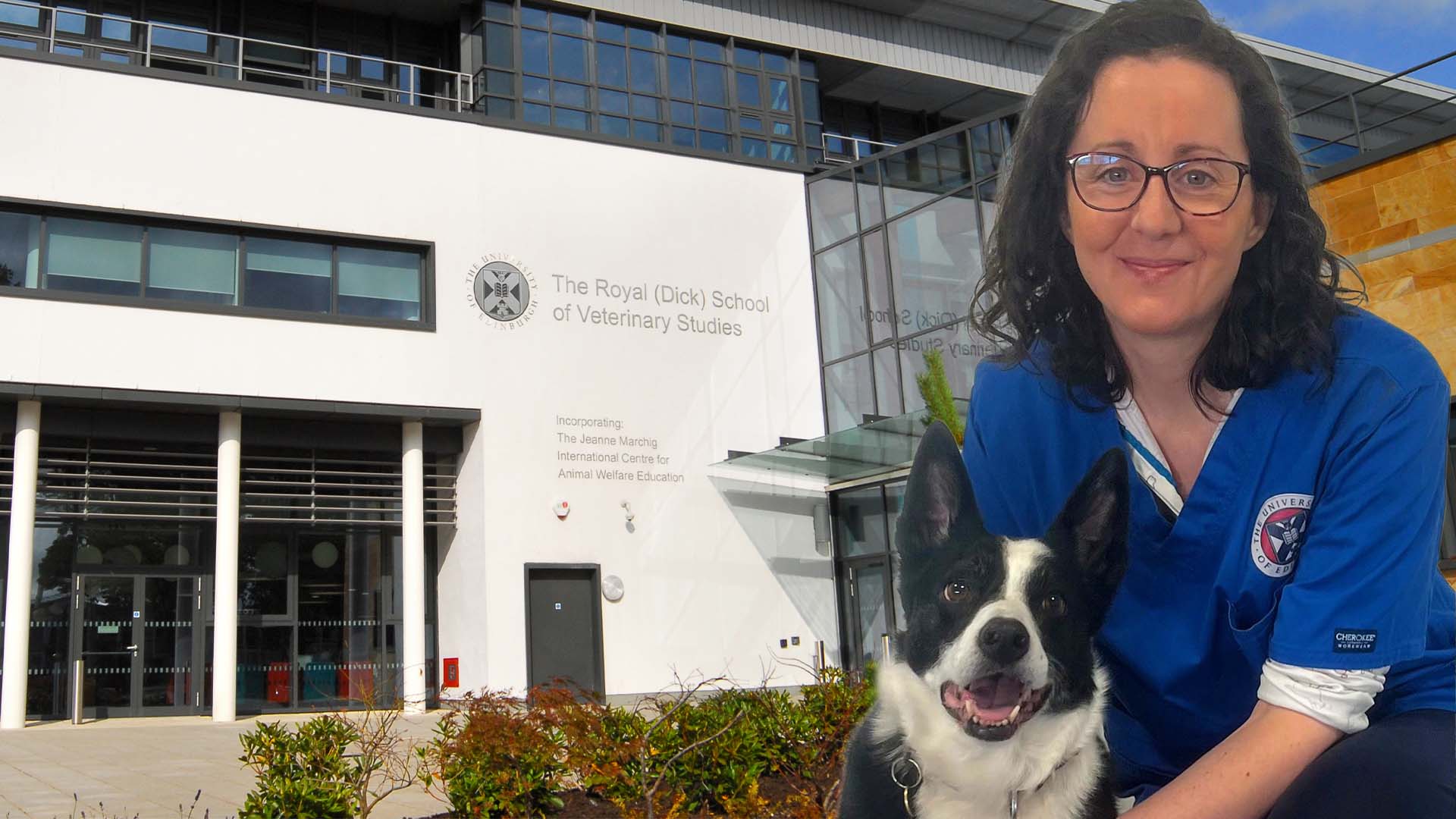
Meet the friendly and dedicated team behind our popular online MSc in Clinical Animal Behaviour.
Dr Amy Miele, Programme Director
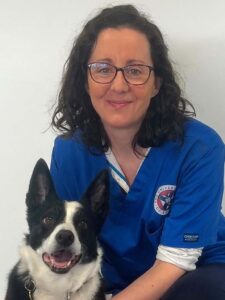
I am Programme Director of the MSc Clinical Animal Behaviour (CAB) online programme, which began in 2015.
I must confess to the old cliché of knowing that I wanted to be a vet from a very young age and I was able to realise this ambition when I graduated from the University of Edinburgh’s Royal (Dick) School of Veterinary Studies (RDSVS) in 2006. Having always had a passion for animal behaviour, I completed an ESVPS Certificate in Animal Behaviour in 2010 and began to undertake behaviour consultations within small animal veterinary practice.
I returned to the RDSVS to undertake a PhD in collaboration with the Donkey Sanctuary and very much caught the research bug! During my PhD I continued to provide a companion animal behaviour referral service to local small animal veterinary practices and I also began teaching animal behaviour to undergraduate and postgraduate students.
My own research interests are fairly broad, but include the role of physical health in problem behaviours in dogs and cats. I am a member of the RDSVS Animal Welfare Centre, and oversee the undergraduate CAB teaching alongside my role as MSc Programme Director. I am currently completing a part-time residency in Veterinary Behavioural Medicine within the University of Edinburgh’s Hospital for Small Animals which means that my teaching is underpinned by ongoing clinical experience. I enjoy spending my spare time exploring the Pentland Hills with my husband, two daughters and Lurcher, Winnie.
Reflections on MSc CAB Programme
I relished the opportunity to be involved in the design and delivery of the online MSc in Clinical Animal Behaviour from its infancy (initially as Programme Coordinator and then as Programme Director from 2017). I am constantly amazed by the hard work and determination of our students, who come from across the globe and bring with them a wide array of different experiences and perspectives relevant to the field of clinical animal behaviour. Many of our students would not be able to attend an on-campus MSc programme due to family and work commitments, thus the flexibility that part time online learning gives them is really important.
It has been a privilege for me and other members of the CAB programme team to be involved in the development of several MSc dissertation projects over the last few years. We are now starting to see several CAB programme alumni publish their work, which is fantastic and we are very proud of what they have achieved.
We are also delighted by the success and growth of the Behaviour Clinic within the RDSVS Hospital for Small Animals, which is led by Dr Kevin McPeake. Kevin is one of a handful of Veterinary Behaviour Specialists in the UK and we are fortunate to have him teaching on the CAB programme. The Behaviour Clinic ensures that both undergraduate and postgraduate students have the opportunity to learn from real life cases under the care of experts within the field.
Dr Verity Bowell, Programme Coordinator
I joined the University of Edinburgh Clinical Animal Behaviour team in 2019 as Programme Coordinator, returning to academia after a wide-ranging career. I have a degree in Zoology from the University of Birmingham, then I came to Edinburgh to take my MSc in Applied Animal Behaviour and Welfare, and never left Scotland. I undertook my PhD at the University of Stirling, where I researched the cooperative care and training of primates, and the impact of this on their welfare and behaviour. I have also worked as a researcher on a number of farm and laboratory-housed animal welfare projects in both research and commercial settings. Prior to joining the CAB programme I spent several years running my own dog training and behaviour business as well as working for an assistance dog charity where I was responsible for overseeing the care and training of all of the puppies in Scotland.
These experiences have led to my specific interests in animal training, animal use in sport and leisure, and also more broadly companion animal welfare. Since starting working on the programme I have also developed my interests in the human side of the relationship! I run the Principles of Applied Animal Behaviour course, teach on a number of other courses, and supervise MSc and PhD students. I am also the Cohort Lead for the programme, which means I look after the academic journey of students on the programme. Away from work you can usually find me around dogs or horses, especially playing agility.
Kirstin Mcilvaney, Programme Coordinator
 I joined the Postgraduate Taught team as an MSc Programme Coordinator in August 2018. Since then I have worked across several programmes, including the on-campus MSc Applied Animal Behaviour and Animal Welfare and the online masters in Clinical Animal Behaviour and International Animal Welfare, Ethics and Law. In early 2024 I joined the CAB programme team full time. Prior to focusing on teaching I spent 15 years with SRUC (Scotland’s Rural College) as a research assistant and experimental manager in the Animal Behaviour and Welfare team. During this time I developed an interest in non-invasive methods of data collection to maximise animal welfare with a wide range of species, becoming efficient in research project management and research quality assurance practices, as well as developing a wide variety of technical and animal handling skills. I am course organiser for the Anthrozoology course and involved in teaching and marking on most of the other CAB courses. I’m a stickler for organisation and efficiency, weaving these into my teaching practice to champion excellence in animal behaviour and welfare research.
I began my addiction to animals by befriending neighbourhood cats at a young age, then progressed up the levels to acquire one of my own. I moved swiftly on to include horses and dogs then began my fascination into why and how we keep and treat animals. I have a broader interest in conservation (mainly furry mammals native to Scotland) and all things related to animal welfare.
Dr Kevin McPeake, Programme Lecturer
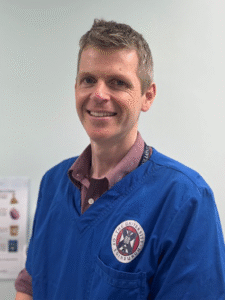 I am a Senior Lecturer in Clinical Animal Behaviour, joining the University of Edinburgh’s Royal (Dick) School of Veterinary Studies team in January 2021. I graduated from the University of Glasgow as a veterinary surgeon in 2005, and then worked in a range of first opinion small animal practices across the UK, during which I became interested in clinical animal behaviour.
In 2011, I completed a postgraduate diploma in Companion Animal Behaviour Counselling before setting up a behaviour referral clinic in the North East of Scotland until 2014. To advance my knowledge, I then moved to the University of Lincoln to undertake a project researching a novel anti-anxiety medication for dogs, remaining there for a further 5 years to complete a residency in veterinary behavioural medicine and a PhD thesis on frustration in dogs.
I am currently the only RCVS and European Specialist in Veterinary Behavioural Medicine and run the referral-only Behaviour Clinic within the Hospital for Small Animals, seeing an array of cat and dog behaviour cases. I am particularly interested in the interplay between medical problems and behaviour, especially painful conditions which often cause or contribute to the development of behaviour problems. Additionally, research interests include developing psychometric tools to quantify and monitor problem behaviours, and assessing the efficacy of new treatments for patients with such problems.
Clinical case material from the Behaviour Clinic caseload, and associated clinical research outputs, directly inform teaching content to veterinary undergraduates, and to students enrolled on the online MSc Clinical Animal Behaviour.
Dr Loni Loftus, Programme Lecturer
 I am a Lecturer in Clinical Animal Behaviour on the MSc Clinical Animal Behaviour online programme, joining the team in 2022. I teach across a range of courses and lead the Dissertation course and preparatory course for dissertation. I am a Certificated Clinical Animal Behaviourist (CCAB), an Animal Behaviour & Training Council (ABTC) Registered Clinical Animal Behaviourist (CAB) and Animal Training Instructor (ATI) and a Certified member of the International Association of Animal Behaviour Consultants (IAABC). I graduated with a BSc (Hons) in Equine Science from the Royal Agricultural University, followed by an MSc in Applied Animal Behaviour and Welfare and a PhD in Equine Behaviour and Welfare, both from Newcastle University. I am actively engaged in research across a broad range of topics and species with a special interest in positive affective state and personality in horses. I am also a member of editorial boards including Applied Animal Behaviour Science and RCVS Knowledge Veterinary Evidence and a Director of the Fellowship of Animal Behaviour Clinicians.
In my non-teaching time, I run a clinical animal behaviour referral practice, as well as Loftus & Wild, a supervision and mentoring service for clinical animal behaviourists, and I see referral cases nationwide for Donovan Veterinary Behaviour Practice.
I really enjoy meeting the wide range of students studying the MSc Clinical Animal Behaviour programme from across the world and being a part of their continued development to reach their career goals.
More information

