Any views expressed within media held on this service are those of the contributors, should not be taken as approved or endorsed by the University, and do not necessarily reflect the views of the University in respect of any particular issue.
Skip to content

Over the past five years, the University of Edinburgh has undertaken a transformative programme to catalogue, preserve, and enhance access to the Charles Lyell Collection. This final blog marks a key milestone—sharing outcomes, showcasing the new catalogue and website, and offering tips for using this vast resource, while also pointing ahead to future discoveries.
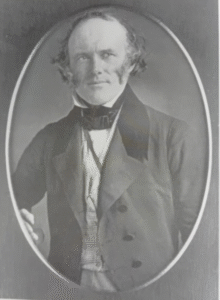
Lyell in 1842 as featured in 'Lyell in America : transatlantic geology, 1841-1853' by Leonard G. Wilson, Johns Hopkins University Press, 1998. Our research has not been able to confirm the whereabouts of the original image.

In The Antiquity of Man, Lyell investigated the meaning of prehistoric flint implements, using them to authenticate ground-breaking arguments about humanity’s deep past. We’ve used our own set of tools - archival methods, state-of-the-art digitisation equipment and digital infrastructure - to unlock the full scope of Lyell’s legacy.

AI has offered some useful and interesting tools. Transkribus provided a scaffold for students learning to decipher Lyell’s handwriting, while ChatGPT has at times supported the non-scientist Archivists. In fact, the title of this blog, ‘Happy Notebooking,’ originated from an AI-generated parting, during an early discussion about the Lyell collection. Just as flint tools helped Lyell uncover ancient stories, our digital tools have helped us illuminate his world—transforming his notebooks, correspondence, and discoveries into something accessible for future generations.
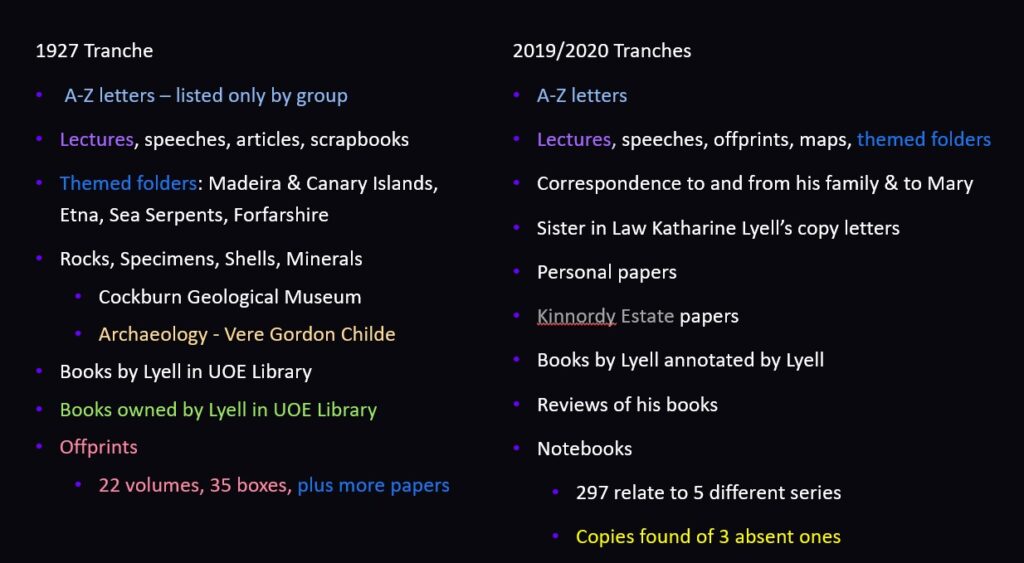
 

The archive catalogue

A basic overview, by provenance, of the composition of the Lyell archive collection.

Charles Lyell is never referred to as an Archivist, but his collection serves as both evidence and documentation of the history of the Earth, and, of his role as its information manager. He’s assisted in this work by his team – George Hall, wife Mary Lyell, and Arabella Buckley, maybe even other people we've not identified yet. For our project, the decision was taken to respect the provenance of the different accessions of Lyell material held at the University, but, the history of information management is writ large across the collection, and we’ve also used the original organisation created by Lyell and his team, to arrange series.

Our work to develop a comprehensive online catalogue has:

  • Expanded the list of correspondents from broad alphabetical categories to over 400 named individuals, providing a clearer picture of Lyell’s extensive network
  • Worked to catalogue the Scientific notebooks. This work will be ongoing, with skilled volunteers meticulously adding details for each one
  • Mapped the records related to Lyell’s Lectures, uncovering how these early materials, which also illustrate the development of his science communication skills, criss-crossed the Atlantic
  • Revealed Lyell’s practice of recording his reading and thoughts in the Index notebooks, and, confirmed the connections with the recently rediscovered Offprints held at the University, and which had previously been challenging to interpret
  • Highlighted Lyell's writing process, through the annotated copies of his books, original manuscript notes, edits, and the publishing activities recorded in the notebooks
  • Strengthened the understanding of the connections between Lyell’s geological specimens - rocks, minerals, and shells - and the archive, establishing a clearer provenance for many, with evidence of Lyell’s direct involvement in their acquisition.

Reflecting back, we can confirm we’ve thoroughly enjoyed the challenge of deciphering Lyell’s handwriting! Along the way, we've encountered the complexities of outdated scientific terminology, historical – and indeed multiple place names across Europe, the UK, and America - as well as Lyell’s spelling. Lyell is actively listening to what other people are saying, which sometimes leads to misspelling. Please forgive any of our own mistakes you might come across; and don’t hesitate to contact us if we can make corrections.

A big thank you to all the volunteers, who have worked with us over the last 5 years, but especially to Drew Coleman and Beverly Gordon - who have worked diligently since 2023 to add detail to the notebooks, allowing us to work to fulfill our aim of a consistent, rich, level of detail for all 297. We’re particularly proud to have added several women - Mary Anning and Jeanne Villepreux-Power amongst them - to our catalogue, helping highlight their contributions to Lyell’s work.

The Lyell Website: A Digital Gateway to His Legacy

All of this work has contributed to a new website designed to make Lyell’s legacy more accessible to the global audience it truly deserves. The website is organised around Lyell’s principal tools; his archival papers - an inclusive term reflecting the breadth of the material held within - as well as the notebooks, Offprints, and specimens.

Lyell’s books can be a useful starting point for any research, as the archive ultimately informs his published works. In addition to providing links to Lyell’s books published by John Murray online, we are proud to make available the late Stuart Baldwin’s comprehensive bibliography. Do make sure to access this, as it provides an excellent start to understanding the extent of Lyell's output. Other key sources are Life Letters and Journals of Sir Charles Lyell by Katharine Lyell - also available via on the website - and the works of Leonard G. Wilson.

Of particular note on the website are the images of Lyell's treasured 297 notebooks, which document his observations from 1818, on a European tour with his family, through to November 1874, just three months before his death. You can access IIIF-compliant images of these notebooks via the “Search the Notebooks” button.

The website offers users an easy way to navigate through the vast collection of materials, creating an interactive experience that aims to preserve and expand upon the legacy of one of the most influential Geologists in history.

The future -  a new blog

Our work has revealed the depths of Lyell’s archive, but there's more still to be explored. Some series of correspondence and a selection of specimens held at the Cockburn Museum have been photographed, providing exciting opportunities for further research. The voluminous Offprints have been box listed only, but its a start. The research potential is immense - many of the geological features Lyell studied are now important heritage and tourism sites. If you live near one, it’s likely that Lyell visited (and possibly documented it more than once!). His advocacy for using physical collections and his involvement in nineteenth century museum development also merit further study.
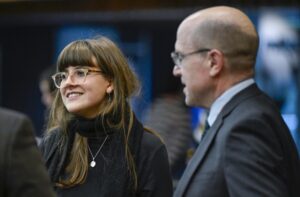
Felicity at the official opening of the project exhibition, taken by photographer Neil Hanna 07702246823

Finally, we can introduce you to Felicity Mackenzie, the University of Edinburgh’s newest Lyell enthusiast. Felicity’s PhD will explore Lyell’s legacy, and we’re excited to pass the baton to someone so passionate. Her research promises to utilise the archive to reassess and deepen our understanding of Lyell’s lasting impact. In fact, Felicity is continuing with her own Through Lyell's Eyes blog - please do subscribe to keep on this epic journey!
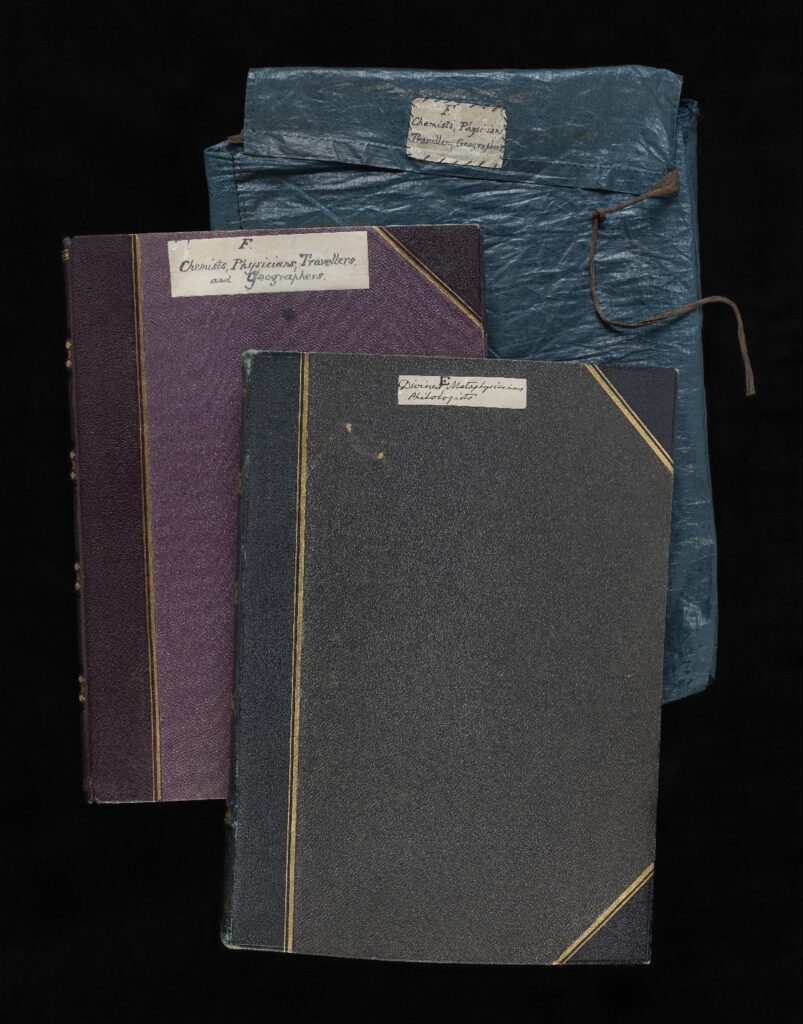
The Sir Charles Lyell Project has technically finished, and our final blogs will offer some guidance for access and future use - BUT - we just want to share a really special update! During the project, further acquisitions were made, including two albums which were collated by Lyell's family but since sold and held in private hands. Through the brilliant work of the Cultural Heritage Digitisation Service (CHDS) these albums are now available digitally for this first time. Please check out the CHDS blog to find out about the technical aspects of this work;

Getting to Grips with Goobi on the Lyell Albums

For some historical context and musings on their content, read on! 

How easy do you find accessing your own papers and records? Can you find things immediately, or, does it take some searching through drawers and cupboards to find the information you need? How many times a day do you search through your digital files? Now imagine those actions, applied to a collection of scientific research, amassed during the 19th century, a time of seismic change in how people viewed and understood the world – and - imagine those actions performed by a number of people, over the span of 100 years.

We are of course talking about Charles Lyell’s comprehensive archive and published works - held at the University. With acquisitions dating 1927, 2019 and 2020, the archive bears evidence of his organisation, right from the start of his career. His travel journal dated Summer 1818 documenting his Grand Tour has title sections, allowing us to trace his itinerary, but pages are unnumbered, and there are no indexes – access tools that he’d later employ. After attending Oxford University, and training as a lawyer, his approach to his work was always to gather testimony and evidence to make a conclusive case. In his quest to codify geology, and in writing the Victorian textbook of its age, Principles of Geology (Murray, 1st edition 1830 - 12th edition 1875), he collected masses of data, and, he needed to access it – on more than one occasion to prove the authenticity of his research. Indeed, we know that page numbering was a task that he allocated time to, as was numbering his specimens. Lyell’s own organisation is demonstrable, but what happens when multiple people are involved, perhaps different homes, or stores, and with a timeframe of over 100 years? How much impact do people and time have on an archive?

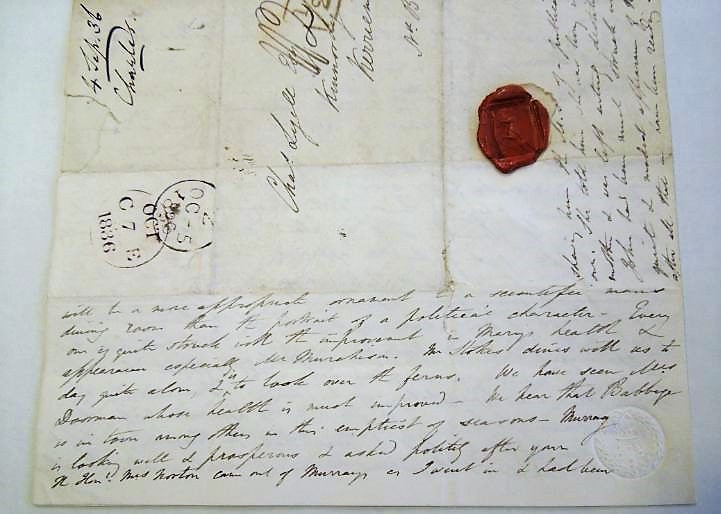
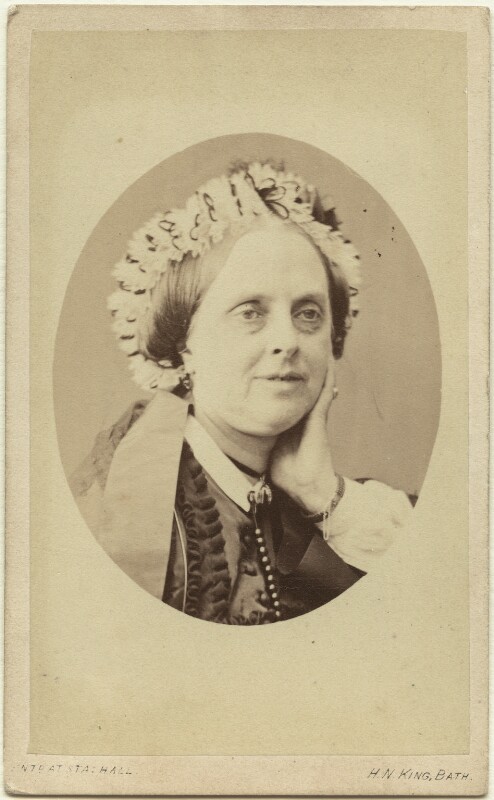
Following the acquisitions of Lyell records in 2019- 20, the University purchased more, including two albums compiled by Leonard Lyell, Lyell’s nephew, containing letters sent to Lyell and others in the family including his wife Mary Horner Lyell, father Charles Lyell (1767–1849), father-in-law Leonard Horner (1785-1864), and brother Francis Horner (1778-1817). In both albums, most of the letters are accompanied by a facing photograph or portrait print of the letter’s author. What is clear is that for the letters sent to Charles Lyell at least, the contents of these albums were originally part of his correspondence – we can spot the same summaries, written on the letter of envelope, meaning these letters were part of his original A-Z series - now catalogued in two tranches 1927 and 2020 . By purchasing these albums, and in facilitating access to them, we are further extending the scope of Lyell's network of ‘able investigators’.
It is apparent from Lyell’s archive, that Lyell’s family surrounded and supported him in his work. Lyell had ten siblings, Mary had six sisters, one of whom married Lyell’s brother. The family was close, sharing interests, travels and correspondence. It’s gratifying then, to see them included in these albums, which serve to show Lyell at the heart of an educated, inquisitive and connected family.

Despite being one of the figure heads in 19th century science, Lyell’s archive reveals he did not work alone. His wife Mary created a number of the indexes in the notebooks - and there is admin support from his original clerk, George Hall (fl 1828-1843), and Arabella Buckley (1840-1929), his secretary from 1863. Their organisation has greatly assisted our progress in describing, and linking back up, the collection. We’ve been able to utilise their ways of working for example, in cataloguing - recreating an almost entire A-Z series of voluminous correspondence, and using their summaries of each letter, found either on the reverse, or on the envelope - and the original page numbering has supported digitisation.

Understanding this work is greatly enhanced by these albums, which are now catalogued, reference Coll-1997 photographed and available digitally here and here, ensuring more work can continue.

The University has actively collected books, objects, instruments and art since its foundation and continues to invest to this day in ensuring that our collections are actively and responsibly developed, reflecting the University’s teaching and research needs, as well as our collections’ strengths and weaknesses. By doing so, we are also adding to Scotland’s collective cultural heritage, building a collection for the nation. In an average year, the librarians, archivists and curators of Heritage Collections acquire hundreds of pieces of cultural heritage and are responsible for the development of the University’s collections. If you would like to find out more,take a look at our editions of 'Recollect', which you can pick up for free on the 6th floor Main Library, George Square, or you can view copies online

As part of our goal to 'create a complete, comprehensive, and enhanced online catalogue,' one series emerged as particularly in need of attention: 'Lectures.' Lyell Intern Claire Bottoms took on the challenge of untangling the numerous, often complex manuscripts, working to bring clarity and accessibility to this crucial part of Lyell’s archive.

Hello, I’m Claire, an intern who has been working on the Charles Lyell Collection offprints over the last 7 months. As part of our efforts cataloguing the collection this Summer, we were able to extend our work to one final element that needed attention: Lyell’s series of lectures, delivered in the UK and the US between 1832-1853.

Charles Lyell’s 20-year career as a lecturer started with two years (1832-1833) in London at King’s College London and at the Royal Institution; and extended throughout his travels in the US (1841-1853), where he presented across New York, Boston and Philadelphia. Records of these lectures exist as part of his archive, gifted to the University by his family in 1927, with additional series coming in recent acquisitions in 2020. Historic cataloguing of this series has been limited to them being simply labelled as ‘Lyell Lectures’, but as we began to sort through them, it was evident that they were early in date, and documented his rewrites and learning. “He revised, rewrote and rethought each lecture before it was delivered”, observed Leonard Wilson in his book Lyell in America (p372). We established that they would really benefit from some serious re-ordering, additional context and detail.

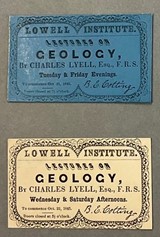
Two printed Lecture cards, produced for the Lowell Lectures at Boston October - November 1845, Coll-203/B14/9.

Given that there are already some sources on Lyell’s lectures, which when pulled together, promised to a comprehensive overview of his work, and, that there was some apparent order of folders within boxes, as well as historic typed lists (compiled by Lyell scholar Martin Rudwick), we embarked on the task of compiling a timeline and order of events to make better sense of these records. We were also able to gather information from a variety of resources: online newspaper records, print resources, previous archival notes, as well as taking a close look at the records themselves, including lecture cards which detailed the contents, venues and topics of Lyell’s lectures. With time and effort, we were able to map across to the archives Lyell and his team had preserved (clerk George Hall, Mary Lyell and Arabella Buckley), his own collection of manuscripts, lecture notes and drafts, newspaper cuttings and correspondence.

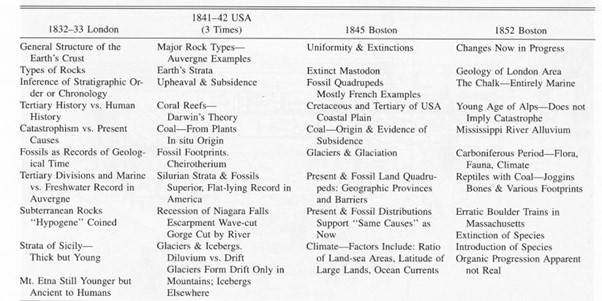
A very useful table by Robert H Dott, which maps out the contents of Lyell’s lectures, 1832 through to 1852

Two key sources we used were written in the 1990s, one being Leonard Wilson’s Lyell in America (1998), which is only available in print, and no longer available to buy; luckily there is a copy at the University Library. We also used Robert H. Dott's article 'Charles Lyells debt to North America: his lectures and travels from 1841 to 1853' published by The Geological Society of London, 1998. In light of this, the construction of a new and updated timeline brought together information that was otherwise scattered and tricky to access - into a cohesive reference for Lyell’s lecture history.

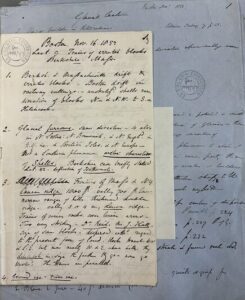
Long notes, on blue paper, and short notes on white, prepared for Boston Lecture on Erratic Blocks, of Berkshire Massachusetts, 16 November 1852, reference Coll-203/B14/15.

Lyell appeared to work on, and organise his lecture notes, using a system of “long notes” (extended pieces of prose), and “short notes” (smaller booklets in numbered shorthand of the same content, often accompanied by timings and lists of illustrations). It is fascinating to see this process of writing, revising and refining his work, which allowed Lyell to hone his scientific ideas and communication skills; portions of these notes appear to make their way into Lyell’s later published works. Published sources describe Lyell as having been initially reluctant to teach and lecture, instead being eager to devote his time to his emerging writing career. The lecture series are credited with providing him with both the additional income, and the scientific recognition to do this. Notably, though Lyell was once a nervous public speaker (sources recount him dropping his notes once during his first lecture), this process likely helped develop a more polished and accessible approach.

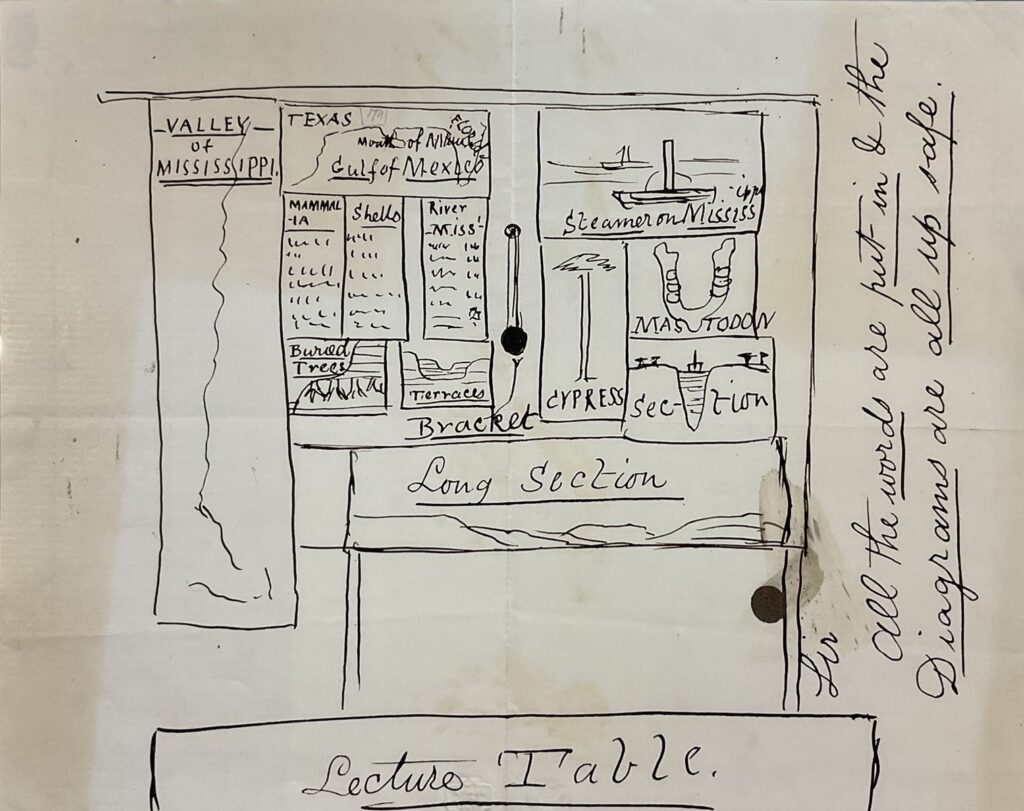
Illustrations as delivered at the Lowell Lectures, Boston, 19 October 1852 - 26 November 1852, reference Coll-203/B14/15.
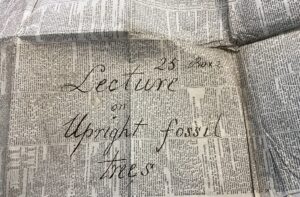
Original newspaper wrapping enclosing Lecture 5 Prose notes, from The Express, dated 19 March 1850, reference Coll-203/B14/12.

The archival records go beyond recording Lyell’s words, they also contain diagrams outlining Lyell’s plans for his lecture layouts, referencing the illustrations intended to support his presentations. It is apparent he travelled with these illustrations, as well as commissioning new ones on his way - sadly they’ve not survived, most likely victims of steamship voyages! Lyell’s lectures are also accompanied with older notes, articles and pieces of research that he brought together to use as material in his lectures. In many cases, all of these associated records are enclosed in newspaper wrappings. These wrappings added an unexpected additional layer of archival interest, and have been helpful in identifying the date, location and corresponding lecture.

Mapping Lyell’s selection of lecture materials has been a challenging changing process, with new pieces of information, resurfacing parts of the collection, and decisions regarding how to order the series emerging at every turn of the page! Yet, it has been incredibly fascinating and rewarding to see it all come together under a new timeline we are proud to have compiled and used to make sense of these folders, no longer only detailed as just ‘Lyell’s Lectures’.

Thank you, Claire, for transforming how Lyell's 'Lectures' are presented in the catalogue. While still respecting the original acquisition details and their division into two sections, the information is now far more detailed. It reveals draft prose that Lyell would later incorporate into Principles, and, with the material now organized by lecture location, it’s much easier to trace how Lyell criss-crossed the Atlantic. Check out the details in sections Coll-203/8 and Coll-203/B14.


Using funding awarded by the Institute of Sedimentologists, Lizzie Freestone worked during the Summer of 2024 as the Charles Lyell Web Development Intern. Read on to learn all about her work, that combined metadata with Neolithic tools, and spanned teams from Digital Libraries, archives and museums, and included a particularly troublesome team member – Vernon!

Lizzie, with Dr. Gillian McCay of the Cockburn Geological Museum,

I started as the Charles Lyell Digital Collections Intern on the 3rd of June 2024. The goal was to develop processes so that specimens from the Charles Lyell collection, part of the Cockburn Geological Museum, could be more easily transferred into Vernon, the University’s collection management system for museum holdings. Once in Vernon, the specimen records can be automatically fed through to a more public-facing website, Collections.Ed; however, there are many significant steps required to get the data to that stage. Using processes developed by my line manager, Senior Systems Architect Scott Renton, my job was to connect that specimen data with high quality photographs of specimens taken by the University’s Cultural Heritage Digitisation Service, which are hosted separately on the University’s image hosting website, LUNA. Linking the specimen data to the images means that we could then have both the data and the associated images feed through to the public website.


I began working on the images collection of the Cockburn Museum, which include around 200 teaching slides with a wide range of images including a series about an expedition to Spitsbergen, Svalbard; portraits of famous geologists; and photos of the natural landscape of Edinburgh, including Arthur’s Seat and the surroundings of Kings Buildings. Under Scott’s guidance, I learned how to run XML imports into Vernon. Working on batches of twenty or so records, I started getting to grips with the software and how it worked. Around this time, I also met with  Gillian McCay, Curator of the Cockburn Geological Museum, who showed me the vast array of physical specimens the museum holds and explained the challenges of trying to get them into digital format. The Lyell specimens represent a complex set of records, reflecting their custodial history of nearly 100 years, so to get my eye in for more specifically geological specimens, I worked on drawers from the Currie collection, restructuring the spreadsheets and configuring Vernon to accept their contents. The Lyell specimens’ records have very long, complex descriptions – including research references, context, and loans - which would need to be broken down into distinct fields before they could go into Vernon. I spent a significant amount of time talking to Gillian and Pamela McIntyre, Strategic Projects Archivist on the Lyell project, about their thoughts on best ways to break up the description information, acceptable under Vernon’s demands.

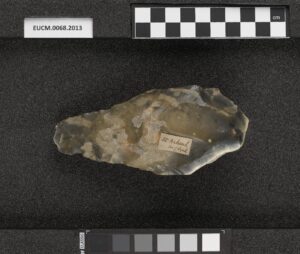
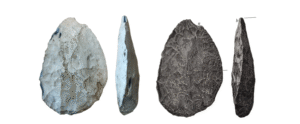
Tear drop shaped flint tool. Dark grey brown colour, with some light grey to cream areas. The surface is covered by concoidal fractures, with little to no rind remaining. One glued label reading ' Sir C. Lyell'.
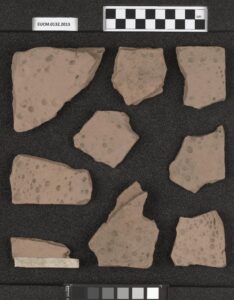
Rain marks in fine grained red sediment. One label attached to the sample reads 'Rainmarks, Kentville'. One specimen has on its reverse a date, scratched into the mud, likely when still soft is written 'July 21 1849'.


I found it really rewarding to work on specimens with such a long history and to get to talk so much with Scott, Gillian and Pamela, who all went above and beyond to answer my questions and concerns as they arose and to give me new ways to think about things. Learning how to use Vernon over the course of the summer was also really satisfying, as I went from zero knowledge to being able to use some of its most complicated functions, thanks to Scott’s explanations and a lot of practice. I also really enjoyed the opportunity to work as part of an IT development team and to have the opportunity to develop my technical skills. I was proficient in using Excel before, but had a minimal background in computer science. I now feel much more confident in learning how to apply new tools and to use programming to achieve a goal. Programming is now something I’m interested in doing more of going forward.

In all, I processed around 500 specimen records, of which around 150 were part of the Lyell collection. My work has developed processes for importing both new Currie and Lyell specimen records into Vernon including spreadsheet templates, setting up Vernon configurations, and created detailed guidance on to how to use them (including on how to set up and use new templates if needed). This means that getting further geological specimen records out of the basic excel spreadsheet stage, and into Vernon is much easier, which will make them more stable and more widely accessible. I also got to work on the Collections.Ed website, adding images and changing the ways some metadata was displayed, making the collections pages more visually appealing and navigable. It will take some additional technical work to get these specimens onto the new Lyell website (more details on that to come!) – for that, the team are using IIIF to link data and images - but it’s great to know that my work will support that next stage.

This internship has been a very rewarding experience, and I am really grateful to have had the opportunity to contribute to the digital preservation of these historically significant geology specimens. I’m looking forward to seeing how the digital collection grows over time!

Thank you so much Lizzie, Scott, Gillian – and Vernon! And thank you to the Institute of Sedimentologists - this funding has allowed us to fill a knowledge gap which will be of huge support to staff going forward - and has provided Lizzie with great work experience in a field outwith her main degree. This internship completes the final allocation of all the funding secured by the Lyell Project, with special thanks to David McClay, Philanthropy Manager, Library and University Collections, who has been its champion since the outset. As the project nears the final stages, forthcoming blogs will focus on access, discovery and legacy. 

2

Thank you to guest blogger, Andrea Edwards, who shares her experience of spending the 'summer' working on the Charles Lyell correspondence...

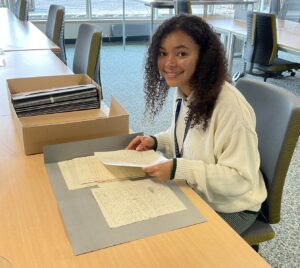
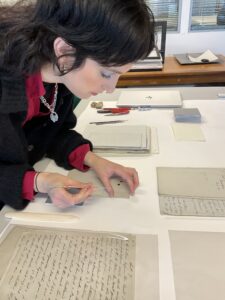
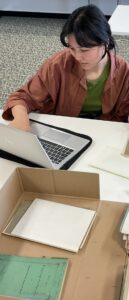
Andrea at work, studying Lyell's American correspondence, in the Centre for Research Collections, University of Edinburgh.

Hi! My name is Andrea Edwards. I am an undergraduate student at the University of Wyoming (UW), majoring in History and Environmental Studies, and minoring in Museum Studies. I travelled to Scotland to do a month-long internship, funded my university’s ‘UW in Scotland’ program. On securing funding, I had to find myself a placement, and I contacted Heritage Collections staff at the University of Edinburgh, and agreed a placement based with the Centre for Research Collections (CRC) in order to learn about and gain experience in UK archives.


During my time there, I learned a lot about how archivists work in the UK, which combined with my knowledge and experience of collections management in the US, really extended my understanding. We talked about the current state of the heritage sector, discussing topics such as budgeting, colonial legacies, the climate crisis, and changes in best practice. It was fascinating to see how the staff at Heritage Collections are dealing with these global issues, compared to the US.  I was able to meet and work with lots of amazing people, specifically my supervisor Pamela McIntyre, archivist extraordinaire. I also visited many other heritage organizations, such as the Royal Botanic Garden Edinburgh archives and the Royal College of Physicians of Edinburgh, to learn about they manage their collections.


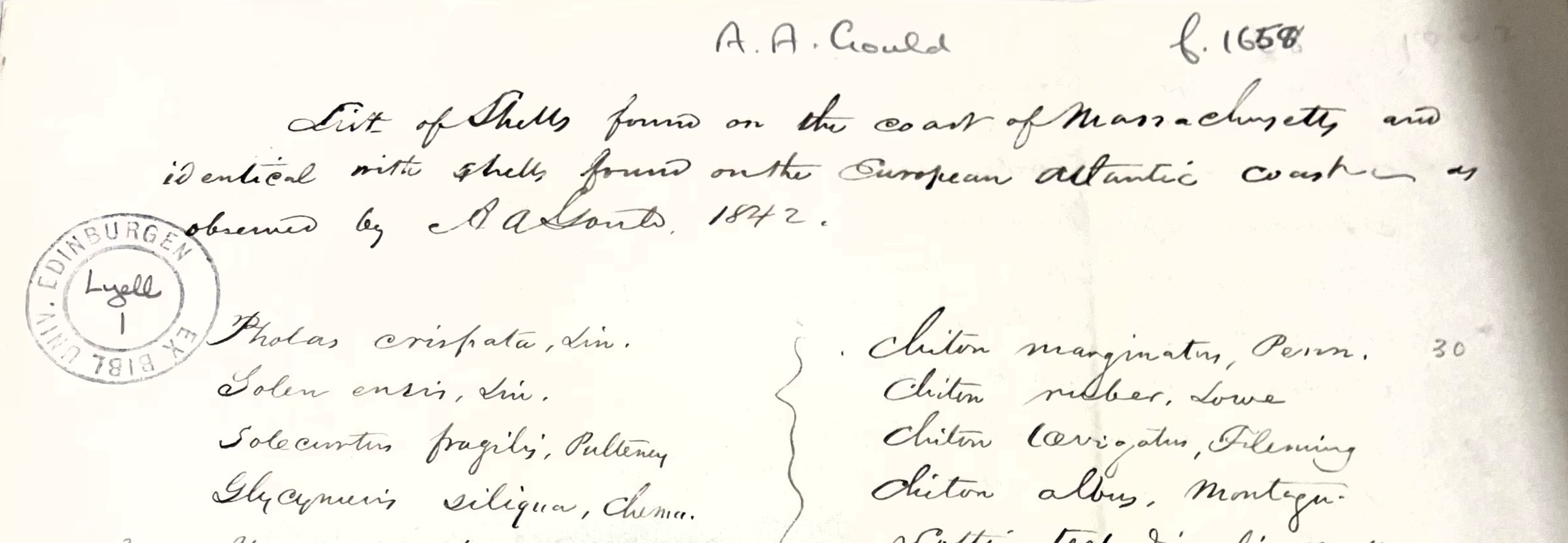
Start of a list of shells, found on the coast of Massachusetts, and identical with shells found on the European Atlantic Coasts, observed by AA Gould 1842, and sent to Lyell

My main project during my time in Scotland was cataloging Charles Lyell’s American correspondence. Charles Lyell travelled extensively throughout the UK, Europe, and Scandinavia, in order to conduct his research. Lyell also visited North America, 4 times, between 1841-1853. During those trips, Lyell made several connections with prominent American scientists and politicians, and continued to stay in touch with many over the years, generating quite a bit of correspondence.

The recent revision of the Lyell collection based at the University of Edinburgh, has identified much more correspondence from American born or based correspondents than perhaps previously has been understood. A lot of this has come from the increase in names ‘agents’ (the writers of the letters) being identified, and extended from 40 to 308; as well as extended by an additional tranche of records coming to the University in 2020. The purpose of my project was to add more detail to the catalogue for Lyell's American correspondence. I was assigned 19 folders, and went through each, counting the number of letters and making notes of significant people, places, or subjects mentioned in each individual letter, allowing me to create a comprehensive scope and content on each file. I was able to catalogue 93 individual letters, with dates ranging from 1841-1875.

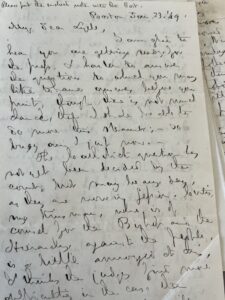
Letter from Ticknor, to Lyell, written at Boston, 23 January 1849.

Through spending time with these records, I got to understand the extent of Lyell’s personal and professional network abroad. Lyell corresponded with people that headed American society: politicians, doctors, university professors, and naturalists. Some characters that he corresponded with include naturalist and conchologist Augustus Addison Gould, and Charles Thomas Jackson, a New England physician and scientist, with a reputation of accusing others of claiming his discoveries. His correspondence with Lyell perhaps confirms Lyell’s position as an ‘authenticator of fact’. Twenty letters to Lyell from George Ticknor, an academic and Hispanist, document his feelings about the Mexican American War, his gossipy tone revealing the friendship between them. William C. Redfield, a meteorologist who gets very excited about fossil fish— content which now flags up another potential topic of investigation in the Cockburn Geological Museum! The correspondence creates a mosaic not only of Lyell’s personal relations, but of the United States’ fledgling academic community, a very tight knit community where everyone writes for the Benjamin Silliman’s journal, is related to a Boston Brahmin family, and knew and extensively talked about each other— the work of Louis Agassiz being regularly mentioned throughout.


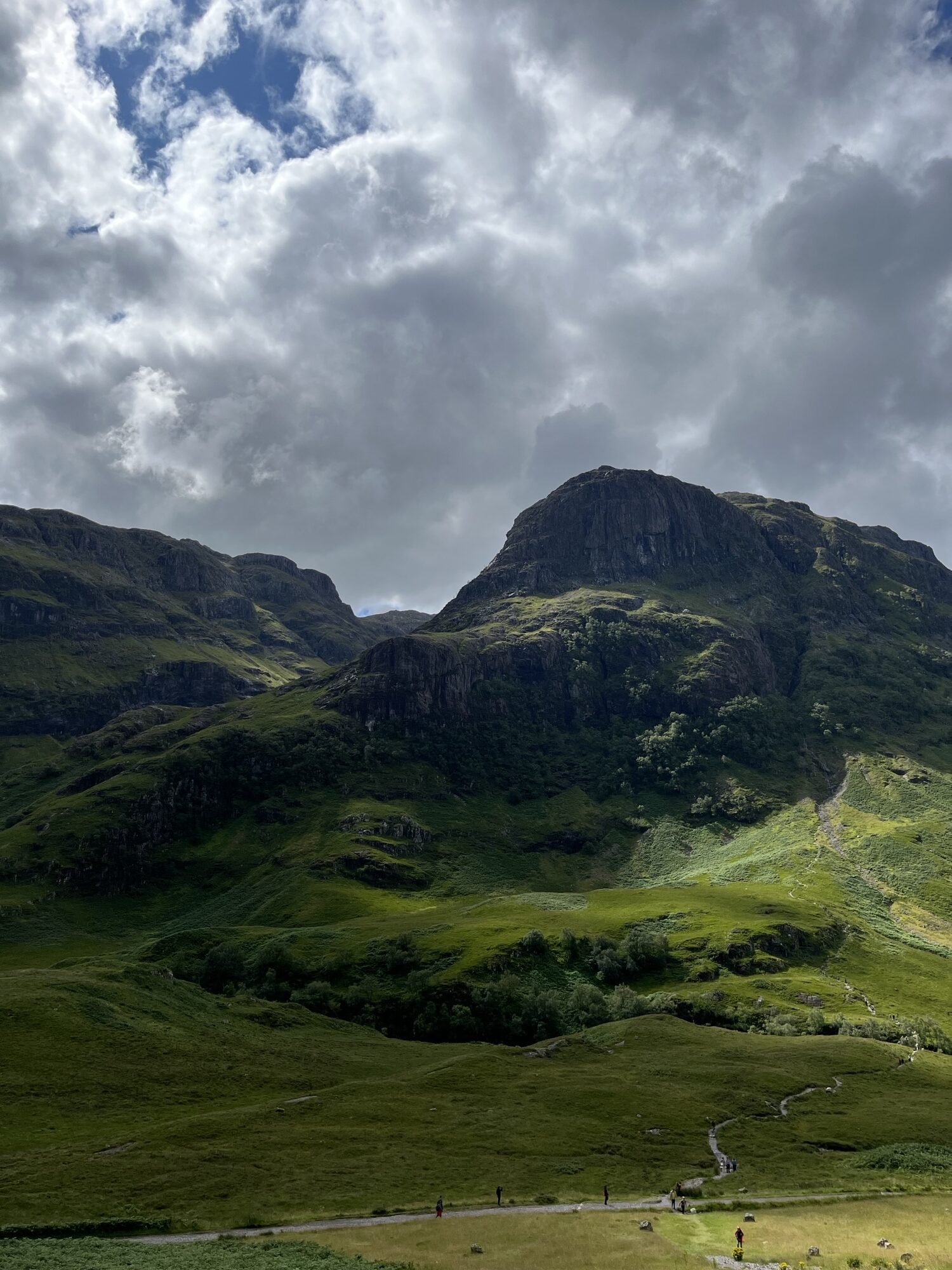
This years 'summer' backlit Glencoe's amazing geology, especially for Andrea....

Lyell travelled throughout this life. I felt encouraged by him to explore Scotland, and it lived up to every expectation. I spent most of my time in Edinburgh, exploring all of its nooks and crannies, and absolutely fell in love with the city. It has such a charming and intimate atmosphere, and despite this being my first solo trip, it felt like a home away from home. I took the time to visit Glasgow, Inverness, and bits of the Highlands, all of which were amazing places that I would love to visit again. I loved the public transportation! Throughout my travels, I loved how climate conscious Scotland is, and I was impressed with their mindfulness about waste and their carbon footprint. It was especially interesting how Heritage Collections strive to apply this thinking to their work.

Everyone I met was so nice and welcoming. Everything was so beautiful, from the winding medieval streets of Edinburgh to the lush green peaks of Glencoe. I will always treasure my time spent there. But it’s also gratifying to know that I’ve also made an impression on Scotland. Due to the work that I have done, Lyell’s American correspondence has been enriched— taking their detail from a scant skeleton entry, to exact dates, extent, content and related agents. This had made this special subset of study more accessible to researchers. I wish them luck on their journey.


We also want to express our gratitude to the University of Wyoming for supporting Andrea's cross-cultural internship, which has enhanced our understanding of Lyell’s global connections. A special thank you to our colleagues at Royal Botanic Gardens Edinburgh, the Royal College of Physicians of Edinburgh and all the staff at Heritage Collections for their warm welcome and mentorship, which made Andrea’s experience both educational and memorable. But, most of all, thank you for all your efforts Andrea.

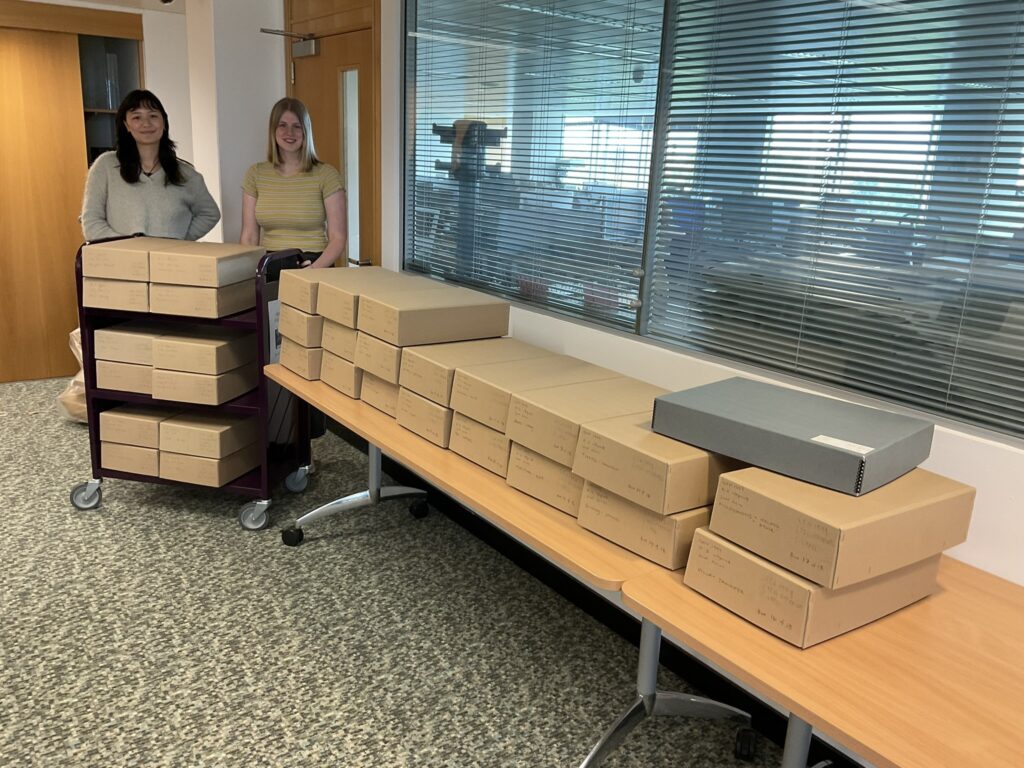
Claire and Harriet proudly display the newly catalogued Lyell’s loose Offprint collection.

Hello, we are interns Claire and Harriet, who have now been working for 5 months on Charles Lyell's Offprint collection held by Heritage Collections. In our first blog post, we covered how our work on these offprints was starting to reveal the extensive network of researchers and topics that Lyell was collecting and reading about. And we're now finished! 

Within this collection, we have worked through all sorts of sizes and types of Offprints, from larger folios (slightly bigger than A4), the smaller Offprints (roughly A5 size), as well as oversized, some miscellaneous items, as well as offprints of Lyell’s own published works. To date, we have now catalogued 1291 separate offprints and organised them into 32 boxes! Many have needed alphabetical reordering, where they have been previously misplaced or incorrectly labelled. It was especially satisfying to see this final re-shuffling and re-labelling of these boxes, now all under our new catalogued order.

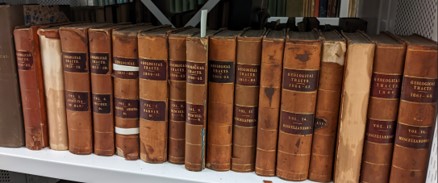
But, we were not quite done! True to every other archive listing project (ever), we still had 22 bound volumes to tackle! Shelved along with other unaccessioned material, and originally part of the Geology Library, these volumes are embossed with the titles ‘Geological Tracts’ a somewhat vague title, that was assumed to point to various other organisations or societies. Some had titles, and numbers embossed on the outside, others were 'unknown', their place in the series unrecorded. In fact, these 22 volumes contain annotations by Lyell, and are a unique set, recording his reading.   

Lyell's 'Geological Tracts'

“Geological tracts Unknown Vol. 2, “Vol. 5”, and ‘Vol. 7, feature journal articles and book extracts discussing Charles Darwin’s Origin of Species, while volumesGeological Tracts Vol. 3 Antiquity of Man, “Vol. 5”, and “Vol. 11”, feature offprints on flint implements and geology in France. Each volume brings together as many as 33 different authors, all originating from different journals, with their own published volume numbers, page numbers - as well as Lyell's own handwritten notes.

Papers about the Human species, their origin, their place within nature, and the different phases of human evolution within the geological/archaeological record, appear throughout, for example, Rolleston’s Distinctive Character of brain of Man and of Anthropomorphic Apes (Vol 2, 17) and Babbage’s (1859) Chalk on human implements mixed with bones of extinct animals (Vol 3, 16). 

The bound volumes labelled “Miscellaneous” include assorted articles on geological formations, zoology, submergence, glaciation, plants, and the deep-sea from locations all over including: the Americas, India, Europe, Islands, with a higher proportion on England, Wales, and Scotland. 

Tracts’ was a word that we had seen before - it had cropped up several times whilst cataloguing the other separate offprints, expressed in handwritten notes on their front covers. From this we have inferred that ‘Tracts refer to these bound volumes. We have also become familiar with the authors and contributors and their topics of interest, and recognised they were reappearing in these bound volumes, and that Lyell appears to collate the topics that he was most interested in. It has been incredibly rewarding to see the re-emerging connections, made possible from our work over the previous months, making more sense in these final bound volume offprints.  

Finally, we have applied our deep understanding of Lyell's Offprints, to his 'Index Notebooks'.

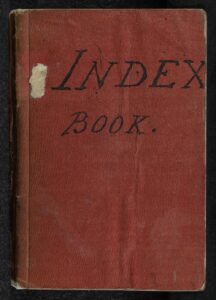
At the end of the series of Lyell's Notebooks, there is a set of 16 index notebooks - but that title isn't as clear as it seems. Our work has explored the relationship between these indexes, and Lyell's reading, and it appears 13 of these notebooks are the key to unlocking the bound ‘Geological Tracts’. There are 2 General Indexes which relate to a series of 11 indexes, filled with Lyell's reading, research, and correspondence notes. The second General Index (currently A5/12) lists alphabetically the names and papers of key researchers Lyell made notes on. This index lists where Lyell's notes can be found inside both the Tracts and the series of 11 notebooks.  


Aided by our comprehensive lists, we were able to put our theories as to how these records connect, to the test. For example, Lyell’s notes on Agassiz’s ‘Distribution of Animals’ is listed as Index 1.122 and Tracts 1.6. Therefore, these notes can be found in index book 1 (A5/15), page 122, and the paper itself can be found in Geological Tracts 1 entry 5 (Geological Society Vol. 1. 1850-1855). Because of this, we were able to correctly identify 2 volumes marked 'unknown', as 'Geological Tracts' 6 and 12. We can piece together the whole set, and, recreate their original order - including some that are dated earlier, and may be their prototype! 
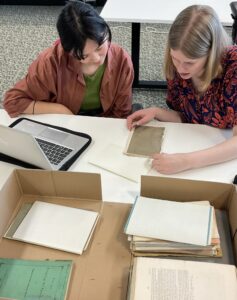
 

Harriet and Claire's internship has been funded by the Friends of the University Library - which is apt, given the relationship between Lyell's archive, and, the Offprints, that technically form part of the book collections. The task of listing the voluminous Offprints must at times, felt never ending - and yet, the application of their knowledge, has meant we can now properly catalogue a crucial set of archival indexes, not to mention, extending Lyell's network by several 100 people! Adding the detail of Lyell's 'reading' to his other tools - of observation, collecting specimens, and correspondence- is a crucial part of the story of his contribution to how we understand the world today. Thank you both for your amazing efforts! 

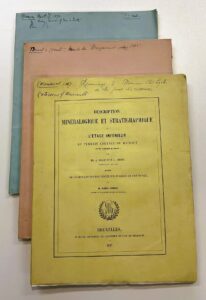
An offprint is a separate printing of a work that originally appeared as part of a larger publication, such as an academic journal, magazine, or edited book. Offprints are used by authors to promote their work and ensure a wider dissemination and longer life than might have been achieved through the original publication alone. They are valued by collectors as akin to the first separate edition of a work and, as they are often given away, and may bear an inscription from the author. Historically, the exchange of offprints has been a method of correspondence between scholars; by studying Lyell’s offprints, we will be able to extend our understanding of his network, for example, contrasting the correspondence files, or by following up references in his notebooks, but, to do that, first we need a list! Please welcome Harriet Mack and Claire Bottoms, who are now charged with that task.... 

Hi, we are Harriet and Claire, and we have been working for about a month on Charles Lyell’s collection of offprints held by Heritage Collections. These offprints are a series of publications collected and kept by Charles Lyell (1797-1875) assisting with his understanding of scientific principles. Their numerous locations and authors help expose the extensive network of researchers publishing - from Paris, Geneva, Berlin, Sicily to North America - as well as being a record of Lyell’s wide-reaching interests - from geology, history, science, anatomy and civil engineering - to name a few Using Lyell’s own work and his archive collection, and by listing these offprints, we are recreating Lyell's network and reference library, providing researchers with a route to Lyell’s own reading and research.

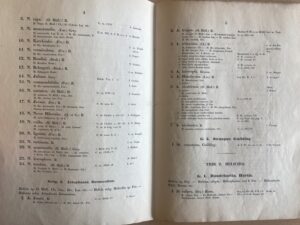
Catalogue of Land Shells in the Royal Collection of the late King of Denmark. Fam. Cochleadea. Trib.1. Vitrinida, by Henrik Hendriksen Beck.
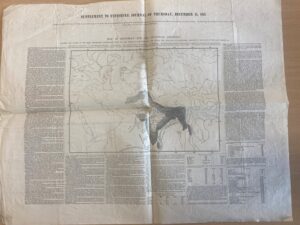
Map of Hindostan and the Countries Adjoining, showing the tracks of the most remarkable earthquakes since 1819, the principal volcanoes and hot wells, the localities of hailstorms, direction of the wind in the rainy season, etc. by George Buist

From the get-go we were focusing on the specific primary metadata that could be taken from each offprint. These include the title, author, paginations, language, date, publisher, and any handwritten notes. Titles are often long and specific to geological terminology with many in German, Italian, French, and English with some outliers of Latin and Swedishwe've been spending a lot of time on Google translate! What is interesting is that the dates follow a huge range across Lyell’s lifetime, with some early works from 1811 and later works dated in the months before his death in 1875. We are pulling out publishers and journal titles as they provide crucial information concerning the works of learned societies, publications of similar dates, similar interests at the time, and an understanding of the priorities in each year. So far, we have recorded over 200 offprints covering a wide range of topics. 

Of great interest are the handwritten notes that accompany the printed works – which reveal hidden details. These appear often on the cover of the offprints and contain dedications by the authors, as well as notes made by Lyell and his team - wife Mary Lyell (1808-1873) and secretary Arabella Buckley (1840 – 1929). Working through the collection, we have uncovered these additional layers to Lyell's administrative organisation; these added names and dates ensure that the offprint can be identified by the cover as well as the title page.

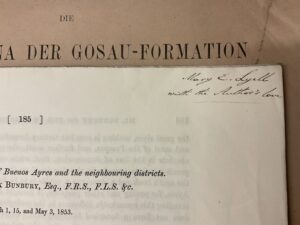
One of our favourite dedications so far is on the cover of Notes on the Vegetation of Buenos Ayres and the neighbouring districts by Sir Charles James Fox Bunbury (1809-1886) dated 1854. The dedication stands out as it is to Mary Lyell rather than Charles: ‘to Mary E. Lyell with the Author’s love’. Charles Bunbury married Mary’s sister, Frances (1814–1894). Lyell’s wider archival collection holds correspondence that details their family and working relationship – it's gratifying to see this extend to the sharing of offprints. 

Surprisingly colourful, Lyell's offprints come in a range of pastel shades

Lyell's offprints have been fascinating to look through. We have gained a colourful wealth of knowledge on specific regions and geological phenomena, as well as an understanding of broader nineteenth century scientific knowledge. At the same time, it is easy to get lost; a common rabbit hole has been the pink journal Revue des Sciences. For this title, Lyell kept specific monthly editions in full. By doing this, he has enabled us to see what else was printed in each edition, widening our understanding of what he and his contemporaries (his network of 'able investigators’) were reading in connection with one another.  


We are really looking forward to continuing looking, and finding more!

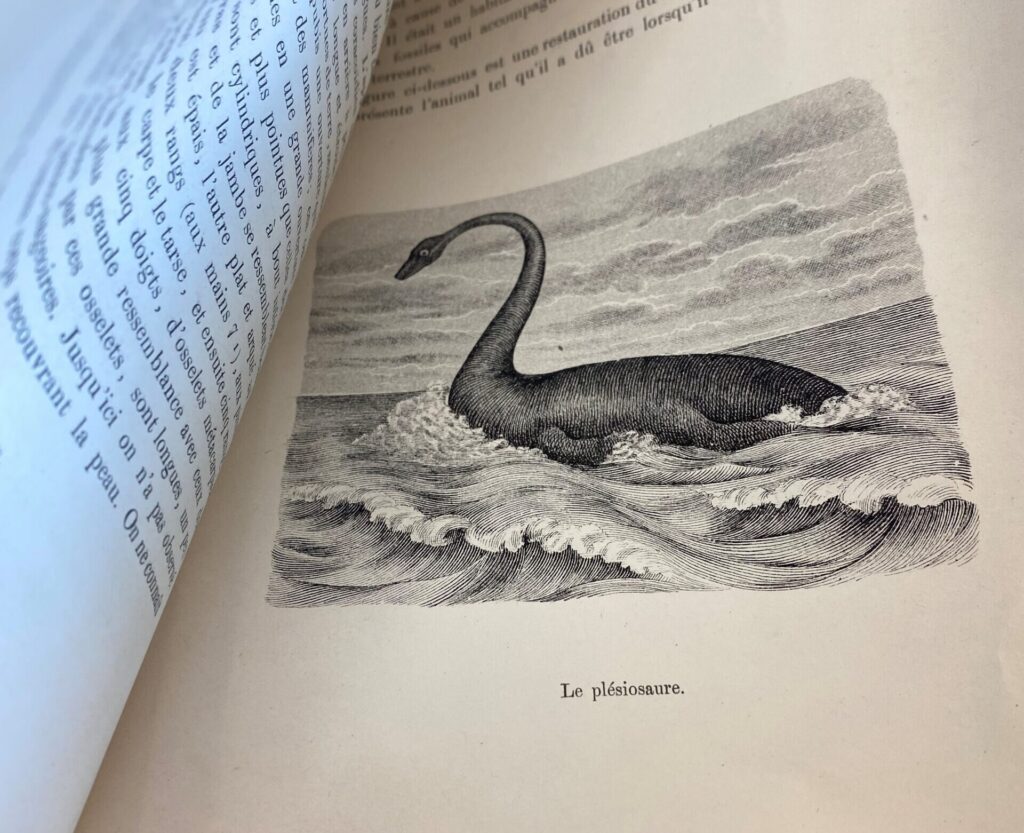
Le Plesiosaurus Dolichodeirus conyb. Du Musee Teyler, By T.C. Winkler

Will Adams completed his MA Archaeology dissertation at the University of Edinburgh Summer 2023 looking at Lyell’s archaeological specimens – achieving an impressive 78% and winning an award to boot! Read on to find out more about his spectacular findings…

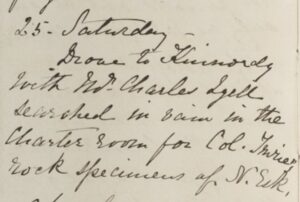
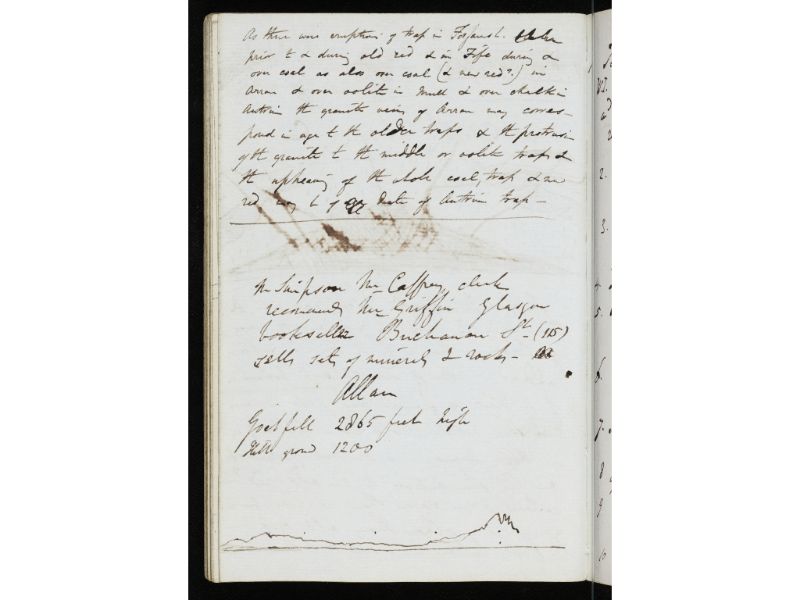
Scientific Notebook 266 page 14

Many specimens from Charles Lyell’s private collection were donated to the University of Edinburgh in 1927 and came directly from his family home and birthplace of Kinnordy House. In the very last Scientific Notebook, number 266, dated 17 July-23 November 1874, Lyell, in advancing age, is driven to Kinnordy to search "in vain in the Charter Room for Colonel Imrie rock specimens of N. Esk".


This indicates that any finding aids to access what must have been a voluminous personal collection, even during Lyell's lifetime, were problematic. No detailed documentation about the specimens at the time of the gift in 1927 appears to have survived, and the absolute authentication as having been part of Lyell’s specimen collection, is reliant on the existence of original labels. Subsequent use by staff of the University also had an impact on the specimens – a split occurred in the collection, with specimens now held by both the Cockburn Geological Museum and the Vere Gordon Childe Collection.

This paper is a study of the archaeological flint tool, VGC1363, held in the Vere Gordon Childe Collection and shows how it can be irrefutably reunited with Lyell through studying the object alongside his printed publications and recently acquired notebooks. This work highlights how an interdisciplinary approach utilising archive, library and museum evidence is essential for provenance research in scientific collections.

Figure 1. Illustration by Adams (2023) showing a match of specimen EUCM.0001.2022 with a figure in Lyell’s The Geological Evidences of the Antiquity of Man (1863) realised by Dr Gillian McCay, Curator of the Cockburn Geological Museum

Using Lyell’s books as source material, Gillian McCay, Curator of the Cockburn Museum had confirmed that specimen reference EUCM.0001.2022, in Figure 1, had been ‘figured’ and included as an illustration in Lyell’s last major work, The Geological Evidences of the Antiquity of Man (1863), which had huge public success with almost all of the 4000 copies sold in its first week of publication (Cohen, 1999, 90).


Looking at the rest of the collection, I was intrigued to find out if I could reveal any more, and was particularly interested in a set of flint hand axes in a draw labelled “Misc. French Flints” in the Vere Gordon Childe Collection, that have ‘Sir C Lyell’ written directly on them or on the object label.

VGC1363: An indication of Lyell

Collecting evidence was critical for Lyell – surely more specimens could be found and identified, using his books? From developments in the human antiquity debate by Joseph Prestwich and John Evans in 1859, Lyell conducted his own research in the Somme Valley to provide an authoritative judgement.

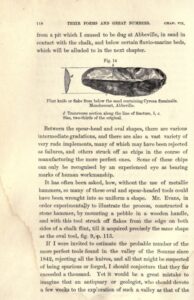
Figure 2. Page 118 Antiquity of Man

Figure 2 shows page 118 of Lyell's Antiquity. Studying this page carefully and using my knowledge of archaeological illustration I could see that this flint tool displayed in Lyell's “Fig 14” has been broken in half from the “b” and “c” line in the original illustration and the section shown at “d”. Out of all the miscellaneous French flints in this draw, I could now narrow down my search to broken flint tools to provide a positive match.

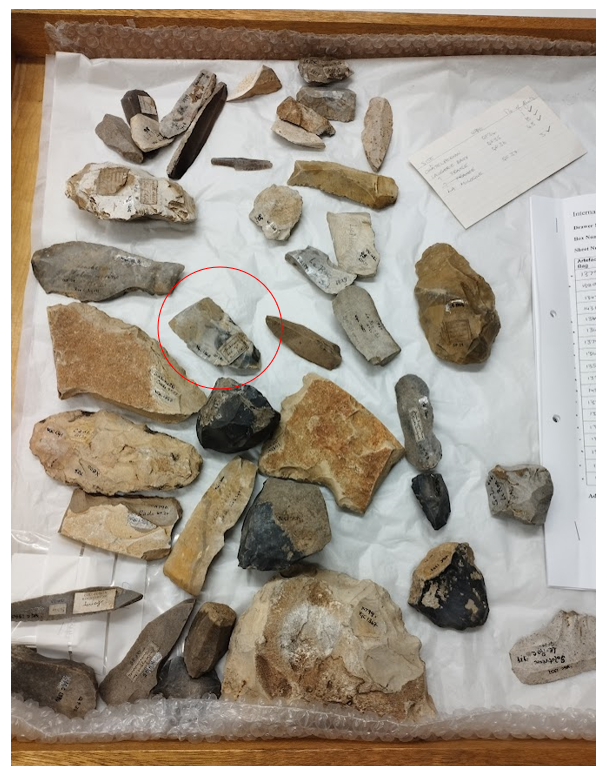
Figure 3. Photograph by Adams (2023) of a drawer in the Vere Gordon Childe Collection labelled as "...Misc. French Flints" with specimen VGC1363 highlighted by a red circle


The flint tool circled in Figure 3 is broken in half, making it a candidate. It is fortunate to retain its label which reads “Sir C. Lyell, Menchecourt bed – ‘e’, March 1861” this connects it to Lyell. The connection is further supported by Lyell’s description of “Fig.14”  as being a flint knife from Menchecourt (Lyell, 1863, 118).

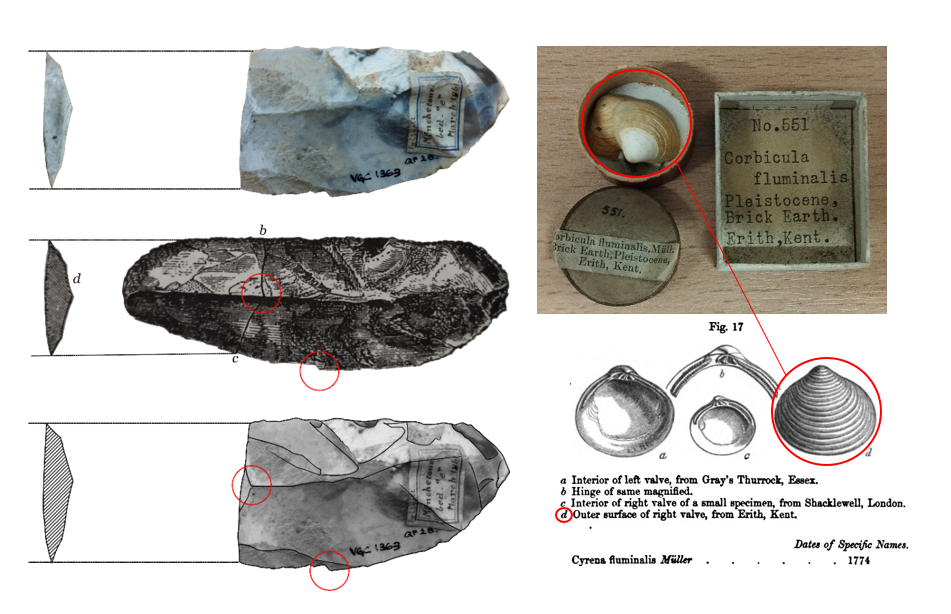
Figure 4(a): Illustration by Adams (2023) comparing VGC1363 with "Fig.14." through correspondence points; and on the righthand side Figure 4(b): Illustration by Adams (2023) showing a match of the specimen of Cyrena (Corbicula) fluminalis, EUCM.0222.2023, from Erith, Kent to illustration “d” in “Fig.17” of …Antiquity of Man (1863)

Furthermore, the illustration in Figure 4(a) shows how the object matches morphologically to Lyell's “Fig. 14.”, through the transverse section and from the front view of the object.

This is an important object because of its context of being found “below the sand containing Cyrena fluminalis, Menchecourt, Abbeville” (Lyell, 1863, 124). Later in the book, Lyell goes on to explain that Cyrena (Corbicula) fluminalis is now an extinct species of freshwater shell in modern Europe, suggesting that the presence of a human modified flint tool in a stratigraphic layer below this shell supports human antiquity (Lyell, 1863, 124).

In Figure 4(b) a specimen of Cyrena (Corbicula) fluminalis held in the Cockburn Geological Museum collection appears to match the illustration and place name description of “Erith, Kent” typed in the extant label, in illustration “d” in “Fig.17.” of Antiquity of Man (Lyell, 1863, 124).

Turning away from the source material of books, and object labels – I was also able to consult Lyell’s rich archive, including the 294 notebooks. Knowing the time frame, and location I was able to establish that Lyell’s Notebook 245 records him being on site in Menchecourt in March 1861.

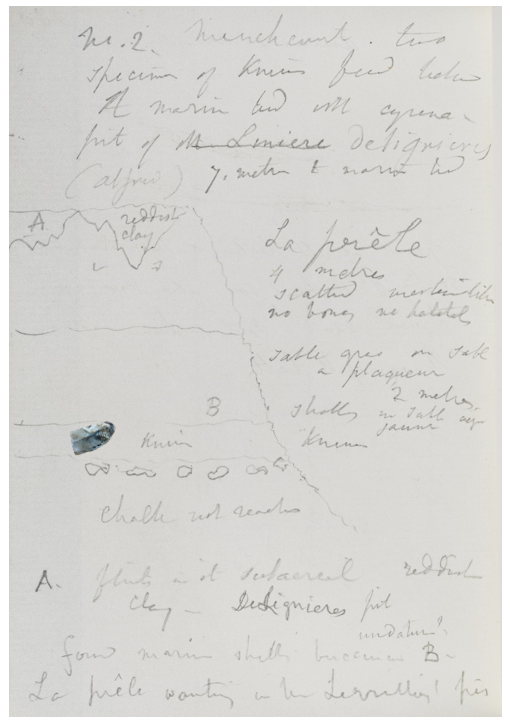
Figure 5. Figure 5: Edited photograph taken by Adams (2023) of Lyell's notebook showing the flint knives place in the stratigraphy with a photograph of VGC1363 superimposed into the stratigraphy.


Figure 5 shows an edited version of Lyell's stratigraphic drawing during his time there, showing flint knives found below a layer containing Cyrena (Corbicula) fluminalis. Lyell’s note at the top of the page 138 reads “Menchecourt. Two specimen of knives found below a marine bed with cyrena” which is the conclusive proof placing Lyell at the right place and time to uncover VGC1363.

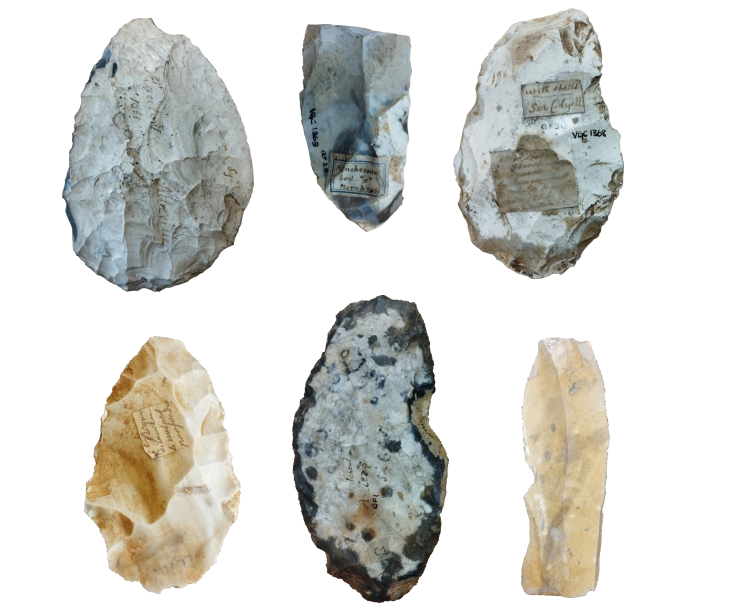
Figure 6. Figure 6 The six archaeological specimens from University of Edinburgh conclusively connected to Charles Lyell. From top left to bottom right: EUCM.0001.2022; VGC1363; VGC1368; EUCM.0311.2009; VGC0860; VGC1366 (Adams, 2023)

Lyell’s specimens confirmed

Through my 4th year MA Archaeology dissertation, I conclusively identified another five archaeological specimens in the University of Edinburgh’s collections, shown in Figure 6, as belonging to Charles Lyell, and, through archival research, was able to create detailed object biographies for each. Although there are more flint hand axes with Lyell’s name attached which have not yet received the same detailed analysis, the trends seen in the object labelling system of the six specimens are consistent with the others in the collection. This makes it highly likely that the ‘Sir C Lyell’ labelled hand-axes in the Cockburn and Vere Gordon Childe collections belonged to the private collection of Lyell. An interdisciplinary approach was essential for determining the provenance of all six of these specimens – I had to apply both my archaeological knowledge and skills as well as newly acquired archival skills such as palaeography to fully understand what I was seeing. Piecing together this information was further complicated, due to a lack of relationships created between the different collections. As I embark on my working career, I’ll definitely advocate for establishing relationships between archive, museum and library catalogue entries to avoid a loss of provenance and the dispersal of materials.

Thank you, Will, for all your efforts – you should take great satisfaction for your part in identifying and repatriating a set of ‘miscellaneous French flints’ as being crucial to Lyell and his role in the Antiquity of Man debate, from which all future users will benefit!

Further reading

Cohen, C. 1998. Charles Lyell and the evidences of the antiquity of man. Geological Society Publications 143, pp. 83-93.

Lyell, C. 1863. The Geological Evidence for the Antiquity of Man (3rd Ed). London: John Murray.

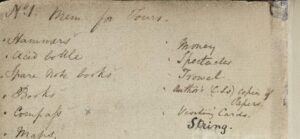
'No. 1 Mem for Tours' features 'Author's (CL's) Copies of Papers'.

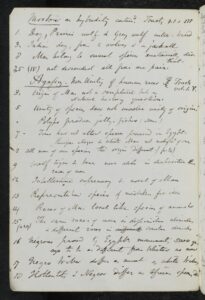
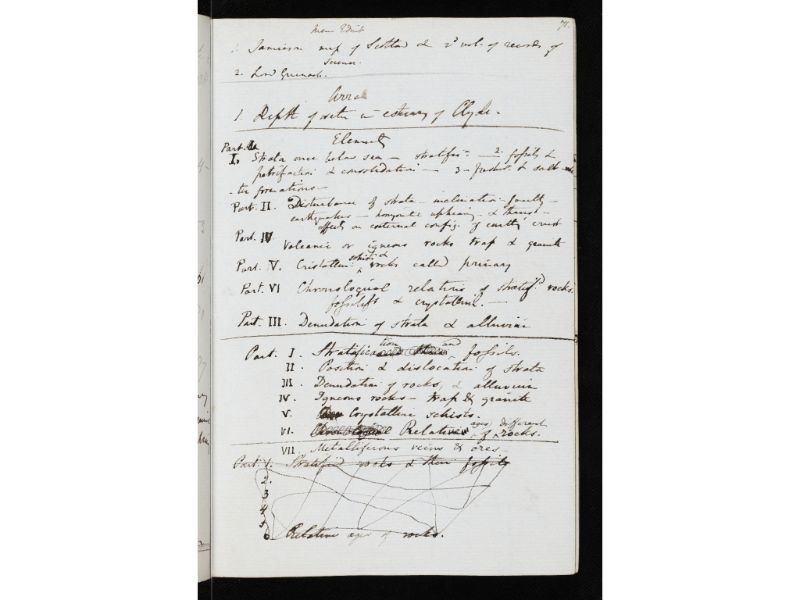
In his Scientific Notebook 1, dated March - April 1825, Charles Lyell lists things to take on his first geological tour, designed to gather the evidence for his first book. In the list, he notes 'Author’s (C.Ls) copies of papers', and it's delightful to see him describe himself in that role.


Felicity with Jeremy Upton, Director of Library & University Collections at Lyell exhibition opening.

Felicity MacKenzie came across Charles Lyell whilst completing her History degree at Bristol - and for a considerable part of that, consulted online versions of his books during lockdown conditions. Felicity has now completed her Masters degree at Cambridge, where again, she was able to focus on Lyell. She is currently applying for a PhD in order to be able to explore his life further. Here, she gives a thorough introduction to Lyell’s books, as well as current links to online versions. 


The books that Charles Lyell wrote played an important role in the way in which he honed and communicated his geological work. When considered alongside each other, they offer the opportunity to trace the threads that run across Lyell’s thought and practice, as well as to compare and contrast his interests and concerns at different times in his career.

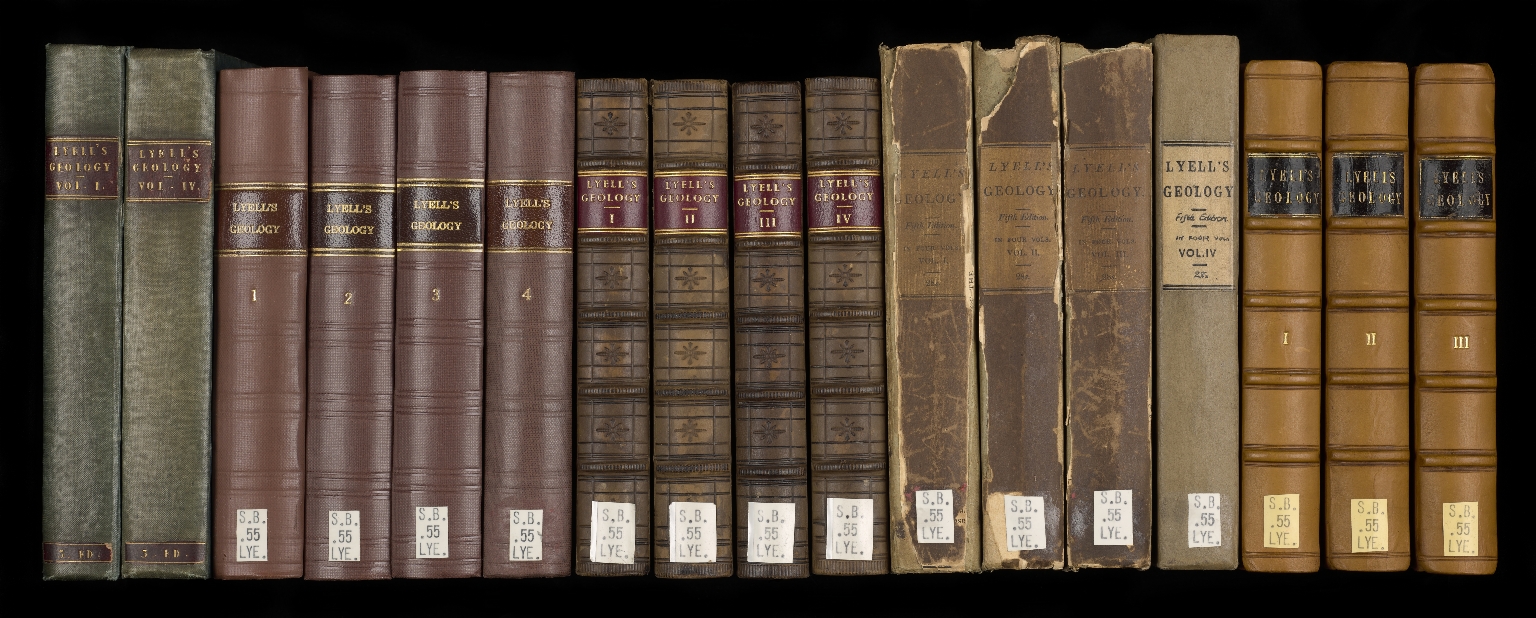
A selection of different editions of Lyell's Principles, held at the University Library.

Lyell’s first and most famous book was the Principles of Geology: Being an Attempt to Explain the Former Changes of the Earth's Surface, by Reference to Causes Now in Operation. Initially published in three volumes - volume I 1830, volume II 1832 and Volume III 1833, the Principles was reprinted in twelve editions over Lyell’s lifetime and sold over twenty-five thousand copies. As the name suggests, Lyell used the book to consolidate and promote the ‘principles’ by which he believed modern geological science should be conducted. The most central of these principles was Lyell’s insistence on the exclusive explanatory authority of the reliable, rationally trained human observer.

For Lyell, human witness and reason formed the only basis for truth. This led him to state his
famous case - that ‘the present is the key to the past’ based on the idea that the action of
geological causes in the present, fell within the remit of human observation, and so formed the only trustworthy basis for knowledge about the way in which such forces might have acted in the past.

Principles, 10th Edition, volume 2, 1868.

This kind of human reason-centred geology had particular political ramifications in the 1830s, when ideas about reason versus revelation - and the bearing of the Bible upon truth - had significant implications for the politics of church, state and education. Lyell was aware that his work could produce heated debate and touch realms beyond geology. As a result, he structured his rhetoric in the Principles carefully. In so doing, he produced a masterpiece in the tactful presentation of controversial ideas. The Principles burst onto the British intellectual scene and remained an important cultural work throughout the nineteenth century and beyond.


Lyell’s second book was the Elements of Geology (1838). This was published in seven editions
between 1838 and 1871; its name changing to the Manual of Elementary Geology with the third
edition. This book was a practical, ‘how-to’ supplement to much of the material already covered
in the Principles, and taught the practitioner what they needed to know for application in the
field.

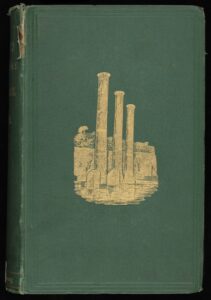
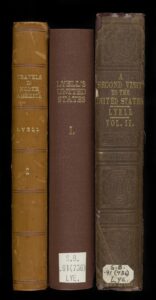
Next, came Lyell’s American travelogues. Lyell was invited to give a series of lectures at the Lowell Institute in Boston in 1841. During this visit, Lyell not only lectured in Boston, Philadelphia and New York, but travelled extensively around the northern and southern states with his wife Mary, observing and collecting geological phenomena. On returning home, Lyell decided to write up his geological work alongside social and political commentary. This resulted in the Travels in America: With Geological Observations on the United States, Canada, and Nova Scotia volume I and volume II in 1845.
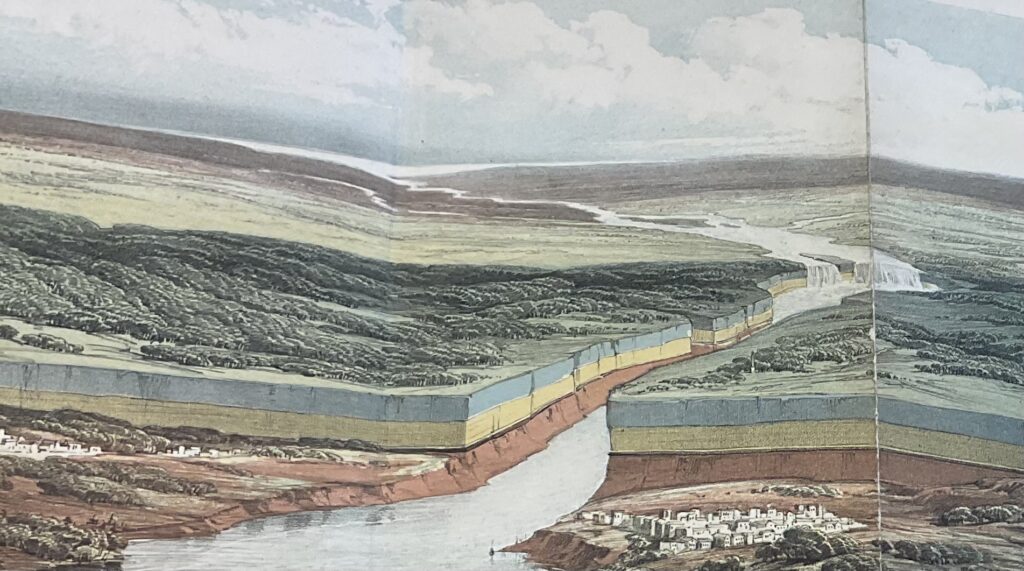
Both volumes include terrific foldouts, necessary to accommodate the scale of the country and its geological features.

Illustrations were important to Lyell, and in his Travels he included a fantastic fold-out, necessary to accommodate the scale of Niagara

That same year, Lyell was invited to lecture again at the Lowell Institute, and factored in another nine-month stint of travelling. The results were published in his A Second Visit to the United States of North America volume I and volume II, in 1849. Once again, a significant portion of this work was dedicated to social and political commentary, which makes it an important insight into Lyell’s broader ideology. In particular, it sheds light on Lyell’s very problematic attitude to race and enslavement

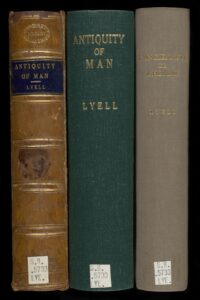
Lyell’s final book was the Geological Evidences of the Antiquity of Man, with remarks on theories of The Origin of Species by Variation (1863). This work focussed on the question of human antiquity and is famous for how many people Lyell upset with it. Charles Darwin was frustrated that Lyell did not take the opportunity - as a significant figure in the highest echelons of British science - to offer full support for an evolutionary account of human origins. Additionally, Lyell infuriated colleagues, such as Robert Owen, Hugh Falconer and John Lubbock, who accused him of plagiarising their own and others’ works.
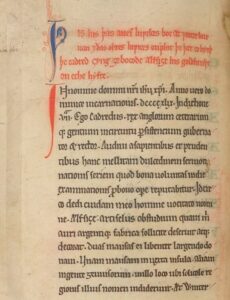
 

Each of Lyell’s books had a different and important impact on the intellectual and cultural life of nineteenth-century Britain. Hugely successful, they chart a course over what was an amazing timeframe in both scientific findings and their popularisation.

Thank you Felicity for sharing your knowledge on Lyell's books with us! Copies of Lyell's books from the University's collections, as well as Lyell's own annotated copies, are featured in our current exhibition. We will be featuring Felicity's comprehensive online book list, and more, in our forthcoming website.

Recommended further reading:

  • James A. Secord, ‘Introduction’, in Principles of Geology (London; New York: Penguin Books, 1997)
  • Martin J.S. Rudwick, Worlds before Adam: the reconstruction of geohistory in the age of reform, (Chicago: University of Chicago Press, 2008)
  • Martin J.S. Rudwick, ‘The Strategy of Lyell's Principles of Geology’, ISIS, 61:1 (1970), 4-33
  • Roy Porter, ‘‘Charles Lyell and the Principles of the History of Geology’, The British Journal for the History of Science, 9:2 (1975), 91-103
  • Stuart A. Baldwin, ’Charles Lyell: A Brief Bibliography’, (Essex: Baldwin’s Scientific Books, 2013)
  • Robert H. Dott, Jr., ’Lyell in America: his lectures, field work and mutual influences 1841-1853’ Earth Sciences History, 15 (1996), 101-140
  • W. F. Bynum, Charles Lyell’s ‘Antiquity of Man’ and Its Critics, Journal of the History of Biology, Summer, 1984, Vol. 17, No. 2 (Summer, 1984), pp. 153-187


Two-day workshop, 8-9 February 2024, University of Edinburgh

CALL FOR PAPERS

Contributions are invited to a two-day workshop on the life and work of the leading geologist and natural scientist Charles Lyell, to be held in the University of Edinburgh.

Building on the acquisition for the nation of the notebooks and archival papers of distinguished geologist and earth scientist Charles Lyell (1797-1875), our work towards the 'Time Traveller' exhibition and a soon to be launched Lyell dedicated website, we now invite papers for a 2 day workshop in Edinburgh.

The Workshop: Aims to provide a platform for persons interested in the life, work, and collections of Charles Lyell, and science in the nineteenth century, to come together to learn more of the Lyell materials held in Edinburgh, to explore how best to connect the disparate holdings of Lyell’s specimens and texts, and to consider future research possibilities on Lyell’s work and world.

Contributions in the form of a paper to be delivered at the Workshop are invited from persons working on any aspect of Lyell’s work and life, on the history of geology, or on related topics bearing upon Lyell’s writings and achievements. Contributions are also welcomed from curatorial or archival staff in institutions holding Lyell material or significant related material for an intended panel session on linking archival holdings and object collections across institutions. The Workshop will include an opportunity to see some of the Lyell materials held by Heritage Collections, and the Cockburn Geological Museum at the University of Edinburgh, and to visit the Exhibition.

Paper contributions: Papers should be 15 minutes in length (paper sessions are planned for 15-minute papers, 5 minutes discussion per paper). Please provide a title, an abstract (100 words), your title and institutional affiliation (if any), and an email address. In selecting papers for the Workshop, preference will be given to PhD or other research students and to Early Career Researchers.

Panel session contributions: Please be prepared to speak for 5-6 minutes on the Lyell material in your institution’s holdings and the opportunities it presents for further research.

To Contribute: Please send in your proposed contribution to Professor Emeritus Charlie Withers via email to: c.w.j.withers@ed.ac.uk by Friday 10 November 2023. It is hoped that the Workshop Programme Committee will reply within two weeks of this date to confirm your involvement or not.

A confirmed Workshop Programme will be available soon after this in which further details will be given on location, timings, and costs of delegate attendance at the Workshop.    

We look forward to hearing from you!


2

Free exhibition in the Main Library Exhibition Gallery (ground floor),

Open from 27th October 2023 – 30th March 2024, Monday to Saturday, 10am to 6pm 

Over the last few months, our efforts have been focussed on pulling together all the work to date associated with the Charles Lyell Project, into an exhibition. It has taken a small army of experts, staff, interns, and volunteers to get us to this stage – and we are nearly there. Here is a look behind the scenes…

Getting down to writing – what will be in effect – the first major exhibition on Sir Charles Lyell was a fairly daunting task. The science Lyell is writing about was new; today it can be recognised as ecology, climate and Earth studies, but in Lyell’s time it encompassed several different disciplines – geology, archaeology, geography, conchology, botany, zoology and palaeontology. The terminology is crucial, and, still under significant debate. Working in an era of imperial exploration and expansion Lyell’s travel through the slave plantations of the American South was controversial and remains disturbing. Despite his life’s work to gather, share and advocate for precise and authentic evidence in science, Lyell struggled to accept his friend Charles Darwin’s work on evolutionary theory. This exhibition explores these themes providing an unprecedented insight into how Lyell worked to establish a science that abridged deep divides of religion, race, culture, and politics.

Given these complexities, getting the right people on the exhibition team was vital, and it has been an absolute pleasure to work with Jim Secord, Director of the recently completed Darwin Correspondence Project. As Jim says, the reality is,

“getting into the 1830s is relatively easy, it’s the getting out that’s the problem”.

Jim has contributed a wealth of knowledge and experience , selecting rare books held by the University that add context to Lyell’s life and career, including motivators, Isaac Newton and James Hutton, and contemporaries such as Frederick Douglass. It has been fascinating to see how books held within the Library collections connect to Lyell’s work.

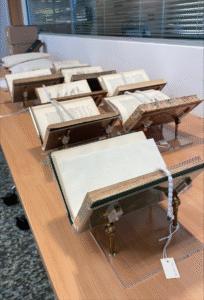
Rare books stand on plastic stands, which have been re-used and adapted for this exhibition
University Library books, that have been used by students over the years, contribute context to Lyell's work.
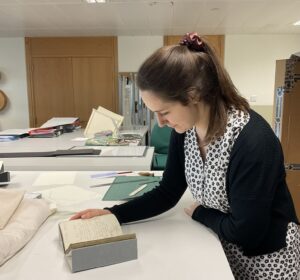
Robyn studies her successful trial to create a bespoke stand for the notebooks; re-useable and recyclable.


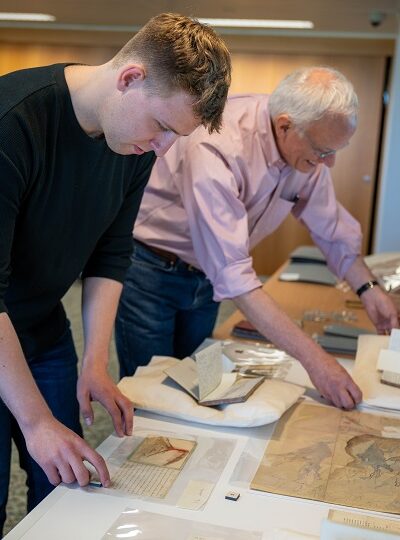
Jim and Will during 'object selection' day, working on choosing what items to feature.

Having completed his dissertation on Lyell’s contribution to prehistoric archaeological study, Will Adams has also been our Lyell Research Intern, tasked with curating a series of case studies, demonstrating how Lyell researched and gathered evidence to support his theories. Five display cases later, look out for Lyell as a ‘Principle Investigator’ (play on words intentional!) as he searches for evidence to support his theories on Volcanoes, Niagara, and Sea Serpents.


Will’s work has been supported by that of Lyell Summer Intern, Harriet Mack, and a crew of remote volunteers - Drew, Beverly, Bob and Ella - are are currently working to away using the digital images to transcribe notebook indexes. In the course of trying to understand them, we’ve googled, mapped, fact checked, and reached out to local people, familiar with where Lyell was working.

Notebooks are used in the exhibition to show how Lyell worked to gather evidence to support his theories.

The volunteer's work has really opened up that section of the archive, producing rich descriptions that have highlighted previously unseen sections in the notebooks that will feature in the exhibition. We have worked to include their reflection on this experience, enabling us to shine a contemporary light onto the notebooks, and all the different hands that appear within their pages.


Team 'Lyell Finds' -Will, Dr. Gillian McCay, & Hattie at the Cockburn Geological Museum.

Lyell’s specimens were a key tool for him, and Dr. Gillian McCay of the Cockburn Geological Museum has been an integral part of our progress to understand how they connect to the archive. From the outset, everyone has been on the lookout for references to collection items (fed into and logged in a very lively teams chat ‘Lyell Finds’) and Will, through his dissertation, has been able to re-establish the events that link notebooks and specimens to Lyell’s work on the antiquity of man. There is much more work to be done in this area – and we hope the exhibition will encourage this.


Today Lyell’s questions are still relevant, and the ways in which he worked (not always successfully) to answer them can add to our own understanding. Travelling relentlessly, and often accompanied by his wife, Mary, Lyell spent his life putting time to work, chasing volcanoes, visiting coastal, industrial and heritage sites, exploring strata, caves, waterfalls, quarries, and mines. The resultant rich data contained in his archive transports us through time.

In working together on the project to open up Charles Lyell’s comprehensive archive, and in preparing this exhibition, we find we have walked in his footsteps – creating a network of experts and local people, and using different tools to consolidate our understanding.

Pamela McIntyre, Strategic Projects Archivist, Heritage Collections, University of Edinburgh

Lyell Summer Intern Harriet Mack on a visit to the Cockburn Museum to see their Lyell Madeira shells

We've been lucky to have had Harriet Mack, who is heading into her 3rd Year of a joint honours degree in Archaeology and Classics working with us as our Lyell Summer Intern! In this blog, Harriet shares her experience - which has included a lot of island hopping!

I first learnt about the Charles Lyell collection through a deep dive into Heritage Collections website, and I really liked the bright colours of the notebooks and the interesting handwriting. I then found the opportunity to volunteer with the Lyell project, cataloguing some of Lyell's letters. I was captivated with the life and work of Lyell and his 19th century contemporaries, and started to gain an understanding of what transcription and palaeography were about.

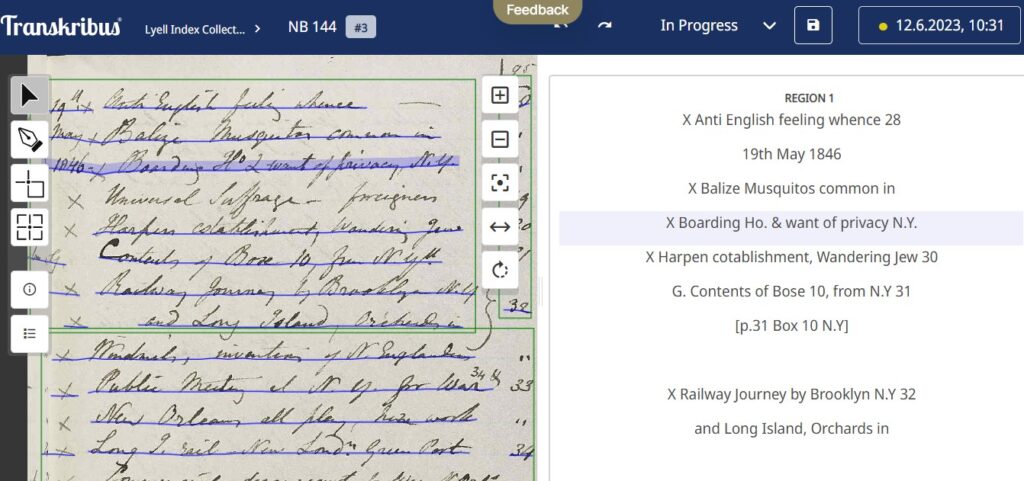
Starting as Lyell Transcription Intern, I had to upgrade my palaeography skills, and Transkribus helped. Switching to their Lite version enabled me to view the information differently and really helped emphasize the difficult words.

Screenshot from Transkribus, Scientific Notebook 144 page 95

I was also able to join the other remote volunteers, Drew and Beverly, online, where we could work together, bringing multiple perspectives to Lyell’s work. Later, when I encountered more difficult issues like the Portuguese place names from the Madeira notebooks, we reached out to expert Carlos A. Góis-Marques who helped to bring context to some of the notebooks. Planning was crucial and I developed a plan that could grow with me, as my skills developed and improved. I could also follow the  communal spreadsheet which enabled me to track my progress. I realised my notes also developed over time, even looking a bit like Lyell’s...

Extracts from Harriet's own project notebook


Once I had developed my skills - it was time to set off island hopping! First stop east coast of Georgia, then the Isle of Wight, Madeira and the Canary Islands.

Notebooks 129 and 130 both cover Georgia, USA, focusing on some of the islands off the east coast like St Simons Island, and Pelican Bank. On these islands, I was introduced to Lyell’s geological observations particular to islands, the environmental impacts, fauna and flora, and historical contexts. In America especially, Lyell's observations of the workings of the islands mix into his observations on slavery, race, and indigenous people.  

I then moved on to Notebooks 212, 213, and 214, with some of the contents being based on the Isle of Wight - which is where I'm from, adding a layer of expertise. I know the places he stayed along the West coast, at the Needles, Freshwater Bay, and Hamstead. Lyell noted the difference in geological specimens and rocks either side of the chalk ridge of the island, allowing him to suggest that south of the ridge - with marine specimens - was part of the Paris basin and had been exposed to the sea. North of the chalk ridge he found land specimens suggesting that it was originally connected to the mainland of the United Kingdom.  

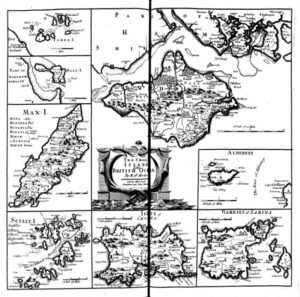
I wanted to know more about Lyell's interest in the Isle of Wight, and took time to search more. I found that as early as Notebook 3 page 108-109, he notes reading about the Isle of Wight in Camden’s Brittania, leading me to find an online copy of the book and an early map. This really excited me as it gave an insight into what map Lyell could have used. I also established that Lyell visited the British Museum and consulted a Charter dated 949 AD. This charter told of King Eadred giving 1 hide (mansa) on the Isle of Wight to his gold and silversmith Ælfsige. This charter is one of the earliest primary sources I had seen, referring to the Isle of Wight as Vecta Insula, a Latin name given by the Romans. 

Camden’s Britannia, : Newly Translated into English: With Large Additions and Improvements· Publish’d by Edmund Gibson, of Queens-College in Oxford. ProQuest, UMI, 1695. Print. Page 1048-1049
Isle of Wight Charter, MS Harley 436 f. 76v


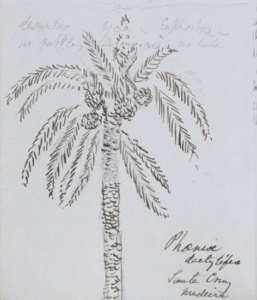
Lyell's drawing of a Phoenix dactylifera, Madeira January 1854, Scientific Notebook 189 page 60


After looking into Lyell’s travels to the Isle of Wight, I hopped on to Madeira and the Canary Islands. Lyell's study of these islands runs to 12 Notebooks dating January - August 1854, and contain his work alongside Georg Hartung (German geologist). I found they were more complicated, however, once I gained more context, I found they were the most enjoyable to work on. Lyell arrives in Funchal and the Notebooks relate his developing thoughts on formation and volcanic theory in response to his contemporaries such as Élie de Beaumont. The Notebooks include both geological and nature notes, with a large focus on shells and volcanic formations. One of my favourite drawings from this book is the Phoenix dactylifera (Date Palm). Lyell lists the shells he is collecting at Porto Santo and Madeira, such as Buccinidae. It was then really special for me to visit the University's Cockburn Museum, and see some of their Madeira shells.  

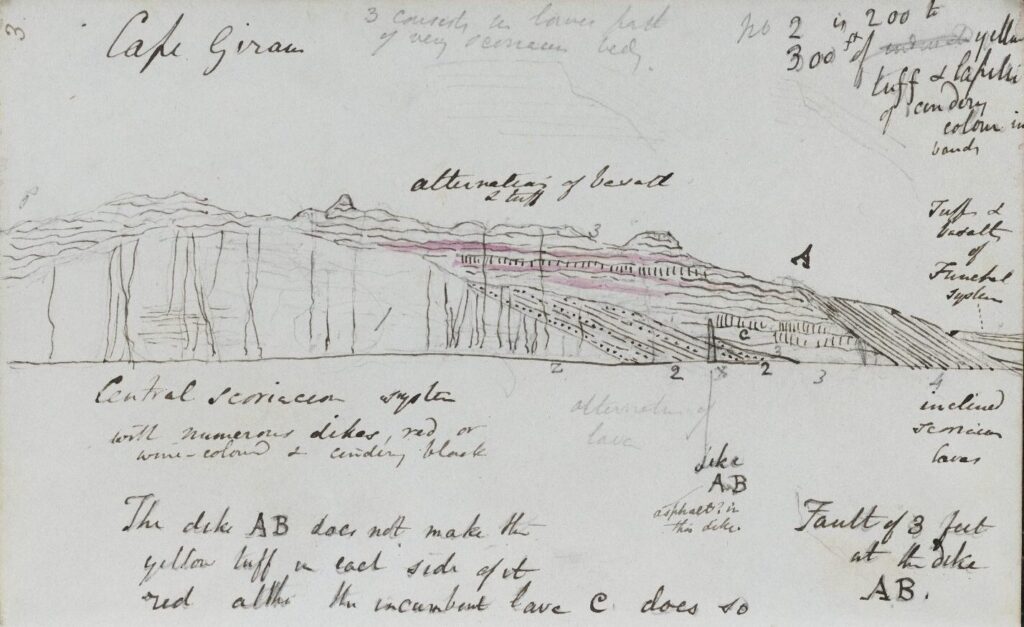
There are a team of people working together to write an upcoming exhibition on Lyell, and via my deep dive in Madeira, I was able to draw their attention to Notebook 191 page 3 and detailed sketches of Cape Girão on the south coast.  This page stands out as having colour in-depth notes, and impressive detail. Its good to know this Notebook page  will now be included in the exhibition. 

Lyell's drawing of Cape Girão, Scientific Notebook 191 page 3

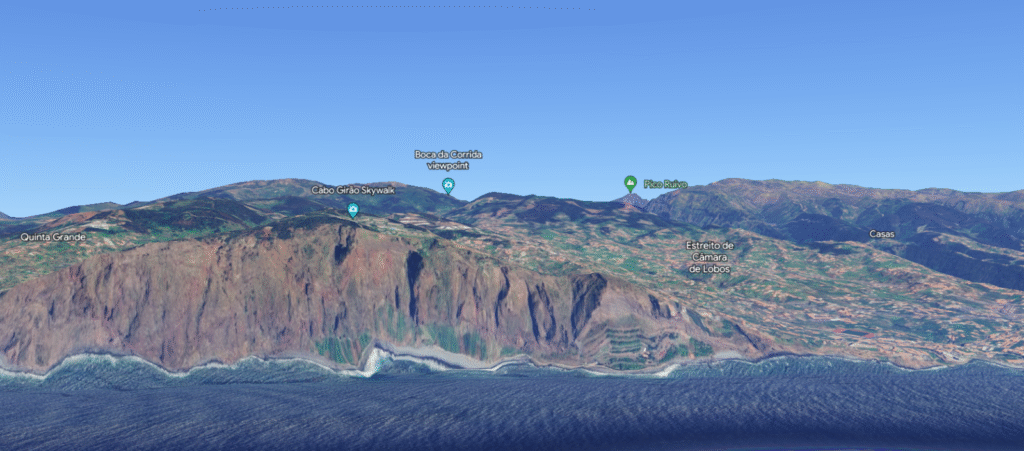
I found that my place recognition was drastically improving. Google Earth was extremely helpful, revealing the terrain and magnitude of Madeira and the Canary Islands in 3D. This not only improved my modelling skills, but also unlocked an environment that was virtually unchanged from that which Lyell was observing. Using Cape Girão as a starting point, I could match drawings to Google Earth and established that Lyell's sketch in Notebook 191 page 3 was most likely drawn at sea to give Lyell the fullest image of the cliff face. 

Google Earth (Version 9.191.0.0), Cabo Girão, Madeira: Latitude: 32.6322222 Longitude: -17.00583333333333

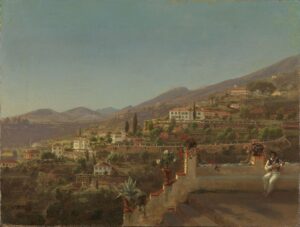
Whilst looking at the Madeira notebooks, there was a name that was repeated throughout that was initially unknown and difficult to decipher. That was until Notebook 191 p.110 where Lyell finally wrote the full name down as Johan F. Eckersberg, a Norwegian painter, who was in Madeira at the same time as Lyell, and as the Notebooks evidence, interacted and may have even advised Lyell's sketches.

View of Funchal, Madeira. Johan Fredrik Eckersberg, 1854, Nasjonalmuseet for kunst, arkitektur og design, The Fine Art Collections, NG.M.03396

Eckersberg completed many paintings of Madeira, recording what the Island looked like whilst Lyell and Hartung were there. By connecting Eckersberg’s artistic realism to these geological travels, the landscape and environment can be better understood.  

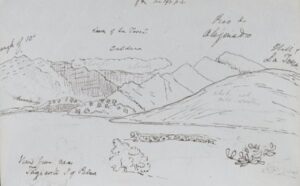
Notebooks 194- 195 cover La Palma and have some of the most recognisable landscape drawings. One that stood out to me was Lyell’s drawing of La Palma’s Caldera from Tazacorte. This one was much easier to locate on Google Earth as it had specific peaks, so I was able to be more accurate in terms of angles and direction.  

Google Earth (Version 9.191.0.0), Tazacorte, La Palma: Latitude: 28.6475 Longitude: -17.92277777777777
Notebook 195 page 40, Lyell's view of La Palma Caldera


Over 10 weeks, I have visited 7 islands with Lyell, and completed the transcription and summaries of 25 notebooks. This internship has really opened up my understanding of 19th century geology and Lyell's contribution to this emerging science, as well as just how connected society was.

Thank you Harriet for all of your hard work during the Summer! By utilising both old fashioned tools - lists, note taking, reaching out to experts and finding contemporary sources and art - alongside 21st century ones such as AI and Google Earth, you've really been able to explore Lyell's islands and make them much more accessible for the future! 

...continue reading "Lyell’s Islands"

2

We are grateful to present another guest blog! This time from Timothé Lhoste who is currently completing his master’s degree studying History of Science at the School for Advanced Studies in the Social Sciences in Paris. Timothé was in touch with the Centre for Research Collections requiring access to Charles Lyell’s Notebooks, and a very interesting story emerged, which sheds light on how Lyell worked. Read on to find out more about Timothé (and Lyell's!) research …

I am working on a scientific controversy concerning a “human fossil” known as ‘L’Homme de la Denise’, and named to acknowledge its discovery in 1844 on the slopes of the Denise Mountain, near the city of Le Puy-en-Velay in the French Massif Central. The find was crucial, as from the outset, doubts hovered over the authenticity and the exact age of the discoveries. In fact, these bones and the gangue (the material that surrounds them) continued to fuel a lively discussion for more than a century.

Drawing on the method of the biography of scientific objects, such as Marianne Sommer's Bones and Ochre: The Curious Afterlife of the Red Lady of Paviland, my study seeks to trace the impact of this object on the social world and vice versa. I am also interested in the evolution of different scientific interpretations of these objects.

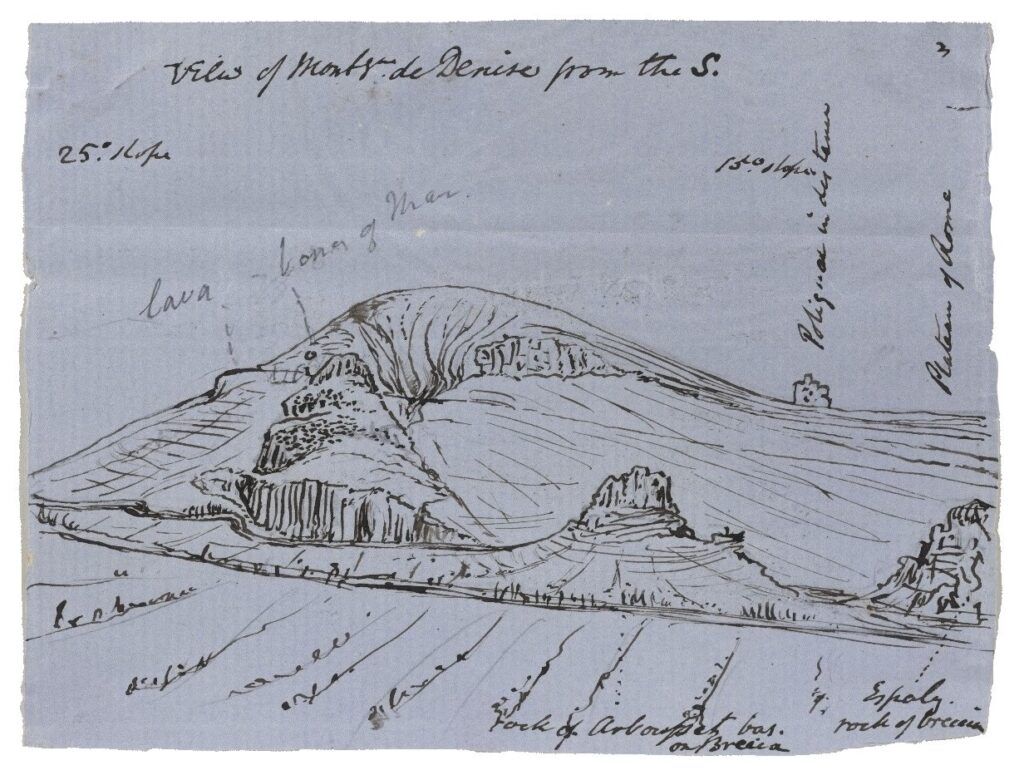
Lyell’s sketch showing the south face of Denise Mountain, Notebook 240, page 11

Charles Lyell’s Notebooks 239 and 240 document his trip to France during the summer of 1859, when he stayed in the vicinity of Le Puy-en-Velay from August 6th to 16th. He already knew this region, since he had visited it in 1828, as evidenced earlier in the run of his Scientific Notebooks in Notebook 12, dated 30 June – 21 July 1828. This area of the French Massif Central called Velay was of particular interest to Lyell. Volcanic formations had allowed the genesis and preservation of many fossil sites - and so of course would be of interest to Lyell the 'volcano  hunter'! - but in 1859, Lyell was now looking in particular for solid geological evidence of the antiquity of man.

For this reason, in the wake of Edmond Hébert and Edouard Lartet, he carried out investigations on the Denise site. He described the geology of the surroundings of Le Puy and carefully examined the human bones, which had been found in the region fifteen years before. During his stay, he met with local scholars such as Auguste Aymard, Bertrand de Doue, Pichot-Dumazel and Félix Robert. He even met Georges Poulett Scrope who came to complete his observations of the volcanoes of this region.

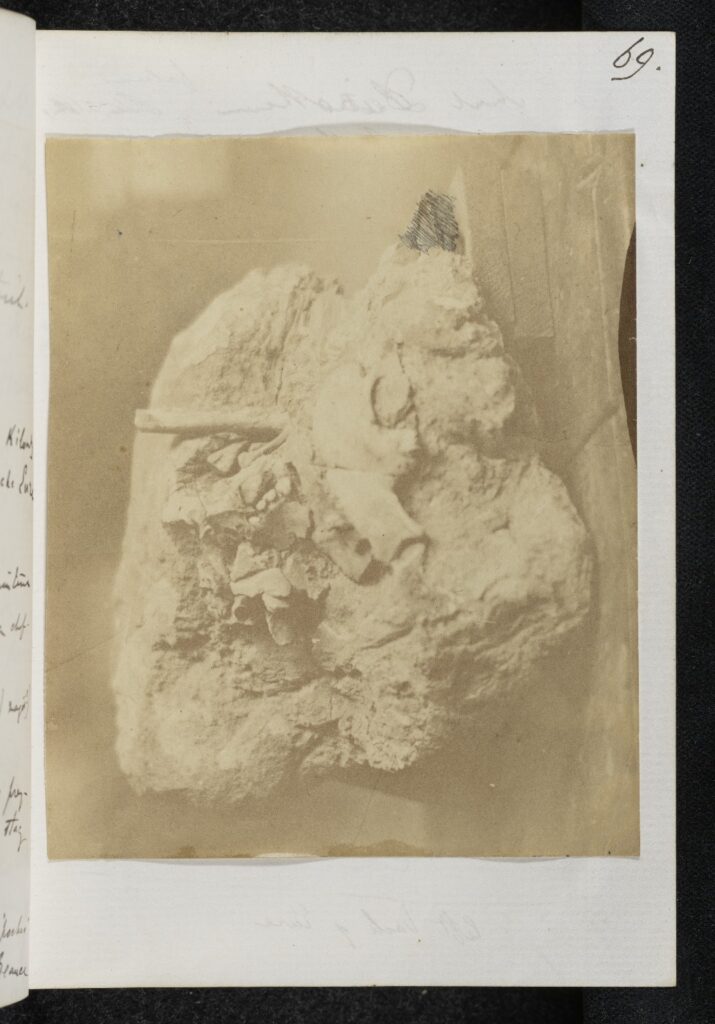
Lyell's Notebooks testify to the richness of his observations. He visited other geological and paleontological sites (including Polignac, Cussac, Espaly, Saint Privat d’Allier, Doue, and La Roche Rouge), drew multiple sketches and talked with many local people. The most compelling piece of ‘evidence’ is a photograph of the “museum block” (bought in 1844 by Auguste Aymard and Bertrand de Doue for the local museum) which is glued into Lyell’s Notebook 240; this illustrates the particular interest that Lyell had in these bones.

Photograph acquired by Lyell showing the Denise block containing human bones which is glued into Notebook 240 page 69

Moreover, he also took Notebook 240 with him to Aberdeen for the 29th meeting of the British Association for the Advancement of Science, along with the famous photograph commissioned by Prestwich and Evans, and featuring the local workmen, showing the position of a stone axe into the sedimentary series of Abbeville (and for more information on that, please see Clive Gamble's article featured in the Geological Society of London's Blog Photographs of the Drift )

In his speech at Aberdeen (and later in his book Geological Evidences of the Antiquity of Man published 1863), Lyell referred to the Denise findings, acknowledging their authenticity and he praised and acknowledged the scientific validity of the discoveries Jacques Boucher de Perthes had made in Abbeville.

However, Lyell could not commit to the idea of ‘L’Homme de la Denise’ as a proof of the contemporaneity of the man, and the latest eruptions of the Massif Central, refusing to give them any value of antiquity.


Thank you Timothé for sharing your research - we wish you all the best for the completion of your Masters degree. Thanks also to Caroline Lam, Archivist & Records Manager at The Geological Society​. This enquiry initially drew our attention to the fact that there was an original photograph in the collection - in fact - one of only two glued into the Notebooks. We can now appreciate how important photography must have been to Lyell - and indeed to others working at that time. It has enabled us to 'unearth' many more related archives - we will revisit this topic!

Further Reading: 

Lyell Charles, 1859, “On the occurrences of works of human art in post-pliocene deposits”, Twenty-Ninth meeting of the British association for the advancement of science, London, Murray.

Lyell Charles, 1863, Geological Evidences of the Antiquity of Man, London, Murray.

Following in the brilliant footsteps of Claire, Sarah and Joanne – we have been lucky to have Sarah Partington working on conserving the Lyell Collection. For 14 weeks, Sarah was able to finally tackle one series of records that had been assessed, but not worked on, and, to provide a wee bit more general TLC to the collection. An extra layer of care, as it were. Here, she tells us what that has involved: 

As the Charles Lyell Project continues, more is being understood about the collection. The entire collection is comprised of different accessions, made at different times. Careful interrogation of the different series is allowing us to understand how they fit together, and, how Lyell used them.

Lyell’s collection of Offprints is similar in scale to the two series of correspondence, demonstrating how collecting and reading different papers would help him stay abreast of the latest finds, research and thinking.  

An Offprint is a separate printing of a work that originally appeared as part of a larger publication, usually one of composite authorship, such as an academic journal,  magazine or edited boos. Offprints are used by authors to promote their work,and ensure a wider dissemination and longer life that might  be achieved by the publication alone. They are valued as being akin to the first separate edition of the work, and as they often are given away, may bear an inscription from the author. Historically, the exchange of Offprints has been a method of correspondence between scholars.

I began my Lyell journey by cleaning and rehousing the 18 boxes of Offprints collected by Lyell. Currently uncatalogued, voluminous, and densely packed in non-archival boxes, these records had been assessed, and found to be exhibiting signs of historic mould. This needed to be dealt with, as although historic and not active, it could ultimately pose a cross-contamination risk to other collections. These records could not be accessed in their current state – both by archivists, and by any potential users.

Surface dirt had to be carefully removed, following Health & Safety guidance.

Cleaning the offprints proved somewhat of a challenge (even for a mould aficionado like myself!).

In some cases, the biological damage was so severe that the paper had partially deteriorated. This complicated the cleaning process, because I had to mitigate further structural damage, whilst still ensuring the satisfactory removal of damaging mould. Throughout the cleaning process, I had to carefully to observe Health and Safety guidance and take precautions to protect my colleagues and myself.

I cleaned each page in the fume cupboard, eliminating mould using a museum vacuum on a low-suction setting, with an interleaving layer of mesh to prevent the loss of material.

An affected Offprint before cleaning. Working in the fume cupboard, all of the surface mould was removed.

After everything had been cleaned, I rehoused the offprints in acid-free boxes, separating out those that had been especially cramped in their original housing. Rehousing generally equates to more boxes! To support the greater extent of boxes, we rationalised shelving in the storeroom and created additional space 

Cleaning this series of the collection was time consuming - but the benefit of the newly cleaned items to the health and safety of the collection is immense. Now properly re packaged, and stored in a climate-controlled environment, work can begin to start to make them discoverable.


A conservator’s worst nightmare: the pocket folder! The contents can be damaged simply taking them out!

At the end of the Offprints series, 5 boxes were identified as being different; they were not Offprints but were actually manuscript material. This material was not housed in a suitable manner, with the usual, historical pocket folders having been chosen as the filing weapon of choice! Not only were these not up to archival standard, but they were also overfilled, and mostly contained items of a non-uninform size and type.

Our closer inspection confirmed that these boxes contain examples of Lyell’s editorial notes, his review of chapters, and included letters, drawings, engravings, notes, maps, as well as his original packaging, which was large sheets of contemporary newspaper.

The different format and sizes meant that there was a risk that items could fall out of sequence or get caught on the edges of the folder when removing or replacing material. To depose the evil pocket folders, I opted for acid-free triptych folders, which open out in such a way that the material is instantly accessible, therefore reducing the risk of damage occurring. I separated out the material into more than one folder where required, making sure that none of the folders were too overcrowded. Thinking about access, and as the items are still loose, we will create guidance for our Reading Room Team and users, to ensure folders are carefully handed over when being accessed.

As well as rehousing these manuscript papers, I was able to look out for documents that needed a bit more TLC. After a little bit of training from Paper Conservator, Emily Hick, I was ready to start carrying out some basic interventive treatment, such as flattening folds and removing pins. I flattened folds manually with a bone folder and an interleaving sheet of bondina and, where appropriate, I used a ‘mister’ – a small hand held tool, used within the beauty industry which sprays a fine mist - to apply localised humidity to the paper, which could then be placed under magnets and left to flatten.

Manually flattening folds.
Sarah using a beauty mister to lightly flatten folds.
Folds shown before and after treatment. Much more relaxed!


Some original pins were still in place, which had started to corrode and were difficult to remove. Emily gave me a pair of pliers and gentle techniques to carefully wiggle them out without causing further damage to the paper. I replaced them with an acid-free paper slip to group pages together. In order to retain the integrity of the sequence, I ensured that nothing came out of order and the items were clearly stored with their original packaging. Any outsized items, or items that required further treatment, were flagged up in an Excel document.

Geared up for another rehousing spree, I then moved onto to the most recent accession in the collection, the Acceptance in Lieu material, consisting of 18 boxes. The strategy this time was to start at the end of this series, giving back a bit more time and care to this series of records.

Loose-leaf material, now held in an acid-free paper fold

Being given the opportunity to support access and research into the Lyell Collection through conservation work has been a real privilege. As an aspiring paper conservator, it has been great to add a few more paper treatment strings to my bow, and to apply my skills to a collection this significant. By working closely with the Lyell Collection, I have also learnt a lot about him and the way in which he planned, researched and worked. I’ll leave all of you lovely Lyell fans with what is possibly my favourite thing that I have learnt whilst focusing on Lyell and his correspondence… apparently Charles Darwin enjoyed a good moan to his pals now and then like the rest of us!


A big thank you to all the conservation people who have contributed their time and skills, and to our funders for ensuring Lyell’s records are in the best condition they can be. There is always more work to be done – but for now, we can look to start the work to make these records available to people.


A lot has happened in 2022! Supported by both core and external funding, and with a return to more normal ways of working, we have been able to re-start and complete many of our plans.

Conservation

Sarah carefully treating minor folds

The care of the Lyell archives was our priority. Supported by external funding from the John R. Murray Charitable Trust, the National Manuscript Conservation Trust and others, professional Conservator Claire Hutchison worked on the collection from January - July 2022, along with two project interns, Joanne and Sarah M. We were able to slightly extend the conservation project, so a big thanks is due to Sarah P, who was able to clean Lyell's Offprints and treat minor folds and tears found in his MS edits.

Digitisation

The University’s Cultural Heritage Digitisation Service have been making good headway, and we are 50% of the way there. At present, the digital images are hosted on the University’s image website Luna. You can use the left hand menu to select the Notebooks, select particular pages and zoom in on the detail - really helpful when deciphering Lyell's handwriting. Mindful of any conservation needs, the team are able to also prioritise notebooks specially requested by researchers -so do get in touch -  the team are very much bolstered by enthusiastic responses!

Charles Lyell’s World Online

Hosting the digital images online is one thing, but we also want to enhance digital access online. Funding provided by the International Association of Sedimentologists has enabled us to bring a Lyell Website Developer onboard. We know that Lyell's Notebooks are packed with information; this information can jump around from topic to topic, but also builds, from observation to noting queries he needs answers to. The Web Team are currently working to apply the International Image Interoperability Framework (IIIF) that will allow the user to view the Notebooks, and flip seamlessly through the pages. Once this step is completed, we will explore what other functionality can be added to enhance the reader’s experience.

Cataloguing & transcription

We are using the Notebook indexes to create a catalogue entry - they are often written by Mary, they can run to 6 or 7 pages - or missing entirely!

We have two cataloguing priorities - the Notebook indexes, and one set of Lyell's correspondence. As we now have a large amount of Lyell’s handwriting digitised, we can start to share out the work to remotely transcribe the indexes using the AI platform Transkribus. The transcriptions are not completely accurate and need to be manually checked, so it’s time consuming, but the results produce rich descriptions that will enable good searching. A small group of remote online volunteers are working away on this (and doing a great job - thank you!). Please get in touch if you would like to join us!

We've also recruited on site volunteers, who are able to visit the CRC reading room, and view records that are not digitised. They are working away on one tranche of Lyell's correspondence, identifying the senders and enhancing description. So far we've encountered some eminent correspondents, including Lucas Barrett and Samuel Beckles - yes, we are at the 'B's!

Beckles' Pit at Durlston Bay, with Samuel Beckles wearing a top hat, directing operations. He is in touch with Lyell as soon as he starts finding specimens, Christmas 1856.

Looking ahead to 2023

As well as working on the website, plans are now in place for us to host what will be the first major exhibition on Lyell. This will be located in the Main Library Exhibition Gallery and will run from November 2023 to February 2024, so see you there! Lyell represents a huge topic - both in terms of scale and impact. The depth and breadth of the collection held at the University of Edinburgh offers a brilliant opportunity to show how he worked to develop and then promote his ideas. We're also delighted to have secured funding to support a Lyell intern, who will focus on collating historical context and Lyell’s travels to populate both the exhibition and the website - more from them in 2023.

Thanks for all your support so far - enjoy the holidays when they come.

Pamela

Guest Blog Author Tim Fedak

We are delighted to welcome Tim Fedak - a Curator and Palaeontologist based at Nova Scotia Museum - to our blog! Tim has been waiting ever so patiently for access to Charles Lyell's Notebook number 104, documenting his visit to Nova Scotia in 1842 to view the geology and fossil trees at Joggins, and which ushered in a new era of geology....


Today, Nova Scotia is well known among geologists around the world for its important geology.  The Joggins Fossil Cliffs UNESCO World Heritage Site has a world class interpretive centre and regular tours of the famous fossil forests. The importance of that site, as well as the Cliffs of Fundy UNESCO Global Geopark on the northern shore of the Minas Basin, both find their beginning in 1842.

Joggins Fossil Cliffs, a UNESCO World Heritage Site on the shores of the Bay of Fundy, Nova Scotia.


In July and August of 1842, Charles Lyell was visiting Nova Scotia for a month of geology, to engage the local geologists and to examine the fossil forest that everyone, including Darwin would come to hear about.  The interactions he had and the insights he gained from walking along the shores of the Bay of Fundy shaped his observations and convictions about ancient trackways and life in the Coal Age.

Cliffs of South Joggins, Figure 18 from Charles Lyell’s Travels in North America, Vol 2. 1845.

Sir. William Dawson was born and raised in Pictou, Nova Scotia but he had studied at the University of Edinburgh in 1840-41. He was still just a young man passionate about geology and fossils when Lyell visited the province, and they shared insights and views of geology. When Dawson published his iconic Acadian Geology in 1855, he noted in the introduction:

The year 1842 forms an epoch in the history of geology in Nova Scotia. In that year Sir Charles Lyell visited the province, and carefully examined some of the more difficult features of its geological structure, which had baffled or misled previous inquirers.“  p6.

Dr. Ebenezer Fitch Harding, a community physician in Windsor, Nova Scotia, was another local geologist that Lyell interacted with, accompanying him to the geology sites and mud flats of the Minas Basin, Bay of Fundy in the summer of 1842.

See more on this important period in Nova Scotia geology, including the links between Nova Scotia and Edinburgh, and Harding’s contributions to science in Tim’s article https://www.erudit.org/en/journals/scientia/2021-v43-n1-scientia05889/1078926ar/ 

Lyell’s trip to Nova Scotia is well described in Volume 2 of his 'Travels to North America' published in1845. However, when I first heard that the University of Edinburgh was attempting to purchase Lyell’s 294 Notebooks for archival research, I was immediately thrilled with the thought of what more he might have written during his visit to Nova Scotia. I then celebrated when the project was successful and have been waiting (somewhat) patiently since then.

In early September this year, I learned that Notebook 104 had been scanned and was now available online. I dropped everything and began to carefully make my initial examination of the notes and drawings of the scanned pages.  You can see my short presentation of some of the immediately interesting observations made about Notebook 104 at:

https://youtu.be/A1OxD0Hpqog

Joggins Sketch

The Joggins cliff sketch on page 48 was immediately of great interest and value. This illustration became the key that unlocked the understanding that the gypsum and limestone layers (now known as the Windsor Group) – were below the coal.

Detail of two preliminary sketches of the Joggins Cliffs in Lyell Notebook 104, p. 48.

Shubenacadie River

The notebook includes many important sketches of the work carried out along the Shubenacadie River, which included contributions from J.W. Dawson, William Duncan, Richard Brown and others.

Field Work, Travel Notes

I am interested in the people of geology and what it was like for them to carry out the work and attain their insights. I was particularly struck by the notes of the bags that Charles and Mary Lyell travelled with, and the supplies that they required. A very personal view into the travelling aspect of field work.

Mary Lyell

Mary Lyell being on this month-long visit to Nova Scotia is also incredibly interesting. It remains difficult to locate any records that describe her activities when they were apart. However, there are notes in Charles’ notebook, as well as in letters he wrote to Dawson that Mary was actively engaged in discussions of geology and conchology.

Extract from Letter from Charles Lyell, to William Dawson, Pictou, Nova Scotia, quoting "...Mrs. Lyell says..."


I am truly grateful for the opportunity that the University of Edinburgh and the project partners are providing in making these notebooks available for research. Here in Nova Scotia, this is a special way to celebrate 180 years since Charles and Mary Lyell where here exploring the geology and natural history of Nova Scotia.

I've mapped the Lyell's travels in Nova Scotia using the information in Notebook 104, descriptions from Lyell's Travels in North America, and links through to archived letters on this interactive timeline. Follow the hashtag #NS1842 and find additional information in this Tweet Collection #NS1842

Thanks Tim - it's great to hear more about Lyell's impact in Nova Scotia. We love your enthusiasm (and patience!).


The Cockburn Geological Museum at the Grant Institute holds an extensive collection of over 130,000 geological specimens that reflect the whole spectrum of earth science materials, including minerals, rocks and fossils. Most of these specimens have labels - some have multiple labels, some of these labels are loose paper in the bottom of specimen boxes, while others are glued directly on to the rock or mineral. Some information is written on with red or blue paint. Some specimens have all of the above - some don’t have any labels at all.

There are several specimens at the Cockburn that are clearly marked ‘Sir C Lyell’ – in what looks to be his own handwriting – a good indication that they were originally part of his own collection.

Now that the University of Edinburgh has acquired Lyell’s 294 Notebooks, for the first time, in a long time, both the specimens and the documentary records, can be brought together to share the same space. The notebooks offer the chance to enrich our knowledge of the specimens, adding valuable context and insight into when and where they were collected, and what they were potentially used for.

Gillian McKay, Curator of the University of Edinburgh's Cockburn Museum


Using our now well-developed Lyell ‘next level’ palaeography skills, we feel ready to explore the links between specimens and the written information – but to get us started, we brought in the label expert!

Kate Bowell studies the Cockburn Museum's Lyell specimens.


Postgraduate researcher Kate Bowell is exploring the stories the National Museum of Scotland has told in their collection of 20,000 exhibition labels and how these stories have changed over time (See Kate’s blog here https://blog.nms.ac.uk/2021/12/14/a-history-of-exhibition-labels-and-the-stories-they-tell/ ). Her experience in studying the stories behind labels means she is the perfect person to help us start formulating a plan.


We were also pleased to have undergraduate student Will Adams join us. Currently in 4th year Archaeology at the University of Edinburgh, Will’s interested in archives and how they relate to archaeological collections – he is also on the quest to find a dissertation topic.


Could we join forces to help each other out? What followed was a joyous 3 hour discussion – exploring the history of labels, the history of collections, why people collect, how people use labels, personal collection administration, split and movement of collections, the rise and purpose of museums – and how museums subsequently label items, both for use and for public enjoyment.

Lyell’s administration throughout his collection – his page numbering, indexing and the labelling of his specimens – show that he actively used them as a resource for his work. No actual catalogue exists – and so we have to start slowly working out how he kept his collection in order, and how he used specimens to aid his understanding. Now that the collections are together, it should be possible to start to see how it all linked up – and there is huge potential to learn much more about the specimens.

For example, one of the Cockburn’s specimens, and part of Lyell’s original collection is this amazing Agate, labelled in Lyell’s own handwriting:

We recognise Lyell’s distinctive ‘e’ – and the place name Mount Horne points us to British Columbia[1]. The specimen’s original owner is noted by Lyell as the Honourable C.A. Murray. In many ways similar to Lyell, Charles Augustus Murray was an author and diplomat,. He attended Oxford University, and spent several years travelling across Europe and America from 1835 and 1838, describing his experiences in popular books on his return [2].

We know Lyell visited British Columbia several times; the collection includes both Charles and Mary’s certificates recording their passing behind Niagara Falls to Termination Rock dated the 7th June 1842; and a card representing Columbia College dated 1853. As we are able to identify critical information – names of people, places, mineral types - on the labels – these can be cross-referenced to text in the notebooks, allowing us to focus in on the history of the specimens. Creating this framework of knowledge allows us to develop our hypothesis about how travel, collaboration, and collecting (or trading) specimens fed into the larger ideas of the time relating to “how the earth systems worked”.

CA Murray's specimen relating to Mount Horne, part of the Lyell Collection at the Cockburn Museum

Will’s presence also helped us see how he can add archaeological detail to the specimens. Lyell’s interests where wide ranging, and his exploration of the history of man resulted in him collecting neolithic objects ranging from tools to beads. Of course, we cannot be experts in everything, and with the collection of specimens being held by the Grant Institute, they have been categorised very much as geological specimens. Will’s contribution proved how collaboration with people who can view the objects with an “archaeological eye” adds significant detail to the objects. Our meeting provided him with the perfect opportunity to dive in and begin to think about a project combining his interest in archives and collections. Inspired, Will has booked into the CRC Reading Room to start looking at the collection in more detail, and is talking to his dissertation advisor to firm up a plan.

The benefits in bringing both the collections and experts together are tangible. Collaborative work will really enhance the Lyell collection – indeed, our afternoon spent considering label gave us a practical insight into how he himself worked and used the collection.

[1] https://www.mindat.org/feature-6081205.html

[2] Charles Murray (author and diplomat) - Wikipedia

I am now in my final week of the Lyell Project; time has flown by as myself and our exceptional interns have breezed through the plethora of material in this collection. Once they had finished their internships, my work turned to focus on some of the most challenging conservation work … the printed books!

Held within both the Lyell new accession and the University’s own collections, 22 printed volumes and a handful of special collection volumes were identified as being in need of interventive treatment. Several of the printed volumes had significant structural damage to their boards and spines. It was clear that through use, the tension the volume had undergone - that is the opening and closing - had led to this damage. I had to be careful that whatever method I chose to rectify this would be sympathetic to the remaining structure, and that new materials would need to be carefully introduced to support the volume structurally. All 22 volumes were at different stages of degradation; they all needed some form of structural repair to mitigate this damage. It was a similar picture with the special collection volumes, which were alike in binding style. This blog focuses on the worst of those bunch.

A small handful of the volumes were in the condition that you see Figure 1 below. Spines and boards were detached or even missing altogether. What was left, was falling apart, and the leather had little integrity.

Special Collections volume before treatment

Special Collection Volume before treatment (SC6373)

Figure 2- Diagram demonstrating the layers of the Honey Hollow technique

After some thought and research, I decided to use the ‘Honey Hollow’ technique to restore the structure of the volumes, which introduces new materials including a cast of the spine that acts as the new structure. The original spine is then attached to it, but no longer takes on any structural responsibility. This was the most feasible choice, as the condition and strength of the leather that was remaining was too poor. An illustration of the Honey Hollow technique can be seen in figure 2:
 

All book conservation work started with surface cleaning, consolidation of red rot and any corner repairs. Normally the first step is to lift the original spine piece from the volume. As this had already detached this was not needed. Once they had been safely stored, the casting could begin. The book was placed in a finishing press, and cling film was tightly wrapped around the spine to act as a barrier from any moisture whilst casting the spine. Pieces of 12gsm Japanese tissue were cut and attached layer by layer onto the exposed spine using wheat starch paste. Dependent on the width of the book, between 7-10 layers of tissue were required to make a strong cast.

Figure 3 - Casting of the spine using Japanese Tissue and wheat starch paste

Once the cast had dried, it was removed and trimmed. The book remained in the finishing press whilst the leather on the boards was carefully lifted using a leaf spatula. This is where the new Aerolinen fabric would be inserted. This fabric is commonly used in book conservation for both board reattachment and spine repairs. As it needed to wrap around the entire spine, a piece of the linen was pasted to the cast with a 1cm margin either side for insertion into the boards. The attachment to the spine needed to be strong, so EVA was the adhesive used for this part of the process.
Figure 4 - Left: Lifting of the board leather, Right: New Aerolinen cast

Aerolinen can be toned to make the original spine piece in other applications, however in this case it is best to cover the linen with a toned Japanese tissue of a heavier weight. A medium tone was chosen that could match the darker parts of the leather, rather than the lighter areas where it had degraded. Once attached and trimmed, it was now time to attach the original spine cover to the cast (making sure it was the right way up!).
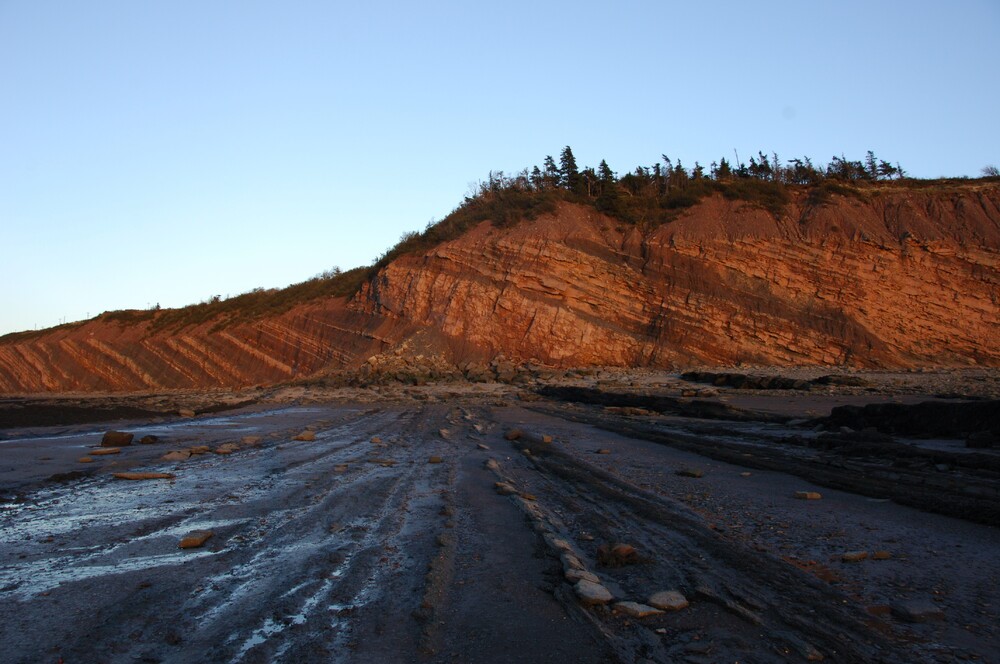
Figure 5 - Toned Japanese Tissue cover of the cast

As often only two thirds of the original spine cover was left, some more acrylic painting had to be done to mask the toned paper. The degradation of the leather was much worse on the spine piece, so the toned Japanese tissue did not match it as well as the sides. After a little bit of painting, the overall look of the new cast was more in keeping with the original spine. All that was left to do was to repair any inner joints inside the book at the start and end of the volume with a light Japanese tissue.
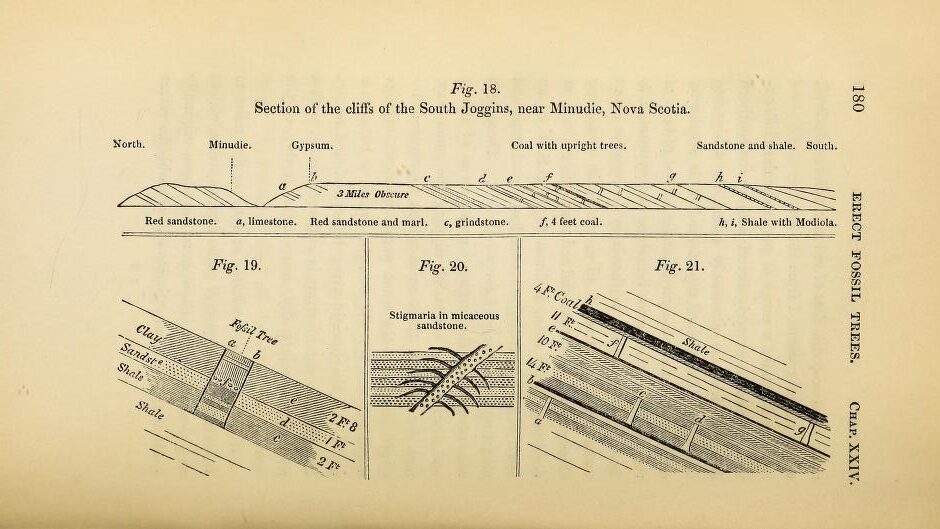
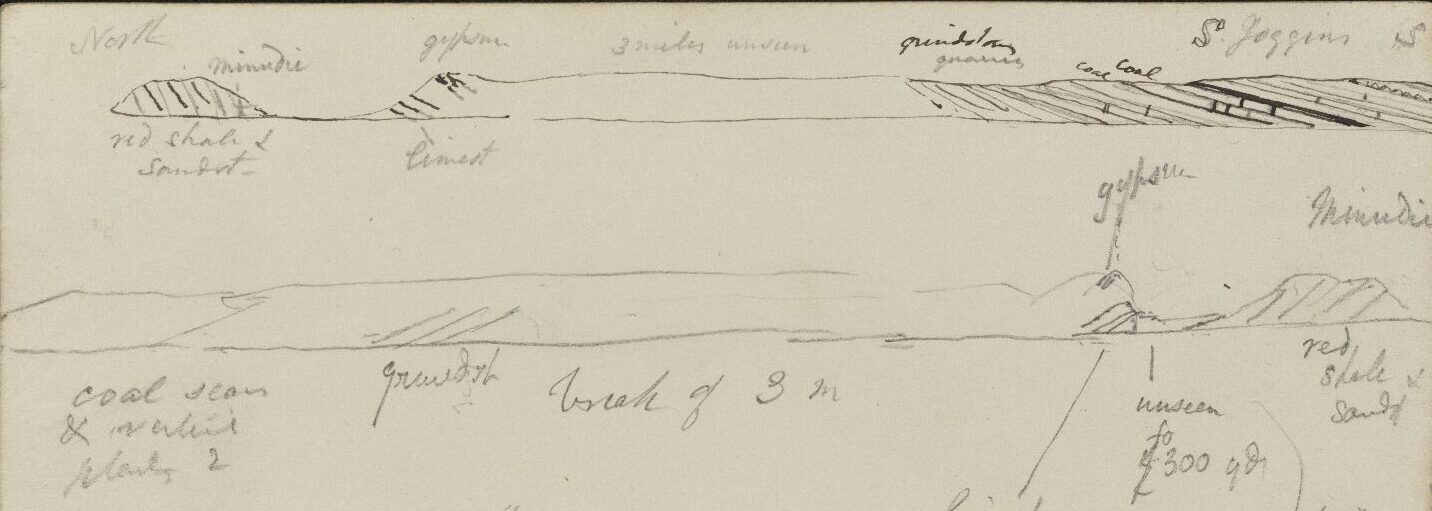

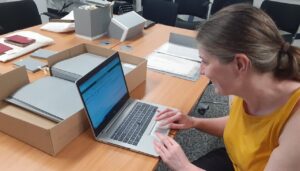
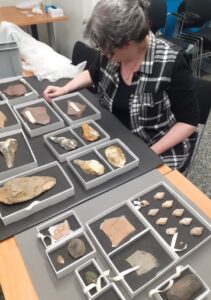
Figure 6 - Special Collection Volume after treatment

The technique overall was a success; this volume and others like it are now safe to handle, and the repairs blend in with the original condition of the rest of the book. It was a really interesting technique to employ and, more importantly, a satisfying one.  This was a great experience for me to put both my ethical and technical skills to work to protect the volumes and retain what was left of the binding.

Claire


Project Photographer John Sikorski attends to the process of setting a Lyell Notebook into the digitisation camera.

Its taking teams of multi-skilled people to open up the Charles Lyell collection! Read all about the Cultural Heritage Digitisation Service Team's efforts to digitise the Notebooks on their latest blog here:

From Castles to Cradle: Photographing the Lyell Notebooks | Digital Imaging Unit (ed.ac.uk)

Its a long road ahead, but already 87 of the Notebooks are now completed and online. The images are being added to the University of Edinburgh's Image website, LUNA, and you can find them here:

Search Results: All Fields similar to 'Coll-203' and Who equal to 'Lyell, Charles (Sir)' - University of Edinburgh

Thanks to all the CHDS staff - keep going!

It was a great pleasure for some of the Lyell project staff to welcome the Murray family to the Library, and to show them how their generous support is allowing the archive to be conserved, digitised and curated. The repairs and bespoke rehousing of the notebooks were found to be particularly interesting.

John, Claire, Pamela, Susan, David and colleagues look forward to updating the rest of our supporters as well as welcoming further donors to Edinburgh in the months ahead.

Some of the Lyell project staff  post with John and Ginny Murray when they met at the University's Main Library

Strategic Projects Archivist, Pamela McIntyre started in mid January, and will be leading on the Charles Lyell Project. Pamela introduces herself, and shares her insight on the internationally significant Sir Charles Lyell archive.   

Hello! After training in a number of repositories across the UK I qualified as an Archivist from Liverpool University in 1995. My first professional post was a SHEFC-funded project to catalogue, preserve and promote the archives of Heriot-Watt University, and its then associated colleges – Edinburgh College of Art, Moray House and the Scottish College of Textiles. Since then, I’ve worked with local authority, private and business archives, and with fine art and museum collections. I have always really enjoyed the practical elements of archive work, and getting people involved, and consequently, I’ve diversified, working in the third sector with volunteers. My last post was Project Development Officer, Libraries. Museums & Galleries for South Ayrshire Council – some highlights of my time there include breaking the ‘Festival of Museums’ with a ‘Day o’ the Dames’ event (sorry, Museum Galleries Scotland!), hosting an amazing exhibition about the history of tattoos, and spending two days at Troon, Prestwick, Maidens and Girvan beaches in support of COP26. I’m thrilled to join Edinburgh University, getting back to my archival roots – and it’s safe to say, Charles Lyell and I are getting on great!

I’m so impressed with the work that’s been done so far. I want to thank the previous staff for all of their efforts.

I am new to Geology, and one of the ways I get to know collections is by searching for subjects I do know about - using family names or places I know. Lyell travelled extensively, and whilst this may well influence my forthcoming holiday plans – it was particularly reassuring to find and read about his trip to the Isle of Arran – a place I love.

From Hutton’s visit in 1787, many geologists have visited Arran. Robert Jameson published his account in 1798, followed by John Macculloch in 1819. Geologists from overseas also visited, and Lyell had studied von Dechen and Oeynhansen’s accounts of 1829. As Leonard Wilson notes in his book Charles Lyell: the Years to 1841:

With its granite mountains and numerous dikes of traprock intersecting and altering stratified sedimentary rocks, Arran was a veritable laboratory for Lyell’s study of hypogene rocks and for the confirmation of his metamorphic theory.

Charles and Mary Lyell stayed at Arran for the first two weeks of August 1836, a trip chronicled by Lyell in Notebooks 62 and 63. Notebook 62 is digitised, and available on the University of Edinburgh's LUNA image website. From page 60, Lyell noted their plans - arriving in Glasgow, a meeting with Hooker, and stop offs at both the Hunterian and the Andersonian - then plans his trip around the island.

Notebook No.62 p.60 plans for travel round the island of Arran

He then began an analysis of the geology of the island, posing questions, and offering amazing drawings.The pages of the notebooks are packed with details, almost at a breath-taking pace.

Notebook No.62 p.62


Notebook No.62 p.63

Lyell immediately made connections with what he saw in Arran with Forfarshire, Fife and Antrim, whilst taking the details of experts and mineral sellers resident in Glasgow, and making another simple line drawing showing the skyline of Goatfell.

By page 66 he is making significant notes entitled ‘Elements’, culminating in what appears to be the proposed structure of chapters for his book.

Wilson adds to the context of that trip; Mary met Lyon Playfair on the boat across – Andrew Ramsey later joined the party. Playfair accompanied Mary on the beach collecting shells, whilst Ramsey and Lyell geologised. At the end of their trip to Arran, the Lyells returned to Kinnordy until the 28th September. Wilson notes:

It was a long rest and summer vacation – a complete break from London, foreign travel and scientific meetings. During the preceding four years Lyell had worked through three editions of the Principles, three tours on the continent, one long trip through Sweden, and all the duties and demands of the foreign secretaryship and presidency of the Geological Society. Mary had acted in part as his secretary and assistant. She wrote many of his letters, helped to catalogue shells, and protected him from visitors. She had accompanied him on his excursions on the continent often under extremely primitive conditions; she had been abandoned in hotel rooms while Charles was off geologizing; she was often lonely. The vacation was for her too a chance to revitalise. When they arrived back at 16 Hart Street Lyell wrote to his father “Everyone is quite struck with the improvement in Mary’s health & appearance’.

I know Mary Horner Lyell as the daughter of Leonard Horner, who by setting up the Edinburgh School of Art in 1821 laid the foundations for Heriot-Watt College. It’s a small world. I am looking forward to being reacquainted with Mary, whose intelligent support to her husband is evidenced in the Lyell Collection by copious correspondence from when they first met.

Mary Elizabeth (née Horner), Lady Lyell
by Horatio Nelson King
albumen carte-de-visite, 1860s
NPG x46569
© National Portrait Gallery, London

I have not come across any mention of Ailsa Craig! However, I have found a reference to Kilmarnock, a topic for a future blog! Familiarisation - to some extent - achieved, it’s now time to decide priorities, to create projects, to engage with people, and to continue the aims of opening up the Lyell collection to all.

My name is Claire Hutchison and I am very proud to introduce myself as the Lyell Project Conservator at the University of Edinburgh’s Centre for Research Collections. I am a Paper Conservator who has worked extensively across archives in Edinburgh on a number of archival projects. My work has led me to become a specialist in fragile formats, such as transparent papers, newspapers and wet press books. This is not my first time working at the CRC; I was lucky enough to be an intern in the conservation studio twice in my career.

I have learnt a lot about Lyell and his dedication to recording his findings since starting. It’s a very personal collection, and it’s clear that they were cherished by Lyell. The labels and indexes are beautifully written and constructed; one can only dream of having the same patience and dedication with their own notebooks. As a Conservator, I was also impressed to find examples where Lyell had hand sewn his index pages into the notebooks. It’s a wonderfully consistent collection which has been a pleasure to conserve. It’s also been made clear to me since starting just how sought after this notebooks are as requests have been flying in; researchers are keen to start connecting those dots across the collection.

Conserving the Notebooks prior to digitisation was imperative in order to prevent loss or further damage to the bindings. The 294 Notebooks were in varying levels of condition, however, overall they were stable with very few requiring intense treatment. It was clear from the flexibility of the spines that they had been well used and heavily manipulated by Lyell on his travels. The adhesive Lyell used to apply his labels and covering material was starting to fail. The earlier Notebooks suffer from red rot – commonly found in vegetable-tanned leathers from the late nineteenth and early twentieth centuries. The leather will become dusty, and the fibrous structure will deteriorate, resulting in the damage or complete loss of the leather binding.

Reattachment of covering material before and after

Internally, it was clear that Lyell had held and bent the spines to write into positions that had caused splits to form between the signatures of the text block. If not treated, these will worsen with handling and ultimately lead to loose pages or whole sections of the text block detaching fully from the binding. Lyell used either graphite or ink within his notebooks, so gelatine has been used to ensure that no bleeding or movement of the corrosive iron in the ink occurred. A strip of Japanese paper was applied to repair this inner joint and prevent further splitting (see example below).

Setup and attachment of inner joint repairs

In some rare instances, further intervention was needed where parts of the spine were lost and the sewing was exposed. This required lifting back the leather of the boards either side of the spine and inserting a repair to stabilise the structure. Layers of Japanese paper were applied to the spine and built up to the required thickness of the leather. Then a final layer of toned Japanese paper was applied to the top, blending in with the rest of the spine piece.

Spine repairs before, during and after treatment

Thanks to generous funding from the National Manuscripts Conservation Trust, two 8-week interns have started working on the Lyell Project. They are helping to assist in the overall efforts of the project, but also have been given their own branch of the collection to work on. Sarah MacLean is currently working on the 1927 donation of letters of correspondence. Joanne Fulton has been given the task of rehousing Lyell’s collection of Geological specimens. This month, my work on the project will continue with the conservation and rehousing of the printed material in the collection, such as Lyell’s own copy of the ‘Proceedings of the Geological Society’.

Stay tuned for more conservation updates soon!


The last few years has seen us all face challenges and embrace change – and the Charles Lyell Project is no different. The Project has said farewell to Elaine and Elise – and we thank them both so much for all their efforts and wish them well. We also need to thank existing University of Edinburgh, CRC and Digital Library staff for keeping the aims and objectives of the project alive – and we can report that there’s been significant progress on recruitment, funding, digitisation, and in conservation.

So – more blogs are GO!

Starting with conservation, we are delighted to signpost you to two brilliant blogs, detailing the work of the fantastic Interns who have been working on the Lyell papers and specimens.

Supported by Project Conservator Claire (her blog forthcoming) the Intern's light but expert touch has greatly enhanced the health and well-being of the collection. Find out more here:

Righting Letters – Conserving the Lyell Collection | To Protect and (Con)serve (ed.ac.uk)

and

Homes for Rocks – Rehousing the Lyell Geological Specimen Collection | To Protect and (Con)serve (ed.ac.uk)

Reverse of an envelope addressed to Charles Lyell, part of the Acceptance in Lieu deposit. Photograph taken by Sarah McLean.

css.php

Report this page

To report inappropriate content on this page, please use the form below. Upon receiving your report, we will be in touch as per the Take Down Policy of the service.

Please note that personal data collected through this form is used and stored for the purposes of processing this report and communication with you.

If you are unable to report a concern about content via this form please contact the Service Owner.

Please enter an email address you wish to be contacted on. Please describe the unacceptable content in sufficient detail to allow us to locate it, and why you consider it to be unacceptable.
By submitting this report, you accept that it is accurate and that fraudulent or nuisance complaints may result in action by the University.

  Cancel