

How I’m preparing for my VIVA or PhD defence in creative writing
There is a date booked in the calendar. My viva, also known as my PhD defence, is scheduled for January 19, 2026 which is an auspicious date for me because it’s also my grandma’s birthday. Prior to submitting my thesis, I had enrolled in the Viva Survivor course offered by the university which outlined what a student could generally expect in their viva. The course was valuable in the sense that it cleared up frequent misconceptions about what a viva is (and what it isn’t). And the instructor gave some useful tips on how to prepare.
Figuring out what the viva is
The first step for me was really figuring out what a viva is. The University of Edinburgh tells students that along with the presentation of our written work, the viva forms the grounds for the award of our doctoral degree. It is essentially an oral examination of my doctoral thesis, but the term viva conjures up all sorts of ideas in the imagination. Will it be like something from a courtroom movie scene? Is it a presentation? Will I be grilled or cross-examined? The answer to these is – no.
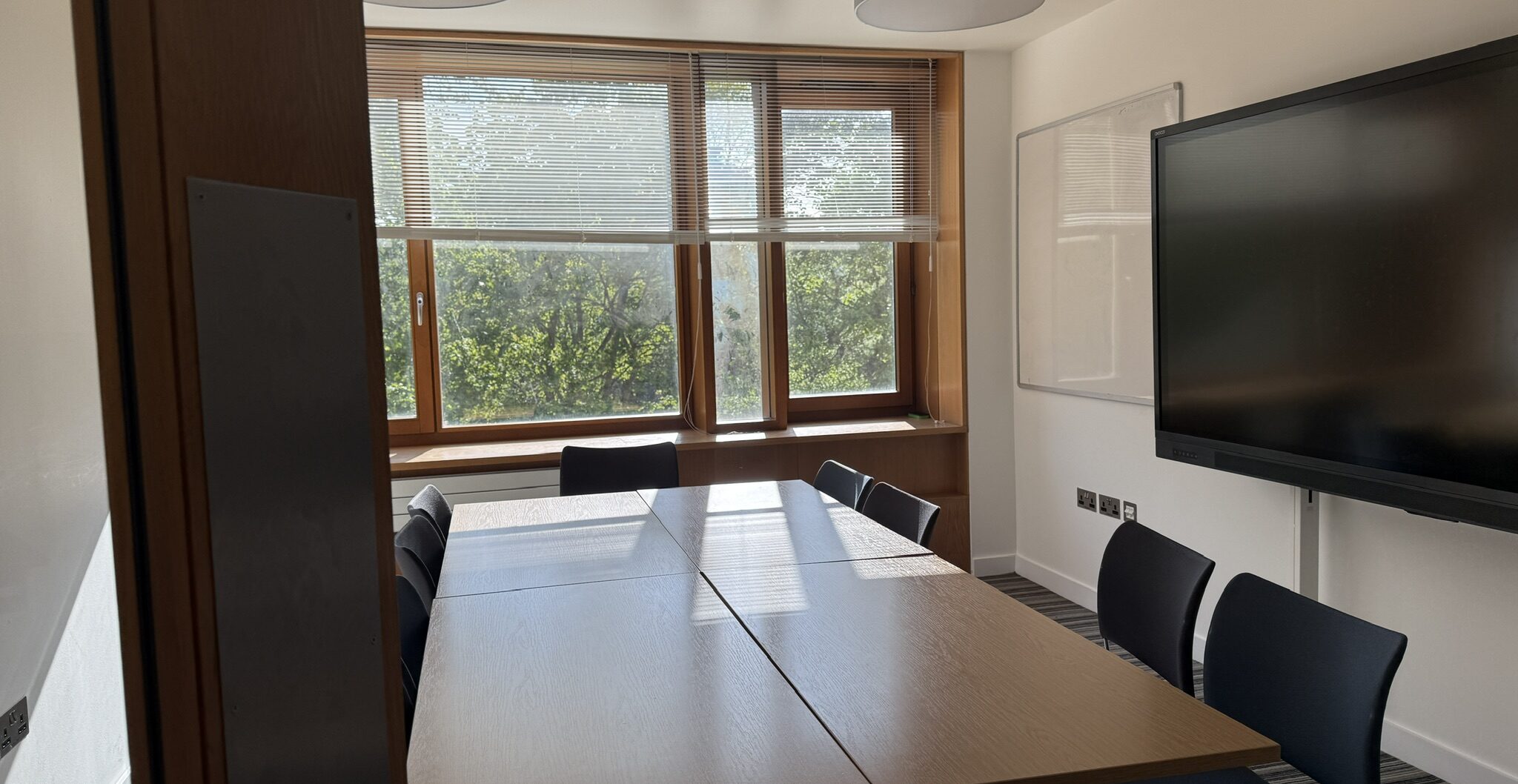
My viva will take place in 50 George Square, the same building where all of my classes have been. Nothing scary about that. When I was preparing for my thesis submission, I actually had a detailed conversation with the admin team and asked if I could pick the room (something no one had requested before). But, I thought, the room itself might influence how I feel during the viva (after all, my research is on setting and place) so I selected the room on the third floor with the stunning view of Arthur’s Seat.

View of Arthur’s Seat
One of the key takeaways from the Viva Survivor course is that the oral examination is intended to make sure I am the author of the work. It might seem kind of obvious that I was the author, but particularly in the age of AI, the examiners need to know that I am the person who created my thesis. It was explained to me that the viva is more like a thoughtful discussion of my research. the motivation of the session is to explore my significant original contribution, unpack the how and why of my research, and examine my capability as a researcher.
What I’m doing to prepare
Given that my viva will be unique to me, it does make it slightly difficult to prepare for because no one previously can tell me exactly what I’ll be asked. My supervisor, Dr Jane Alexander, did send me some questions that she thinks will be likely to surface for the field of creative writing, and my thesis in particular.
For my novel, she suggested preparing to answer questions such as:
- Your choice of the police procedural genre, its limitations and possibilities, and your approach to working within / pushing at the edges of that genre
- The dynamics of plot, character, theme and literary place – how these intersected in your novel
- Your process, and in particular the development of your instantaneous capturing technique – how might you further develop this, or how might other creative practitioners build on it?
- What you’ve learned and how you’ve developed along the way
- What you’ve learned from the writers you’ve focused on in the critical
- Other influences on your creative work
- Aspects of the novel I’m most proud of, and why; consider if there are any weak spots in the manuscript, and how you might talk about these
- What your objectives are as an artist and where you want to go next
For my critical element, she also recommended preparing for these questions:
-
Why did you choose these novels / novelists to look at?
-
Why did you choose the methodologies / lenses you’ve applied?
-
Are there other ways you might have gone about things, e.g. other novelists you might have put centre stage, or other theoretical frameworks that you considered?
-
What challenges did you experience in the course of working on the project?
-
Where you would take the research if you planned to take it further?
-
How did the critical study influence your creative work and your own development?
The viva podcast plan
Given that I can’t take anything but my thesis into the examination room, my plan to prepare is to essentially record a podcast of me replying to these questions. In that way, I can listen back to myself with a) zero preparation b) some preparation and c) with annotations and notes.
I want to hear myself talking through the questions, and looking for ways to enhance my responses and connect them to the page numbers of the thesis itself. I don’t want to reply like I’m referencing a dictionary, like “as you’ll see on page 191” but more so I know where in the text I’m pulling my ideas from.
My supervisor also encouraged me to think beyond my thesis, to demonstrate knowledge of outside of what is exactly on the page. I can assume the examiners have read the thesis, so they don’t need me to recite it back to them. Rather, the idea is to go “off script” in a sense and discuss ideas beyond what I have put into the document itself.
Annotations and further research
In addition to my podcast plan, I will also be making annotated notes within the document and highlighting certain sections that I think might be relevant (or likely to be discussed). I’ll also do a cursory scan for any new research into setting and creative writing that may have materialized since I submitted my thesis. I had the University of Calgary (where I have been teaching this past semester) print and spiral bind my thesis for me, so I have a nice copy to take with me into the room.
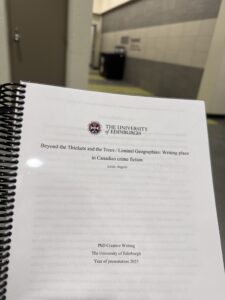
My printed and bound copy
If I have time, I also want to read the books of my examiners just to get familiar with their own writing style. I will have one external examiner from a UK university, an internal examiner from the University of Edinburgh, a non-examining chair who will make sure all guidelines are being followed, as well as my own supervisor who will essentially sit there and observe. It is optional to have your supervisor attend, and some students feel more comfortable without their supervisor present, but for me, I felt having my supervisor attend would be a meaningful experience.
My goal is to take about two weeks to prepare, spending about two hours a day on re-familiarizing myself with my research and noting down ideas. It’s not a study-cram-session at all, but rather a methodical process to dip back into my thesis and my research, and basically re-fresh my memory.
Practicing the format
The format of the viva usually lasts about two hours, and there are some extra things I want to do to make sure I have the experience that I want. For example, I want to pick a certain outfit and think about how I want to dress for the viva. I want to have a post-viva plan (some people go to the pub, or others might have a post-viva party). I also want to think about what I will need in the room, my thesis, a tea, a water, etc. I also want to re-read the viva guidelines and rules to make sure I’m following the right structure. For example, I want to understand if a question might be too far off-topic or if I need to alert the non-examining chair about something. My viva will be in the afternoon, so I want to think about what my morning ritual might be. Do I want to eat breakfast at my lucky cafe? Do I want to get my hair done? These are all small things that will influence my feelings for the day. I had a very specific goal for my NITS and VIVA submission, because I wanted to feel cool, calm and collected going in. I want the same for my viva.

Share