Any views expressed within media held on this service are those of the contributors, should not be taken as approved or endorsed by the University, and do not necessarily reflect the views of the University in respect of any particular issue.
Skip to content

2

On this day, 30 June, in 1940 the Germans invaded the Channel Islands which was the beginning of nearly 5 years occupation. In this week's blog I’m using some of the Library’s online resources to find primary source material to discover more about this facet of the Second World War.

I recently had the opportunity to visit the Jersey War Tunnels, one of Jersey's many tunnel complexes built by mostly forced and slave labour under German command during the occupation.I have to admit that before that visit I really knew very little about this period in the Channel Islands history but I was inspired by the incredibly moving and fascinating exhibition to try and find out what primary source material was available to us through the University Library’s fantastic online primary source collections about the occupation.
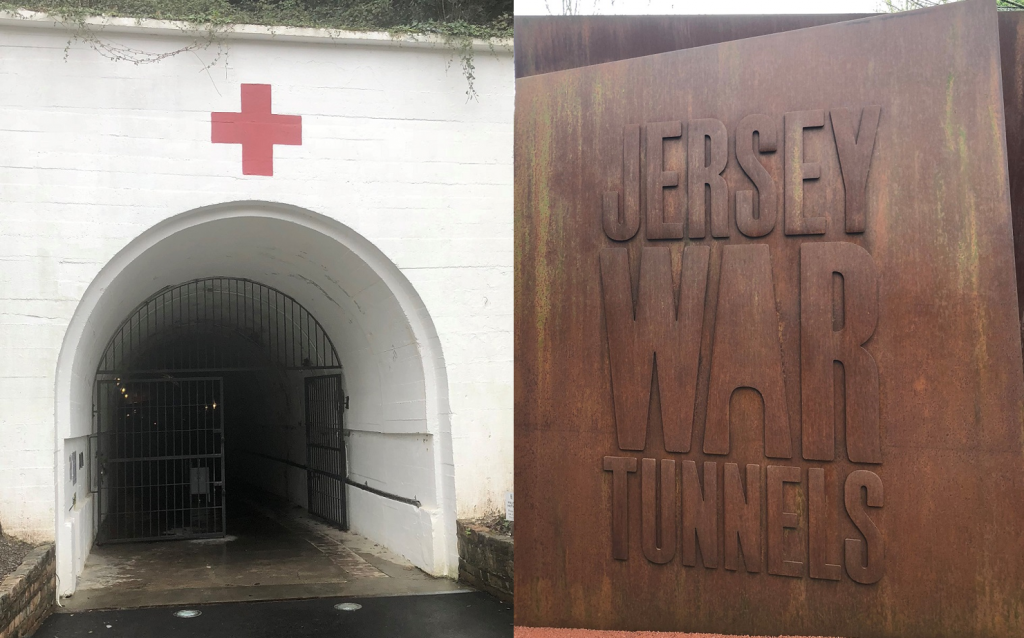
© Mark Cairney

There are many stories that could be told about the Channel Islands occupation and I encourage you to seek them out but due to the nature of our online primary source collections and time limits I’m focusing on what the outside world, mainly Britain, knew (or didn't) about what was happening on the Channel Islands during the occupation.

The blitzkrieg nears Britain

The first half of 1940 was a dark time for the Allies in the Second World War. In fairly quick succession Denmark, Norway, Belgium, the Netherlands and France were invaded by Germany. With the evacuation at Dunkirk (Operation Dynamo) and France, faced with no real other choice, signing an armistice with Germany in June of that year, Britain was now on its own and under threat.
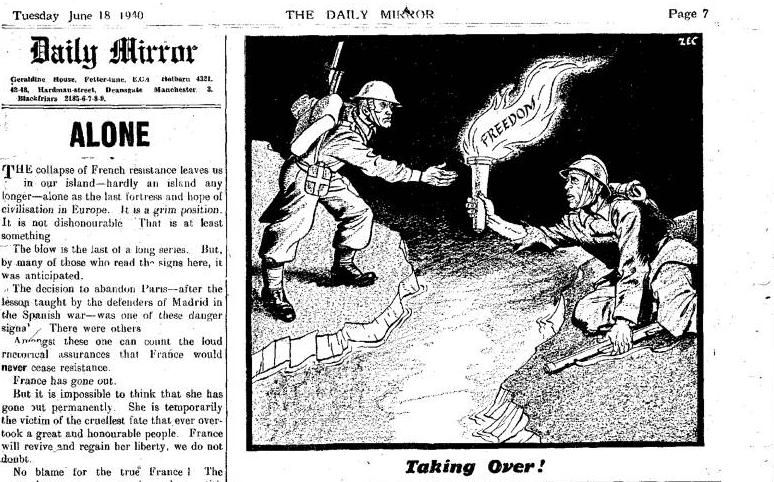
The Daily Mirror, Tuesday, 18 June 1940, p. 7. UK Press Online. Accessed 25th May 2018.

...continue reading "Channel Islands occupation: through the Library’s online primary sources"

2

In this week's blog post I wanted to highlight a number of primary source databases that you have access to at the University that allow you to discover more about black history.

I'm concentrating on collections available to you through Archives Unbound, which presents topically-focused digital collections of historical documents. There are currently 265 collections in Archives Unbound covering a broad range of topics from the Middle Ages forward-from Witchcraft to World War II to 20th century political history.

You can access Archives Unbound via the Databases A-Z list or Primary Sources database list.

As Archives Unbound covers such a vast range of subjects and collections, searching through the whole database will provide material perhaps from some surprising areas (so it’s very worthwhile doing this), however, I'm going to focus on some of the individual collections. You can access the individual collections by clicking on "Browse Collections", where you can either browse through an alphabetical list or choose to browse by "Categories" instead.

So here is just a small selection of collections that will allow you to take your research into black history further.

Fannie Lou Hamer: Papers of a Civil Rights Activist, Political Activist, and Woman

Fannie Lou Hamer (née Townsend) was born in Mississippi in 1917. The youngest of 20 children she would go on to become an American voting rights activist and a leader in the Civil Rights Movement. Hamer was instrumental in organising Mississippi Freedom Summer for the Student Nonviolent Coordinating Committee (SNCC). She was actively involved in starting the Delta Ministry, and she was one of the founders of the Mississippi Freedom Democratic Party later to become the Vice-Chair. ...continue reading "Explore black history through Archives Unbound"

This was the response from suffragist, Dame Millicent Garrett Fawcett, when asked why women would want the vote1.

Today, 6th February 2018, marks 100 years since (some) British women were granted the right to vote for the first time through the Representation of the People Act. This was the culmination of a hard fought campaign and while it would take another 10 years before women would have equal voting rights to men in the UK, with the Representation of the People Act 1928, it was a victory for the suffragette movement.

There are lots of events, exhibitions, programmes, etc., taking place today and this year to mark this important historic event but I wanted to delve into some of the primary sources available to us at the Library which allow you to find out more about the suffragette movement in the UK.

What did the papers say?

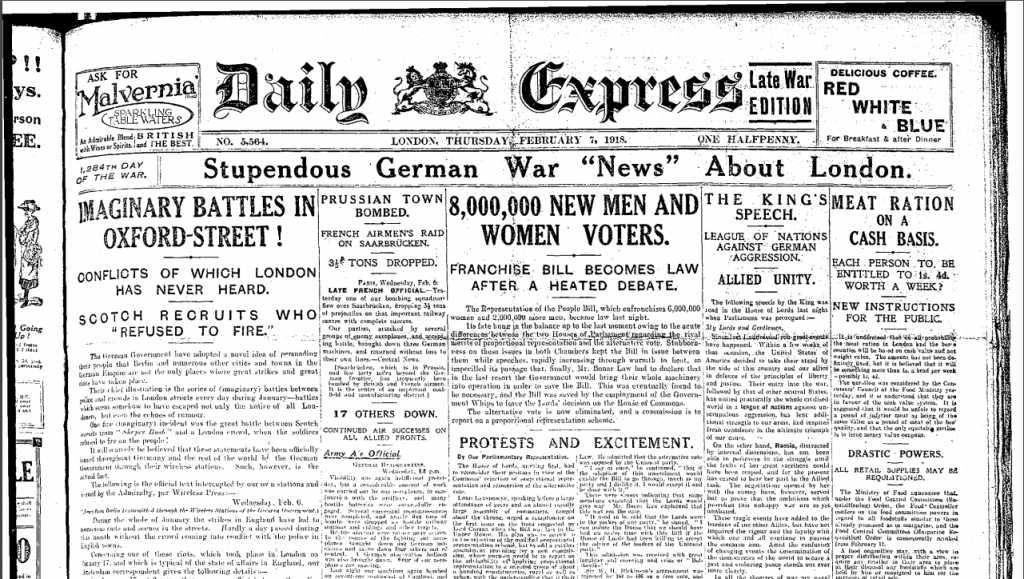
The Library subscribes to a large number of online newspaper archives that will allow you to see what events were being reported on at the time and how they were being reported. Read full text articles, compare how different newspapers were covering the same issues and stories, track coverage from the start of the suffragette movement in the 19th century up to the Representation of the People Act 1918 and beyond.

Screenshot from UK Press Online showing the front page of the Daily Express from Thursday February 7, 1918.

...continue reading "#100years: “Because…we want to get on with our work more quickly”"

On Tuesday 30th January we’ll be holding a Discovery Day event in the Main Library where representatives from 3 publishers of digitised primary source collections and our very own Centre for Research Collections will be on hand to help you navigate through and find useful material in the huge range of primary sources you have access to at the Library.

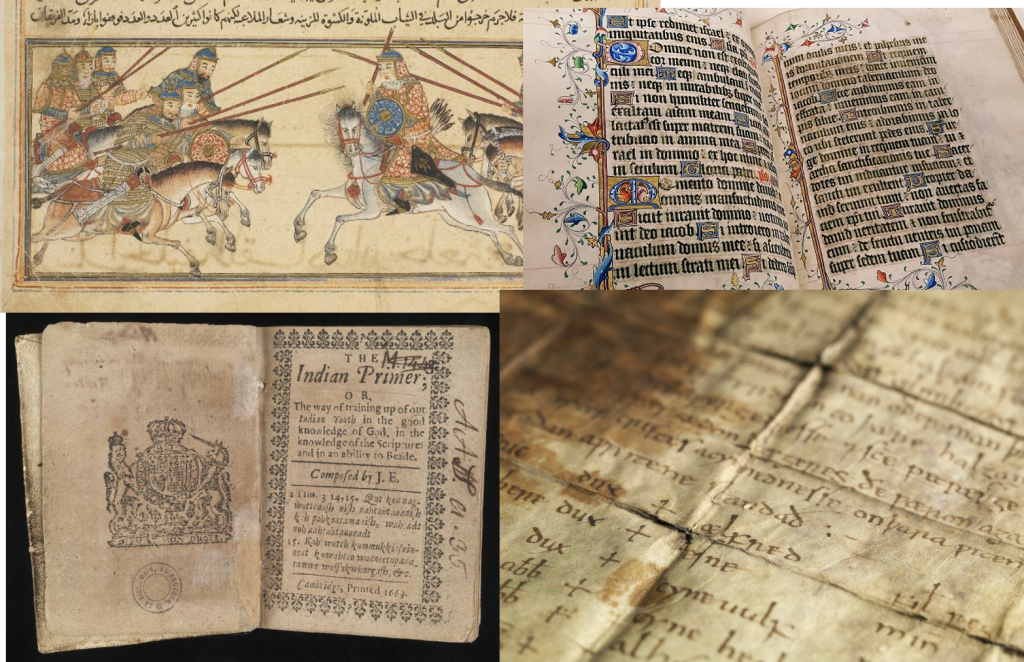
The University of Edinburgh holds world class collections, including rare books, archives and manuscripts, art, historical musical instruments and museum objects ranging from geological specimens to anatomical models. These unique collections are and can be used for teaching and research within the University and by the wider community.

The main entry and access point for these collections is the Centre for Research Collections (CRC) which is based on the 6th floor of the Main Library. The CRC is open to all researchers, including students, staff, visiting academics and members of the public. ...continue reading "Spotlight on our Centre for Research Collections"

2

On Tuesday 30th January we’ll be holding a Discovery Day event in the Main Library where representatives from 3 publishers of digitised primary source collections and our very own Centre for Research Collections will be on hand to help you navigate through and find useful material in the huge range of primary sources you have access to at the Library. ProQuest are one of the publishers who will be attending and this blog post highlights the fantastic collections the Library has access to through them.

The Library has access to a large and broad range of primary source collections that can be accessed via the Primary Source database list or the separate Newspapers & Magazines list and Images & Moving Images list.

Through ProQuest the Library has access to around 45 of these fantastic databases. ProQuest has built its expertise in preserving and widening access to significant research collections over 75 years, partnering with large and small libraries and archives, to bring you collections encompassing government, humanities, and historical documents that formerly may have been difficult to retrieve. Alexander Street Press and Chadwyck-Healey databases are also part of the ProQuest suite of resources.

Below are the databases you have access to via ProQuest. As there are so many I have split them into broad categories. ...continue reading "Spotlight on ProQuest digital primary sources"

4

On Tuesday 30th January we’ll be holding a Discovery Day event in the Main Library where representatives from 3 publishers of digitised primary source collections and our very own Centre for Research Collections will be on hand to help you navigate through and find useful material in the huge range of primary sources you have access to at the Library. Gale Cengage are one of the publishers who will be attending and this blog post highlights the fantastic collections the Library has access to through them.

The Library has access to a large and broad range of primary source collections that can be accessed via the Primary Source database list or the separate Newspapers & Magazines list and Images & Moving Images list.

The Library is very lucky to have access to 12 of these types of databases from Gale Cengage, a leader in education, learning, and research resources online. This actually gives you access to around 300 collections of primary source material. Gale's digital collections span 500 years of history and a wide breadth of topics, including politics, society, business and leisure. ...continue reading "Spotlight on Gale Cengage digital primary sources"
3

On Tuesday 30th January we'll be holding a Discovery Day event in the Main Library where representatives from 3 publishers of digitised primary source collections and our very own Centre for Research Collections will be on hand to help you navigate through and find useful material in the huge range of primary sources you have access to at the Library. Adam Matthew are one of the publishers who will be attending and this blog post highlights the fantastic collections the Library has access to through them.

The Library has access to a large and broad range of digital primary source collections that can be accessed via the Primary Source database list (see also the separate lists for Newspapers & Magazines and Images & Moving Images).

Adam Matthew are a publisher who specialise in producing high-quality, digitised primary source collections online. They put together thematic collections sourced from libraries, archives, museums, etc., around the world and they have databases that cover the Medieval period onwards.

The Library is very lucky to have access to 11 of these collections (or databases) from Adam Matthew and all can be accessed via the Primary Source database list.

China: Culture and Society

...continue reading "Spotlight on Adam Matthew digital primary sources"

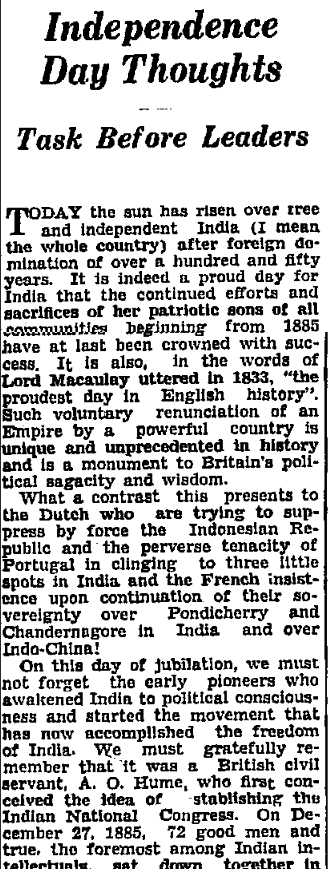
In August 1947 British India won its independence from the British and split into two new states, India and Pakistan (East Pakistan subsequently became Bangladesh), that would govern themselves. The Partition of India, as it was known, created a huge refugee crisis with millions of displaced people and the level of violence and loss of life prior to and after the Partition has caused reverberations over the years, with hostile relations between India and Pakistan continuing to this day.

With the 70th anniversary of the Partition of India being marked this month I've pulled together just a small selection of Library resources that will help you explore the Partition of India further.

What did the papers say?

The Library subscribes to a large number of online newspaper archives that will allow you to see what events were being reported on at the time and how they were being reported. Read full text articles, compare how different newspapers were covering the same issues and stories, track coverage from the start of the Indian independence movement in the 19th century until post-partition.

Screenshot from The Times of India.

The Times of India (1838-2007)
The Library has access to the online archive of The Times of India, which covers the period 1838-2007. The Times of India is the world's largest circulation English daily newspaper and, as would be expected, is particular valuable for its coverage of key historical events in India, such as the Partition.

But how does this compare with how newspapers in the UK were reporting on it e.g. The Times, The Guardian and The Observer, The Scotsman, The Telegraph, etc., or how international newspapers were reporting on events e.g. The New York Times, Washington Post, Le Monde, Japan Times, etc?

Want to look at more recent coverage of the Partition of India? The Library also subscribes to databases, such as Factiva and Nexis UK, that allow you to search and access the full text of a large number of UK and international newspapers from around the 1980s up to date. You can access these, the databases mentioned above and many other newspaper archives and magazine archives from Newspaper Databases. ...continue reading "Explore the Partition of India through our library resources"

1

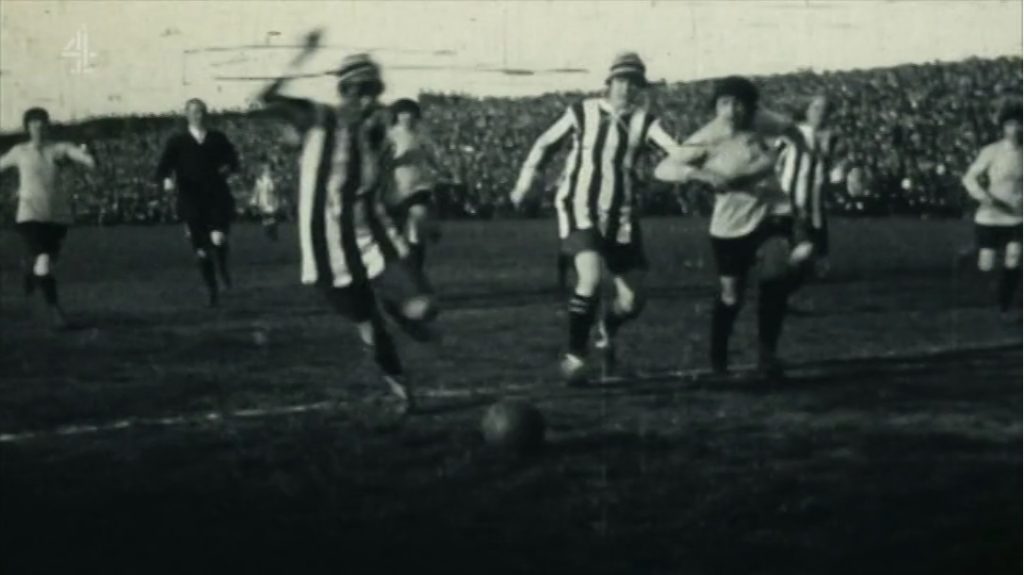
In this week’s blog I’m using some of the Library’s online resources to find primary source material relating to the popularity of women's football during and just after the First World War and the decision by the FA to ban it.

The other night on catch-up I watched the Channel 4 documentary When Football Banned Women, programmed to coincide with the Women’s EURO 2017 (which Channel 4 just happens to be showing, it’s like they thought about their programming or something!) This interesting documentary looked at the rise in popularity of women's football during the First World War and the subsequent decline after the decision by The Football Association (FA) to ban the women's game in 1921.

If you’ve not seen it you can watch it on Box of Broadcasts (BoB).

Screenshot from 'When Football Banned Women' (Channel 4).

As I am always looking for an excuse to use some of the University Library’s fantastic online primary source collections, I decided this was a perfect story to try and find out more about from our online archives.

While I primarily used some of the online newspaper archives the Library has access to for that period, I did do some searching in some other primary source collections that covered the period in question. You can find a list of the specific databases I used at the end of the post.

Women's football in the First World War

With 1000s of men being called up to fight in the First World War, women were expected to take on roles as never before in the workplace and with this came other opportunities. Women’s football teams began to form, often put together or sponsored by the industries and companies now employing the vast female workforce. These teams began to play matches with the primary aim of raising money for charity and while spectators may have originally attended to help raise money and to watch what they thought of as a novelty, they continued to attend as the matches were good and the teams had skill. ...continue reading "Why football banned women"

This is part of an occasional series highlighting some of the online resources available at the Library that will be of interest to students and staff in History, Classics and Archaeology.

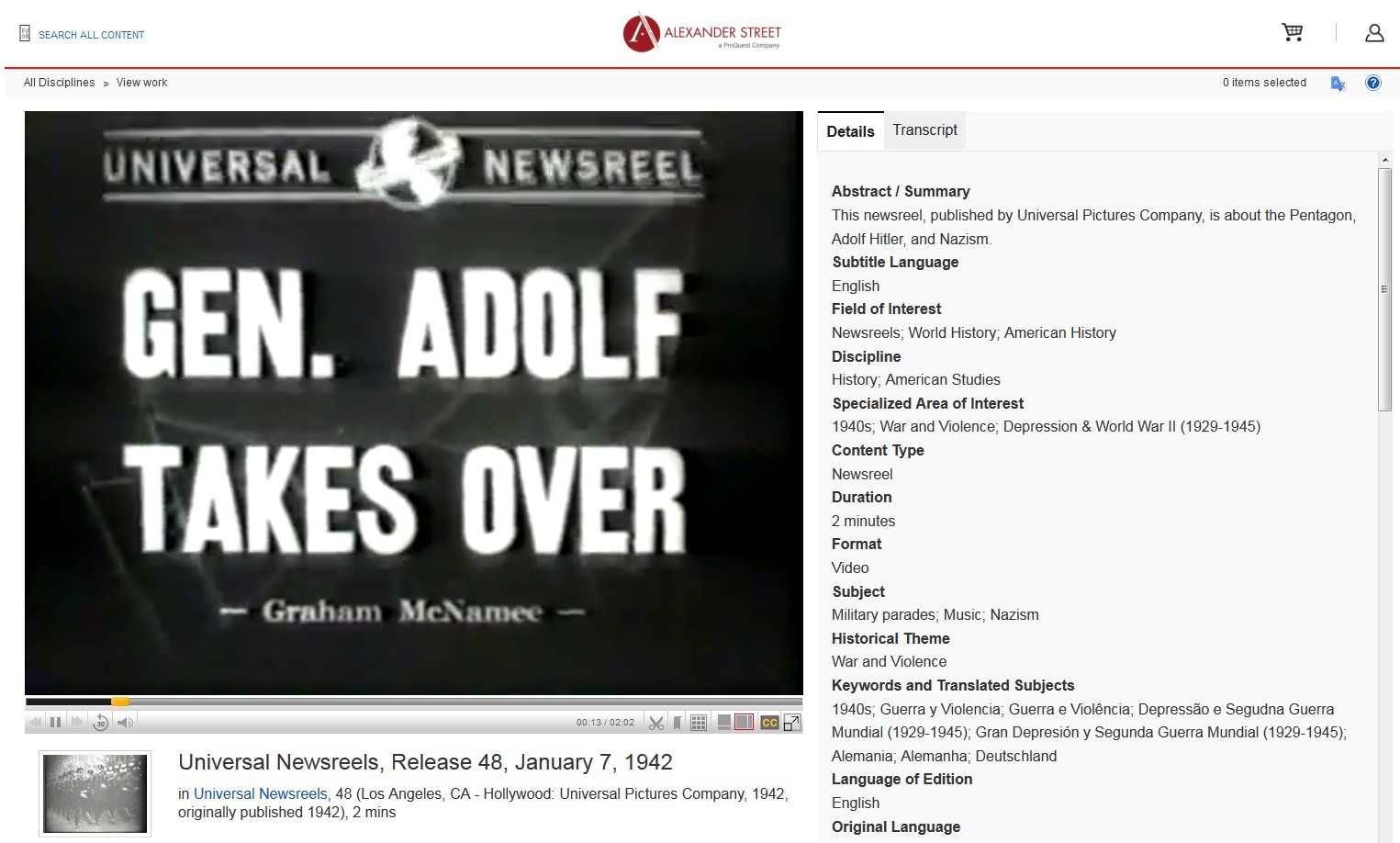
While previous posts in this series have looked at groups of online primary source collections, in this post I wanted to highlight resources that give you access to film and moving images, including films, documentaries, TV programmes, public information films, archival film footage, cinema newsreels, advertising, home movies, etc.

Film provides a fascinating insight into the past through documentary, archival and amateur film footage and a deliberately constructed historical world through feature films. However, using film as ‘historical evidence’ is far from straightforward; specific skills are required to understand the complexities of the visual medium, its relationship to the society from which it emerges, the industry which created it and those who consumed it. Despite these obstacles, film is a crucial means for understanding the recent past.1

Academic Video Online

...continue reading "Spotlight on film and moving images"

css.php

Report this page

To report inappropriate content on this page, please use the form below. Upon receiving your report, we will be in touch as per the Take Down Policy of the service.

Please note that personal data collected through this form is used and stored for the purposes of processing this report and communication with you.

If you are unable to report a concern about content via this form please contact the Service Owner.

Please enter an email address you wish to be contacted on. Please describe the unacceptable content in sufficient detail to allow us to locate it, and why you consider it to be unacceptable.
By submitting this report, you accept that it is accurate and that fraudulent or nuisance complaints may result in action by the University.

  Cancel