Any views expressed within media held on this service are those of the contributors, should not be taken as approved or endorsed by the University, and do not necessarily reflect the views of the University in respect of any particular issue.
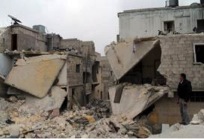
Christine Bell, Professor of Constitutional Law and Director of the Global Justice Academy, comments on recent Human Rights developments in Syria.
A recent report into torture – interestingly with a connection to Scotland (one of the researches is based in Dundee University) – has provided strong evidence that the Assad regime has been involved in gross human rights violations. The report was produced by a set of international experts in international criminal law and forensics, requested by Carter-Ruck & Co solicitors, acting for Qatar National State who apparently support the Syrian National Movement (none of this is very clear from the face of the report, which has been linked to from Carter-Ruck’s website, neither is it very clear from the Carter-Ruck press release which does not mention a client).
As part of a series of guest blogs on the subject, Tim Hayward of the School of Social and Political Science in Edinburgh, discusses the relationship between academic Freedom and Responsible Investment.
ACADEMIC FREEDOM AND SOCIAL RESPONSIBILITY: CONFLICTING FACTORS IN A UNIVERSITY’S ETHOS?
Why should a university be socially responsible? A question thrown into relief by the current debate over universities’ investments concerns the social role of the university and the relation of that to its core academic activities.
In this article, Dr. Elisa Morgera and Tom Gerald Daly explore the role that ‘Benefit-Sharing’ might be able to play in adressing the environmental challenges associated with the use of natural resources. The authors pose important questions about Benefit-Sharing and its potential to contribute to the protection and sustainability of natural resources, whilst enabling opportunities for the growth of communities, indiginous peoples and developing countries in culturally-sensitive and equitable ways. Could Benefit-Sharing present a tool to address these issues?
Members of the Global Justice Academy are invited to stage their very own Edinburgh Fringe show in 2014.
It’s only a few months since the big purple cow in Edinburgh’s Bristo Square was dismantled, but planning for the 2014 Edinburgh Fringe is already well underway. The Beltane Public Engagement Network is one of the groups intending to stage shows when the crowds descend next August. With luck, members of the Global Justice Academy will be among Beltane’s star performers!
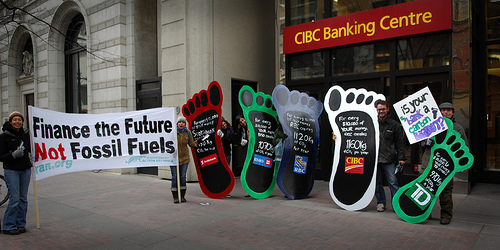
Divestment from fossil fuels is the focus of a campaign among students and other civil society groups that is gathering momentum – and faster, it seems, even than previous campaigns that targeted apartheid, tobacco and arms manufacturers. Universities are among the institutions to come under particular pressure to withdraw their investments in funds that yield profits directly from fossil fuel exploitation. But should they do so?
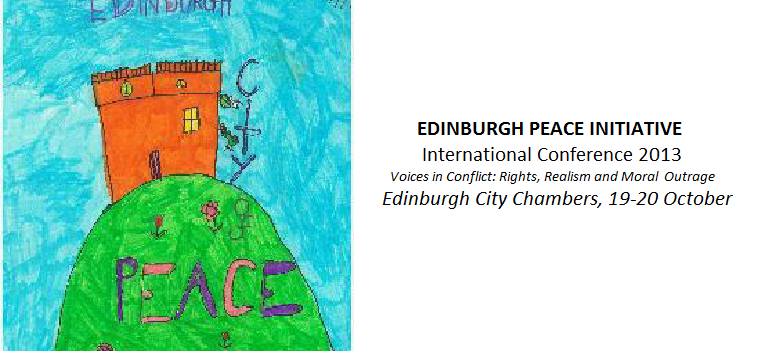
The weekend of the 19th and the 20th of October brought on exciting opportunities for individuals and organisations concerned with human rights, global justice and peace, as Edinburgh hosted the Global Citizenship Commission and the Edinburgh Peace Initiative’s Voices in Conflict: Rights, Realism and Moral Outrage conference.
It is easy to be outraged at the injustices suffered by refugees at the hands of their tormentors – arbitrary arrest; torture; forced conscription; rape. Horrors unimaginable in our cosseted lives bring easy waves of sympathy – but too little self-reflection. The drowning of 359 migrants off Lampedusa’s shores on 3 October should shatter our complacency: not because it is a shocking tragedy, but because it is a cruelly predictable one.
The Edinburgh Ethics Forum how has a blog! Dr Philip Cook (Lecturer in Political Theory) has written a piece about the relevance of the Universal Declaration…