On June 20, 2014, Mathias Thaler (University of Edinburgh) organized a workshop dedicated to the tension between spectating and acting in democratic politics. The event drew an engaged audience of about 40 participants, both from Edinburgh and from outside Scotland. Apart from Law School and School of Social and Political Science staff (such as Zenon Bankowski, Christine Bell and Jonathan Hearn), the event also attracted academics from farther abroad (like Phil Parvin from Loughborough University, Cara Nine from the University College Cork and Audra Mitchell from the University of York). Furthermore, many PhD students attended and contributed to the workshop.
Comments closedGlobal Justice Blog Posts
Dr Laura Jeffery is a Lecturer and ESRC Research Fellow in Social Anthropology at the University of Edinburgh, specialising in forced displacement, migration, the environment, and human rights. Her academic profile can be viewed here.
In this guest blog, Laura considers how WikiLeaks evidence has been used in courts and whether documents obtained by WikiLeaks are admissable as legal evidence.
UK government policy is to ‘neither confirm nor deny’ (NCND) the authenticity of unauthorised leaked documents. The rationale for NCND is twofold: firstly, authenticating a leaked document could compound any damage already caused by the leak and secondly it rewards those involved in leaking documents. NCND is applied as a blanket policy because selective commentary would give rise to the supposition that leaked documents whose authenticity was not explicitly denied are implicitly authenticated.
Comments closedIn this guest blog by Zoe Marks of the Centre of African Studies at the University of Edinburgh, she discusses responses to the kidnapping of nearly three hundred school girls in northern Nigeria, and argues that something can be done. This blog was written on May 6, 2014.
What is a war on terrorism if not the rescue of 276 hostages? Prisoners, forced wives, sex slaves, chattel for market, domestic servants, human trafficking victims – aspiring, diligent, brave young girls.
We are facing an urgent moral crisis and fumbling. More than 20 days have passed since over 300 schoolgirls were corralled onto lorries in the middle of the night, captured by men claiming to be soldiers there to protect them. For three weeks, the Nigerian government has punted, Western governments have stood on the sidelines, and regional allies and the African Union have not even shown up to the pitch. Nigerian President Goodluck Jonathan did not call his first strategy meeting until last Saturday (4 May). His military advisory committee was convened only today for the first time (6 May).
When abducted on 14 April, the students were already far from home. They had travelled to Chibok Government Girls Secondary School despite school closures throughout Borno State not to make a political statement, but simply to sit the same high school certificate exams being taken by their peers across West Africa.

Boko Haram, the al Qaeda-aligned insurgency that has destabilized the region, only claimed responsibility for the kidnapping yesterday (5 May). They released an hour-long video of masked men standing heavily armed and silent while their leader read a lengthy harangue. The girls were nowhere to be seen. He parroted back as threats what the news media has been recycling as fact, raising more questions than answers.
Comments closedHarriet Cornell is the Development Officer for the Global Justice Academy. In this guest post, she reports on the botched execution of Clayton Lockett in Oklahoma, and the state of the death penalty in the United States.
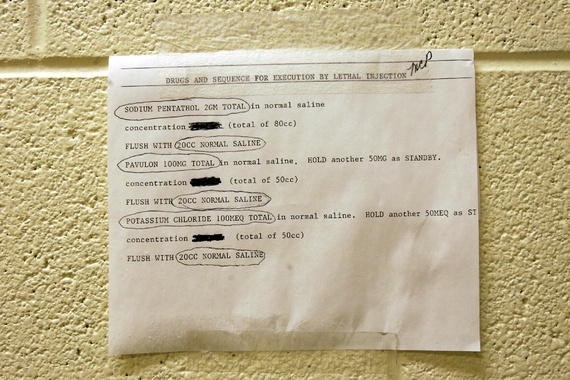
The state of Oklahoma executed Clayton Lockett at 6pm local time on Tuesday 29 April 2014. Or, according to widespread news reports and a statement from Robert Patton (Director of Oklahoma Department of Corrections), the state attempted to execute Lockett but failed, and he died 43 minutes later from a massive heart attack. Charles Warner was due to follow Lockett to the gurney at 8pm, but has been granted a 14-day stay by Governor Mary Fallin, pending an investigation into what happened in that execution chamber.
Comments closedA guest blog by Akwugo Emejulu, University of Edinburgh and Leah Bassel, University of Leicester, in which they argue that in order to counter the asymmetrical effects of the current economic crisis, intersectional analyses and coalition building are required. They consider how researchers might capture the effects of austerity on representations of minority women’s vulnerability as well as their activism. They do so by drawing on their current empirical project, ‘Minority Women’s Activism in Tough Times’, which explores the impact of the crisis on minority women in Scotland, England and France.
At the time of writing, the UK is undergoing the most extensive reduction and restructuring of its welfare state since its enactment after the Second World War (Taylor-Gooby and Stoeker 2010; Yeates et al 2011). The Conservative-Liberal Democrat Coalition Government is presiding over a 27% cut to local government—the key mechanism for delivery of public services—and a 68% cut to the social housing budget (Taylor-Gooby 2011: 4). Whilst France was not implementing as stringent measures until the January 2014 budget was announced, a key policy aim of the Socialist government is austerity (Clift 2013). The headline of President François Hollande’s 2013 budget, which he described as ‘the biggest budget shock of the past 30 years’ (Guélaud 2012), was a commitment to cutting the deficit to 3% of GDP in 2013 (L’Express 2012). However, the beleaguered Socialist government missed this budget target (BBC 12 March 2013).
Comments closedA guest blog by Dejan Stjepanović of the University of Edinburgh on the Ukraine crisis.
The ongoing Ukrainian crisis raises a number of serious questions about the future of political relations in Europe. Until now, the primary driver of regional integration in post-socialist Europe was the European Union. The return of Russia onto the stage, and its not shying away from using its military power, caught some observers by surprise. Behind the struggle for geopolitical dominance lies a deeper problem which arises from the pervasive influence of the essentialist understanding of nation, state, sovereignty and borders.
Comments closedEdinburgh University has recently published a consultation paper on responsible investment and is seeking responses.
In the third and last of a series guest blogs on the subject, Tim Hayward of the School of Social and Political Science in Edinburgh, discusses the relationship between university investments and the creation of wealth.
Investment in Reality
To think about the fundamental principles that should guide a responsible investment policy it is helpful to get back to conceptual basics. So I shall start with a moment of philosophical reflection.
Comments closedThis post by Christine Bell, Prof. of Constitutional Law and Director of the Global Justice Academy, first appeared on The Future of the UK and Scotland blog.
The UK government up until now has clearly stated that it is not going to ‘pre-negotiate’ the break up of the Union. Yet to-day apparently the UK Chancellor George Osborne, along with support from the Labour party, is to rule out in advance a currency union.
In response the Scottish government has raised that they have a card to play: a possible refusal to take on a share of the UK’s national debt.
So what is going on?
Comments closedObservations by Christine Bell, Professor of Constitutional Law at the University of Edinburgh, and Director of the Global Justice Academy. She is course organiser for the new LLM in Human Rights degree, available from September 2013 at Edinburgh.
 At the start of this week, the UN Special Rapporteur on the Right to Adequate Housing has released her report into the country visit she made to the UK which investigated the right to housing across the UK, and in particular considered it against the background of current welfare reform including on the bedroom tax.
The report can be accessed in English here. Two matters are interesting to highlight.
Comments closed