Any views expressed within media held on this service are those of the contributors, should not be taken as approved or endorsed by the University, and do not necessarily reflect the views of the University in respect of any particular issue.
Press "Enter" to skip to content

Global Justice Blog Posts

Mental Health and Justice: the Execution of Scott Panetti

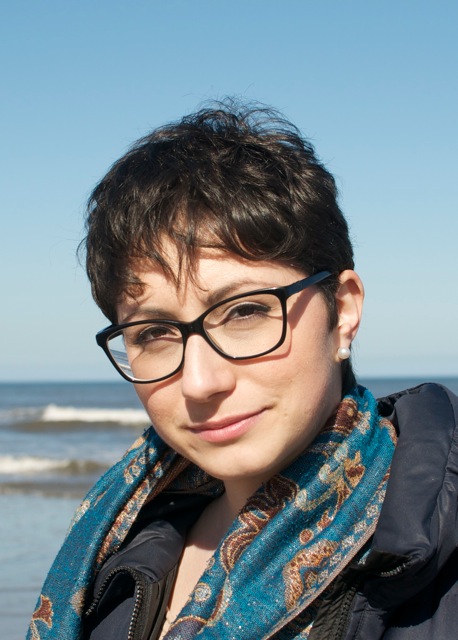
HC Profile PicThis post by Dr Harriet Cornell, Development Officer for the Global Justice Academy, examines the relationship between mental illness and justice in light of the planned execution of Scott Panetti in Texas on Wednesday, 3 December 2014.

A Public Policy Polling national survey was published yesterday, 1 December 2014, showing that Americans oppose the death penalty for mentally ill defendants by a 2-1 margin. The Death Penalty Information Center reported that ‘opposition to the execution of people with mental illness was strong across lines of race, gender, geographic region, political affiliation, and education. Democrats (62%), Republicans (59%) and Independents (51%) all opposed the practice’. Tomorrow, 3 December 2014, the state of Texas plans to execute Scott Louis Panetti for the 1992 murders of his parents-in-law, Joe and Amanda Alvarado. With a long, documented history of severe mental illness, Scott Panetti’s case has garnered international news coverage and a notable spectrum of support for clemency.

Comments closed

How should religion be addressed in attempts to prevent atrocities?

george-wilkes headshot

This guest post is by Dr George Wilkes, founding Director of the Religion and Ethics in the Making of War and Peace Project, and Research Fellow at the School of Divinity, University of Edinburgh.

In June 2014, the Global Justice Academy supported the launch of a new programme bringing scholars and civilian protection practitioners together to identify the state of the art of atrocity prevention, and the state of the academic literature addressing the impact of religion on civilian protection work.

‘Preventing Atrocity: Reasons to Engage with the Religion and Ethics of the Other’ brought specialists from across the College of Humanities and Social Science together with experts from the ICRC, DfID, the UN Office on Genocide Prevention and the Responsibility to Protect, the European Centre for the Prevention of Mass Atrocities, Human Rights Watch, Islamic Relief, the Bosnian Islamic Community and Finn Church Aid.

Comments closed

Ebola: Judging Reactions and Responses. What Happens Next?

LG Ebola 27 Oct 2014

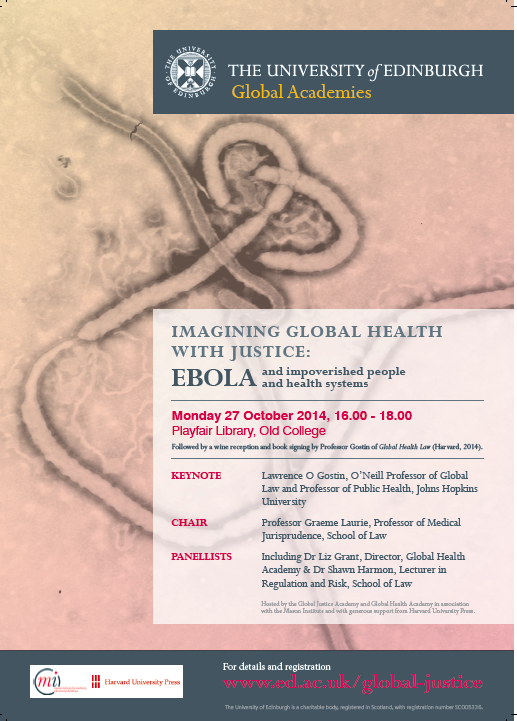
The University of Edinburgh’s Global Academies have announced their Autumn 2014 Ebola Series in response to the current global crisis. In this short post, Dr Harriet Cornell from the Global Justice Academy reflects on how the global response to Ebola has unfolded in the press, and criticisms that have been voiced by experts in the field.

This evening’s Ebola headlines are divided between pleas for world help from Liberia’s President, Ellen Johnson Sirleaf, and blame for the spread and devastation of the outbreak been laid squarely at the doors of the world’s supranational bodies: the World Health Organisation, and the United Nations. Then there is the intersect between the outbreak of the disease in West Africa, and the western media response, with The Guardian running a comment piece entitled The problem with the west’s Ebola response is still fear of a black patient’.

Comments closed

Is Climate Change Causing Conflict in Iraq-Syria?

Nicaylen RayasaThis guest post is by Nicaylen Rayasa. Nicaylen is studying for a Bachelor’s degree in Meteorology and Environmental Studies at Ohio University. Along with fellow GJA-blogger, Janice Brewer, Nicaylen took the ‘Place-Making and Making-Places’ summer school module at the University of Edinburgh during July 2014 – you can read more about the group and their investigations of Global Justice here. In this post, Nicaylen considered the rise of Islamic State and how this intersects with climate change.

This past winter in the Fertile Crescent was particularly harsh for farmers, in what is usually the wettest part of the year. It ended up to be the hottest and driest winter on record.

While prolonged droughts and record heat have been commonplace for many parts of the world, the Iraq-Syria region brings an interesting political dynamic to the climate regime.The region’s climate is  based historically on dry summers and rainy winters. However, climate change and the uptick in temperatures has transformed land use and increased desertification during extended droughts. Extreme versions of hot, dry summers have been more prevalent.

The Iraq-Syria conflict in the Middle East has been a growing regional issue for years now. ISIS (Islamic State of Iraq and Syria), the Sunni Jihadist organisation responsible for the newfound violence in the region, arose earlier this year. Their emergence coincidently occurred during the hottest March-May period on record in Iraq.

Comments closed

The Islamic State and Al Qaeda: the Return of Jihad to the Middle East

Ewan SteinThis guest post is by Dr Ewan Stein, Lecturer in Politics and International Relations at the University of Edinburgh. A longer version of this post will appear as an article in the journal Afkar/Ideas, published by the Institut Europeu de la Mediterrània, Barcelona.

By the time of the 2010-2011 Arab uprisings Al Qaeda was a peripheral actor in regional politics. It now finds itself in competition with a new, perhaps more powerful, jihadist actor in the Islamic State (IS). But IS and Al Qaeda pursue complimentary, rather than divergent, strategies and the IS phenomenon represents a logical evolution for global jihad.

Following 9/11 and the destruction of its Afghan stronghold Al Qaeda had become a decentralised network of affiliates. The uprisings initially pushed global jihad as a strategy to improve the plight of Muslims in the Middle East even further to the margins, and the death of Osama bin Laden in June 2011 registered as a footnote to the much larger political convulsions of the time.

Comments closed

When will we start to address the security of aid workers through a gendered lens?

This guest post is by Dr Alice Gritti. Alice holds a PhD in social psychology from the University of Milano-Bicocca. Her research focuses on gender studies and international aid workers. She arrived at the University of Edinburgh as a visiting researcher in 2013.

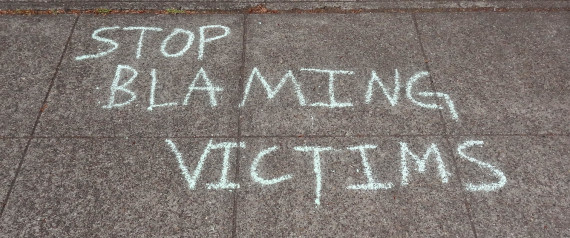
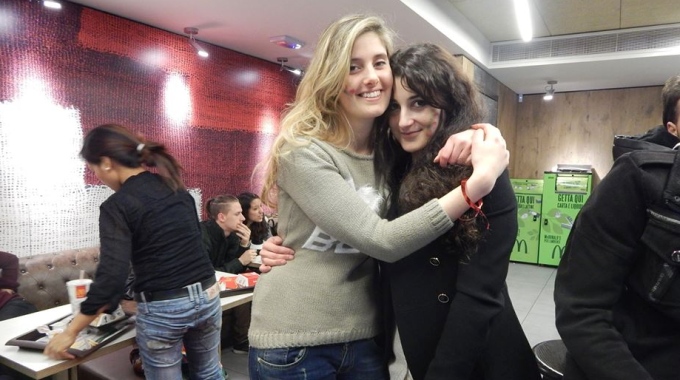
It has already been a month since the kidnapping of two female Italian aid workers in Syria last August. It was striking how the media reported the news of Greta and Vanessa, and how the world of social and the industry insiders commented on it. Before that of a respectful silence, it took the shape of a blame game, with only a few speaking up in defence of the two aid workers, admiring and sharing their values​​, while many were blaming the two with judgemental comments, and often sexist. Yes, of course. The two at issue are indeed “two girls”, and their female identity was what the “accusers” mostly made relevant in their notes: “two young girls”, “very young and inexperienced”, “naïve”, “the blonde and the brunette”, “they should have played with Barbie when they were little instead of playing at the little humanitarians”, and so on.

Greta Ramelli (L) and Vanessa Marzullo (R). Source: ANSA.it
Comments closed

Tis the season for Tomatoes and Social Justice

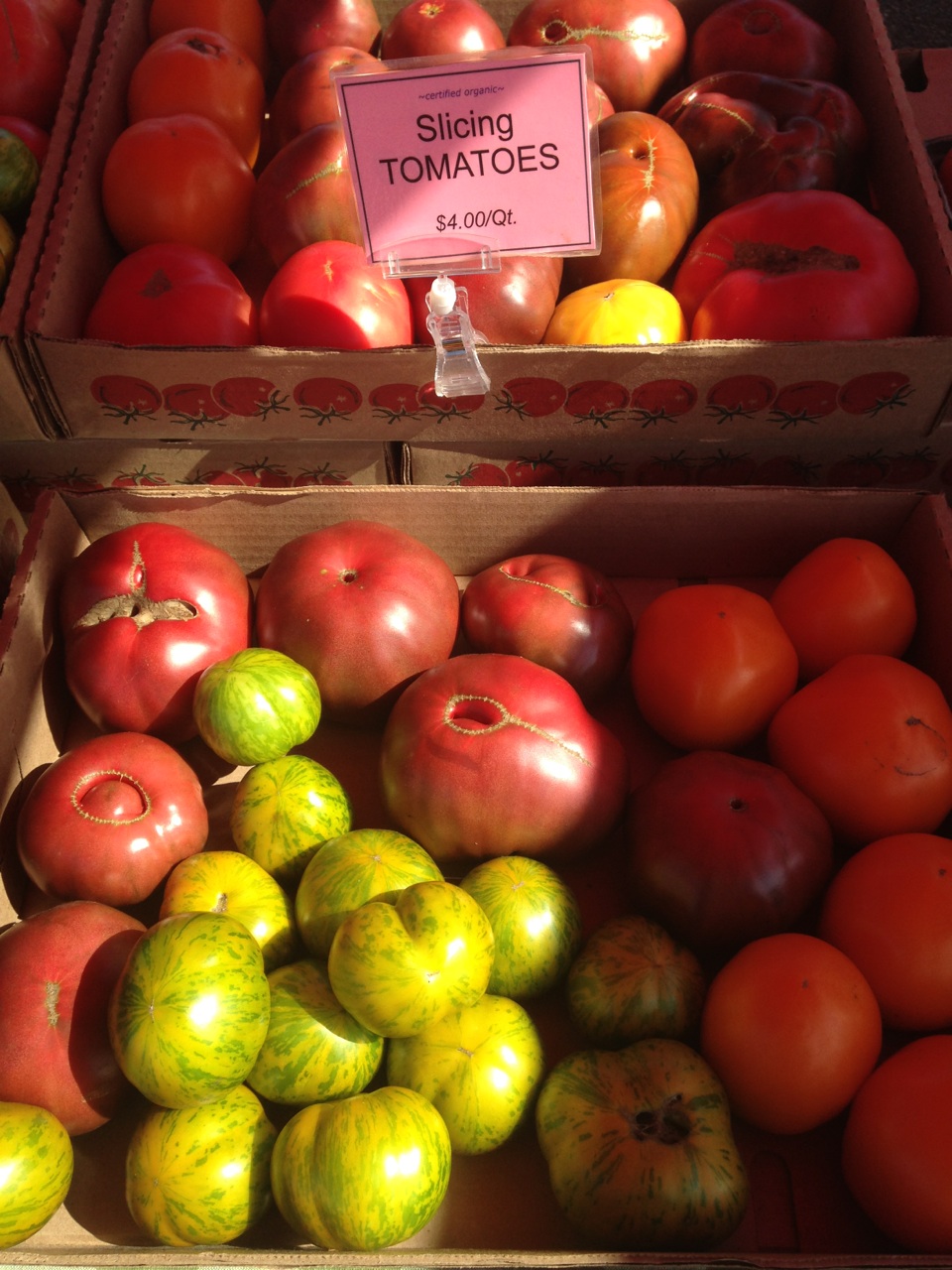
In this second guest post, Janice Brewer investigates the tomato industry in the US and what common practice means for agricultural workers and social justice.

As summer rolls through, tomatoes flourish in all sorts of varieties, colors, sizes, and tastes. As I sink my teeth into an heirloom German tomato, grown 100% organically by Green Edge Gardens in Athens, Ohio, I am blown away by the flavour. I grew up hating tomatoes! So why was this tomato so special?

Janice tomato 2

Tomatoes are thought to have originated in the Northern Andes Mountains where the weather tends to be warm and wet creating an optimal growing climate for tomatoes. When the Spanish invaded these areas they became intrigued by tomato and brought it back to Europe. Being apart of the Nightshade family – a wide group of flowering plants generally containing alkaloids – the tomato was originally thought of as poisonous and unfit for consumption but it later developed the name of the “love apple” and “golden apple” given by the French and Italians. In addition to it’s growing popularity in Europe, then North America, the tomato was found to have countless health benefits.

Comments closed

A community that has less, uses less, and therefore needs less

This guest post is by Janice Brewer. Janice is studying for a Bachelor’s degree in Specialised Studies at Ohio University, in Sustainable Food System Planning and Development. Janice took the ‘Place-Making and Making-Places’ summer school module at the University of Edinburgh during July 2014 – you can read more about the group and their investigations of Global Justice here. In this post, Janice recalls her visit to Eigg and what she learned about sustainability in an island setting.

While awaiting the Ferry in Mallaig I glanced across the blue waters to a special outline of an island I would soon visit.

The Inner Hebrides is sprinkled with over 30 inhabited islands, each with its own history and charm. Located just to the south of the Isle of Skye sits the Isle of Eigg stretching only 5.6 miles by 3.1 miles. Eigg is decorated with “Singing Sands” beach, dramatic climbs, and sheep Xing with every step. This seemingly “just another island” is pioneering is way out of the ordinary; 17 years ago the – now 83 – inhabitants bought the land and the island became community owned. On 1st February 2008 the island switched off the grid. Eigg is the first of its kind to develop an electricity system powered only by wind, water and solar energy. Electricity would become available 24 hours a day for the first time in this islands history. The community won first place in the Big Green Challenge to tackle climate change and received £300,000 from National Endowment for Science, Technology and the Arts (NESTA).

Comments closed

Spectating and Acting: a Workshop Report

On June 20, 2014, Mathias Thaler (University of Edinburgh) organized a workshop dedicated to the tension between spectating and acting in democratic politics. The event drew an engaged audience of about 40 participants, both from Edinburgh and from outside Scotland. Apart from Law School and School of Social and Political Science staff (such as Zenon Bankowski, Christine Bell and Jonathan Hearn), the event also attracted academics from farther abroad (like Phil Parvin from Loughborough University, Cara Nine from the University College Cork and Audra Mitchell from the University of York). Furthermore, many PhD students attended and contributed to the workshop.

Comments closed

WikiLeaks Evidence in Court

Dr Laura Jeffery is a Lecturer and ESRC Research Fellow in Social Anthropology at the University of Edinburgh, specialising in forced displacement, migration, the environment, and human rights. Her academic profile can be viewed here.

In this guest blog, Laura considers how WikiLeaks evidence has been used in courts and whether documents obtained by WikiLeaks are admissable as legal evidence.

UK government policy is to ‘neither confirm nor deny’ (NCND) the authenticity of unauthorised leaked documents. The rationale for NCND is twofold: firstly, authenticating a leaked document could compound any damage already caused by the leak and secondly it rewards those involved in leaking documents. NCND is applied as a blanket policy because selective commentary would give rise to the supposition that leaked documents whose authenticity was not explicitly denied are implicitly authenticated.

Comments closed
css.php

Report this page

To report inappropriate content on this page, please use the form below. Upon receiving your report, we will be in touch as per the Take Down Policy of the service.

Please note that personal data collected through this form is used and stored for the purposes of processing this report and communication with you.

If you are unable to report a concern about content via this form please contact the Service Owner.

Please enter an email address you wish to be contacted on. Please describe the unacceptable content in sufficient detail to allow us to locate it, and why you consider it to be unacceptable.
By submitting this report, you accept that it is accurate and that fraudulent or nuisance complaints may result in action by the University.

  Cancel