Lauren Donnelly is reading for an LLM in Human Rights at Edinburgh Law School. In her role as a Global Justice Academy Student Ambassador, Lauren reflects on discussions raised from the Paris talks on climate change, including what Scotland can do.
On Saturday the 19th of March, the UN House Scotland held, “Climate Change: Global Challenges, Local Solutions Conference” to explore the impact of the much publicised 2015 Paris Climate Change agreement. The event consisted of two panel discussions, the first which examined from an international perspective and the second which explored the Scottish response, to the various challenges faced in achieving the goals set out in this agreement.
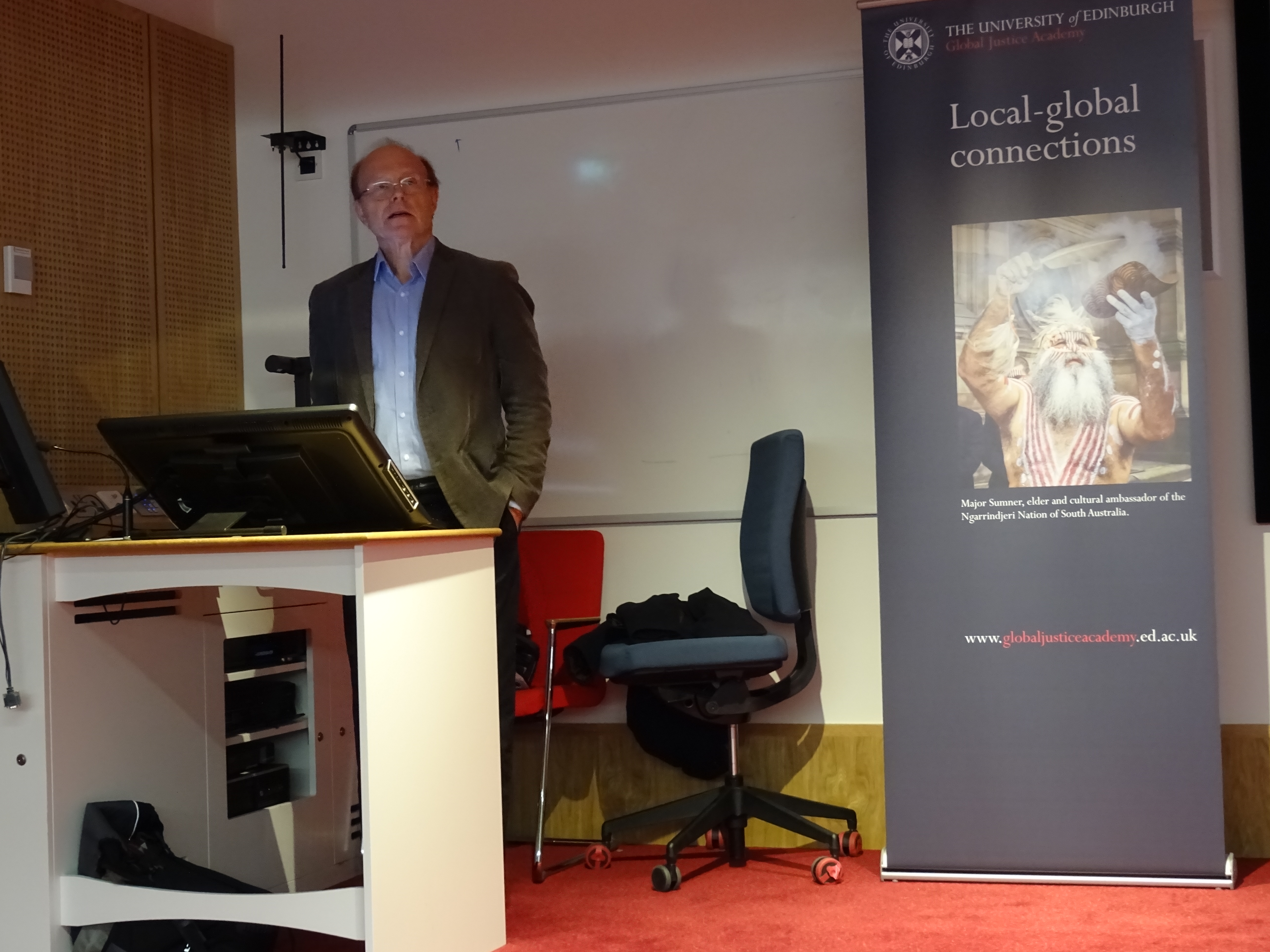
 The opening address of conference was delivered by Tom Ballantine, the Chair of Stop Climate Change Scotland. The opening address paved the way for what was to be an inspiring and enlightened discussion throughout the afternoon. The presentation outlined briefly why climate change matters, the broader effects of climate change and climate change after the Paris agreement. It highlighted that climate change has been discussed since the nineteenth century, stressing that despite the fact that the developing world is contributing the least to climate change, these countries are most likely to suffer the impact of global warming. Expanding on this point, the presentation outlined that if we do not act urgently we can expect to see: coastal flooding and displaced people due to land loss; reduced yields of major crops; human insecurity; and mass poverty.