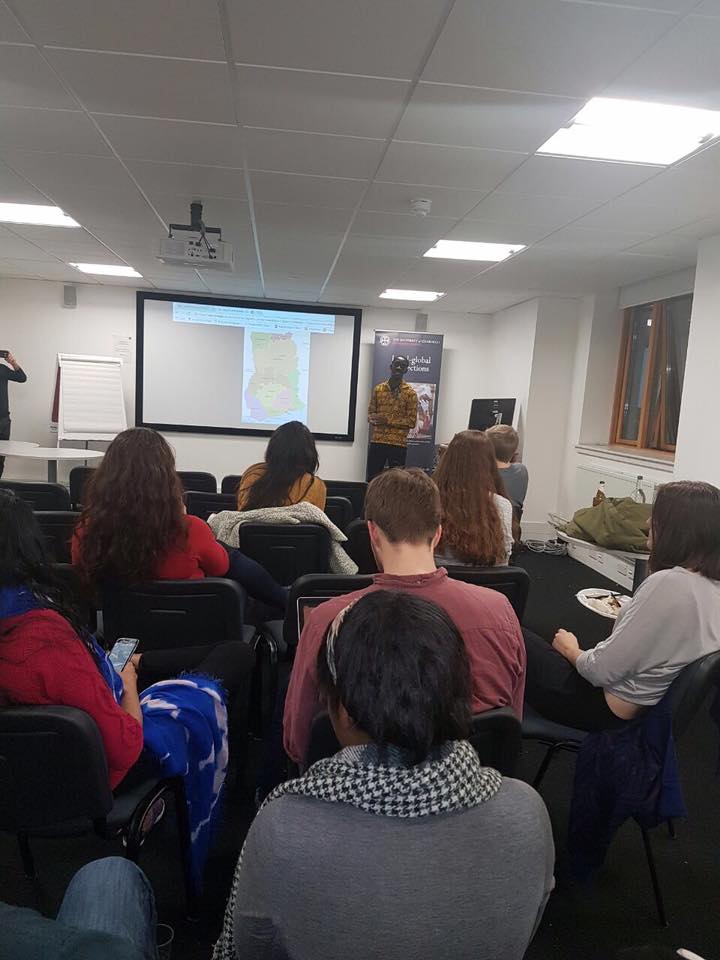
 Vivek Bhatt is reading for a PhD in Law, and is a Global Justice Academy Student Ambassador for 2016-17. Here, he reviews Luis Eslava’s Local Space, Global Life: The Everyday Operation of International Law and Development (Cambridge University Press, 2016).
Luis Eslava’s Local Space, Global Life considers the ways in which international law and the development project jointly produce local spaces and ‘locals’ that conform to global ideals.[1] The author moves beyond the doctrine of legal subjects,[2] a concept that confines many international law scholars to the relationship between law and states, the primary bearers of legal ‘status.’ To Eslava, international legal norms move across spaces and jurisdictions, constituting everyday, local, and private life. Dr Eslava traces the conceptual trajectory of the international development discourse, which became prevalent following Harry S. Truman’s 1949 inaugural address.[3] Truman identified the Third World nation-state as the ideal unit for the attainment of developmental goals. International law and development became inextricable; the former would contribute to the ‘making of a new world order’[4] by aiding the development of Third World nation-states. Yet according to Eslava, world leaders gradually became disenchanted with the idea that development could be achieved through reform at the nation-state level.[5] This led to the identification of the local jurisdiction as the new ideal locus of international development.
Comments closed