This is Part 2 of a two-part blog post by Prof. Paul Clark comparing police discipline in the US and the UK. It identifies aspects…
Comments closedCategory: USA
This post is the first of a two-part blog by Prof. Paul Clark comparing police discipline in the US and the UK. Part I focuses…
Comments closedOn 14 March 2022, the Global Justice Academy hosted a conversation between Mohamedou Ould Salhi, author of the best-seller Guantánamo Diary, and Dr Kasey McCall-Smith,…
Comments closedIn this guest post, LLM in International Law student and GJA Ambassador, Felix Mayr, reflects on a recent Edinburgh Centre for International and Global Law…
Comments closed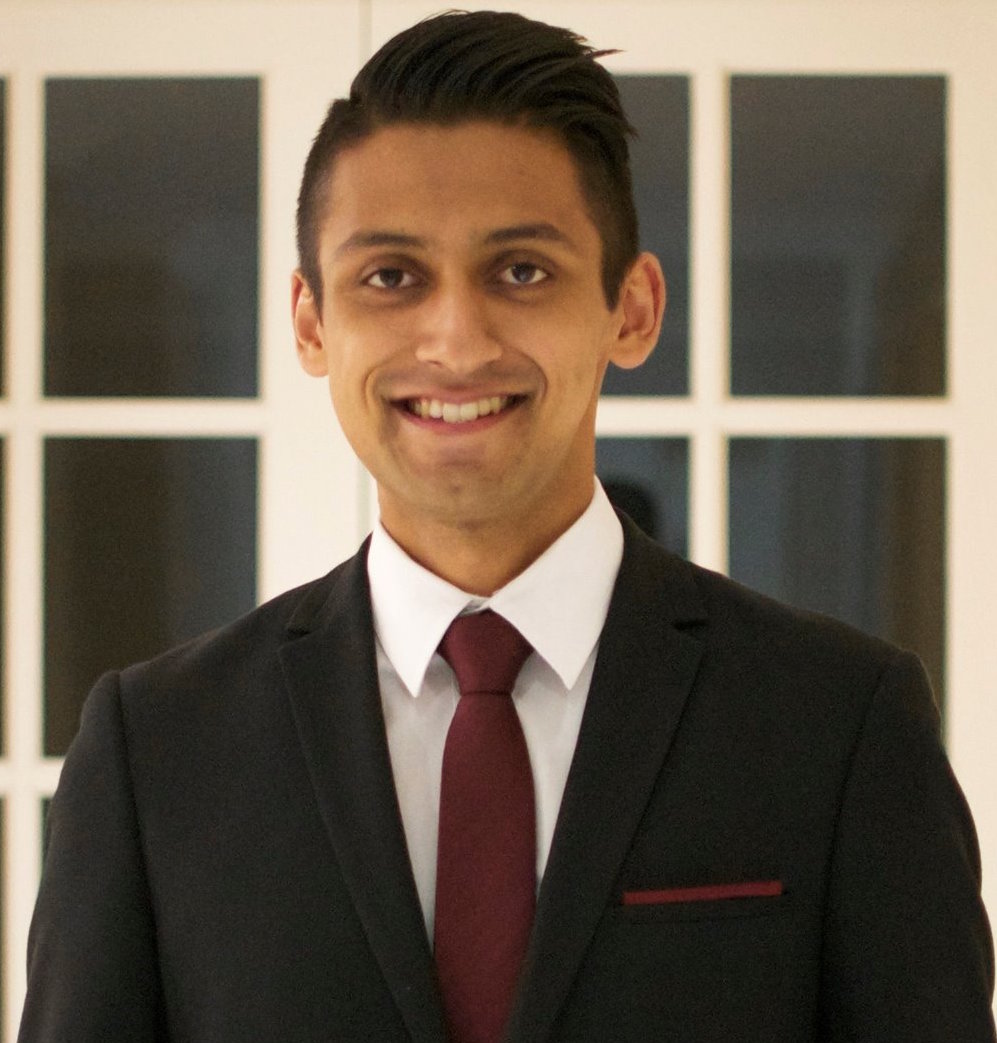
In this guest post, Law PhD Candidate, Vivek Bhatt, reflects on Bryan Stevenson’s visit to Edinburgh Law School to give the 2019 Ruth Adler Memorial Lecture, and to receive an honorary doctorate as part of the School’s summer graduation ceremony.
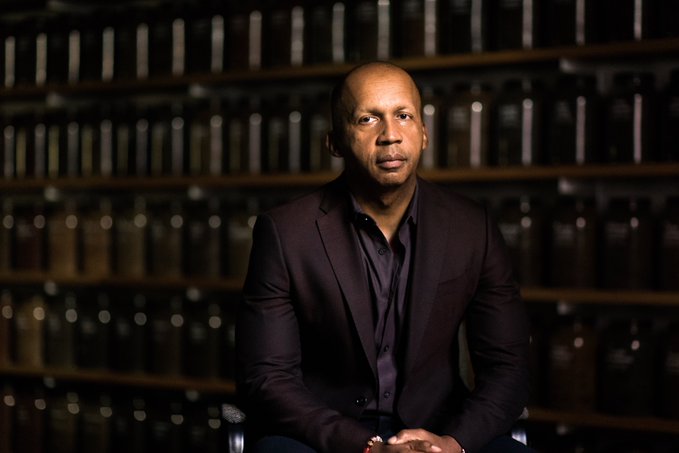
On 8 July 2019, the Global Justice Academy hosted a lecture by Bryan Stevenson, recipient of an honorary doctorate at the Edinburgh Law School. Stevenson is founder of the Equal Justice Institute (EJI) in Montgomery, Alabama, and a clinical professor at the NYU School of Law. Stevenson works as a legal representative for disadvantaged and marginalised individuals, particularly young and poor people who are on death row or serving life sentences. He and his colleagues at the EJI have achieved the exoneration or release of over 125 individuals on death row. Stevenson is also the author of Just Mercy: A Story of Justice and Redemption,[1] which was a New York Times bestseller and won the Carnegie Medal for the best nonfiction book of 2014.
Stevenson’s lecture circulated around a question that is as succinct as it is complex: how do we, as human rights advocates, address injustice? Firstly, he said, we must create justice by becoming proximate to those suffering inequality and injustice. Recounting his relationship with his grandmother, who wished that Stevenson would always be able to feel her embracing him, the skilful orator argued that we must know and seek to understand those who suffer injustice in order to affirm their humanity and dignity. Thus, human rights practice is not about the deployment of legal arguments from afar, but rather about stepping away from one’s legal expertise and embracing those who suffer violations of dignity.
Comments closed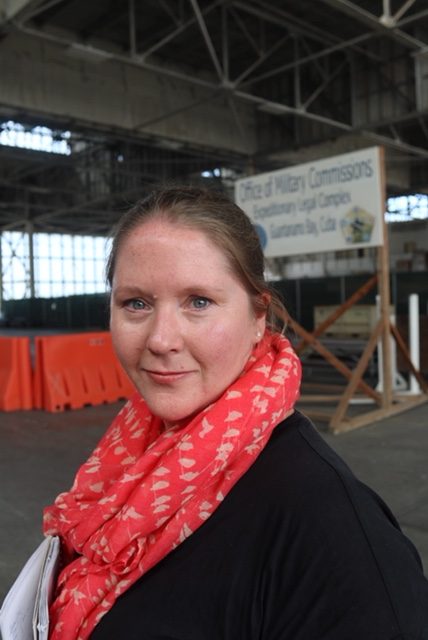 This is the second post in a blog series by Dr Kasey McCall-Smith examines some of the crucial legal issues and broader public questions raised regarding the US v. Khalid Shaikh Mohammad, et. al. military commission proceedings against the five men charged with various war crimes and terrorism in relation to the 11 September 2001 attacks on the US. The series is part of her project ‘Torture on Trial’ and funded by a grant from the Royal Society of Edinburgh.
- Read the first post: Taking a Step Back – A Primer on the International Prohibition against Torture
In the 9/11 war crimes trial taking place in Guantánamo, an array of motions have been filed regarding unlawful influence on the US v. Khalid Shaikh Mohammad, et. al.(9/11 case) proceedings. They began with complaints regarding statements by then-President Obama and continue to the present with complaints regarding President Trump, Secretary of Defense Mattis, former Attorneys General Sessions and Holder and CIA Director Gina Haspel. These motions, all based on section 949b of the 2009 Military Commissions Act, cover a range of statements and actions.
During the April-May 2018 proceedings, the influence of current US President Trump was raised as lawyers debated the influence of statements made by Trump as the commander in chief of the US military. The relevant statements focused on the president’s response to the Bowe Bergdahl v. US courts martialand also the 31 October 2017 New York incident where an alleged terrorist drove a van onto a bike path killing eight people. Trump’s statements on the campaign trail and after his election were also potentially problematic for the 9/11case and attacked the integrity of the military justice system. His statements and twitter posts explicitly called into question the administration of justice and constitutional protections in the US. Defence counsel in the 9/11 war crimes tribunal argue that collectively these successive statements by US presidents and other government officials equate to unlawful influence (UI), a concept drawn from provisions in the US Uniform Code of Military Justice prohibiting Unlawful Command Influence (UCI). UI is a concept set out in 10 USC §837 and article 37 of the UCMJ and is deemed the ‘mortal enemy’ of military justice and also violates due process as guaranteed by the US Constitution and the right to a fair trial under Article 14 of the International Covenant on Civil and Political Rights (ICCPR). The concept applies here as the governing law of the trial is the Military Commissions Act 2009 (MCA 2009) – combining rules of military, domestic and international law – and the president is the constitutional Commander-in-Chief of the US military.
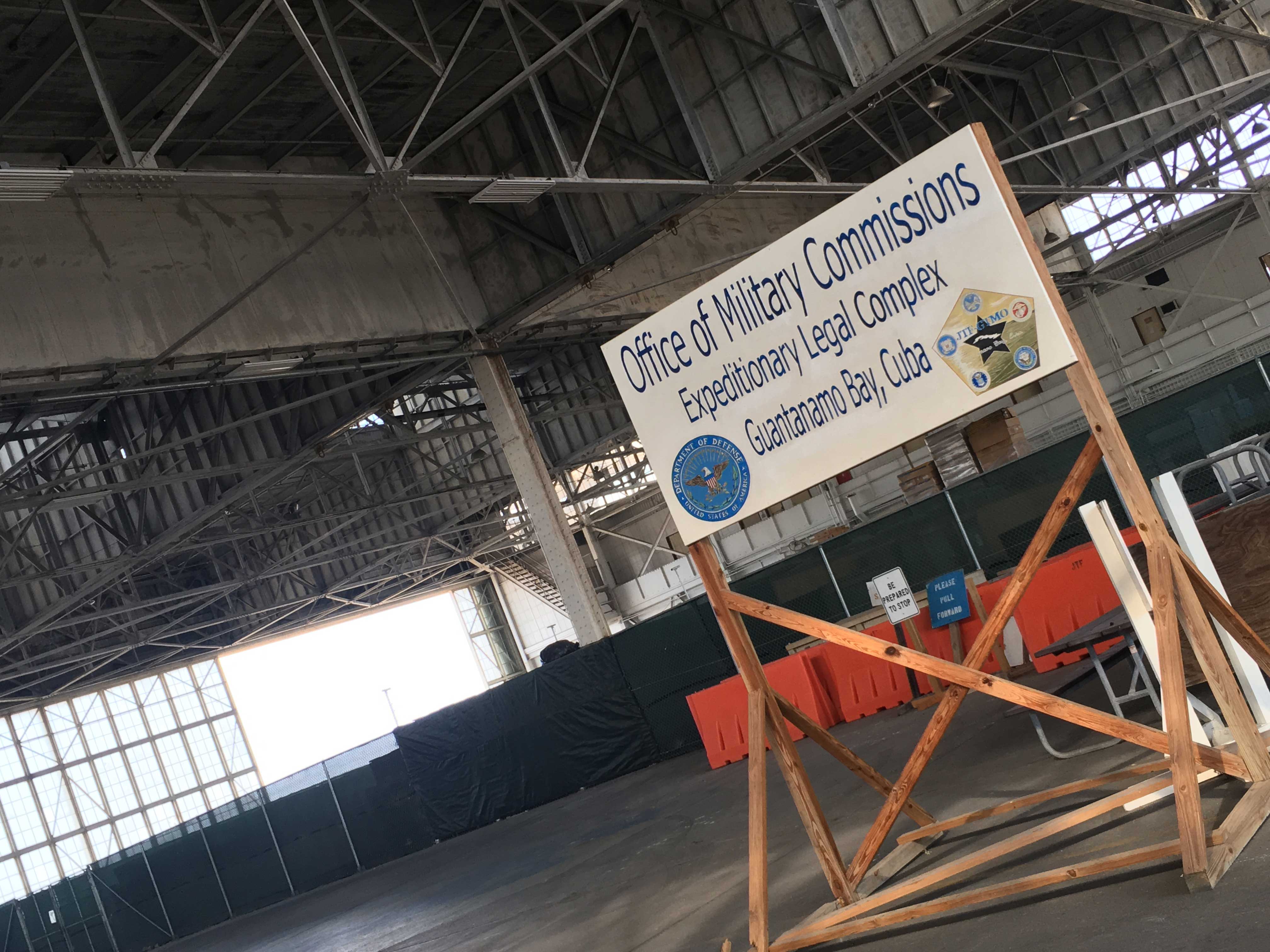
Comments closedThis blog series by Dr Kasey McCall-Smith examines some of the crucial legal issues and broader public questions raised regarding the US v. Khalid Shaikh Mohammad, et. al. military commission proceedings against the five men charged with various war crimes and terrorism in relation to the 11 September 2001 attacks on the US. The military commissions are in the sixth year of the pretrial phase and taking place at a purpose-built Expeditionary Legal Complex in Camp Justiceon Naval Station Guantánamo Bay, Cuba. The series is part of her project ‘Torture on Trial’ and funded by a grant from the Royal Society of Edinburgh.
Taking a Step Back – A Primer on the International Prohibition against Torture
Many members of the public not trained in international law fail to understand why the international prohibition against torture matters or should matter in the US legal system. This post seeks to explain how international law on the prohibition against torture relates to US law and the impact of the prohibition on the military commission proceedings against the five men charged with conspiracy and war crimes in relation to the 9/11 terrorist attacks on the US in US v. Khalid Shaikh Mohammad, et. al.(9/11 case).
Comments closedIn this post, PSRP researcher Laura Wise reflects on symbolic representations of handshake moments at high-level peace summits, and what we miss when we consistently focus on comprehensive peace agreements. This is a longer version of remarks delivered at the IICR 2nd Annual Conference ‘Networked Cultures: Translations, Symbols, and Legacies’, as part of a session convened by the IICR Cultures of Peace and Violence Network. PSRP and the Global Justice Academy are proud members of this interdisciplinary network that enables discussions on how symbolic representations constrain or facilitate cultures of peace and violence, and we look forward to participating in future events.

Handshake moments are currently a hot topic, as journalists rush to interpret the symbolism of the Singapore Summit between North Korea and the United States. From the diplomatic menu to the moment the leaders of each country make physical contact, no aspects of negotiation process are above being scrutinized for what they can tell us about the potential for achieving peace. Meanwhile, participants and commentators often hail the agreements themselves as historic and comprehensive even before crucial details of a done deal are released to the public, with parties keen to credit themselves as having achieved what no other figure has managed to do thus far.
Over twenty years ago, another high-level summit was capturing the world’s attention, as leaders from the former Yugoslavia and other interested parties gathered at Wright-Patterson Air Force Base near Dayton, Ohio, to negotiate yet another comprehensive peace plan for Bosnia and Herzegovina.
Comments closed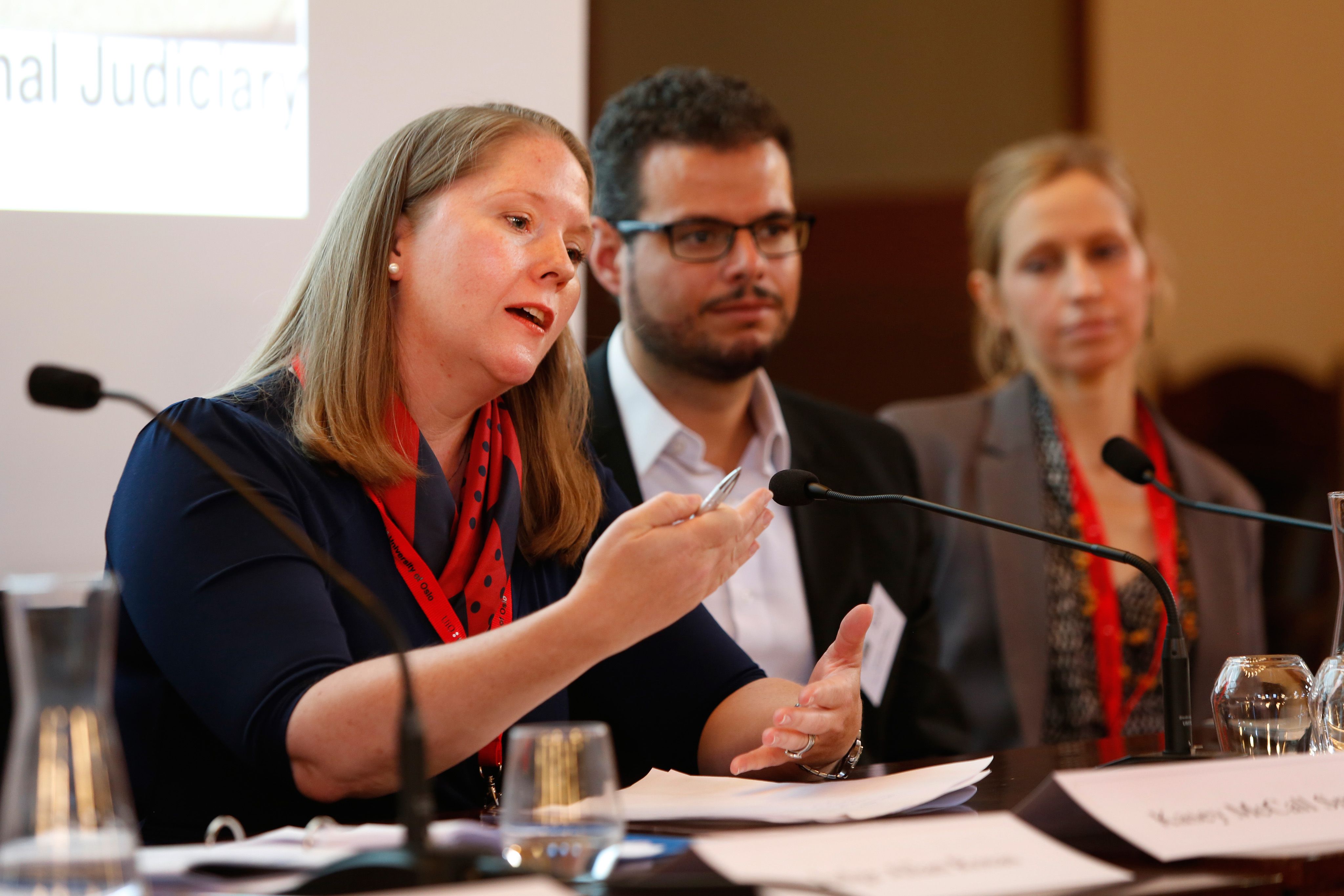 This series of blogs presents a number of the legal issues raised at the April – May 2018 military commission proceedings against the alleged plotters of the 11 September 2001 (9/11) terror attacks against the US in the case of US v. Khalid Shaikh Mohammad, et. al. taking place at Camp Justice, Guantánamo Bay Naval Station, Cuba.
The author, Dr Kasey McCall-Smith, is conducting a research project entitled Torture on Trial, which is funded by the Royal Society of Edinburgh.
1. The Shadows of Torture
When people speak about torture and the war on terror, the most egregious and publicly decried acts generally pop to mind: waterboarding, walling, sleep deprivation, and so on. As the military commission proceedings in case of US v. Khalid Shaikh Mohammad, et. al. (KSM case) unfold, less examined examples aspects of torture reveal the irreversible physical and mental impacts on victims of such abuse.
The Global Justice Academy recently attended an event at the Academy of Sport with visiting professor, Professor Lucia Trimbur (City University of New York; John…
Comments closed