Any views expressed within media held on this service are those of the contributors, should not be taken as approved or endorsed by the University, and do not necessarily reflect the views of the University in respect of any particular issue.
Press "Enter" to skip to content

Category: Urbanization

Posts discussing Global Justice and Urbanization

Challenges of the New Urban Agenda

This guest post is by Pedro Cisterna Gaete, who is reading for an LLM in Global Environment and Climate Change Law at Edinburgh Law School. Pedro is a qualified lawyer from Chile, and former Deputy National Social Director of TECHO, Chile. In this post, he explores the ideas around the Right to the City, and current challenges facing the world’s urban spaces and their populations.
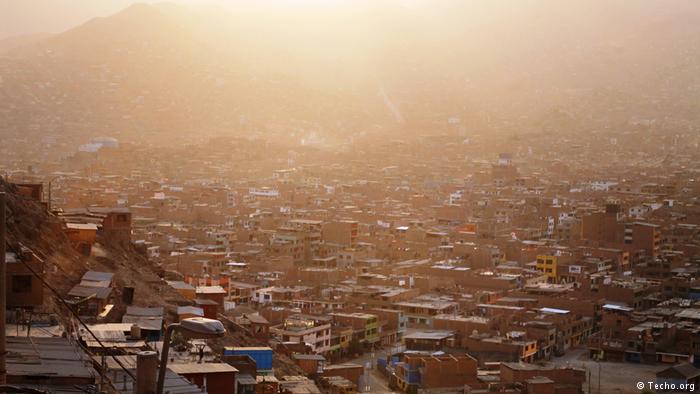
Almost two years ago, the last UN Conference on Human Settlements was celebrated in Quito, Ecuador. At this international meeting, representatives of the majority of governments and also several non-governmental organisations discussed what the essential international urban challenges for the next 20 years would be, and raised a vigorous agenda relating to our cities. This post addresses three main aspects of this  meeting:

  • the official inclusion of the right to the city;
  • the existing and growing housing challenge; and
  • the crucial implementation of this agenda.

Comments closed

Hope Meets Expectation

This post is by Sarah-Jane Cooper Knock, and first appeared on the Security at the Margins (SeaM) blog. SJ is a Lecturer in International Development at the University of Edinburgh. Her current research focuses on magistrates courts in South Africa and asks what role they play in the negotiation of everyday security and justice.  In this post, SJ draws on her recent work on the everyday lives of informal settlement residents in South Africa. She is currently based in Durban, South Africa.  

As I walked into Solomon Mahlangu settlement, Sne was driving posts back into the ground to rebuild the walls that the Land Invasion Unit had torn down. Still visible on one of the remaining boards was a sprayed number, the ubiquitous sign across eThekwini that the municipality had registered the dwelling, ahead of upgrading. Sne’s home bore testament to contradictions of the South African state, which carries with it the promise of provision and violence.

Comments closed

‘Buildings are for (Some) People’: Reconsidering Architecture and the Struggle for Urban Space

profile-jg
GJA Student Ambassador, James Gacek

The Global Justice Academy is delighted to post its second book review of the 2016-17 academic year as part of its Student Ambassador Programme. James Gacek is reading for a PhD in Law. Here, he review’s Bill Caplan’s Buildings are for People as part of our Urban Justice Lab.

Exploring the interactions between people and the natural environment, Bill Caplan’s Buildings are for People: Human Ecological Design issues a clarion call for the design/build professions to critically assess architecture, green design and sustainability in the context of human ecology—that is, the examination between people, community spaces and the ecosystem which surrounds and penetrates us.

Such a focus is significant, as sustainable building has gained resonance in recent professional and academic accounts (Jones & Card, 2011). The built environment of urban spaces has the potential to alter “our living environment in material and experiential ways, shaping the character of human experience, the physical, mental and economic wellbeing of individuals and the community at large” (Caplan, 2016, p. xvi, italics in original). Caplan’s book is a unique approach to further understanding the process of conceiving architectural design, while both highlighting the social aspects of human interaction as well as the benefits of ‘green’ and sustainable architectural designs.

Comments closed

An Urban Justice Project: Winchburgh Futures (January-May 2016)

Global Justice Academy Co-Director, Dr Tahl Kaminer, reflects on the Winchburgh Futures project that ran in ESALA at the beginning of this year.

An ESALA (Edinburgh School of Architecture and Landscape Architecture) team studied (2016) the current urban development around Winchburgh, West Lothian, in which a ring of 2000 or more housing units and a medium-scale town centre are being developed around an existing mining village of 2000 residents. The team responded to local residents’ request for support and advice regarding concerns for community cohesion and quality of development.

Comments closed

Equality and the Democratic Deficit

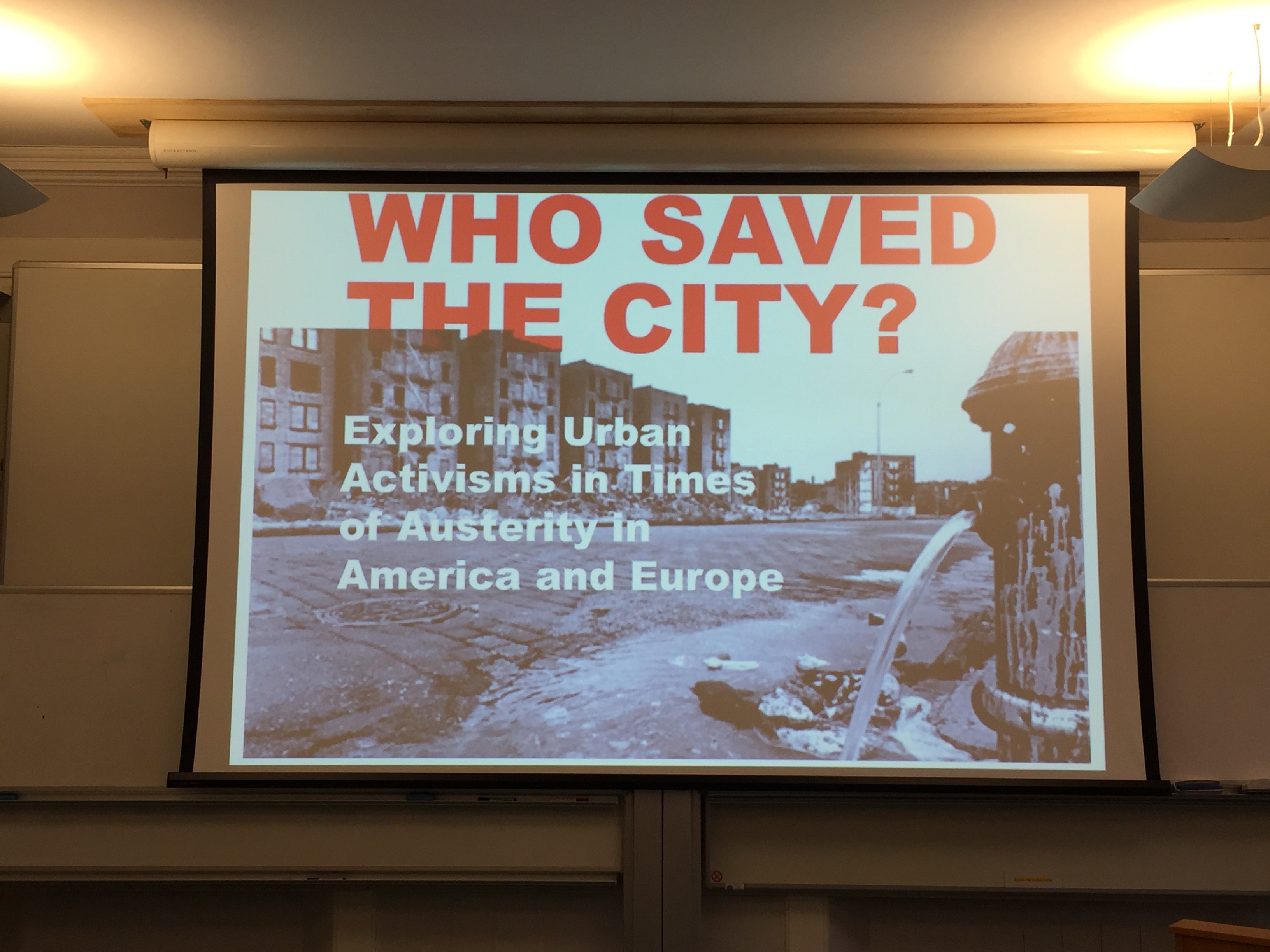
This post by Global Justice Co-Director, Dr Tahl Kaminer, reports from the first Urban Justice Lab Symposium: ‘Who Saved the City?’. Follow the link at the bottom of the post to our Lecture Library to view videos from the day and to find out more about the Urban Justice Lab and what it does.

Who Saved the City

The recent exposure of a letter by David Cameron to Oxfordshire County Council (as reported in the Oxford Mail, and The Guardian), in which the PM berates the council for front-line budget cuts, generated a minor storm on social media. Less than a fortnight earlier, Annette Hastings of the University of Glasgow presented the findings of a Rowntree Foundation report, which lucidly depicted the application of cuts to front-line budgets of city councils across the UK. Her eloquent and precise presentation demonstrated vividly why the government’s cuts necessarily hit front-line spending, and particularly the poor.

Comments closed

Regeneration in an Edinburgh Neighbourhood: the Craigmillar Project Report

In 2014-15, the Global Justice Academy launched its Urban Justice Lab. Based on the MIT-pioneered model to address global challenges, the Urban Justice Lab creates space for discussions and debates as well as collaborations in research, teaching, and outreach for university academics that study or operate on the city.

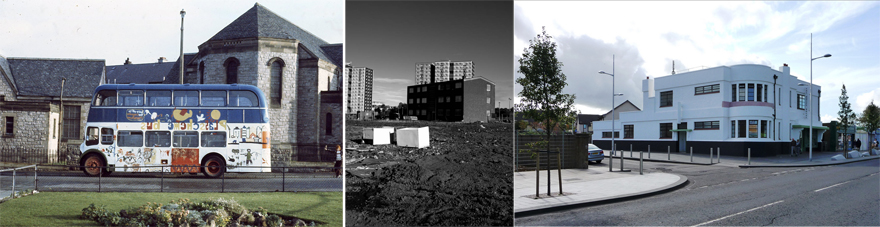
Dr Tahl Kaminer, GJA Co-Director (Urban Justice Lab), is a Lecturer in Architectural Design and Theory at the Edinburgh School of Architecture and Landscape Architecture (ESALA). One track of Tahl’s research studies the means of social amelioration via urban transformation. In 2014, students from the MSc programme in Urban Strategies and Design produced the Craigmillar Project Report – an extensive analysis of the Edinburgh neighbourhood, of the regeneration project, and of current conditions. 

L-R: ‘Charlie’s Bus’ Craigmillar Festival playscheme Bus, historical photograph by Andrew Crummy; Craigmillar flats, photograph by David Flutcher; the White House in Craigmillar, photograph by John Lord.

Comments closed
css.php

Report this page

To report inappropriate content on this page, please use the form below. Upon receiving your report, we will be in touch as per the Take Down Policy of the service.

Please note that personal data collected through this form is used and stored for the purposes of processing this report and communication with you.

If you are unable to report a concern about content via this form please contact the Service Owner.

Please enter an email address you wish to be contacted on. Please describe the unacceptable content in sufficient detail to allow us to locate it, and why you consider it to be unacceptable.
By submitting this report, you accept that it is accurate and that fraudulent or nuisance complaints may result in action by the University.

  Cancel