As part of my LLM in Human Rights at the University of Edinburgh, I had the unique opportunity to undertake a work placement with the…
Leave a CommentCategory: Students participate!
This post by is by Oskar Granskogen Kjorstad, Alexandra Haider and Tess Gallagher. They are students enrolled in PLIT10063 ‘Human Rights in International Relations’, an honours-level…
Comments closed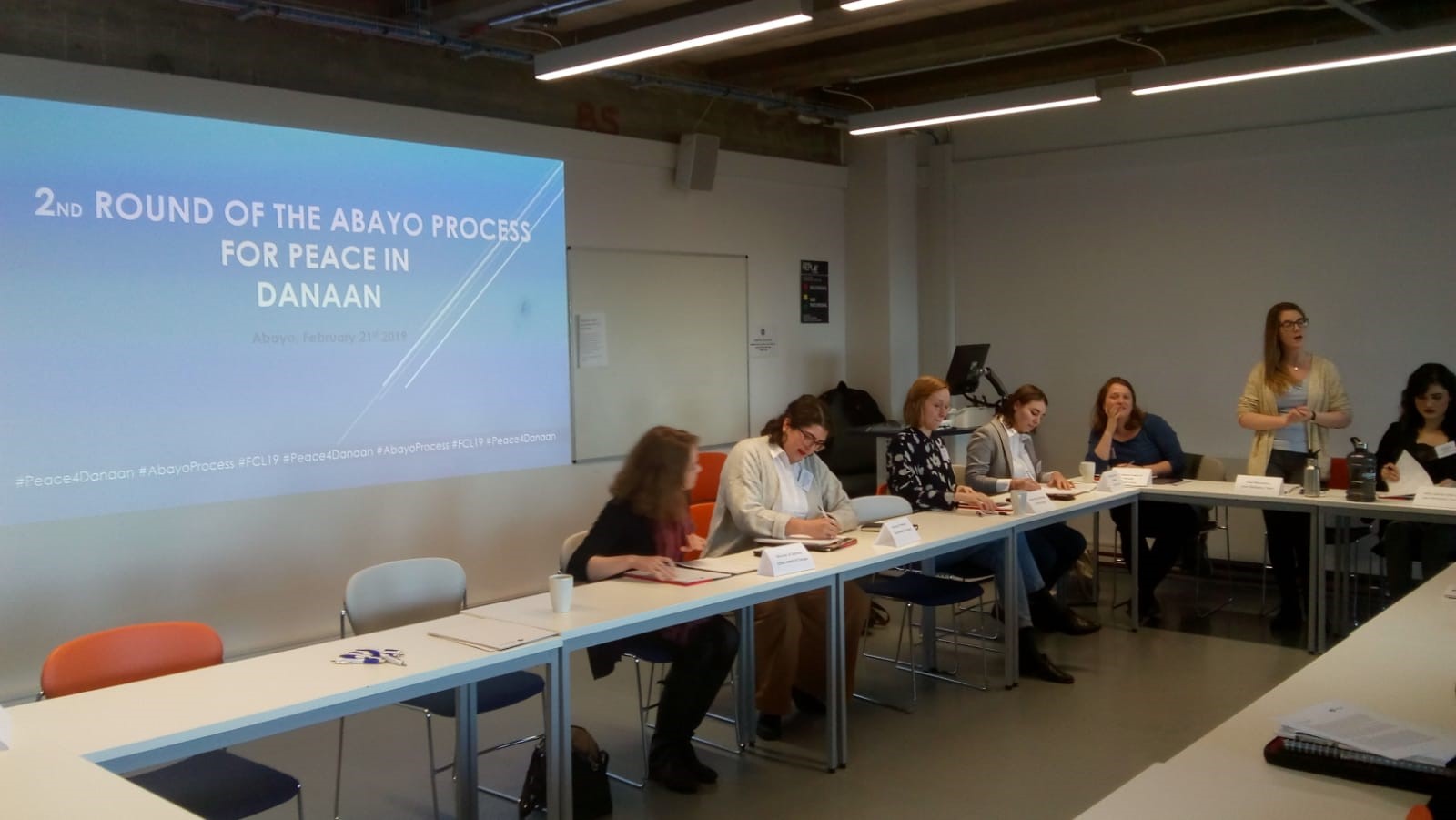
In this post, Edinburgh Law School postgraduate student Phoebe Warren reflects on her experience of taking part in the peace process simulation ‘Building Inclusive Dialogue in Danaan’, organised as part of the 2019 Festival of Creative Learning.
It is frequently bemoaned that theory-heavy subject areas such as politics and law rarely provide opportunities from within the university setting to put education into practice. In an age where student loans continue to accrue for an entire generation while prospects of the job market dwindle, there is room for real concern regarding the employability of those interested in these disciplines. As a postgraduate student on the LL.M. Human Rights programme at Edinburgh Law School, the issue of lacking practical experience in my chosen field is one that worries me greatly. How can I one day participate in high-stakes politico-legal negotiations without being able to first make mistakes and grow from them in a low-risk environment? A useful solution has been the discovery of conflict resolution simulations.
Comments closedIn this post, our Communications Intern, Jee-Young Song, reports from the second day of the recent GJA-sponsored GREYZONE summer school.
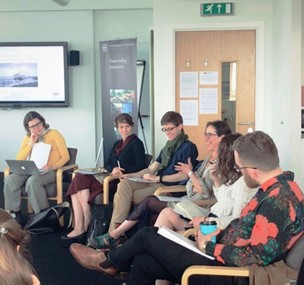 26 June 2018 was the second day of the GREYZONE Summer School, and starting the day’s session was Danielle Celemajer, Professor of Sociology and Social Anthropology at the University of Sydney. Titled ‘The worlds that produce torture’, the main question put to us was:
“What causes torture?”
The straightforward answer to this would of course be obvious: doesn’t torture occur because a malignant perpetrator decided to inflict such an act on the victim?
However, this is an over-simplistic approach, as Professor Celemajer professed her view that there is in fact a complex map of causality for torture, with many contributory factors which extend beyond the scope of the individual perpetrator.
Comments closedIn April 2018, the GJA sponsored its first ‘Spring School’ in a collaboration with Moray House School of Education. In this post, Spring School Co-organiser and GJA Management Group member, Dr Callum McGregor, reflects on the Spring School’s innovative community-university partnership, which fostered strong links with local organisations and social justice practitioners. It is hoped that a similar Spring School will run again next year. Callum is also the programme director for the online MSc in Social Justice and Community Action, which is sponsored by the Global Justice Academy.
The Global Justice Academy (GJA) is an institutional forum for dialogue with practitioners engaged in justice issues locally and globally. This short blog highlights one such example of local dialogue, in the form of a series of community-university workshops on Critical Discourse Analysis (CDA). CDA is a form of critical social research, whose purpose is to analyse the ways in which language can be used to both reproduce and challenge social injustice. Discourses can be thought of as representationsof various aspects of our social lives. These representations are made up sets of rules and statements that determine whatcan be expressed within a particular context, howit can be expressed, by whom and under what conditions. Discourses are important because they have real material effects on the distribution of burdens and benefits along different axes of inequality.
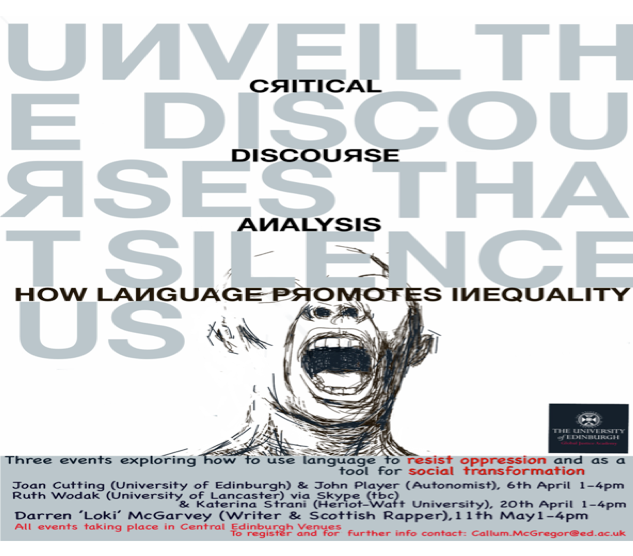
Between April and May 2018, three workshops were held, with the purpose of bringing together community practitioners, community-based adult learners, activists, students and academics to learn together about CDA. Specifically, the workshops focused on how CDA can be used creatively to link education to social action, through addressing the interests and struggles of ordinary people in communities.
Comments closed
Each year, the Global Justice Academy runs a photography competition as part of Edinburgh College of Art’s MA Photography degree programme. The 2018 competition was run in conjunction with the ERC Greyzone Project and its Summer School, ‘Navigating the Grey Zone: Complicity, Resistance, and Solidarity’. This post is the first in a short series of three, where we introduce this year’s winners, their images, and the stories behind their submissions
Series Winner: Keris Heading, ‘Hungry?’.
Q: What inspired your competition entry?
 Working in a supermarket, I noticed the vast amounts of food that is wasted and thrown away, which encouraged me to research more about the exact figures of food wastage in large countries like the UK and US. The figures were astonishing. World hunger is a concept many people, or perhaps everyone, is familiar with, but perhaps it is the injustice in the distribution and usage of food that needs more attention.
Each year, the Global Justice Academy runs a photography competition as part of Edinburgh College of Art’s MA Photography degree programme. The 2018 competition was run in conjunction with the ERC Greyzone Project and its Summer School, ‘Navigating the Grey Zone: Complicity, Resistance, and Solidarity’. This post is the first in a short series of three, where we introduce this year’s winners, their images, and the stories behind their submissions
Single Image Winner: Amber Brown, ‘The Coming Soon Land’.
Q: What inspired your competition entry?
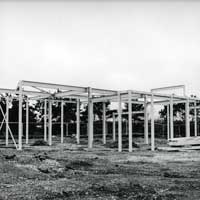 My concept of ‘The Coming Soon Land’ sprouted from the emotional disarray I found in observing a town undergoing change within development. Whilst the project grows from a frustration, the landscapes are in some sort of structural purgatory which I find aesthetically interesting, a grey zone that is not quite one nor the other, plans proposed but stuck in quicksand amidst a crisis concerning social and urban justice. Solidarity in this, comes from an accumulation of observed opinions which have been illustrated through my imagery. It feels a complex situation, one that is constantly progressing.
Each year, the Global Justice Academy runs a photography competition as part of Edinburgh College of Art’s MA Photography degree programme. The 2018 competition was run in conjunction with the ERC Greyzone Project and its Summer School, ‘Navigating the Grey Zone: Complicity, Resistance, and Solidarity’. This post is the first in a short series of three, where we introduce this year’s winners, their images, and the stories behind their submissions
Commended Series: Isobel Budler, ‘Bridges Not Walls’.
Q: What inspired your competition entry?
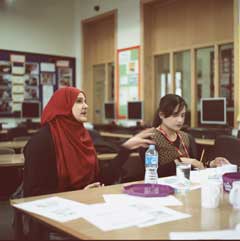 I came across the ‘Bridges Not Walls’ conference through the organiser Nancy, who I knew prior to the project. She spoke to me candidly about the work they do within the school they are employed by, challenging stereotypes and educating young people on a range of topics.

In his first post as GJA Student Ambassador, Connor Hounslow reports from the 2017 Scottish Centre for International Law‘s Annual Lecture. This year’s lecture was delivered by Natalie Klein, Professor and Dean of Macquarie Law School.
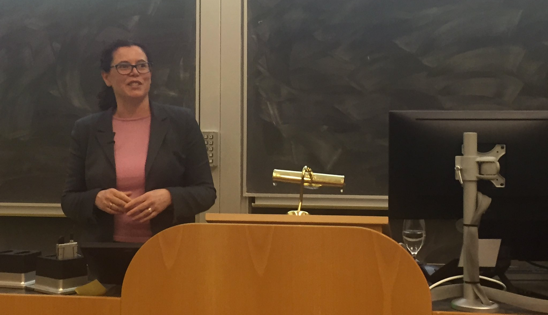
Last Tuesday, Professor Klein delivered the Scottish Center for International Law Annual lecture on the role of the judge in developing international law, especially within the context of the Law of the Sea. As described by Professor Klein, her body of research on this topic represents a microcosm of the international legal system. Nonetheless, Professor Klein’s explorations in this lecture posited an understanding of the judge which applies to the broader international legal universe.
The Global Justice Academy runs a Student Ambassador programme within the University of Edinburgh, where current undergraduates and postgraduates can get involved with our work. Here, Connor Hounslow introduces himself as our first Student Ambassador for 2017-18. Connor will be reporting from upcoming events as well as penning opinion pieces for this blog. Stay tuned!
My name is Connor Hounslow andI hail from Westborough, Massachusetts. I am third-year MA (Hons) International Relations with Quantitative Methods Student at the University. My aligned interests with the Global Justice Academy include political theory, international law, as well as the use of quantitative methods in the social sciences.
Comments closed