As part of my LLM in Human Rights at the University of Edinburgh, I had the unique opportunity to undertake a work placement with the…
Leave a CommentCategory: Student Ambassadors
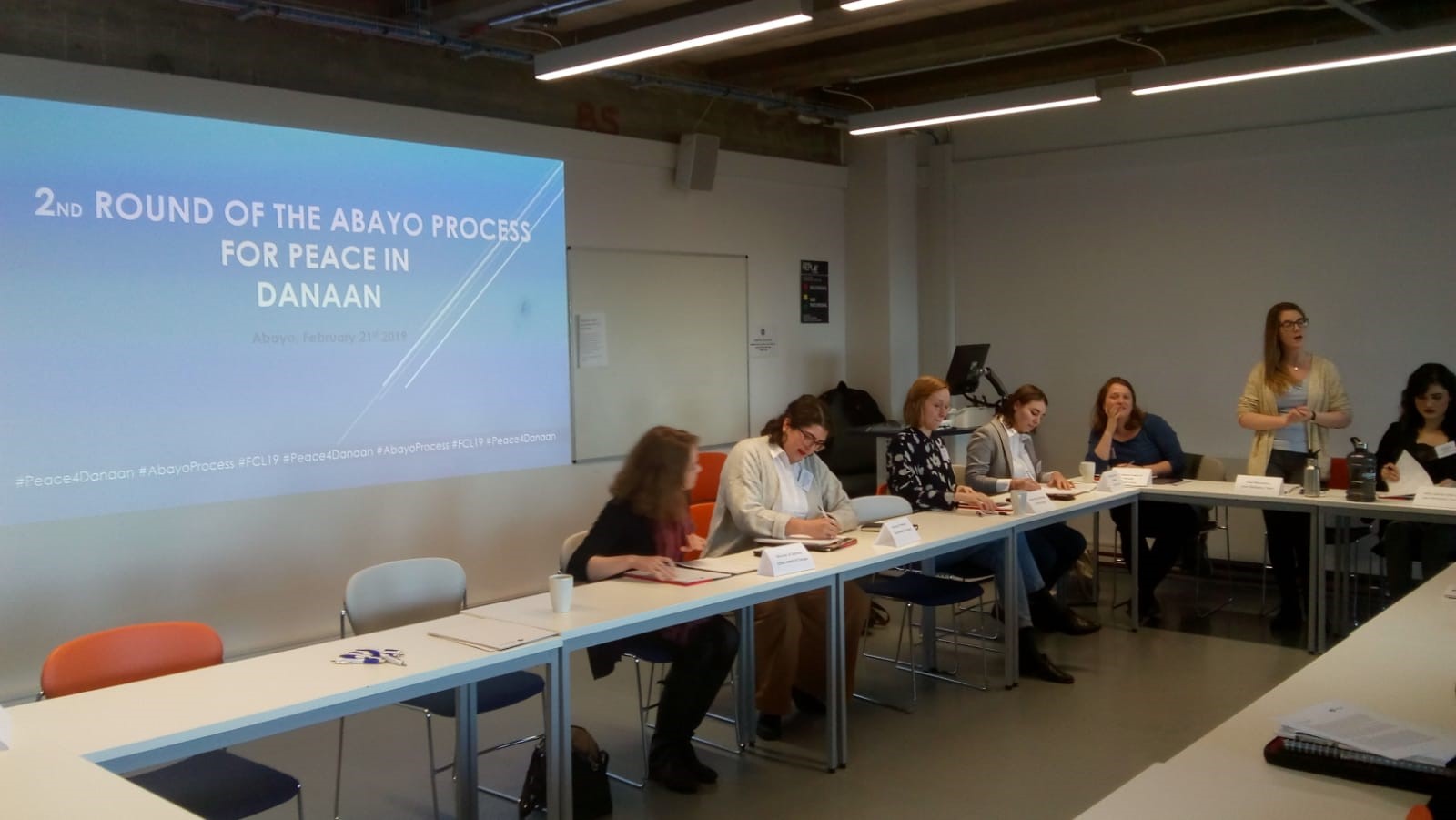
In this post, Edinburgh Law School postgraduate student Phoebe Warren reflects on her experience of taking part in the peace process simulation ‘Building Inclusive Dialogue in Danaan’, organised as part of the 2019 Festival of Creative Learning.
It is frequently bemoaned that theory-heavy subject areas such as politics and law rarely provide opportunities from within the university setting to put education into practice. In an age where student loans continue to accrue for an entire generation while prospects of the job market dwindle, there is room for real concern regarding the employability of those interested in these disciplines. As a postgraduate student on the LL.M. Human Rights programme at Edinburgh Law School, the issue of lacking practical experience in my chosen field is one that worries me greatly. How can I one day participate in high-stakes politico-legal negotiations without being able to first make mistakes and grow from them in a low-risk environment? A useful solution has been the discovery of conflict resolution simulations.
Comments closedGuncha Sharma is a candidate for the Global Justice Academy’s LLM in Human Rights, and a GJA Student Ambassador for 2018-19. From India, she is also one of three recipientsof the GJA’s LLM Human Rights scholarship awards for this year, and has a keen interest in gender issues, the rights of children and other vulnerable groups, and public health. In this post, Guncha reflects on the recent Ruth Adler Memorial Lecture, which was delivered by Philippe Sands QC, with a response from Scotland’s Lord Advocate James Wolffe QC.
On October 24 2018, Philippe Sands delivered the Ruth Adler Memorial Lecture with a talk based on his bestselling book East-West Street and the Making of Modern Human Rights. Phillippe Sands is one of the most successful British lawyers working in the field of International Law. He has argued many high-profile cases before International courts and tribunals, and currently directs the Project on International Courts and Tribunals from his position as Professor of Laws at UCL.
Comments closed
In his first post as GJA Student Ambassador, Connor Hounslow reports from the 2017 Scottish Centre for International Law‘s Annual Lecture. This year’s lecture was delivered by Natalie Klein, Professor and Dean of Macquarie Law School.
Last Tuesday, Professor Klein delivered the Scottish Center for International Law Annual lecture on the role of the judge in developing international law, especially within the context of the Law of the Sea. As described by Professor Klein, her body of research on this topic represents a microcosm of the international legal system. Nonetheless, Professor Klein’s explorations in this lecture posited an understanding of the judge which applies to the broader international legal universe.
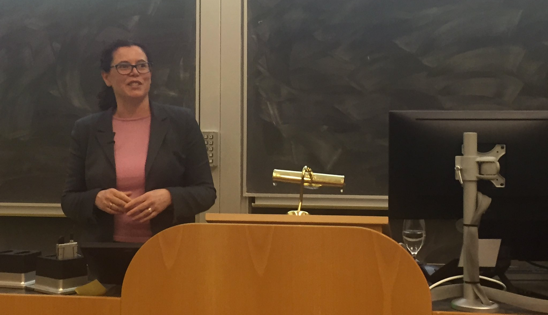
The Global Justice Academy runs a Student Ambassador programme within the University of Edinburgh, where current undergraduates and postgraduates can get involved with our work. Here, Connor Hounslow introduces himself as our first Student Ambassador for 2017-18. Connor will be reporting from upcoming events as well as penning opinion pieces for this blog. Stay tuned!
My name is Connor Hounslow andI hail from Westborough, Massachusetts. I am third-year MA (Hons) International Relations with Quantitative Methods Student at the University. My aligned interests with the Global Justice Academy include political theory, international law, as well as the use of quantitative methods in the social sciences.
Comments closedVivek Bhatt, a Student Ambassador with the Global Justice Academy (GJA), has written this blog following a panel event he attended at the Edinburgh Law School. The event, hosted by the GJA, explored…
Comments closedMahlea Babjak is reading for a PhD in Religious Studies and is researching human trafficking in South Asia. She is a Global Justice Academy Student…
Comments closedVivek Bhatt is reading for a PhD in Law, and is a Global Justice Academy Student Ambassador for 2016-17. He recently attended and spoke at…
Comments closed Vivek Bhatt is reading for a PhD in Law, and is a Global Justice Academy Student Ambassador for 2016-17. Here, he reviews Luis Eslava’s Local Space, Global Life: The Everyday Operation of International Law and Development (Cambridge University Press, 2016).
Luis Eslava’s Local Space, Global Life considers the ways in which international law and the development project jointly produce local spaces and ‘locals’ that conform to global ideals.[1] The author moves beyond the doctrine of legal subjects,[2] a concept that confines many international law scholars to the relationship between law and states, the primary bearers of legal ‘status.’ To Eslava, international legal norms move across spaces and jurisdictions, constituting everyday, local, and private life. Dr Eslava traces the conceptual trajectory of the international development discourse, which became prevalent following Harry S. Truman’s 1949 inaugural address.[3] Truman identified the Third World nation-state as the ideal unit for the attainment of developmental goals. International law and development became inextricable; the former would contribute to the ‘making of a new world order’[4] by aiding the development of Third World nation-states. Yet according to Eslava, world leaders gradually became disenchanted with the idea that development could be achieved through reform at the nation-state level.[5] This led to the identification of the local jurisdiction as the new ideal locus of international development.
Comments closed In his second book review as a Global Justice Academy Student Ambassador, James Gacek considers Zygmunt Bauman’s Strangers at Our Door and the popular panic that often surrounds mass migration.
Zygmunt Bauman’s (2016) book, Strangers at Our Door, provides a significant contribution to a growing discussion which counters the illusory panics of mass migration. Bauman explores the origins, contours and the impact of ‘moral panic’ seemingly spreading across Western, liberal democracies, and dissects the present-day ‘migration panic.’ Such migration panic, he contends, is witnessed within anxiety-driven and fear-suffused debates percolating within Western societies. While moral panic is not a new concept—one in which articulates that some malevolent force of ‘evil’ threatens a society’s well-being, coupled with the anxieties ostensibly overwhelming felt within such societies (c.f. Cohen, 1972)—what is new is the feeling of fear spreading among an ever-growing number of people within Western nations.
Comments closed