Last Thursday, PeaceRep, Gender.Ed, and the Global Justice Academy hosted the Scottish Premiere of ‘Devi’ a documentary on the life of Devi Khakda—former member…
Leave a CommentCategory: Sexual Violence
On 14 March 2023, the Global Justice Academy hosted the Ruth Adler Human Rights Lecture by Ms Mama Fatima Singhateh, the UN Special Rapporteur…
Comments closedThis is the third blog in a series written by LLM students on the Human (In)Security course at Edinburgh Law School. The series celebrates the…
Comments closedMahlea Babjak is reading for a PhD in Religious Studies and is researching human trafficking in South Asia. She is a Global Justice Academy Student…
Comments closed
Dr Michelle Brock is an Assistant Professor of History at Washington and Lee University, specialising in British History. In this guest post, Mikki examines the culture of ‘victim blaming’ that has been reinvigorated in the United States over the past six months, from the perspective of an early-modernist who researches belief and the Devil.
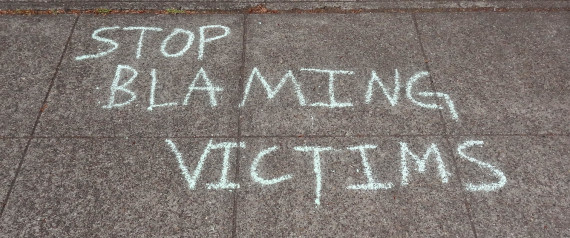
From the decisions not to indict the officers who killed Michael Brown and Eric Garner to the disturbing Rolling Stone article on a brutal gang rape at UVA, this country has produced a harrowing month of news. The reaction of much of the American public to these stories has been as distressing as their content. Many have turned not to self-searching or activism, but to stereotype and judgement. They rush to point out that Brown and Garner had, after all, committed crimes, drawing on centuries-old racial tropes to point out their size or comment that they were acting like “thugs” with “bad attitudes.” When they hear about the epidemic of sexual assaults on college campuses across the country, they question the victim’s dress, behaviour, and alcohol consumption, wondering if not explicitly saying that she might have been “asking for it.” In short, we are a country that blames the victims.
Comments closed
