This blog forms part of a series celebrating the 75th anniversary of the Universal Declaration of Human Rights (UDHR). Recognising the numerous conflicts and the…
Comments closedCategory: Refugees
This is the second blog in a series written by LLM students on the Human (In)Security course at Edinburgh Law School. The series celebrates the…
Comments closed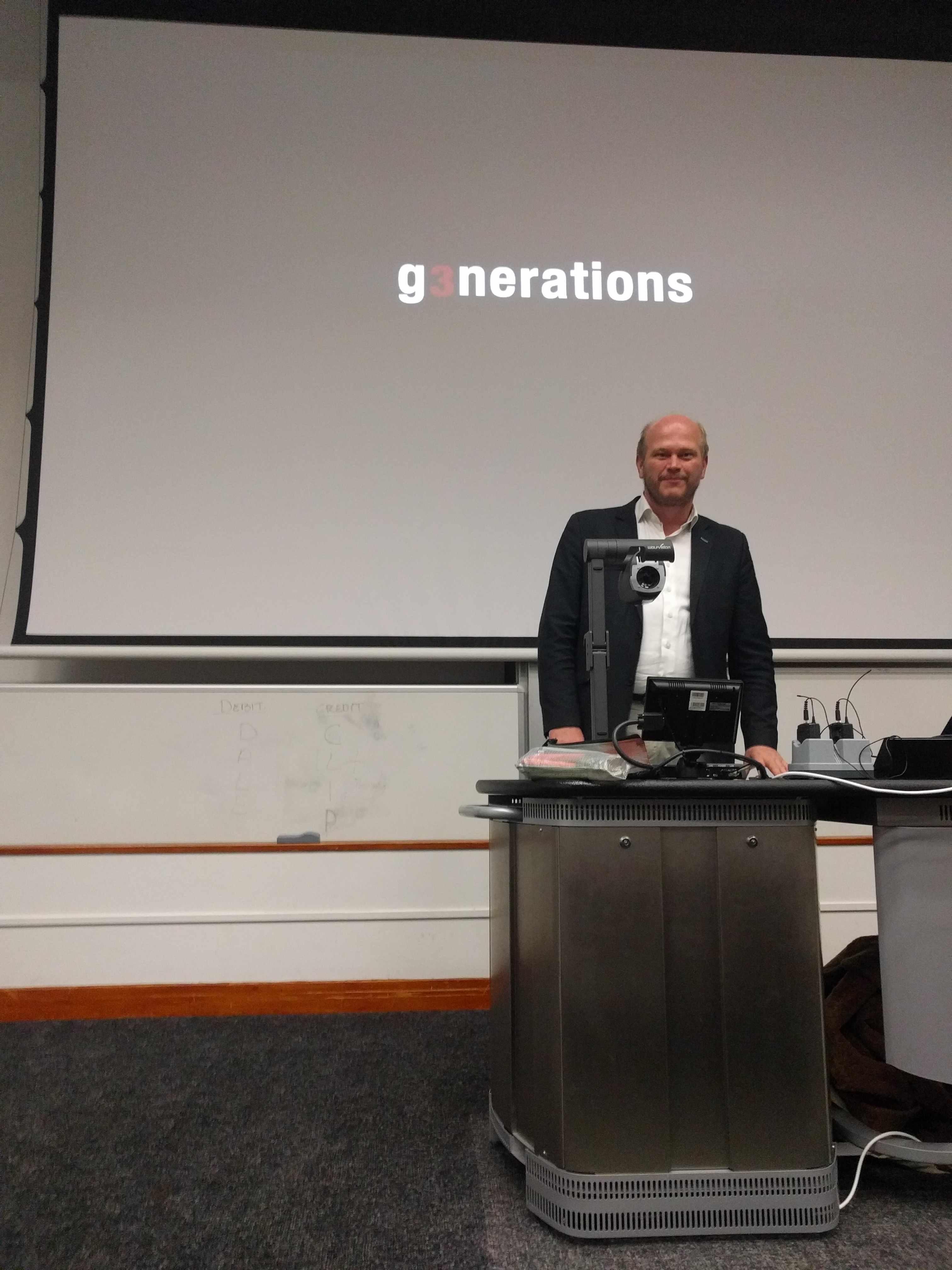 Between 13-15 October 2018, the Global Justice Academy co-hosted a weekend of events joining Relief & Reconciliation for Syria with peacebuilding communities in Scotland. This post from Dr George R. Wilkes, reflects on the series of events that took place.
The prospect of an inclusive peacebuilding process in Syria looks bleak now. From the perspective of millions of Syrians who have fled regime controlled areas, atrocity, terror and armed extortion all confront attempts to straddle divisions to talk about peace. Refugees face daily existential pressures in the face of which peace talks appear distant and untimely. Critics of regime ‘reconciliations’ see the concept reduced to the mechanics of overpowering the regime’s outlaws. In regime territory, a more inclusive embrace of populations controlled by Islamist armed groups is undercut by the sense that violence and terror were the inevitable result of a religious fundamentalism shared widely within those populations, and by the international supporters of those forces.
Comments closed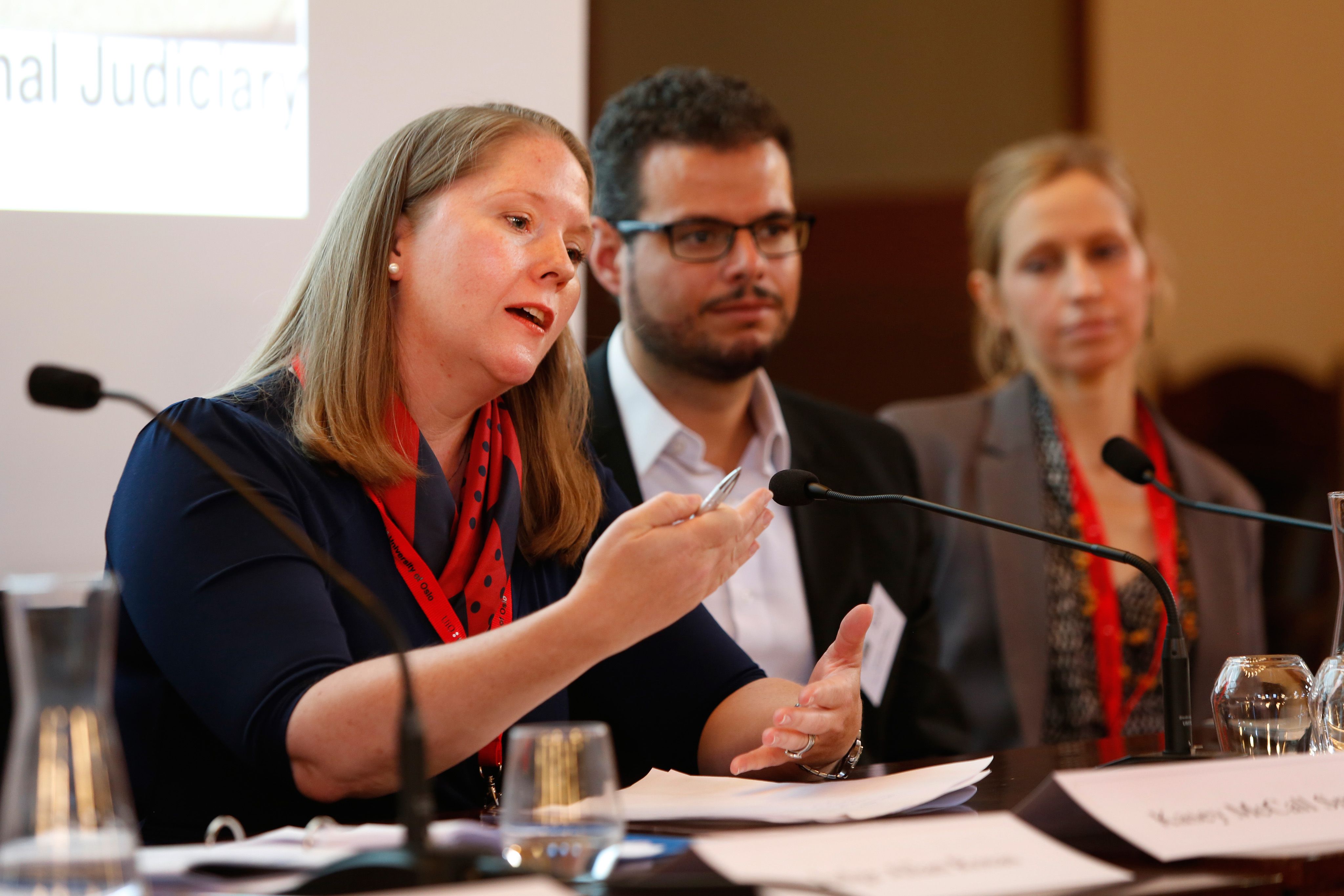 Dr Kasey McCall-Smith, Chair of the Association of Human Rights Institutes and member of the Global Justice Academy, discusses Human Trafficking and Modern Slavery in the context of the UN Global Compact for Migration.
In a previous post, I gave general overview of the UN Global Compact for Migration and a brief analysis of the Migration Compact thematic discussions on the distinctions between human smuggling and human trafficking. This note considers modern slavery, a topic with which the University of Edinburgh is highly engaged through both academic projects as well as its Modern Slavery initiatives. Following on from the distinction between migrants smuggled into a state for the sole purpose of evading legal migration and individuals trafficked into (or within) a state for purposes of exploitation, the following will present key debates about modern slavery and human trafficking that are highly relevant to the conclusion of a comprehensive Migration Compact.
Comments closedDr Kasey McCall-Smith, Chair of the Association of Human Rights Institutes and member of the Global Justice Academy, discusses recent steps towards a UN Global Compact for Migration. This is the first of two blogs from Dr McCall-Smith on the Migration Compact negotiations.
The next steps toward a UN Global Compact for Migration to combat the ever-growing legal and policy issues associated with mass and irregular migration were taken at the UN headquarters in Vienna, Austria, 4-5 September 2017. The Compact aims to deliver a comprehensive approach to human mobility as well as further clarification of and support for existing international frameworks addressing migration, refugees and trafficking, including the Refugee Convention and its Protocol, the UN Convention against Transnational Organized Crime (UNTOC), the UN Protocol to Prevent, Suppress and Punish Trafficking in Persons, Especially Women and Children (Trafficking in Persons Protocol) and the Protocol against the Smuggling of Migrants by Land, Sea and Air (Smuggling of Migrants Protocol), as well as a number of human rights instruments such as the Convention on the Elimination of all forms of Discrimination against Women (CEDAW) the Convention on the Rights of the Child (CRC), among many others.
Comments closedThis blog has been written by Dr Grit Wesser, a postdoctoral fellow in Social Anthropology at The University of Edinburgh. Here, she reports from a recent Asylum Monologues…
Comments closed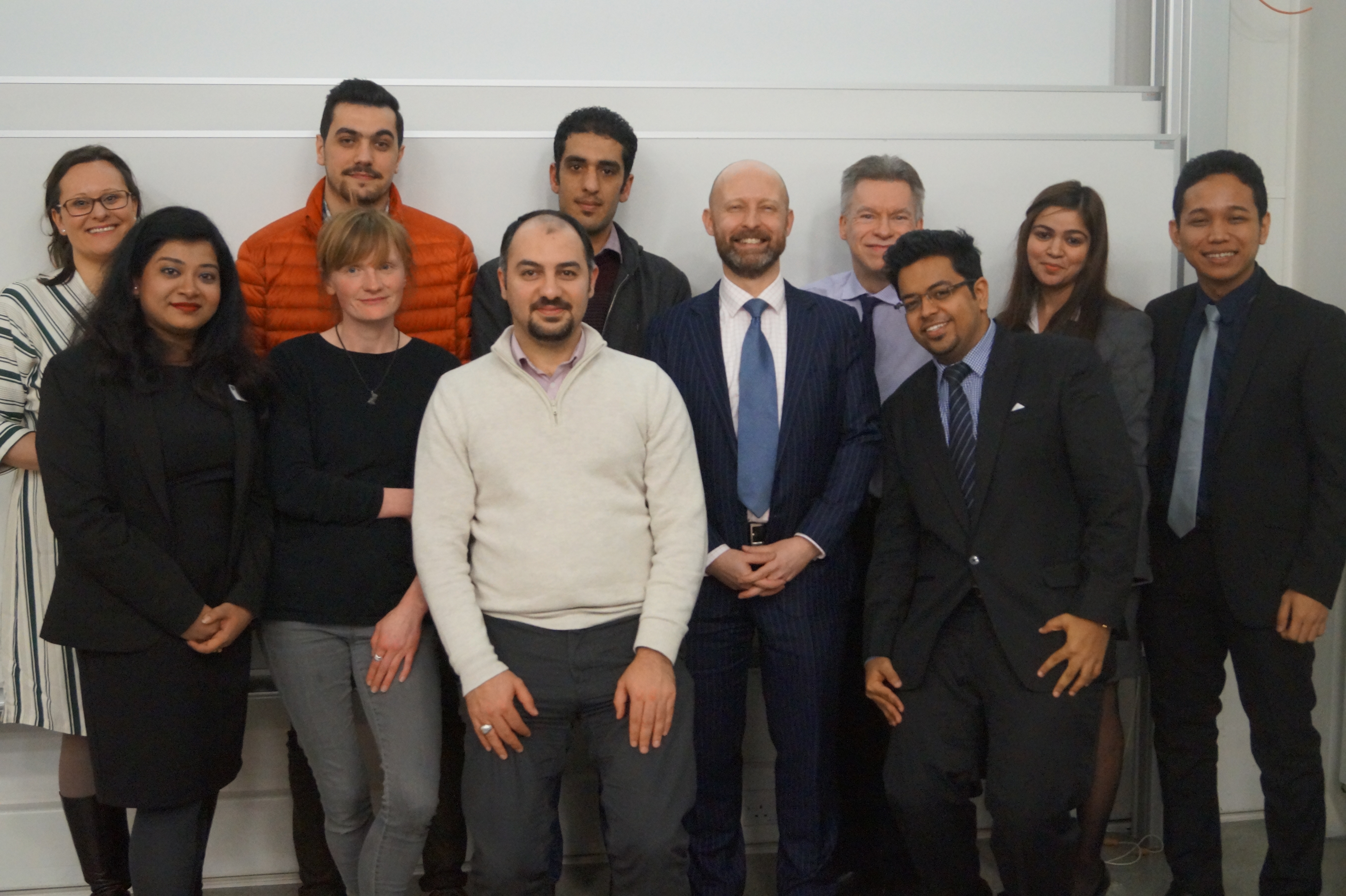 As a part of the Strategic Leadership course on Edinburgh’s MBA programme, a group of five students organised a social event to help draw awareness to the Syrian refugee crisis. In this guest post, Debjani Paul offers an overview of the event, which centred around the the personal life experiences of three Syrians now settled in Edinburgh – Aamer Hanouf, Hussen Al Ajraf, and Amer Masri.
With the rising global concerns including climate change, an increase in global population, poverty, and terrorism, world leaders have much to focus on. It is becoming a new norm for companies to be socially responsible by promoting sustainability and contributing at least in one of the global concerns, also known as Corporate Social Responsibility. This is the ethical way to do business that every future leader should practice.
Comments closedThis post was first published on the author’s Remotely Balkan blog, and is re-blogged here with permission.
This post is by Laura Wise. Laura is an Analyst on the Global Justice Academy’s Political Settlements Research Programme. Her research interests include minority mobilisation, state-society relations, and conflict management in South-Eastern Europe.
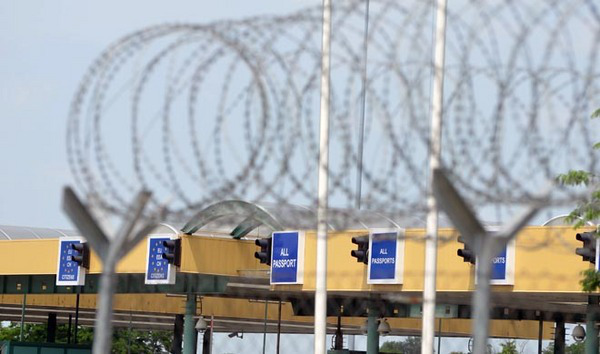
Képen: Szögesdrót a röszkei határátkelőnél.
fotó: Segesvári Csaba
The Balkan Express is no more.
Replaced by luxury international coaches from Vienna to Sarajevo, with on-board toilets that work, Wi-Fi, and conductors who serve drinks, gone are the potholed, unreliable minibus journeys that make classic travellers’ tales for the Western backpacker. Last month I made a fleeting visit back to the Balkans; the kind of trip where you spend hours on the aforementioned buses just to meet friends for coffee. It was also a chance to reunite with rakia, and revisit bars where the pop-folk of Dado Polumenta is an acceptable choice of music. However, most of my conversations and experiences kept returning to a more sobering topic: Europe.
Comments closedRebecca Smyth is a Global Justice Academy Student Ambassador for 2015-16. In this post, Rebecca reflects on the third in our series of Rapid Response Roundtables on the current refugee crisis. Rebecca also report from the second roundtable, ‘Is the Global Refugee Regime Fit for Purpose?’.
Chaired by Dr Patrycja Stys of the Centre of African Studies, this event was the last of three organised by the Global Justice Academy in relation to the current refugee crisis.
It began with a screening of LIVED’s Learning to Swim, a short documentary that aims to share something of the everyday lives of displaced young Syrians in the Zaatari Refugee Camp, the village of Zaatari, and Amman in Jordan. It’s a very special piece. Through seemingly disjointed snippets of interviews and footage, it gives a sense of the inner lives and daily routines of children and young people caught up in the Syrian conflict. We meet a girl who loves football, kites and fried food, and whose favourite place is Homs, a place of roses and affectionate people.
Comments closedRebecca Smyth is a Global Justice Academy Student Ambassador for 2015-16. In this post, Rebecca reflects on the second in our series of Rapid Response Roundtables on the current refugee crisis. Rebecca will also report from the final roundtable, ‘What Can Scotland Do?’.
This panel discussion was a follow-on event from the first panel discussion held at the beginning of October on the roots of the current Syrian crisis. The panel was comprised of Professor Christina Boswell and Dr Lucy Lowe from the School of Social and Political Science; campaigner Amal Azzudin of the Mental Health Foundation; and Jamie Kerr, Partner at Thorntons Solicitors specialising in Immigration Law. It was chaired by Dr Mathias Thaler.
“The international refugee regime is spectacularly not fit for purpose”
Drawing upon her academic research and own experience working with the UNHCR in the mid-1990s, Professor Boswell demonstrated the ways in which the origins of the current global refugee regime have combined with EU policy to create an unsustainable system for dealing with the current refugee crisis.
Comments closed