
This blog forms part of a series celebrating the 75th anniversary of the Universal Declaration of Human Rights (UDHR). Recognising the numerous conflicts and the…
Comments closedCategory: Punishment
This post is the first of a two-part blog by Prof. Paul Clark comparing police discipline in the US and the UK. Part I focuses…
Comments closed
In this guest post, Law PhD Candidate, Vivek Bhatt, reflects on Bryan Stevenson’s visit to Edinburgh Law School to give the 2019 Ruth Adler Memorial Lecture, and to receive an honorary doctorate as part of the School’s summer graduation ceremony.
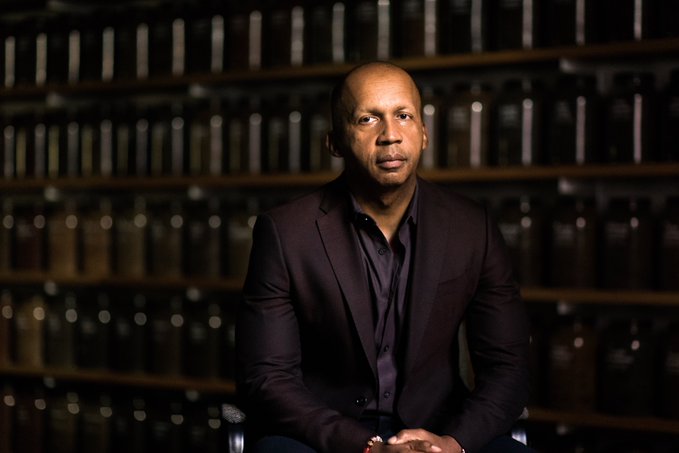
On 8 July 2019, the Global Justice Academy hosted a lecture by Bryan Stevenson, recipient of an honorary doctorate at the Edinburgh Law School. Stevenson is founder of the Equal Justice Institute (EJI) in Montgomery, Alabama, and a clinical professor at the NYU School of Law. Stevenson works as a legal representative for disadvantaged and marginalised individuals, particularly young and poor people who are on death row or serving life sentences. He and his colleagues at the EJI have achieved the exoneration or release of over 125 individuals on death row. Stevenson is also the author of Just Mercy: A Story of Justice and Redemption,[1] which was a New York Times bestseller and won the Carnegie Medal for the best nonfiction book of 2014.
Stevenson’s lecture circulated around a question that is as succinct as it is complex: how do we, as human rights advocates, address injustice? Firstly, he said, we must create justice by becoming proximate to those suffering inequality and injustice. Recounting his relationship with his grandmother, who wished that Stevenson would always be able to feel her embracing him, the skilful orator argued that we must know and seek to understand those who suffer injustice in order to affirm their humanity and dignity. Thus, human rights practice is not about the deployment of legal arguments from afar, but rather about stepping away from one’s legal expertise and embracing those who suffer violations of dignity.
Comments closedThis post continues the blog series by Dr Kasey McCall-Smith which examines some of the contentious legal issues raised in the US v. Khalid Shaikh…
Comments closedThis is the third post in a blog series by Dr Kasey McCall-Smith which examines some of the contentious legal issues raised in the US…
Comments closedIn this post, our Communications Intern, Jee-Young Song, reports from the second day of the recent GJA-sponsored GREYZONE summer school.
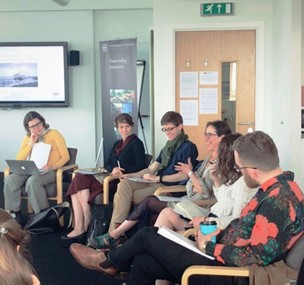 26 June 2018 was the second day of the GREYZONE Summer School, and starting the day’s session was Danielle Celemajer, Professor of Sociology and Social Anthropology at the University of Sydney. Titled ‘The worlds that produce torture’, the main question put to us was:
“What causes torture?”
The straightforward answer to this would of course be obvious: doesn’t torture occur because a malignant perpetrator decided to inflict such an act on the victim?
However, this is an over-simplistic approach, as Professor Celemajer professed her view that there is in fact a complex map of causality for torture, with many contributory factors which extend beyond the scope of the individual perpetrator.
Comments closed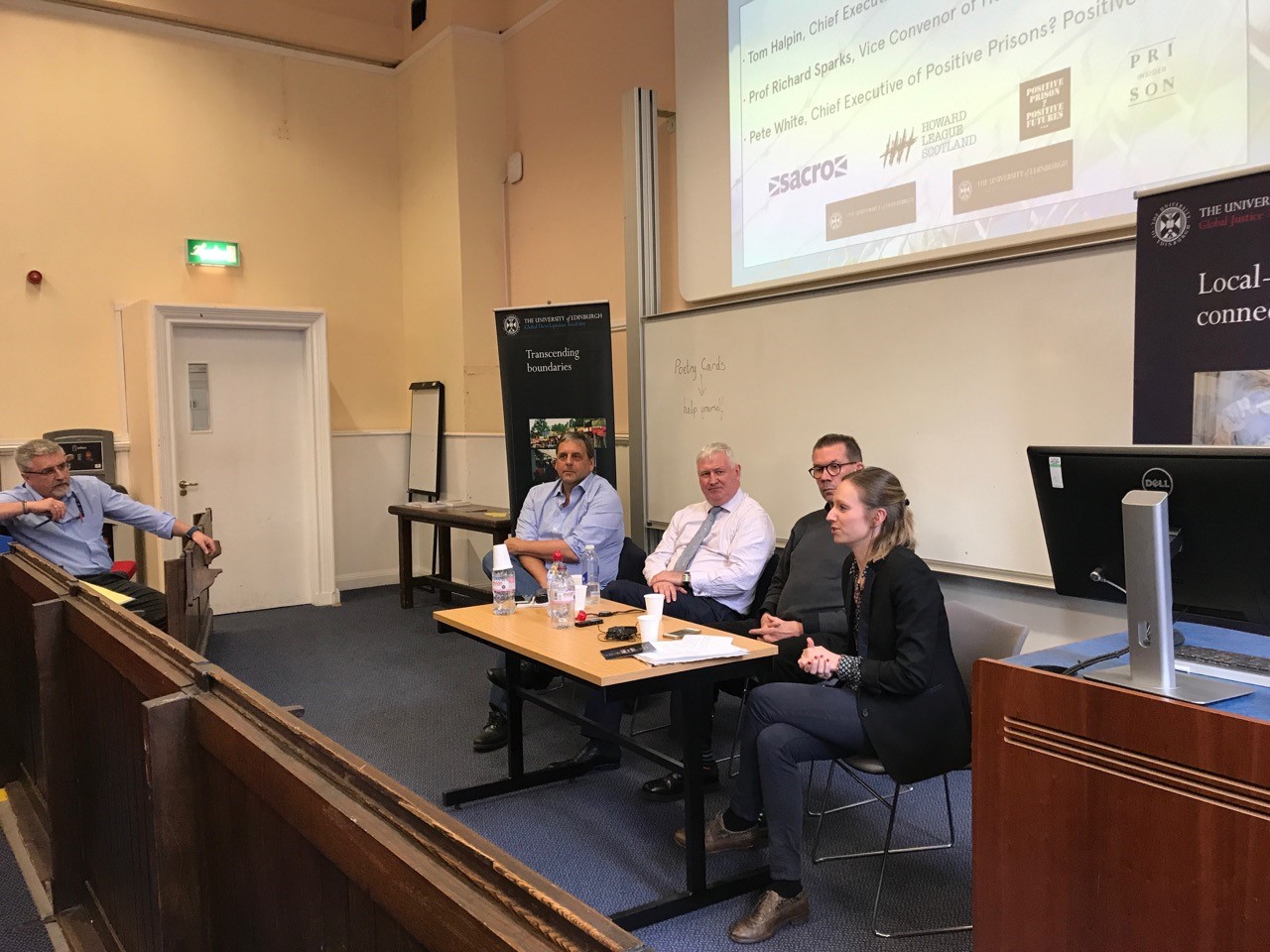 In this guest post, Coline Constantin reflects on the recent seminar that tackled issues around incarceration in Scotland. Coline is reading for an LLM in Human Rights at Edinburgh Law School, and applied for funding for this event from the Global Justice and Global Development Academies’ Innovative Initiative Fund.
Scotland has the second highest imprisonment rate in Europe. Although English headlines for issues of overcrowding, under staffing, rising rates of self-harming cases do not find an echo north of the border, the statistic still makes it worth taking a closer look at its system. On Thursday 26 April, an engaged audience gathered at the University of Edinburgh to hear more about the positive developments and challenges of the Scottish system of detention.
Three panellists from different fields of expertise and different view angles on the Scottish situation were invited to cover topics from policy-making, to the implementation and analysis of these policies. Professor Richard Sparks, Convenor of Howard League Scotland and criminologist specialised on the different systems of detention in the UK, took us through his analysis of the particularities of the Scottish case within the UK and European context. Tom Halpin, Chief Executive of Sacro and prominent figure in the reduction of inequalities in the Scottish criminal justice system, gave us a sense of the work that is being done with communities and specific groups of people with convictions to go towards better mentoring and guidance throughout the process. Pete White, Chief Executive of Positive Prisons? Positive Future and fascinating storyteller, treated the audience with a story of his personal experience from his time inside and the aftermath of this life-changing event.
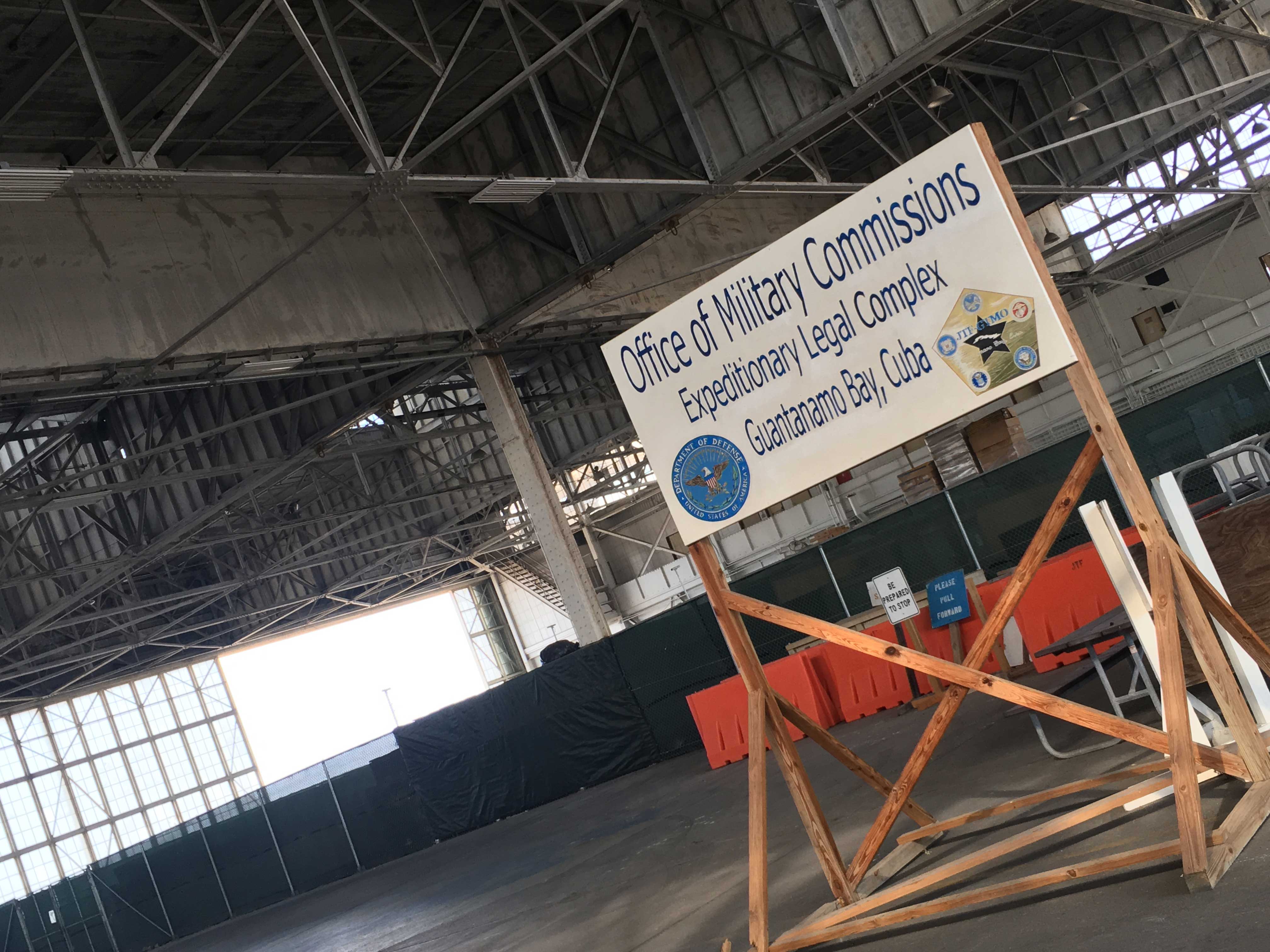
Comments closed This series of blogs presents a number of the legal issues raised at the April – May 2018 military commission proceedings against the alleged plotters of the 11 September 2001 (9/11) terror attacks against the US in the case of US v. Khalid Shaikh Mohammad, et. al. taking place at Camp Justice, Guantánamo Bay Naval Station, Cuba.
The author, Dr Kasey McCall-Smith, is conducting a research project entitled Torture on Trial, which is funded by the Royal Society of Edinburgh.
1. The Shadows of Torture
When people speak about torture and the war on terror, the most egregious and publicly decried acts generally pop to mind: waterboarding, walling, sleep deprivation, and so on. As the military commission proceedings in case of US v. Khalid Shaikh Mohammad, et. al. (KSM case) unfold, less examined examples aspects of torture reveal the irreversible physical and mental impacts on victims of such abuse.
This post is by Kasey McCall-Smith: a lecturer in Public International Law and programme director for the LLM in Human Rights at Edinburgh Law School.
This post is the fourth in a series of blogs that chronicle the history and current state of play regarding the US rendition and detention programme in the immediate aftermath of 9/11. They were written during the author’s visit to Guantánamo Bay, Cuba, to observe military commission proceedings in the case of USA v. Khalid Shaikh Mohammad, et. al. 30 May – 3 June 2016, which is the initial phase of her project Getting to Grips with Guantánamo.
- Click here to read the first post in the series: ‘Rendition to the Caribbean’
- Click here to read the second post in the series: ‘Getting to Grips with Guantánamo: Military Commissions & Law of War Detention’
- Click here to read the third post in the series: ‘Getting to Grips with Guantánamo: Torture Evidence’
In my last post, the use of evidence obtained through torture in the case of US v. Khalid Shaikh Mohammad, et. al. (KSM case) was introduced. This post further considers how torture impacts detainees held at Guantánamo and the 9/11 trial. An interesting addition to the already complex pre-trial considerations is the possible appearance of a detainee who has not been seen in public since he was rendered into the custody of the CIA. Abu Zubaydah, a Palestinian, is believed to have been taken into CIA custody in 2002 following his capture in Pakistan. After three years on a CIA ‘black site’, he was delivered to Joint Task Force-Guantánamo (JTF-GTMO) in 2006 where he remains a High Value Detainee (HVD) despite never having been charged with a crime. As characterised by former FBI agent, Ali Soufan, Zubaydah is the ‘original sin’ of the US in its post-9/11 anti-terror campaign.
Comments closedThis post is by Kasey McCall-Smith: a lecturer in Public International Law and programme director for the LLM in Human Rights at Edinburgh Law School.
This post is the third in a series of blogs that chronicle the history and current state of play regarding the US rendition and detention programme in the immediate aftermath of 9/11. They were written during the author’s visit to Guantánamo Bay, Cuba, to observe military commission proceedings in the case of USA v. Khalid Shaikh Mohammad, et. al. 30 May – 3 June 2016, which is the initial phase of her project Getting to Grips with Guantánamo.
- Click here to read the first post in the series: ‘Rendition to the Caribbean’
- Click here to read the second post in the series: ‘Getting to Grips with Guantánamo: Military Commissions & Law of War Detention’
Right now, on a small island in the Caribbean, what will ultimately be one of the most comprehensive examinations of torture is taking place in the form of a military commission proceeding in the case of US v. Khalid Shaikh Mohammad, et. al. (KSM case). A common understanding among the observers that are witnessing KSM is that half are there to see the 9/11 trial and half are there to see the torture trial. In anticipation of what many view as a foregone conclusion, the defence lawyers are diligently representing their clients in order to ensure that if the ultimate penalty, death, is pursued in the sentencing phase of the trial; then the brutality that they suffered at the hands of the CIA is in the trial record. This record will be instrumental to mitigation of the death penalty and speak to the reality that much of the evidence presented may have been extracted or derived through torture, which is prohibited under international law.
Comments closed