Last Thursday, PeaceRep, Gender.Ed, and the Global Justice Academy hosted the Scottish Premiere of ‘Devi’ a documentary on the life of Devi Khakda—former member…
Leave a CommentCategory: Peace and Conflict Series
 Publicising Human Rights violations and holding perpetrators of torture accountable has been guiding practice for much human rights work. As Prof. Tobias Kelly shows in this contribution to the GJA’s Peace & Conflict blog series: rather than shining light into dark places, many victims want the lights switched off. Kelly suggests that that the need for protecting victims may be more important than the need to hold perpetrators accountable.
By Tobias Kelly
Perpetrators need to be held to account and victims need redress. This has been the central principle of human rights work against torture for the past fifty years. However, collaborative work we have been carrying out in Kenya, Bangladesh and Nepal suggests that for many survivors- especially amongst the poorest and most vulnerable in society- the emphasis might be in the wrong place. What most survivors want, above all else, is to feel safe and secure, and accountability has only an indirect relationship with the desire for protection.
Comments closed
Nicola Perugini on the weaponisation of human bodies and the increasing justification of the killing of innocent civilians through international law
 Nicola Perugini is a Lecturer in International Relations at the University of Edinburgh. For this exclusive blog post in the Global Justice Academy’s Peace and Conflict Series, Nicola was asked to answer the following question about his research:
What does human shielding tell us about the link between international law and contemporary political violence?
Nicola Perugini
Human shielding is growing phenomenon intricately linked to the increasing “weaponisation” of human bodies in contemporary warfare. The term refers to the deployment of civilians in order to deter attacks on combatants or military sites as well as their transformation into a technology of warfare. From Gaza City through Mosul in Iraq to Sri Lanka, accusations of using human shields as an instrument of protection, coercion or deterrence have multiplied in the past few of years.
Indeed, the dramatic increase of urban warfare, including insurgency and counterinsurgency, terrorism and counterterrorism, has inevitably meant that civilians often occupy the front lines in the fighting, while the distinction between civilians and combatants is blurred. This, in turn, presents a series of ethical dilemmas relating to the use of violence and whether the violence deployed complies with international law.
Comments closed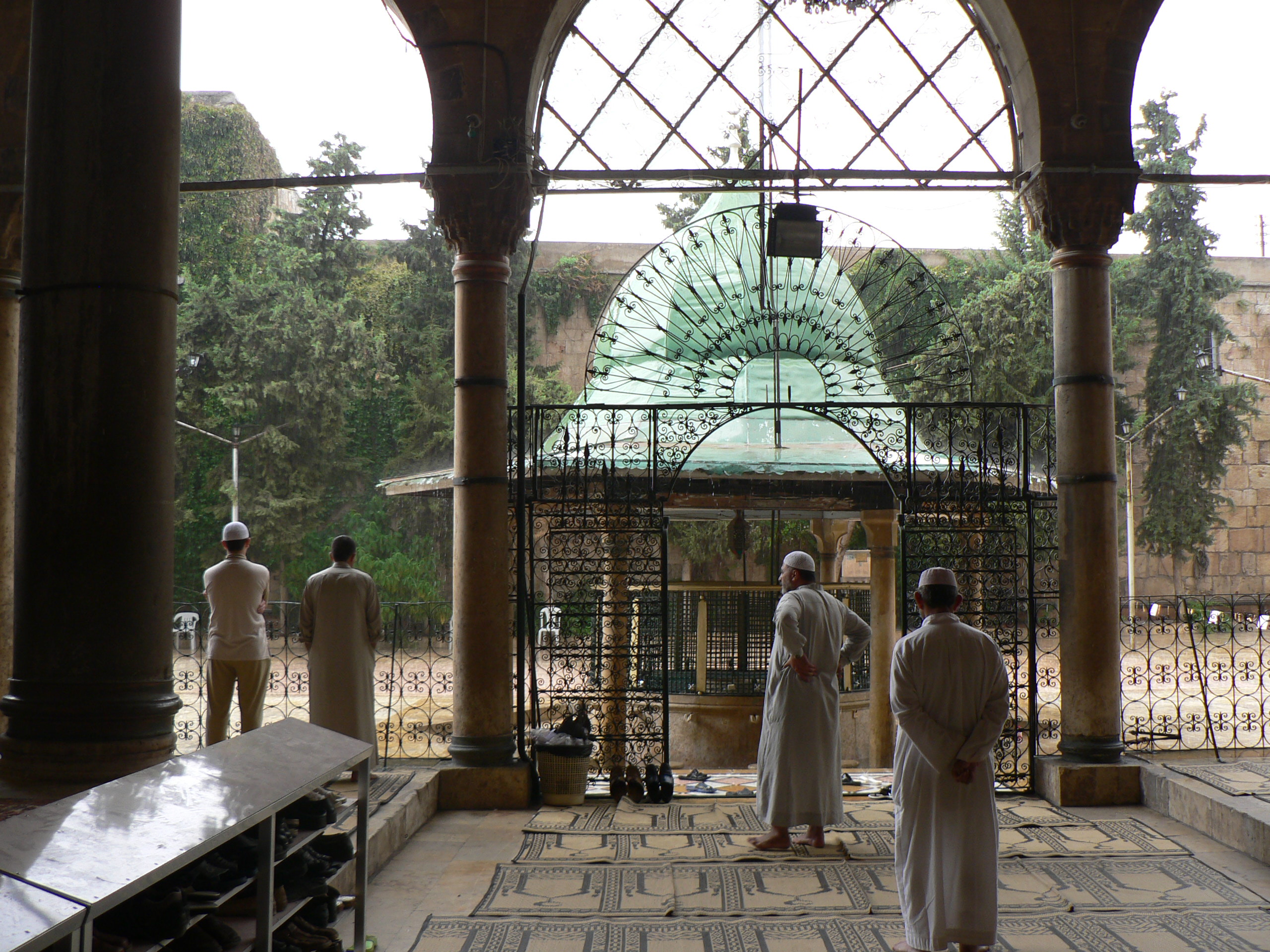
Universities find impact beyond academia increasingly important. In situations of violent conflict, however, it can be difficult for experts who are working on evolving conflicts such as Syria to remain relevant outside of the academy. The increasing influence of think-tanks, and use of social media, together with pressures of wider academic life, pose serious questions as to what the academy has to offer. In an interview with GJA Peace & Conflict blog series editor Andreas Hackl, Thomas Pierret looks back at 13 years of research in Syria and reflects on the changing role of his expertise within and outside of the academy. Thomas suggests that academics may uniquely contribute the ability to locate specific events and moments in a conflict within wider conflict patterns and dynamics.
Thomas Pierret is a Senior Lecturer in Middle Eastern Studies at the University of Edinburgh. He has worked on the Syrian insurgency with a focus on the leadership of insurgent movements and the role of various brands of Salafism. As an expert on the Syrian crisis, Thomas Pierret’s commentary was featured on hundreds of occasions in dozens of media outlets, among them the BBC, The Financial Times, The Guardian, the New York Times, and Le Monde.
How has your research field changed since the outbreak of the Syrian crisis?
I have done research in Syria for almost 13 years now, and at the beginning I was almost alone on my topics of expertise. In a matter of years, the field has become extremely crowded, including non-academics such as think tank analysts. The problem is: they are good. It is no longer true that academics know more than they do. Once we could look at think tanks and say that their research is superficial, with some exceptions. But this has changed.
It seems academic expertise on Syria is becoming less relevant. How did this happen?
Comments closed
The many ways of being complicit in violence and injustice An interview with Mihaela Mihai, Senior Research Fellow in Political Theory at the University of Edinburgh…
Comments closedEavesdropping on a roundtable conversation at the Centre for the Study of Modern Conflict… ‘Modern conflict’ is commonly used to refer to conflicts in recent…
Comments closedWhat can social and political scientists learn from data science? And what can data science contribute to the research on peace and conflict?
‘Most importantly, one has to know what questions to ask’, says Gabriele Schweikert, Research Fellow at the School of Informatics at the University of Edinburgh. ‘And secondly, one needs the necessary data to answer that question.’
For example, researchers on urban conflict might be interested to find out how different instances of violence distribute across a city over time. Available data from media on the location and intensity of violence can be harvested with the help of automatised bots searching for keywords. ‘But if researchers have only a vague idea of their question and do not know what data can do and what not, they might end up with a trivial answer’, she says, adding: ‘Such as the simple result that violent conflict in cities tends to take place in streets.’
Can data predict conflict?
Gabriele’s colleague, Guido Sanguinetti, a Reader in Machine Learning in Informatics at Edinburgh, is an expert in running prediction models, usually in the field of computational biology. But when a friend who worked as a data scientist for the New York Times sent him a visualisation of violent incidents in Afghanistan, taken from the WikiLeaks Afghan War Diaries, he realised that he could ‘do much more with the available data’.
Comments closedThe University of Edinburgh’s research expertise on peace and conflict is growing fast, making it ever more important to connect and communicate across disciplinary lines. To this effect, a new blog series titled Rethinking Peace and Conflict Research in Edinburgh will foster exchange and make this ongoing research and its challenges more visible. Its aim is to build new interdisciplinary capacity and exchange around challenges and themes that connect experts working on peace and conflict across and beyond the University.
Comments closed