
In this guest post, Law PhD Candidate, Vivek Bhatt, reflects on Bryan Stevenson’s visit to Edinburgh Law School to give the 2019 Ruth Adler Memorial Lecture, and to receive an honorary doctorate as part of the School’s summer graduation ceremony.
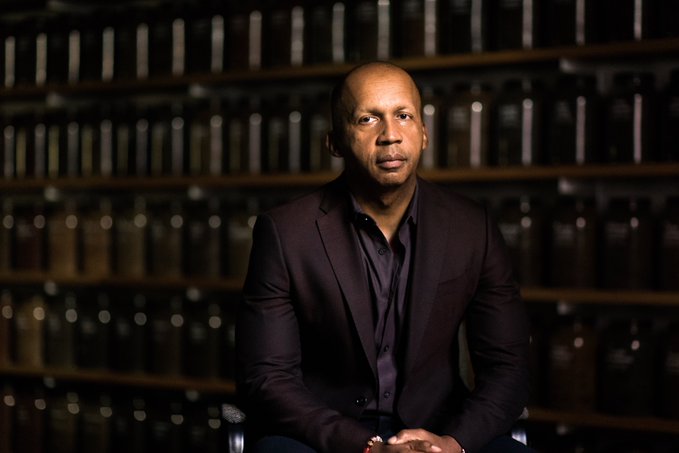
On 8 July 2019, the Global Justice Academy hosted a lecture by Bryan Stevenson, recipient of an honorary doctorate at the Edinburgh Law School. Stevenson is founder of the Equal Justice Institute (EJI) in Montgomery, Alabama, and a clinical professor at the NYU School of Law. Stevenson works as a legal representative for disadvantaged and marginalised individuals, particularly young and poor people who are on death row or serving life sentences. He and his colleagues at the EJI have achieved the exoneration or release of over 125 individuals on death row. Stevenson is also the author of Just Mercy: A Story of Justice and Redemption,[1] which was a New York Times bestseller and won the Carnegie Medal for the best nonfiction book of 2014.
Stevenson’s lecture circulated around a question that is as succinct as it is complex: how do we, as human rights advocates, address injustice? Firstly, he said, we must create justice by becoming proximate to those suffering inequality and injustice. Recounting his relationship with his grandmother, who wished that Stevenson would always be able to feel her embracing him, the skilful orator argued that we must know and seek to understand those who suffer injustice in order to affirm their humanity and dignity. Thus, human rights practice is not about the deployment of legal arguments from afar, but rather about stepping away from one’s legal expertise and embracing those who suffer violations of dignity.
Comments closed
 In December 2014 DUP MLA Paul Girvan introduced a Freedom of Conscience Bill aimed at allowing businesses to refuse services to a customer if they feel it is against their religious convictions. The Bill arose following the announcement of the Northern Ireland Equality Commission that they would be issuing legal proceedings against Ashers Baking Company for their refusal to accept an order for a cake with a pro-gay marriage slogan.