Dagmar Topf Aguiar de Medeiros is reading for a PhD in Law at the University of Edinburgh, and is an intern at UN House Scotland.…
Comments closedCategory: Law and Legal
This blog post was written by Heather Milligan, Communications Intern for the Global Justice Academy. The blog reports on a recent seminar event hosted by the…
Comments closedThe Edinburgh Centre for Legal Theory organised an author-meets-critics workshop on the manuscript of the book Just Justice by Frederick Wilmot-Smith. This workshop was funded…
Comments closedVivek Bhatt, a Student Ambassador with the Global Justice Academy (GJA), has written this blog following a panel event he attended at the Edinburgh Law School. The event, hosted by the GJA, explored…
Comments closedThis guest post is by Michelle Burgis-Kasthala, who is currently a Research Fellow at the Centre for International Governance and Justice, RegNet, ANU. Michelle will be returning to Edinburgh Law School in 2017-18. This post is re-blogged from ‘Regarding Rights: Academic and Activist Perspectives on Human Rights’ and is based on an article published recently in the Journal of International Criminal Justice: ‘Scholarship as Dialogue? TWAIL and the Politics of Methodology’.

ICC in Ivory Coast in 2013. Image: BBC News
Concerns about the International Criminal Court’s (ICC) continuing relevance in Africa following exit announcements by Burundi, South Africa, and Gambia are widespread. But the picture across the continent is more complex. While some African states have clearly rejected the Court, the majority remain members. How can we explain the fracturing of the Court’s support in Africa? More fundamentally – what is the best way of studying international criminal justice and its effects in the Global South – whether in Africa or elsewhere?
Comments closed Vivek Bhatt is reading for a PhD in Law, and is a Global Justice Academy Student Ambassador for 2016-17. Here, he reviews Luis Eslava’s Local Space, Global Life: The Everyday Operation of International Law and Development (Cambridge University Press, 2016).
Luis Eslava’s Local Space, Global Life considers the ways in which international law and the development project jointly produce local spaces and ‘locals’ that conform to global ideals.[1] The author moves beyond the doctrine of legal subjects,[2] a concept that confines many international law scholars to the relationship between law and states, the primary bearers of legal ‘status.’ To Eslava, international legal norms move across spaces and jurisdictions, constituting everyday, local, and private life. Dr Eslava traces the conceptual trajectory of the international development discourse, which became prevalent following Harry S. Truman’s 1949 inaugural address.[3] Truman identified the Third World nation-state as the ideal unit for the attainment of developmental goals. International law and development became inextricable; the former would contribute to the ‘making of a new world order’[4] by aiding the development of Third World nation-states. Yet according to Eslava, world leaders gradually became disenchanted with the idea that development could be achieved through reform at the nation-state level.[5] This led to the identification of the local jurisdiction as the new ideal locus of international development.
Comments closed
The Edinburgh Legal Theory Research Group had the pleasure of hosting, with the kind sponsorship of the Global Justice Academy through its Innovative Initiative Fund, the Workshop on Dignity on 6 October 2016. The workshop had three speakers: Ioanna Tourkochoriti (National University of Ireland Galway), Colin Bird (University of Virginia), and Adam Etinson (St. Andrews).
This guest post by co-organisers, Lucas Miotto and Paul Burgess, discusses the presentations and debate that took place.
The workshop was well attended by both staff members and students. An interesting, and beneficial, feature of the audience, was that it reflected the interdisciplinary character of the topic; we had attendees coming from myriad fields, such as politics, human rights, international and constitutional law, as well as legal and moral philosophy. Discussion was very lively and, perhaps due to the diverse character of the audience, presenters received feedback and questions from several different angles.
Comments closedThe Global Justice Academy is delighted to launch the second year of its Student Ambassador programme with a guest post by Vivek Bhatt. Vivek is an incoming student reading for a PhD in Law. He recently completed the MSc in Political Theory at the London School of Economics, and holds a Bachelor of Arts (Advanced) (Honours) and Master of International Law from the University of Sydney. His primary interest is in international laws relating to counterterrorism, conflict, and human rights.
Rodrigo Duterte’s war on drugs in the Philippines has recently been deemed an international crime. This post reflects upon issues arising from the condemnation of Duterte, asking whether international criminal law can enable the realisation of cosmopolitan ideals.
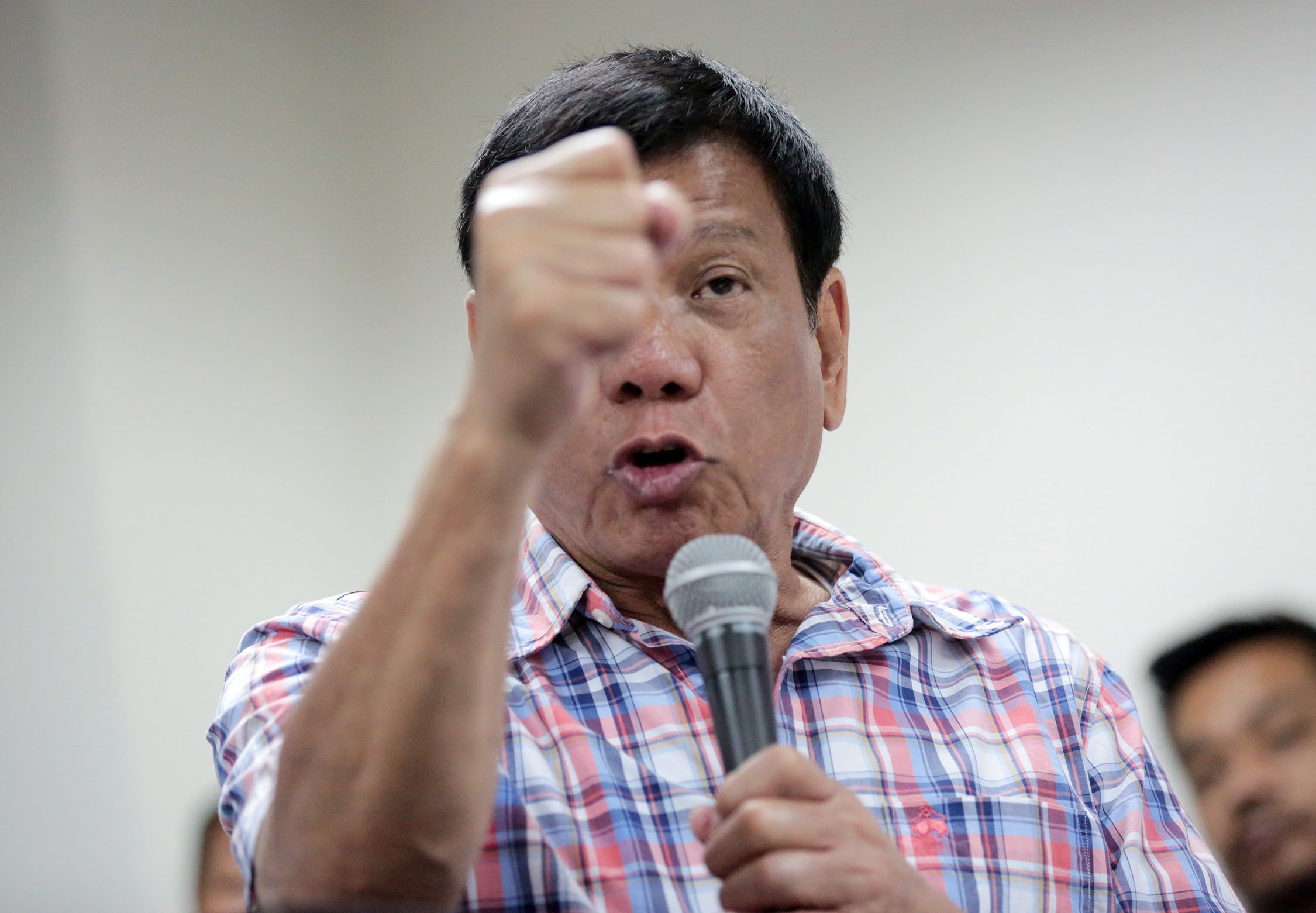
When elected President of the Philippines on 9 May 2016, Rodrigo Duterte vowed to reduce rates of drug-related crime within the state. Duterte has since waged a violent anti-drug campaign, authorising the extra-judicial execution of individuals thought to use, possess, or traffic illegal substances. The President’s “death squad” comprises select members of the police force and civilian volunteers. Most of these individuals were lured into their roles as amateur mercenaries through payment, and promises of impunity for their actions. Others were coerced into joining Duterte’s campaign; men and women were guaranteed immunity from punishment for their own drug-related offences in exchange for their services as assassins.[1] The OHCHR suggests that over 850 people have been killed since Duterte’s election, but reports that take into account unexplained deaths during that period suggest the number is closer to 3,000.[2]
Comments closedDr Kasey McCall-Smith and Dr Dimitrios Kagiaros attended the 2016 Association of Human Rights Institutes (AHRI) conference on behalf of the Global Justice Academy. The conference was hosted by the Netherlands Institute of Human Rights (SIM) of Utrecht University, and welcomed over 200 academics and researchers. In this short post, Kasey McCall-Smith reflects on the discussion.
The theme of the conference was ‘50 Years of the Two UN Human Rights Covenant: Legacies and Prospects’. The conference enjoyed presentations, debates and interventions from well-known faces on international human rights scene.
Comments closed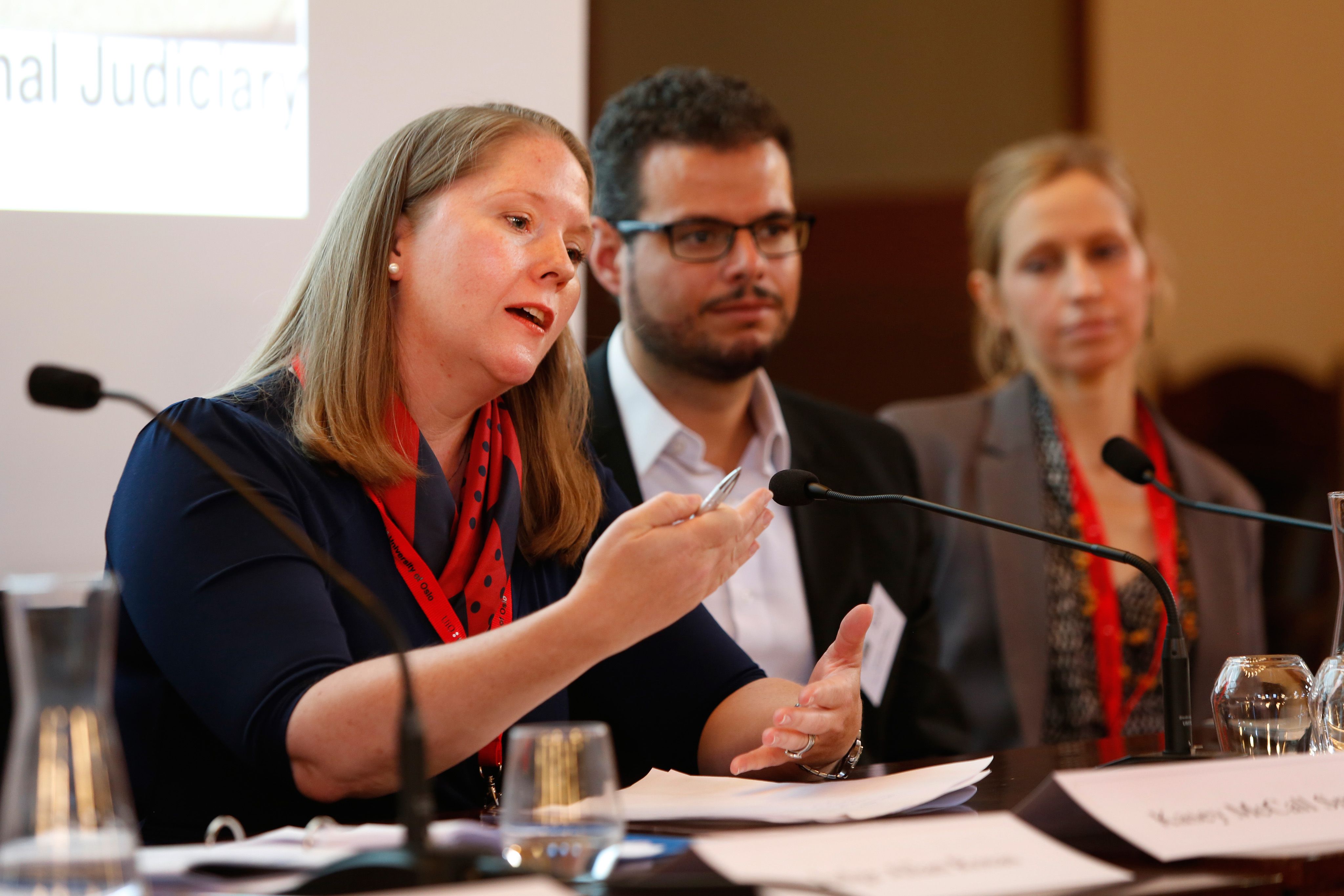 This post is by Kasey McCall-Smith: a lecturer in Public International Law and programme director for the LLM in Human Rights at Edinburgh Law School.
This post is the fourth in a series of blogs that chronicle the history and current state of play regarding the US rendition and detention programme in the immediate aftermath of 9/11. They were written during the author’s visit to Guantánamo Bay, Cuba, to observe military commission proceedings in the case of USA v. Khalid Shaikh Mohammad, et. al. 30 May – 3 June 2016, which is the initial phase of her project Getting to Grips with Guantánamo.
- Click here to read the first post in the series: ‘Rendition to the Caribbean’
- Click here to read the second post in the series: ‘Getting to Grips with Guantánamo: Military Commissions & Law of War Detention’
- Click here to read the third post in the series: ‘Getting to Grips with Guantánamo: Torture Evidence’
In my last post, the use of evidence obtained through torture in the case of US v. Khalid Shaikh Mohammad, et. al. (KSM case) was introduced. This post further considers how torture impacts detainees held at Guantánamo and the 9/11 trial. An interesting addition to the already complex pre-trial considerations is the possible appearance of a detainee who has not been seen in public since he was rendered into the custody of the CIA. Abu Zubaydah, a Palestinian, is believed to have been taken into CIA custody in 2002 following his capture in Pakistan. After three years on a CIA ‘black site’, he was delivered to Joint Task Force-Guantánamo (JTF-GTMO) in 2006 where he remains a High Value Detainee (HVD) despite never having been charged with a crime. As characterised by former FBI agent, Ali Soufan, Zubaydah is the ‘original sin’ of the US in its post-9/11 anti-terror campaign.
Comments closed