Any views expressed within media held on this service are those of the contributors, should not be taken as approved or endorsed by the University, and do not necessarily reflect the views of the University in respect of any particular issue.
Press "Enter" to skip to content

Category: Law and Legal

Off the Record: Unlawful Influence on the War Crimes Proceedings

This is the second post in a blog series by Dr Kasey McCall-Smith examines some of the crucial legal issues and broader public questions raised regarding the US v. Khalid Shaikh Mohammad, et. al. military commission proceedings against the five men charged with various war crimes and terrorism in relation to the 11 September 2001 attacks on the US. The series is part of her project ‘Torture on Trial’ and funded by a grant from the Royal Society of Edinburgh.

In the 9/11 war crimes trial taking place in Guantánamo, an array of motions have been filed regarding unlawful influence on the US v. Khalid Shaikh Mohammad, et. al.(9/11 case) proceedings. They began with complaints regarding statements by then-President Obama and continue to the present with complaints regarding President Trump, Secretary of Defense Mattis, former Attorneys General Sessions and Holder and CIA Director Gina Haspel. These motions, all based on section 949b of the 2009 Military Commissions Act, cover a range of statements and actions.

During the April-May 2018 proceedings, the influence of current US President Trump was raised as lawyers debated the influence of statements made by Trump as the commander in chief of the US military. The relevant statements focused on the president’s response to the Bowe Bergdahl v. US courts martialand also the 31 October 2017 New York incident where an alleged terrorist drove a van onto a bike path killing eight people. Trump’s statements on the campaign trail and after his election were also potentially problematic for the 9/11case and attacked the integrity of the military justice system. His statements and twitter posts explicitly called into question the administration of justice and constitutional protections in the US. Defence counsel in the 9/11 war crimes tribunal argue that collectively these successive statements by US presidents and other government officials equate to unlawful influence (UI), a concept drawn from provisions in the US Uniform Code of Military Justice prohibiting Unlawful Command Influence (UCI). UI is a concept set out in 10 USC §837 and article 37 of the UCMJ and is deemed the ‘mortal enemy’ of military justice and also violates due process as guaranteed by the US Constitution and the right to a fair trial under Article 14 of the International Covenant on Civil and Political Rights (ICCPR). The concept applies here as the governing law of the trial is the Military Commissions Act 2009 (MCA 2009) – combining rules of military, domestic and international law – and the president is the constitutional Commander-in-Chief of the US military.

Comments closed
Off the Record: Observations on the 9/11 Military Commission

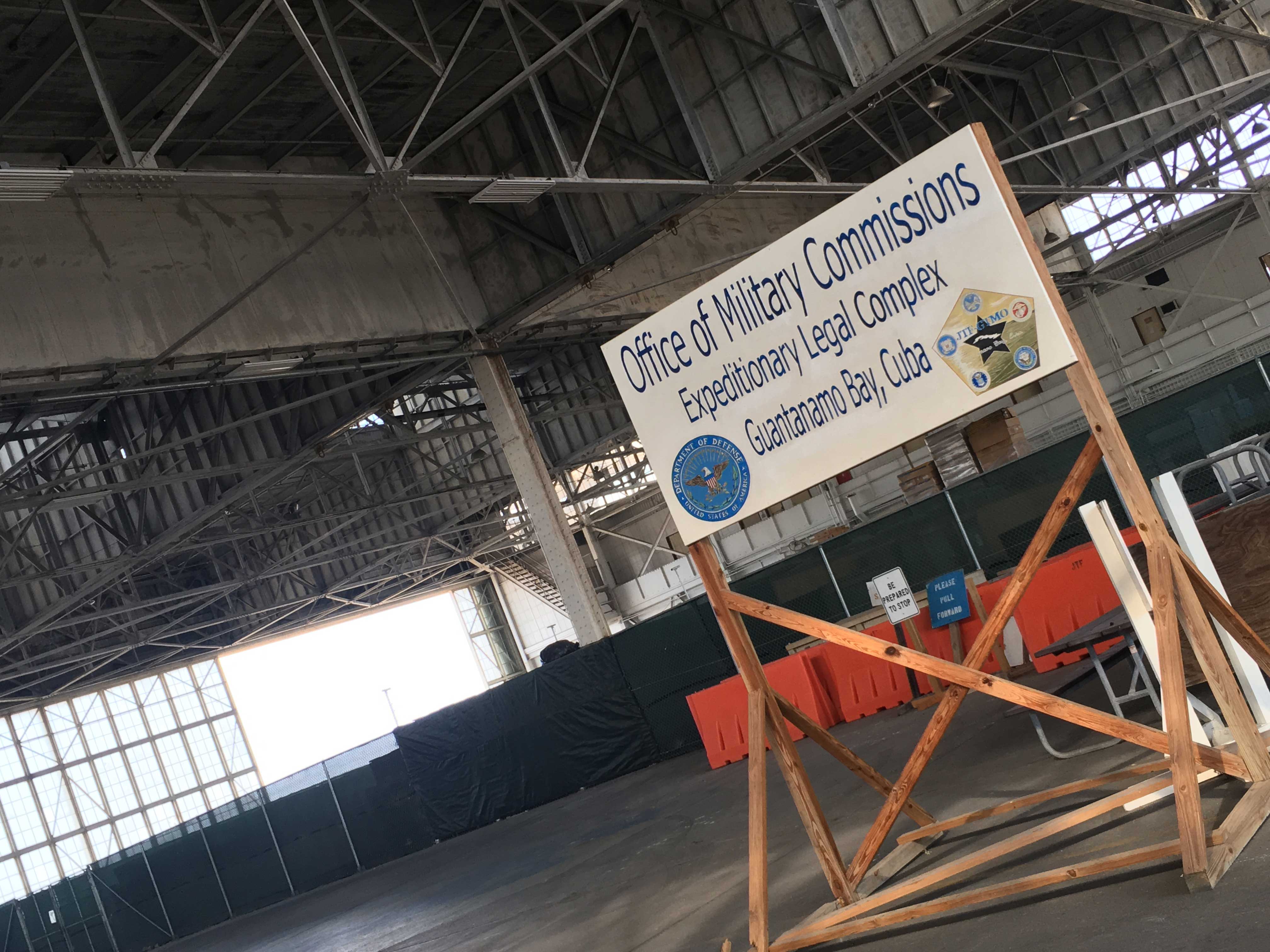
This blog series by Dr Kasey McCall-Smith examines some of the crucial legal issues and broader public questions raised regarding the US v. Khalid Shaikh Mohammad, et. al. military commission proceedings against the five men charged with various war crimes and terrorism in relation to the 11 September 2001 attacks on the US. The military commissions are in the sixth year of the pretrial phase and taking place at a purpose-built Expeditionary Legal Complex in Camp Justiceon Naval Station Guantánamo Bay, Cuba. The series is part of her project ‘Torture on Trial’ and funded by a grant from the Royal Society of Edinburgh.

Taking a Step Back – A Primer on the International Prohibition against Torture

Many members of the public not trained in international law fail to understand why the international prohibition against torture matters or should matter in the US legal system. This post seeks to explain how international law on the prohibition against torture relates to US law and the impact of the prohibition on the military commission proceedings against the five men charged with conspiracy and war crimes in relation to the 9/11 terrorist attacks on the US in US v. Khalid Shaikh Mohammad, et. al.(9/11 case).

Comments closed

Inspiring Action in these Challenging Times

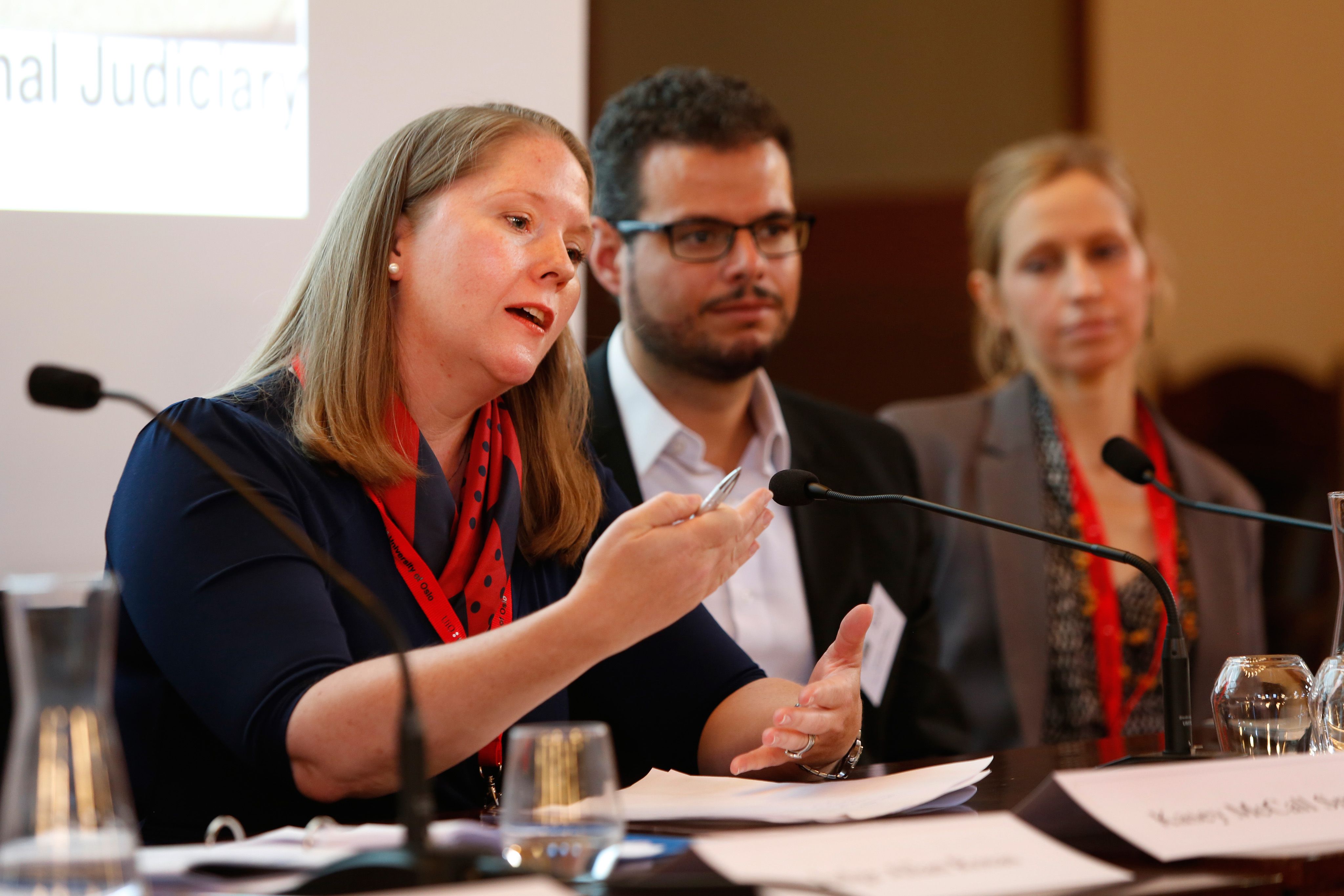
The Global Justice Academy (GJA) and Edinburgh Law School welcomed over 200 human rights academics and practitioners to the University of Edinburgh for the 2018 Association of Human Rights Institutes  (AHRI) Annual Conference on the 6-8 September 2018. The GJA holds the current Secretariat of AHRI in conjunction with the Centre for the Study of Human Rights Law (CSHRL) at the University of Strathclyde. In this post, AHRI Chair and GJA Management Group member, Dr Kasey McCall-Smith, reflects on the three days.

The theme of this year’s conference was ‘Renewing Rights in Times of Transition: 70 Years of the Universal Declaration of Human Rights’. The conference began with Works in Progress sessions on 6 September followed by the launch of the Political Settlements Research Programme’s PA-X Peace Agreements database (PA-X). Professor Christine Bell delivered a public lecture entitled The Inclusion Project: Human Rights Dilemmas in the Negotiation of Peace Agreements, with a response from the UN’s Ian Martin, entitled A UN ‘Surge in Diplomacy’ in a World in Transition

Comments closed

Reflections from the Tenth Aniversary Edition of the Edinburgh Legal Theory Festival: Workshop on Virtue Ethics, Markets, and the Law

The Global Justice Academy recently sponsored one of the workshops at the 10th Anniversary Edition of the Edinburgh Legal Theory Festival. In this blog post, the co-convenors of the Edinburgh Legal Theory Research Group—Richard Latta and Joaquín Reyes—report on the issues raised during the workshop.

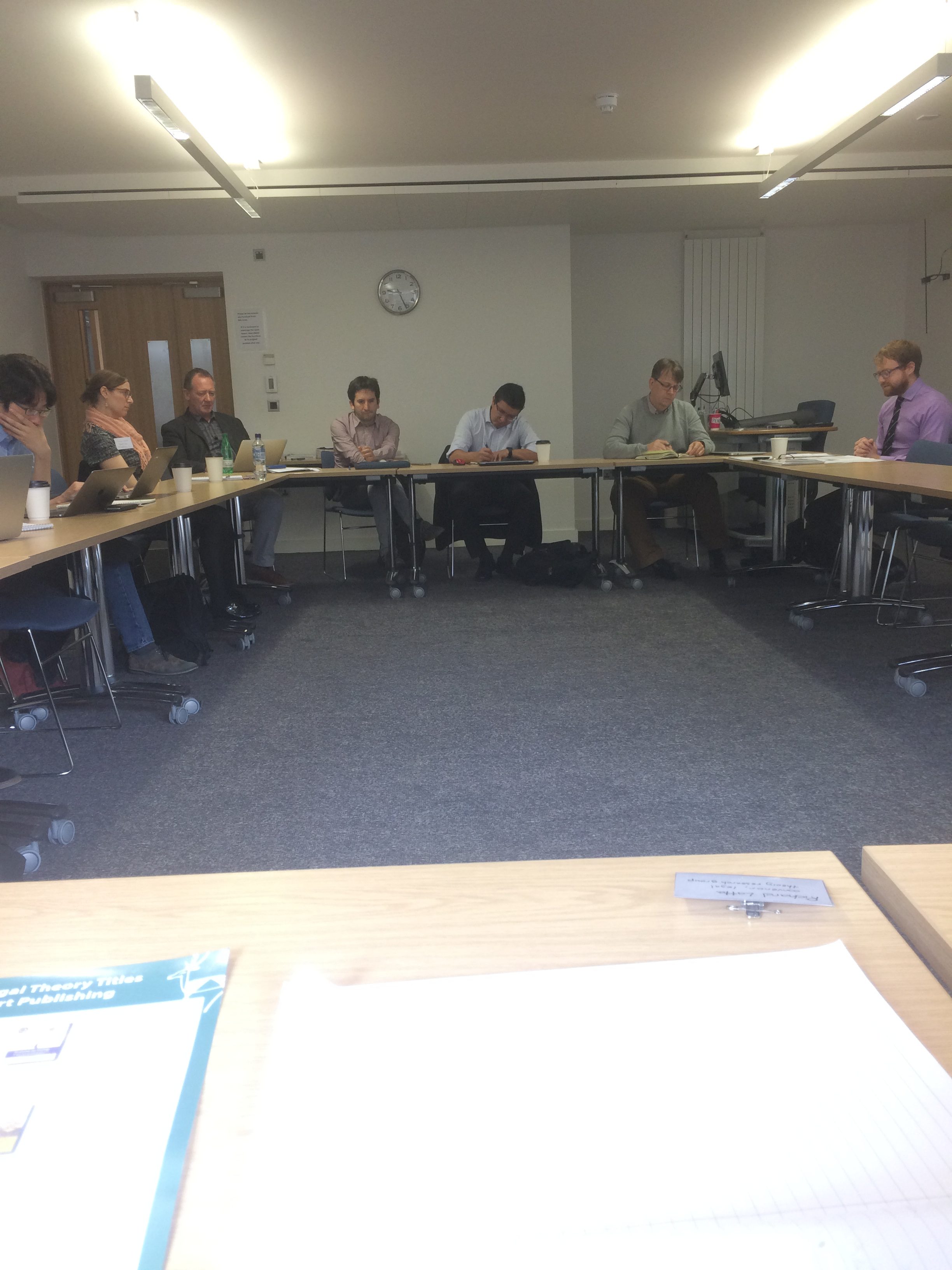
The workshop on ‘Virtue ethics, Markets, and the Law’—held on Tuesday 5thJune, the second day of the week-long Edinburgh Legal Theory Festival (4th-8thJune)—was devoted, as its name suggests, to explore the implications of a virtue-centred approach to legal theory for a wide-ranging variety of related topics, including the relationships between power, virtue and the constitutional state (Dominic Burbidge), algorithmic governance (René Urueña), the Rule of law and the law of equity (Irit Samet), intent to contract and trust (Prince Saprai), and the future of virtue jurisprudence (Chapin Cimino). All sessions were followed by a lively discussion in which the participants had the opportunity to give and receive important feedback on their ongoing research projects.

Comments closed

Incarceration in Scotland: a system with positive evolutions in need of a generalisation of its good practices

In this guest post, Coline Constantin reflects on the recent seminar that tackled issues around incarceration in Scotland. Coline is reading for an LLM in Human Rights at Edinburgh Law School, and applied for funding for this event from the Global Justice and Global Development Academies’ Innovative Initiative Fund.

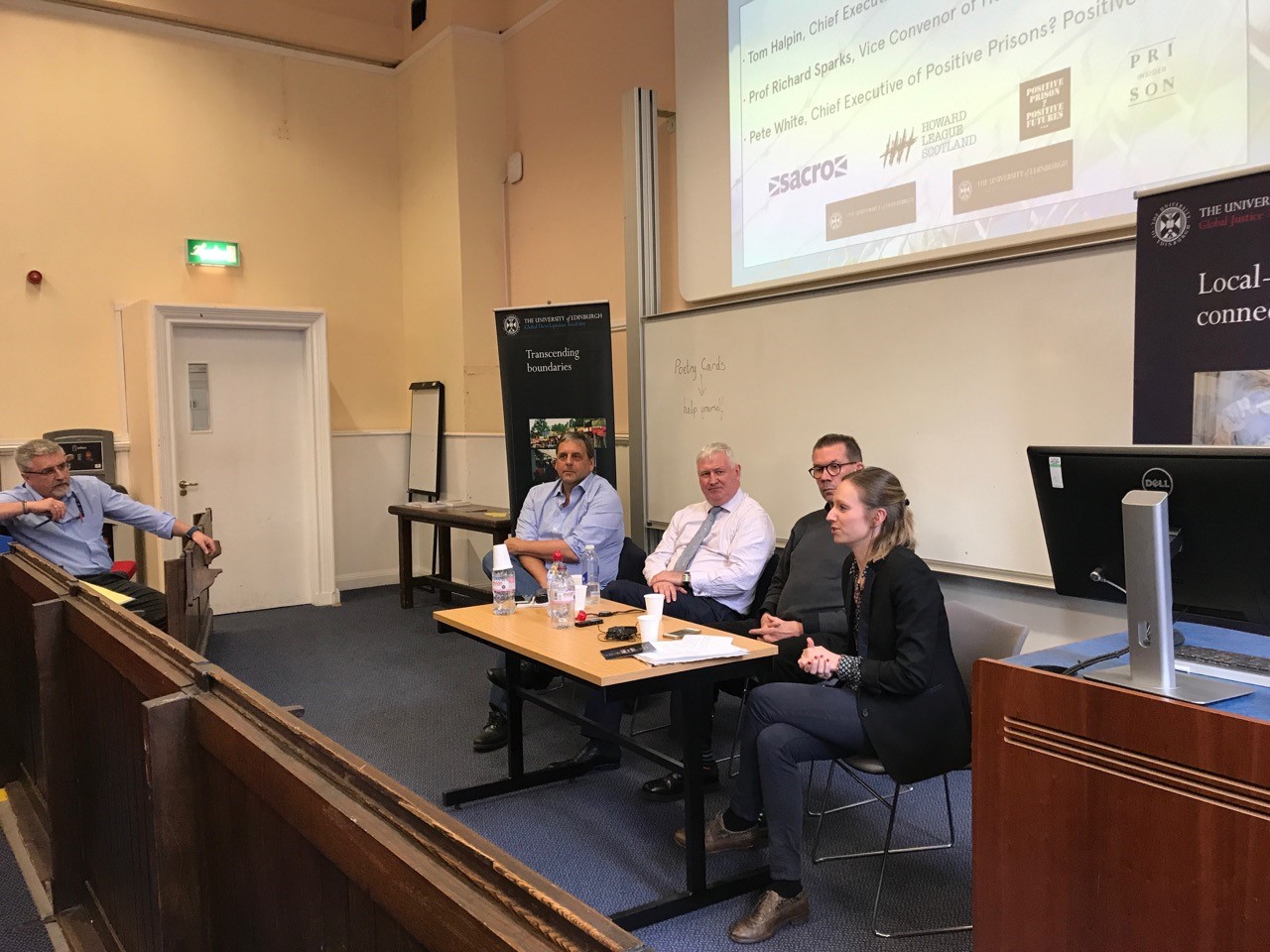
Scotland has the second highest imprisonment rate in Europe. Although English headlines for issues of overcrowding, under staffing, rising rates of self-harming cases do not find an echo north of the border, the statistic still makes it worth taking a closer look at its system. On Thursday 26 April, an engaged audience gathered at the University of Edinburgh to hear more about the positive developments and challenges of the Scottish system of detention.

Three panellists from different fields of expertise and different view angles on the Scottish situation were invited to cover topics from policy-making, to the implementation and analysis of these policies. Professor Richard Sparks, Convenor of Howard League Scotland and criminologist specialised on the different systems of detention in the UK, took us through his analysis of the particularities of the Scottish case within the UK and European context. Tom Halpin, Chief Executive of Sacro and prominent figure in the reduction of inequalities in the Scottish criminal justice system, gave us a sense of the work that is being done with communities and specific groups of people with convictions to go towards better mentoring and guidance throughout the process. Pete White, Chief Executive of Positive Prisons? Positive Future and fascinating storyteller, treated the audience with a story of his personal experience from his time inside and the aftermath of this life-changing event.

Comments closed

The Shadows of Torture: Reporting from Guantánamo

This series of blogs presents a number of the legal issues raised at the April – May 2018 military commission proceedings against the alleged plotters of the 11 September 2001 (9/11) terror attacks against the US in the case of US v. Khalid Shaikh Mohammad, et. al. taking place at Camp Justice, Guantánamo Bay Naval Station, Cuba.

The author, Dr Kasey McCall-Smith, is conducting a research project entitled Torture on Trial, which is funded by the Royal Society of Edinburgh.

1. The Shadows of Torture

When people speak about torture and the war on terror, the most egregious and publicly decried acts generally pop to mind: waterboarding, walling, sleep deprivation, and so on. As the military commission proceedings in case of US v. Khalid Shaikh Mohammad, et. al. (KSM case) unfold, less examined examples aspects of torture reveal the irreversible physical and mental impacts on victims of such abuse.

Comments closed

Recent Discussions in Legal Theory at the Edinburgh Legal Theory Research Group

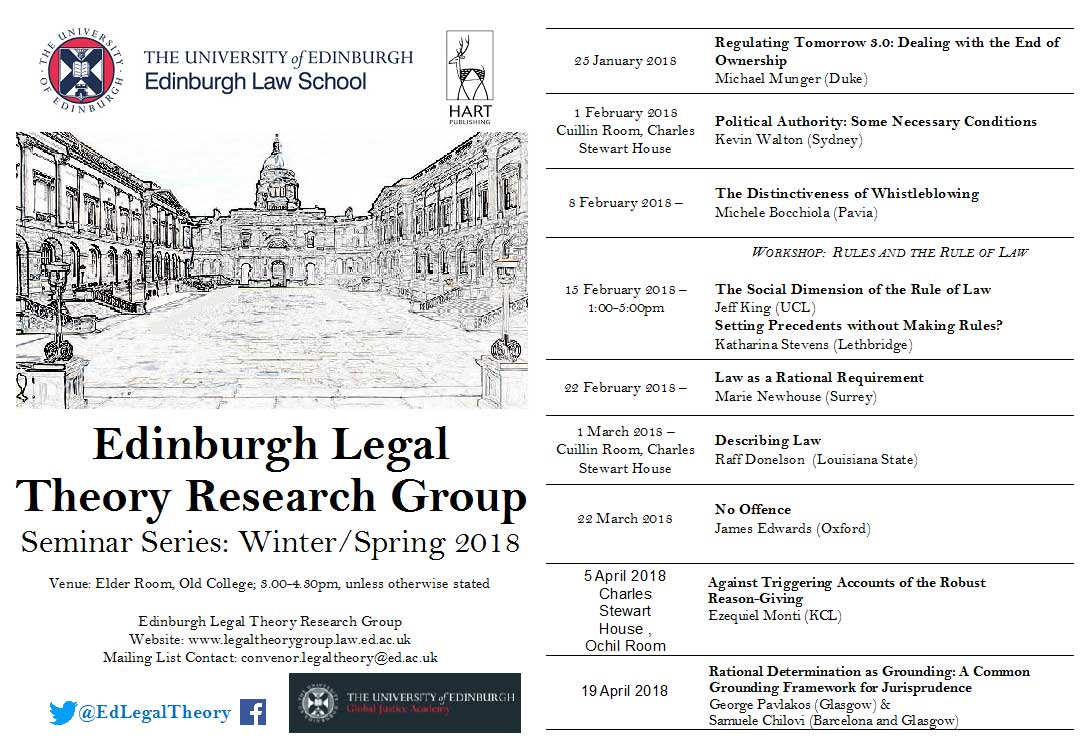
In this post, the Co-Convenors of the Edinburgh Legal Theory Research Group for 2017-18, Richard Latta and Joaquin Reyes, report on their recent Winter/Spring seminar series and the topics discussed.

The Edinburgh Legal Theory Research Group is very grateful for the support of the Global Justice Academy for the Edinburgh Legal Theory Research Group’s Seminar Series of Spring 2018. This semester we hosted speakers from all over the world to discuss issues in legal theory and beyond legal theory.

Comments closed

Personality and Procedure: Judges and UNCLOS adjudication

In his first post as GJA Student Ambassador, Connor Hounslow reports from the 2017 Scottish Centre for International Law‘s Annual Lecture. This year’s lecture was delivered by Natalie Klein, Professor and Dean of Macquarie Law School.


Last Tuesday, Professor Klein delivered the Scottish Center for International Law Annual lecture on the role of the judge in developing international law, especially within the context of the Law of the Sea. As described by Professor Klein, her body of research on this topic represents a microcosm of the international legal system. Nonetheless, Professor Klein’s explorations in this lecture posited an understanding of the judge which applies to the broader international legal universe.

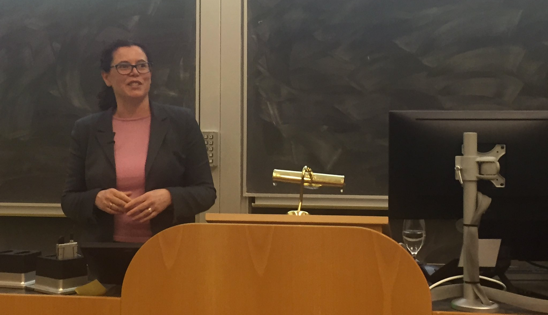
Natalie Klein, Professor and Dean of Macquarie Law School, giving the Scottish Center for International Law Annual Lecture on ‘The Role of Judges in Developing the Law of the Sea’.
Comments closed

Reflections from the Edinburgh Legal Theory Group Past Convenors’ Colloquium

The Global Justice Academy recently sponsored the Edinburgh Legal Theory Group Past Convenors’ Colloquium in collaboration with the Edinburgh Legal Theory Research Group. In this blog post, Paul Burgess – a third year PhD candidate in the Edinburgh Law School and Co-Convenor of the Edinburgh Legal Theory Research Group – reports on the issues raised.


The Colloquium was well attended by staff and students from across The University of Edinburgh. This included several new PhD candidates who had only arrived in the university for the first time that week. Some participants and presenters had travelled from other parts of the world.

Comments closed
css.php

Report this page

To report inappropriate content on this page, please use the form below. Upon receiving your report, we will be in touch as per the Take Down Policy of the service.

Please note that personal data collected through this form is used and stored for the purposes of processing this report and communication with you.

If you are unable to report a concern about content via this form please contact the Service Owner.

Please enter an email address you wish to be contacted on. Please describe the unacceptable content in sufficient detail to allow us to locate it, and why you consider it to be unacceptable.
By submitting this report, you accept that it is accurate and that fraudulent or nuisance complaints may result in action by the University.

  Cancel