On November 4th, the GJA hosted its annual Ruth Adler Lecture, welcoming Baroness Helena Kennedy, Baroness Kennedy of the Shaws, as the distinguished speaker. Baroness…
Leave a CommentCategory: International Law
On 14 March 2023, the Global Justice Academy hosted the Ruth Adler Human Rights Lecture by Ms Mama Fatima Singhateh, the UN Special Rapporteur…
Comments closedThe Secretariat for the Association of Human Rights Institutes (AHRI), hosted by the Global Justice Academy (GJA) and Strathclyde Centre for the Study of Human Rights…
Comments closedOn 25 January, the Global Justice Academy hosted its first event of the new year, ‘Interpretive Convergence at the European Court of Human Rights: Strength…
Comments closedThis post continues the blog series by Dr Kasey McCall-Smith which examines some of the contentious legal issues raised in the US v. Khalid Shaikh…
Comments closed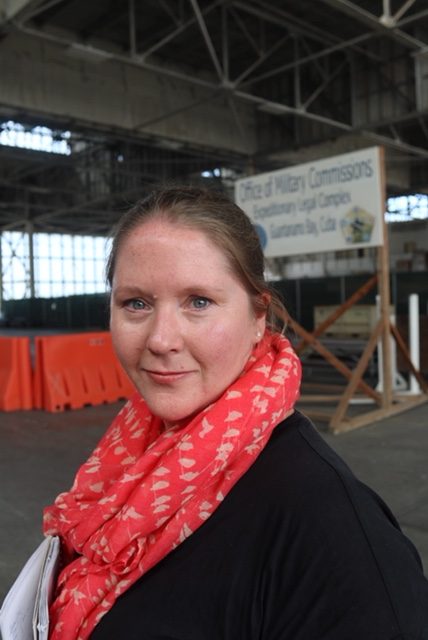 This is the second post in a blog series by Dr Kasey McCall-Smith examines some of the crucial legal issues and broader public questions raised regarding the US v. Khalid Shaikh Mohammad, et. al. military commission proceedings against the five men charged with various war crimes and terrorism in relation to the 11 September 2001 attacks on the US. The series is part of her project ‘Torture on Trial’ and funded by a grant from the Royal Society of Edinburgh.
- Read the first post: Taking a Step Back – A Primer on the International Prohibition against Torture
In the 9/11 war crimes trial taking place in Guantánamo, an array of motions have been filed regarding unlawful influence on the US v. Khalid Shaikh Mohammad, et. al.(9/11 case) proceedings. They began with complaints regarding statements by then-President Obama and continue to the present with complaints regarding President Trump, Secretary of Defense Mattis, former Attorneys General Sessions and Holder and CIA Director Gina Haspel. These motions, all based on section 949b of the 2009 Military Commissions Act, cover a range of statements and actions.
During the April-May 2018 proceedings, the influence of current US President Trump was raised as lawyers debated the influence of statements made by Trump as the commander in chief of the US military. The relevant statements focused on the president’s response to the Bowe Bergdahl v. US courts martialand also the 31 October 2017 New York incident where an alleged terrorist drove a van onto a bike path killing eight people. Trump’s statements on the campaign trail and after his election were also potentially problematic for the 9/11case and attacked the integrity of the military justice system. His statements and twitter posts explicitly called into question the administration of justice and constitutional protections in the US. Defence counsel in the 9/11 war crimes tribunal argue that collectively these successive statements by US presidents and other government officials equate to unlawful influence (UI), a concept drawn from provisions in the US Uniform Code of Military Justice prohibiting Unlawful Command Influence (UCI). UI is a concept set out in 10 USC §837 and article 37 of the UCMJ and is deemed the ‘mortal enemy’ of military justice and also violates due process as guaranteed by the US Constitution and the right to a fair trial under Article 14 of the International Covenant on Civil and Political Rights (ICCPR). The concept applies here as the governing law of the trial is the Military Commissions Act 2009 (MCA 2009) – combining rules of military, domestic and international law – and the president is the constitutional Commander-in-Chief of the US military.
Comments closedThe G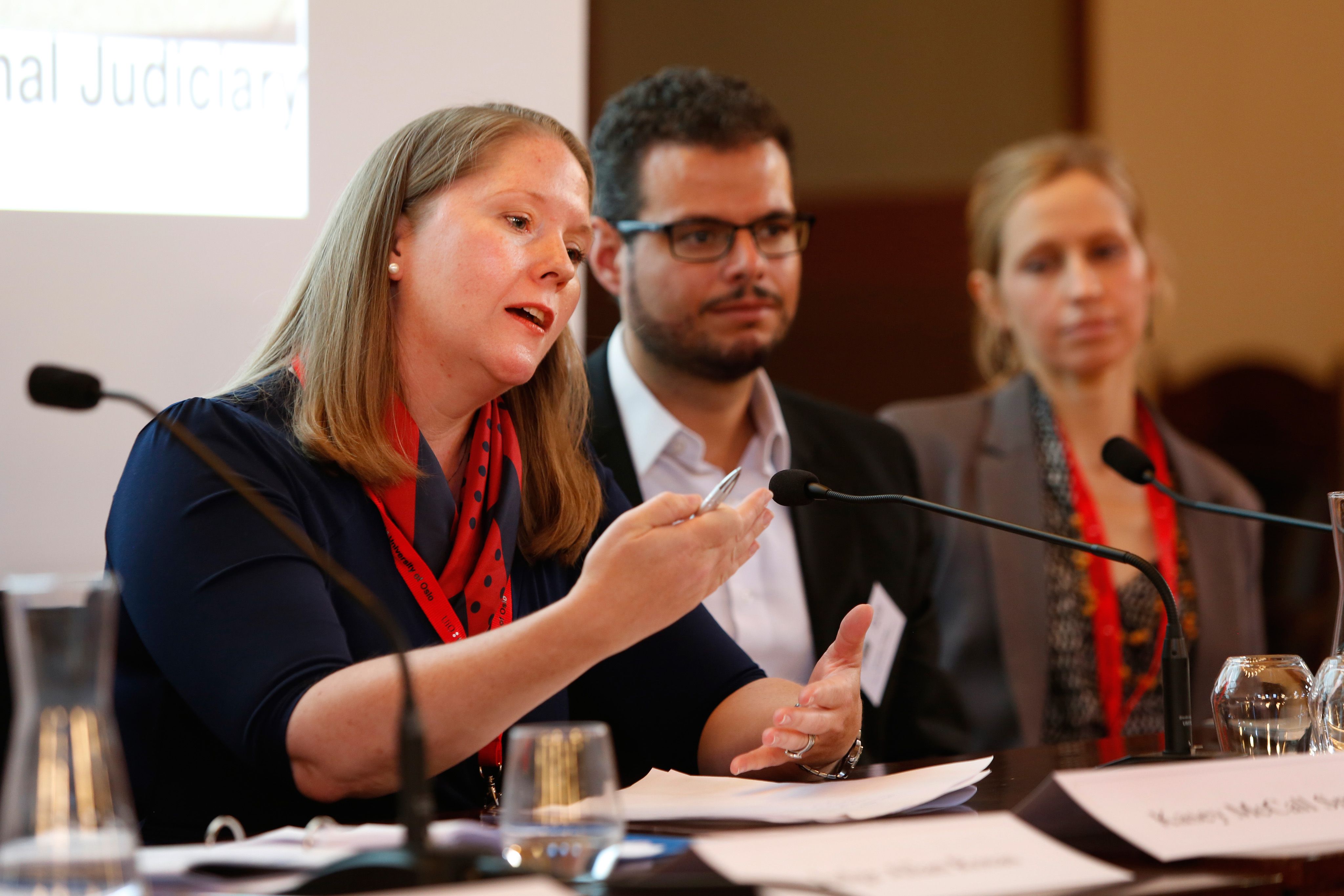 lobal Justice Academy (GJA) and Edinburgh Law School welcomed over 200 human rights academics and practitioners to the University of Edinburgh for the 2018 Association of Human Rights Institutes (AHRI) Annual Conference on the 6-8 September 2018. The GJA holds the current Secretariat of AHRI in conjunction with the Centre for the Study of Human Rights Law (CSHRL) at the University of Strathclyde. In this post, AHRI Chair and GJA Management Group member, Dr Kasey McCall-Smith, reflects on the three days.
The theme of this year’s conference was ‘Renewing Rights in Times of Transition: 70 Years of the Universal Declaration of Human Rights’. The conference began with Works in Progress sessions on 6 September followed by the launch of the Political Settlements Research Programme’s PA-X Peace Agreements database (PA-X). Professor Christine Bell delivered a public lecture entitled The Inclusion Project: Human Rights Dilemmas in the Negotiation of Peace Agreements, with a response from the UN’s Ian Martin, entitled A UN ‘Surge in Diplomacy’ in a World in Transition.
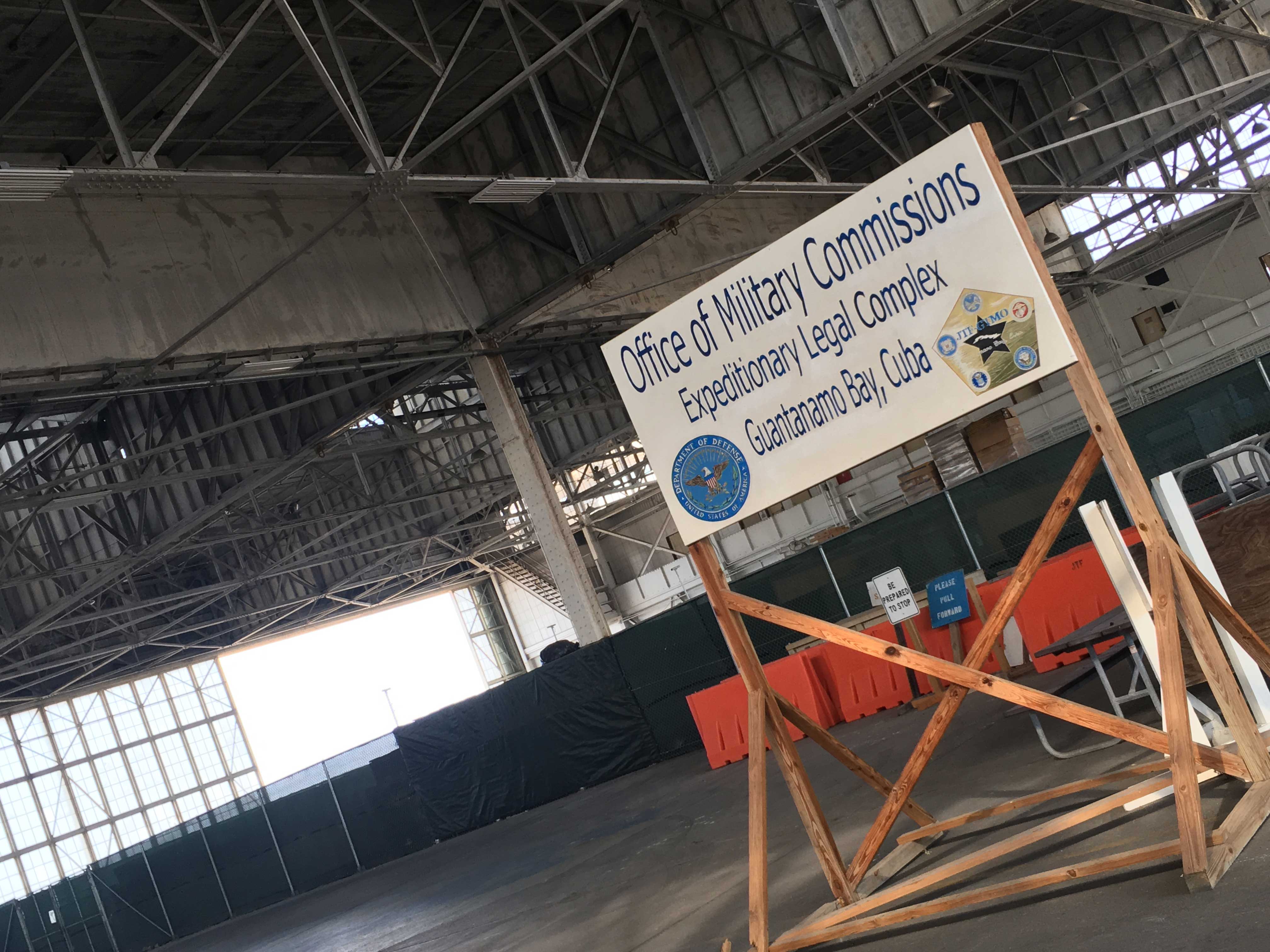
Comments closedThis series of blogs presents a number of the legal issues raised at the April – May 2018 military commission proceedings against the alleged plotters of the 11 September 2001 (9/11) terror attacks against the US in the case of US v. Khalid Shaikh Mohammad, et. al. taking place at Camp Justice, Guantánamo Bay Naval Station, Cuba.
The author, Dr Kasey McCall-Smith, is conducting a research project entitled Torture on Trial, which is funded by the Royal Society of Edinburgh.
1. The Shadows of Torture
When people speak about torture and the war on terror, the most egregious and publicly decried acts generally pop to mind: waterboarding, walling, sleep deprivation, and so on. As the military commission proceedings in case of US v. Khalid Shaikh Mohammad, et. al. (KSM case) unfold, less examined examples aspects of torture reveal the irreversible physical and mental impacts on victims of such abuse.
In his first post as GJA Student Ambassador, Connor Hounslow reports from the 2017 Scottish Centre for International Law‘s Annual Lecture. This year’s lecture was delivered by Natalie Klein, Professor and Dean of Macquarie Law School.
Last Tuesday, Professor Klein delivered the Scottish Center for International Law Annual lecture on the role of the judge in developing international law, especially within the context of the Law of the Sea. As described by Professor Klein, her body of research on this topic represents a microcosm of the international legal system. Nonetheless, Professor Klein’s explorations in this lecture posited an understanding of the judge which applies to the broader international legal universe.
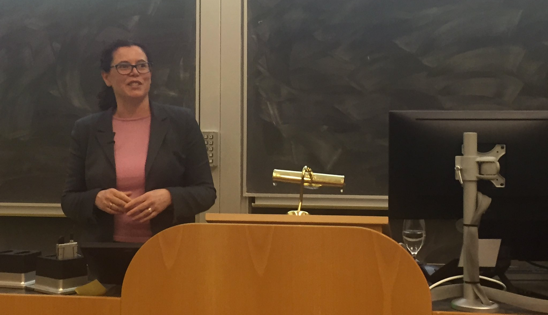
Dr Kasey McCall-Smith, Chair of the Association of Human Rights Institutes and member of the Global Justice Academy, discusses Human Trafficking and Modern Slavery in the context of the UN Global Compact for Migration.
In a previous post, I gave general overview of the UN Global Compact for Migration and a brief analysis of the Migration Compact thematic discussions on the distinctions between human smuggling and human trafficking. This note considers modern slavery, a topic with which the University of Edinburgh is highly engaged through both academic projects as well as its Modern Slavery initiatives. Following on from the distinction between migrants smuggled into a state for the sole purpose of evading legal migration and individuals trafficked into (or within) a state for purposes of exploitation, the following will present key debates about modern slavery and human trafficking that are highly relevant to the conclusion of a comprehensive Migration Compact.
Comments closed