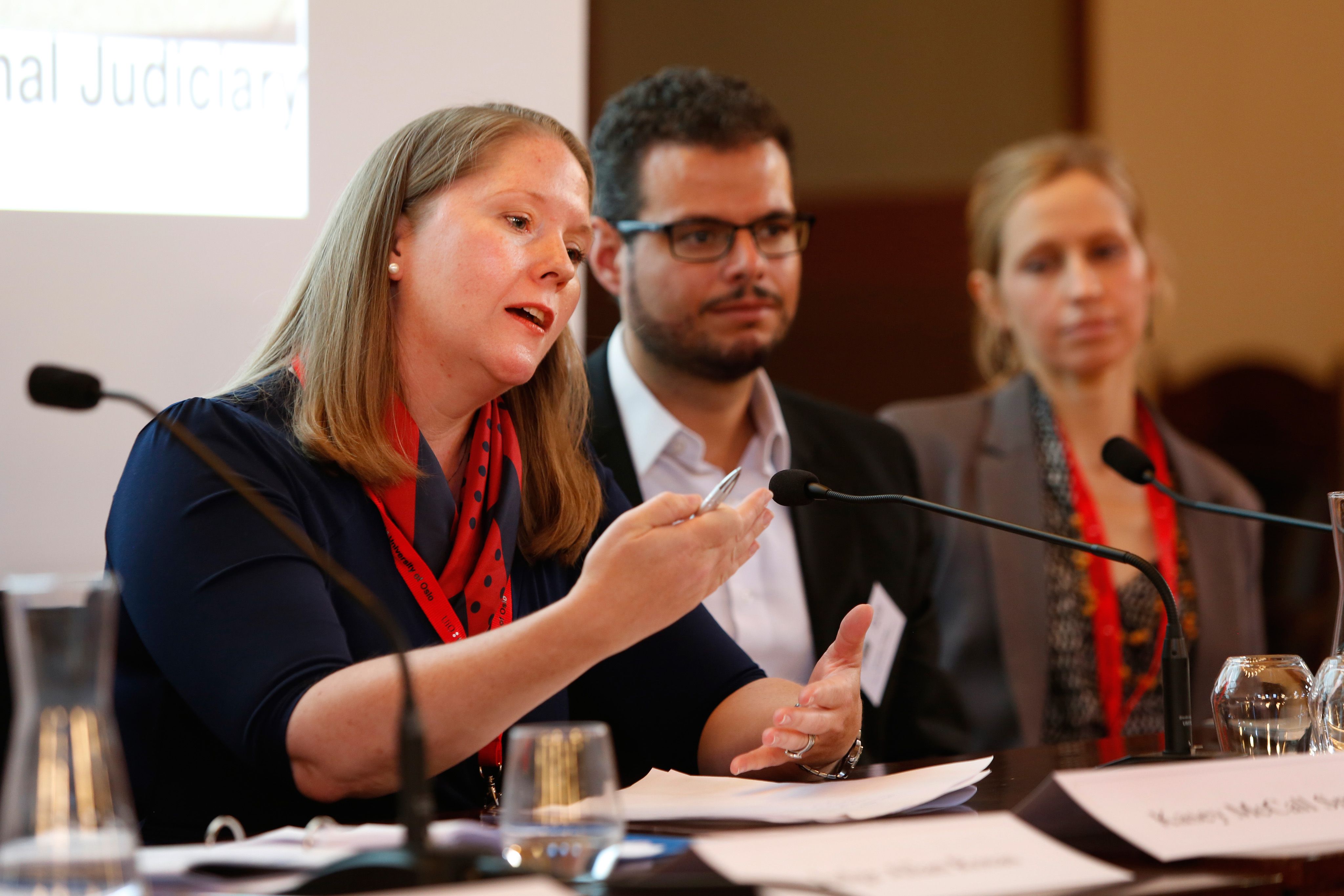
 This post is by Kasey McCall-Smith: a lecturer in Public International Law and programme director for the LLM in Human Rights at Edinburgh Law School.
This post is the first in a series of blogs that chronicle the history and current state of play regarding the US rendition and detention programme in the immediate aftermath of 9/11. They were written during the author’s visit to Guantánamo Bay, Cuba, to observe military commission proceedings in the case of USA v. Khalid Shaikh Mohammad, et. al. 30 May – 3 June 2016, which is the initial phase of her project Getting to Grips with Guantánamo.
Following the attacks against the US on 9/11, then-President Bush declared open-season on all individuals with any established link to al Qaeda. In furtherance of the Bush declaration, the US Central Intelligence Agency (CIA) commenced what would eventually prove to be the most egregious and calculated rendition and detention campaign in modern, post-WWII history. A campaign defined by blatant breaches of both US and international law. To this day, it serves as a black mark on America’s international image, and the resulting impact of the decisions taken by the Bush Administration in the early days of 2001 continue to resonate today.
Comments closed