On 14 March 2022, the Global Justice Academy hosted a conversation between Mohamedou Ould Salhi, author of the best-seller Guantánamo Diary, and Dr Kasey McCall-Smith,…
Comments closedCategory: Torture
This blog is by Daniel Erhardt Nielsen, LLM Candidate in Human Rights at Edinburgh Law School. It presents some of the issues he examined during…
Comments closedThis post continues the blog series by Dr Kasey McCall-Smith which examines some of the contentious legal issues raised in the US v. Khalid Shaikh…
Comments closedThis is the third post in a blog series by Dr Kasey McCall-Smith which examines some of the contentious legal issues raised in the US…
Comments closed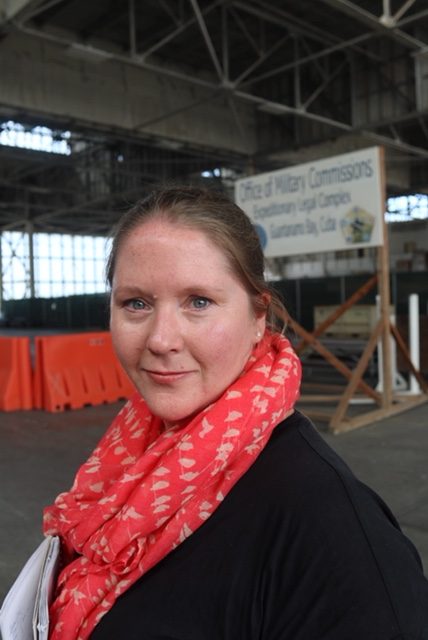 This is the second post in a blog series by Dr Kasey McCall-Smith examines some of the crucial legal issues and broader public questions raised regarding the US v. Khalid Shaikh Mohammad, et. al. military commission proceedings against the five men charged with various war crimes and terrorism in relation to the 11 September 2001 attacks on the US. The series is part of her project ‘Torture on Trial’ and funded by a grant from the Royal Society of Edinburgh.
- Read the first post: Taking a Step Back – A Primer on the International Prohibition against Torture
In the 9/11 war crimes trial taking place in Guantánamo, an array of motions have been filed regarding unlawful influence on the US v. Khalid Shaikh Mohammad, et. al.(9/11 case) proceedings. They began with complaints regarding statements by then-President Obama and continue to the present with complaints regarding President Trump, Secretary of Defense Mattis, former Attorneys General Sessions and Holder and CIA Director Gina Haspel. These motions, all based on section 949b of the 2009 Military Commissions Act, cover a range of statements and actions.
During the April-May 2018 proceedings, the influence of current US President Trump was raised as lawyers debated the influence of statements made by Trump as the commander in chief of the US military. The relevant statements focused on the president’s response to the Bowe Bergdahl v. US courts martialand also the 31 October 2017 New York incident where an alleged terrorist drove a van onto a bike path killing eight people. Trump’s statements on the campaign trail and after his election were also potentially problematic for the 9/11case and attacked the integrity of the military justice system. His statements and twitter posts explicitly called into question the administration of justice and constitutional protections in the US. Defence counsel in the 9/11 war crimes tribunal argue that collectively these successive statements by US presidents and other government officials equate to unlawful influence (UI), a concept drawn from provisions in the US Uniform Code of Military Justice prohibiting Unlawful Command Influence (UCI). UI is a concept set out in 10 USC §837 and article 37 of the UCMJ and is deemed the ‘mortal enemy’ of military justice and also violates due process as guaranteed by the US Constitution and the right to a fair trial under Article 14 of the International Covenant on Civil and Political Rights (ICCPR). The concept applies here as the governing law of the trial is the Military Commissions Act 2009 (MCA 2009) – combining rules of military, domestic and international law – and the president is the constitutional Commander-in-Chief of the US military.
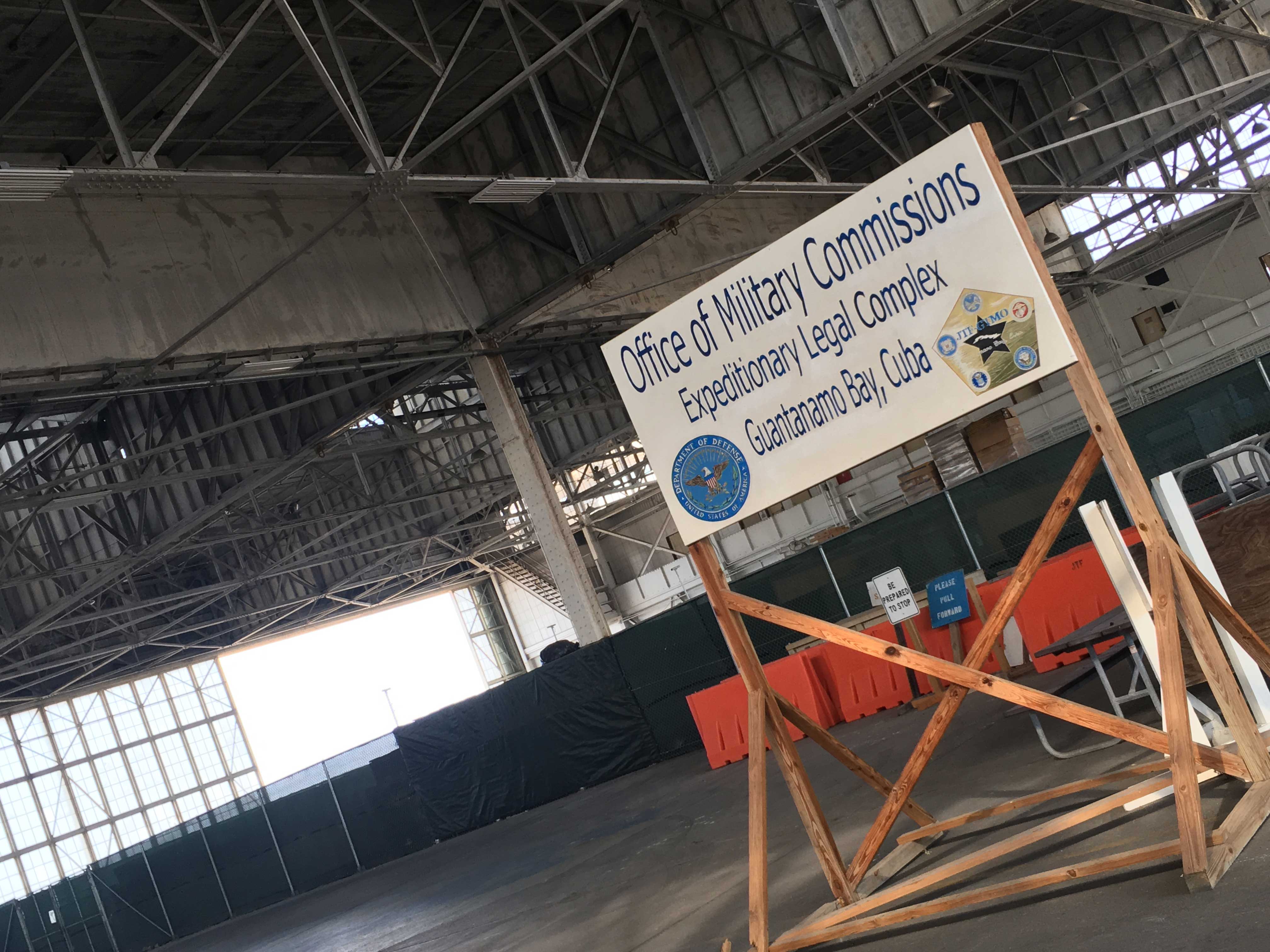
Comments closedThis blog series by Dr Kasey McCall-Smith examines some of the crucial legal issues and broader public questions raised regarding the US v. Khalid Shaikh Mohammad, et. al. military commission proceedings against the five men charged with various war crimes and terrorism in relation to the 11 September 2001 attacks on the US. The military commissions are in the sixth year of the pretrial phase and taking place at a purpose-built Expeditionary Legal Complex in Camp Justiceon Naval Station Guantánamo Bay, Cuba. The series is part of her project ‘Torture on Trial’ and funded by a grant from the Royal Society of Edinburgh.
Taking a Step Back – A Primer on the International Prohibition against Torture
Many members of the public not trained in international law fail to understand why the international prohibition against torture matters or should matter in the US legal system. This post seeks to explain how international law on the prohibition against torture relates to US law and the impact of the prohibition on the military commission proceedings against the five men charged with conspiracy and war crimes in relation to the 9/11 terrorist attacks on the US in US v. Khalid Shaikh Mohammad, et. al.(9/11 case).
Comments closedIn this post, our Communications Intern, Jee-Young Song, reports from the second day of the recent GJA-sponsored GREYZONE summer school.
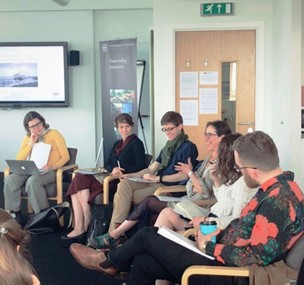 26 June 2018 was the second day of the GREYZONE Summer School, and starting the day’s session was Danielle Celemajer, Professor of Sociology and Social Anthropology at the University of Sydney. Titled ‘The worlds that produce torture’, the main question put to us was:
“What causes torture?”
The straightforward answer to this would of course be obvious: doesn’t torture occur because a malignant perpetrator decided to inflict such an act on the victim?
However, this is an over-simplistic approach, as Professor Celemajer professed her view that there is in fact a complex map of causality for torture, with many contributory factors which extend beyond the scope of the individual perpetrator.
Comments closed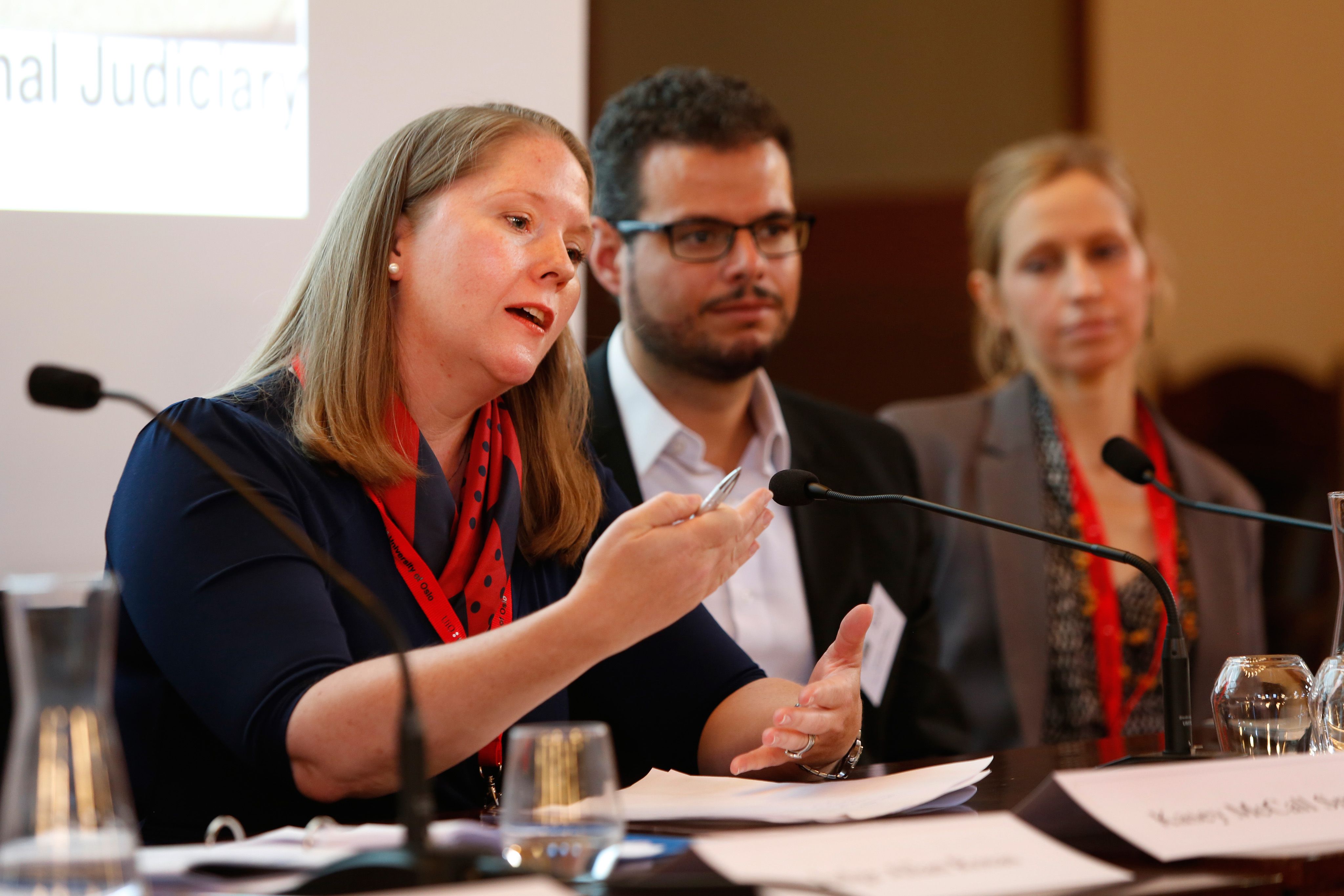 This series of blogs presents a number of the legal issues raised at the April – May 2018 military commission proceedings against the alleged plotters of the 11 September 2001 (9/11) terror attacks against the US in the case of US v. Khalid Shaikh Mohammad, et. al. taking place at Camp Justice, Guantánamo Bay Naval Station, Cuba.
The author, Dr Kasey McCall-Smith, is conducting a research project entitled Torture on Trial, which is funded by the Royal Society of Edinburgh.
1. The Shadows of Torture
When people speak about torture and the war on terror, the most egregious and publicly decried acts generally pop to mind: waterboarding, walling, sleep deprivation, and so on. As the military commission proceedings in case of US v. Khalid Shaikh Mohammad, et. al. (KSM case) unfold, less examined examples aspects of torture reveal the irreversible physical and mental impacts on victims of such abuse.
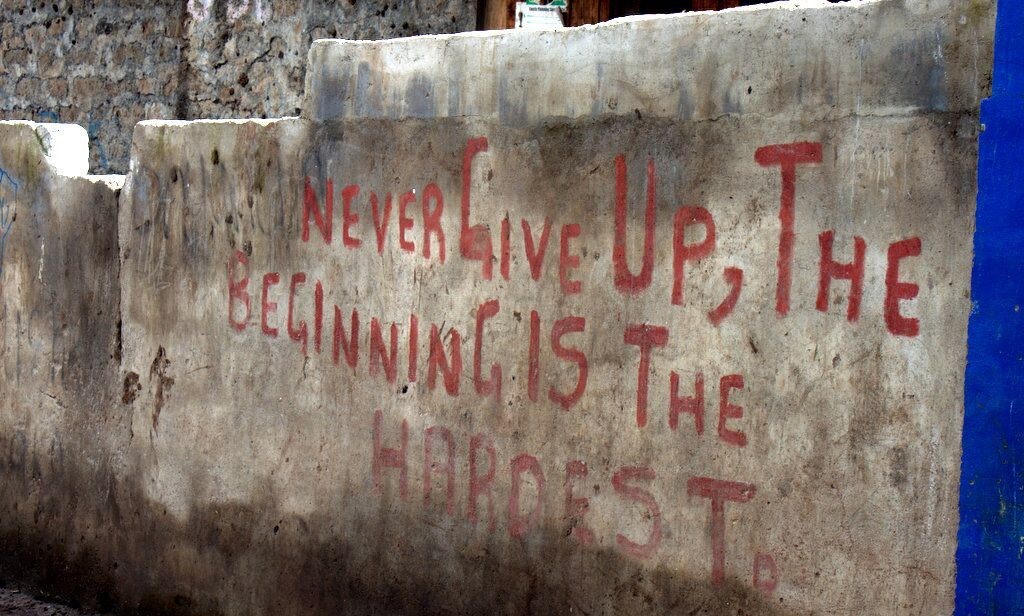
 Publicising Human Rights violations and holding perpetrators of torture accountable has been guiding practice for much human rights work. As Prof. Tobias Kelly shows in this contribution to the GJA’s Peace & Conflict blog series: rather than shining light into dark places, many victims want the lights switched off. Kelly suggests that that the need for protecting victims may be more important than the need to hold perpetrators accountable.
By Tobias Kelly
Perpetrators need to be held to account and victims need redress. This has been the central principle of human rights work against torture for the past fifty years. However, collaborative work we have been carrying out in Kenya, Bangladesh and Nepal suggests that for many survivors- especially amongst the poorest and most vulnerable in society- the emphasis might be in the wrong place. What most survivors want, above all else, is to feel safe and secure, and accountability has only an indirect relationship with the desire for protection.
Comments closedVivek Bhatt, a Student Ambassador with the Global Justice Academy (GJA), has written this blog following a panel event he attended at the Edinburgh Law School. The event, hosted by the GJA, explored…
Comments closed