Any views expressed within media held on this service are those of the contributors, should not be taken as approved or endorsed by the University, and do not necessarily reflect the views of the University in respect of any particular issue.
Press "Enter" to skip to content

Category: Human rights

Reflections from the Association of Human Rights Institutes 2016 Conference

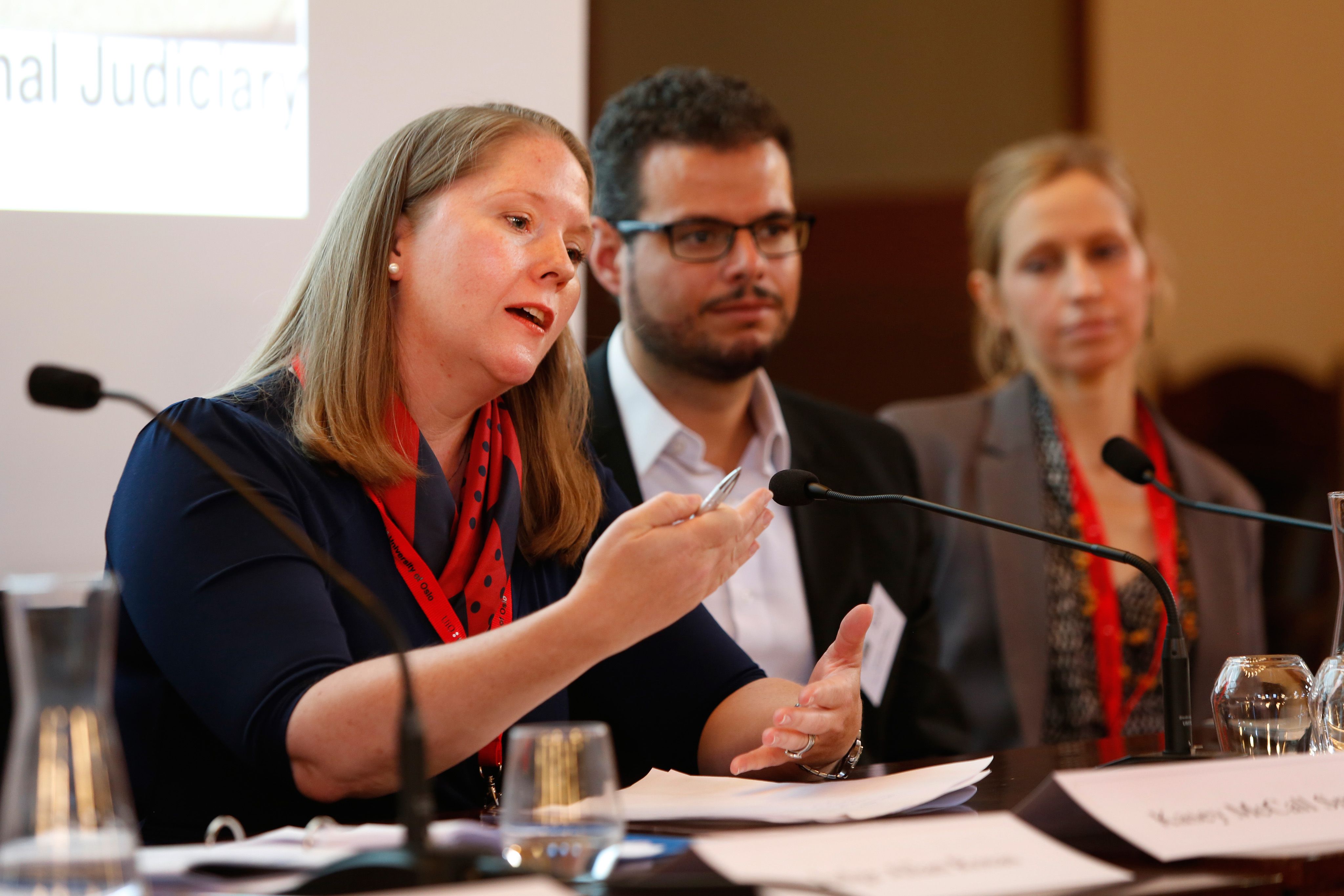
Dr Kasey McCall-Smith and Dr Dimitrios Kagiaros attended the 2016 Association of Human Rights Institutes (AHRI) conference on behalf of the Global Justice Academy. The conference was hosted by the Netherlands Institute of Human Rights (SIM) of Utrecht University, and welcomed over 200 academics and researchers. In this short post, Kasey McCall-Smith reflects on the discussion.

The theme of the conference was ‘50 Years of the Two UN Human Rights Covenant: Legacies and Prospects’. The conference enjoyed presentations, debates and interventions from well-known faces on international human rights scene.

Comments closed

Getting to Grips with Guantánamo IV: Person Zero & Camp 7

KMSThis post is by Kasey McCall-Smith: a lecturer in Public International Law and programme director for the LLM in Human Rights at Edinburgh Law School.

This post is the fourth in a series of blogs that chronicle the history and current state of play regarding the US rendition and detention programme in the immediate aftermath of 9/11. They were written during the author’s visit to Guantánamo Bay, Cuba, to observe military commission proceedings in the case of USA v. Khalid Shaikh Mohammad, et. al.  30 May – 3 June 2016, which is the initial phase of her project Getting to Grips with Guantánamo.

In my last post, the use of evidence obtained through torture in the case of US v. Khalid Shaikh Mohammad, et. al. (KSM case) was introduced. This post further considers how torture impacts detainees held at Guantánamo and the 9/11 trial. An interesting addition to the already complex pre-trial considerations is the possible appearance of a detainee who has not been seen in public since he was rendered into the custody of the CIA. Abu Zubaydah, a Palestinian, is believed to have been taken into CIA custody in 2002 following his capture in Pakistan. After three years on a CIA ‘black site’, he was delivered to Joint Task Force-Guantánamo (JTF-GTMO) in 2006 where he remains a High Value Detainee (HVD) despite never having been charged with a crime. As characterised by former FBI agent, Ali Soufan, Zubaydah is the ‘original sin’ of the US in its post-9/11 anti-terror campaign.

Comments closed

Getting to Grips with Guantánamo III: Torture Evidence

KMSThis post is by Kasey McCall-Smith: a lecturer in Public International Law and programme director for the LLM in Human Rights at Edinburgh Law School.

This post is the third in a series of blogs that chronicle the history and current state of play regarding the US rendition and detention programme in the immediate aftermath of 9/11. They were written during the author’s visit to Guantánamo Bay, Cuba, to observe military commission proceedings in the case of USA v. Khalid Shaikh Mohammad, et. al.  30 May – 3 June 2016, which is the initial phase of her project Getting to Grips with Guantánamo.

Right now, on a small island in the Caribbean, what will ultimately be one of the most comprehensive examinations of torture is taking place in the form of a military commission proceeding in the case of US v. Khalid Shaikh Mohammad, et. al. (KSM case). A common understanding among the observers that are witnessing KSM is that half are there to see the 9/11 trial and half are there to see the torture trial. In anticipation of what many view as a foregone conclusion, the defence lawyers are diligently representing their clients in order to ensure that if the ultimate penalty, death, is pursued in the sentencing phase of the trial; then the brutality that they suffered at the hands of the CIA is in the trial record. This record will be instrumental to mitigation of the death penalty and speak to the reality that much of the evidence presented may have been extracted or derived through torture, which is prohibited under international law.

Comments closed

Getting to Grips with Guantánamo II: Military Commissions & Law of War Detention

KMSThis post is by Kasey McCall-Smith: a lecturer in Public International Law and programme director for the LLM in Human Rights at Edinburgh Law School.

This post is the second in a series of blogs that chronicle the history and current state of play regarding the US rendition and detention programme in the immediate aftermath of 9/11. They were written during the author’s visit to Guantánamo Bay, Cuba, to observe military commission proceedings in the case of USA v. Khalid Shaikh Mohammad, et. al.  30 May – 3 June 2016, which is the initial phase of her project Getting to Grips with Guantánamo. Click here to read the first post in the series: ‘Rendition to the Caribbean’.

The military commission proceeding against the 9/11 five in the case of US v. Khalid Shaikh Mohammad, et. al. (KSM case) is viewed as having parallel purposes, bringing justice to the nation and victims’ families for the terrorist attacks of 9/11 and laying bare the flagrant torture campaign under the US Central Intelligence Agency’s (CIA) post-9/11 Detention and Interrogation Program (DIP). The KSM case stems from charges filed on 31 May 2011 against the five men charged with conspiracy, murder and destruction of property in violation of the law of war for the conception and facilitation of the 9/11 attacks which resulted in the deaths of close to 3000 people. The subsequent ‘war on terror’ launched by the Bush administration in the aftermath set in motion a ruthless anti-terrorism campaign by the CIA that has been acknowledged by the US government as comprising widespread use of torture in breach of both US domestic law and international law.

Comments closed

Getting to Grips with Guantánamo I: Rendition to the Caribbean

KMSThis post is by Kasey McCall-Smith: a lecturer in Public International Law and programme director for the LLM in Human Rights at Edinburgh Law School.

This post is the first in a series of blogs that chronicle the history and current state of play regarding the US rendition and detention programme in the immediate aftermath of 9/11. They were written during the author’s visit to Guantánamo Bay, Cuba, to observe military commission proceedings in the case of USA v. Khalid Shaikh Mohammad, et. al.  30 May – 3 June 2016, which is the initial phase of her project Getting to Grips with Guantánamo.

Following the attacks against the US on 9/11, then-President Bush declared open-season on all individuals with any established link to al Qaeda. In furtherance of the Bush declaration, the US Central Intelligence Agency (CIA) commenced what would eventually prove to be the most egregious and calculated rendition and detention campaign in modern, post-WWII history. A campaign defined by blatant breaches of both US and international law. To this day, it serves as a black mark on America’s international image, and the resulting impact of the decisions taken by the Bush Administration in the early days of 2001 continue to resonate today.

Comments closed

MBA Team Syria: Making a Difference to the Community

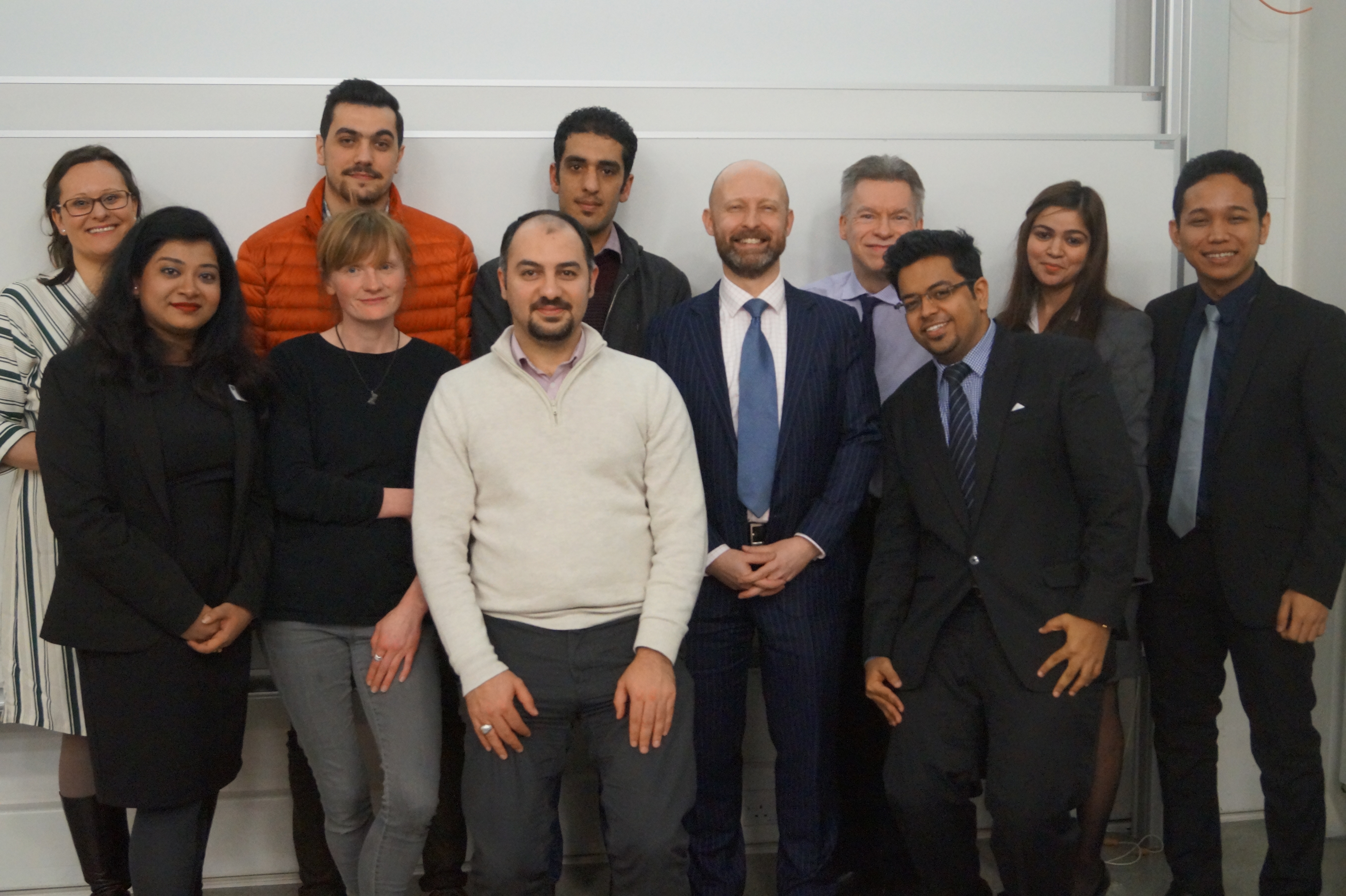
DSC00990As a part of the Strategic Leadership course on Edinburgh’s MBA programme, a group of five students organised a social event to help draw awareness to the Syrian refugee crisis. In this guest post, Debjani Paul offers an overview of the event, which centred around the the personal life experiences of three Syrians now settled in Edinburgh – Aamer Hanouf, Hussen Al Ajraf, and Amer Masri.

With the rising global concerns including climate change, an increase in global population, poverty, and terrorism, world leaders have much to focus on. It is becoming a new norm for companies to be socially responsible by promoting sustainability and contributing at least in one of the global concerns, also known as Corporate Social Responsibility. This is the ethical way to do business that every future leader should practice.

Comments closed

Out of Serbia

This post was first published on the author’s Remotely Balkan blog, and is re-blogged here with permission.

This post is by Laura Wise. Laura is an Analyst on the Global Justice Academy’s Political Settlements Research Programme. Her research interests include minority mobilisation, state-society relations, and conflict management in South-Eastern Europe.

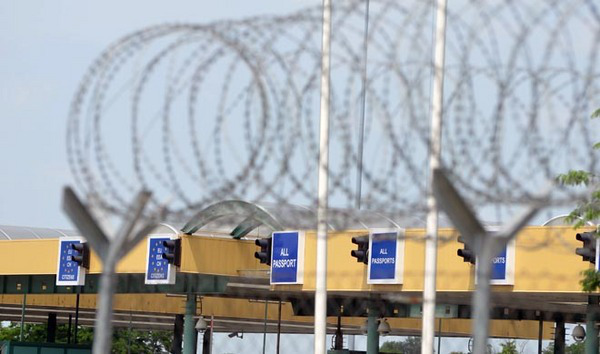
Röszke, Vasfüggönnyel a bevándorlók ellen. Képen: Szögesdrót a röszkei határátkelőnél. fotó: Segesvári Csaba
Röszke, Vasfüggönnyel a bevándorlók ellen.
Képen: Szögesdrót a röszkei határátkelőnél.
fotó: Segesvári Csaba

The Balkan Express is no more.

Replaced by luxury international coaches from Vienna to Sarajevo, with on-board toilets that work, Wi-Fi, and conductors who serve drinks, gone are the potholed, unreliable minibus journeys that make classic travellers’ tales for the Western backpacker. Last month I made a fleeting visit back to the Balkans; the kind of trip where you spend hours on the aforementioned buses just to meet friends for coffee. It was also a chance to reunite with rakia, and revisit bars where the pop-folk of Dado Polumenta is an acceptable choice of music. However, most of my conversations and experiences kept returning to a more sobering topic: Europe.

Comments closed

What obligations, if any, does a state in Europe have towards boat people attempting dangerous sea crossings?

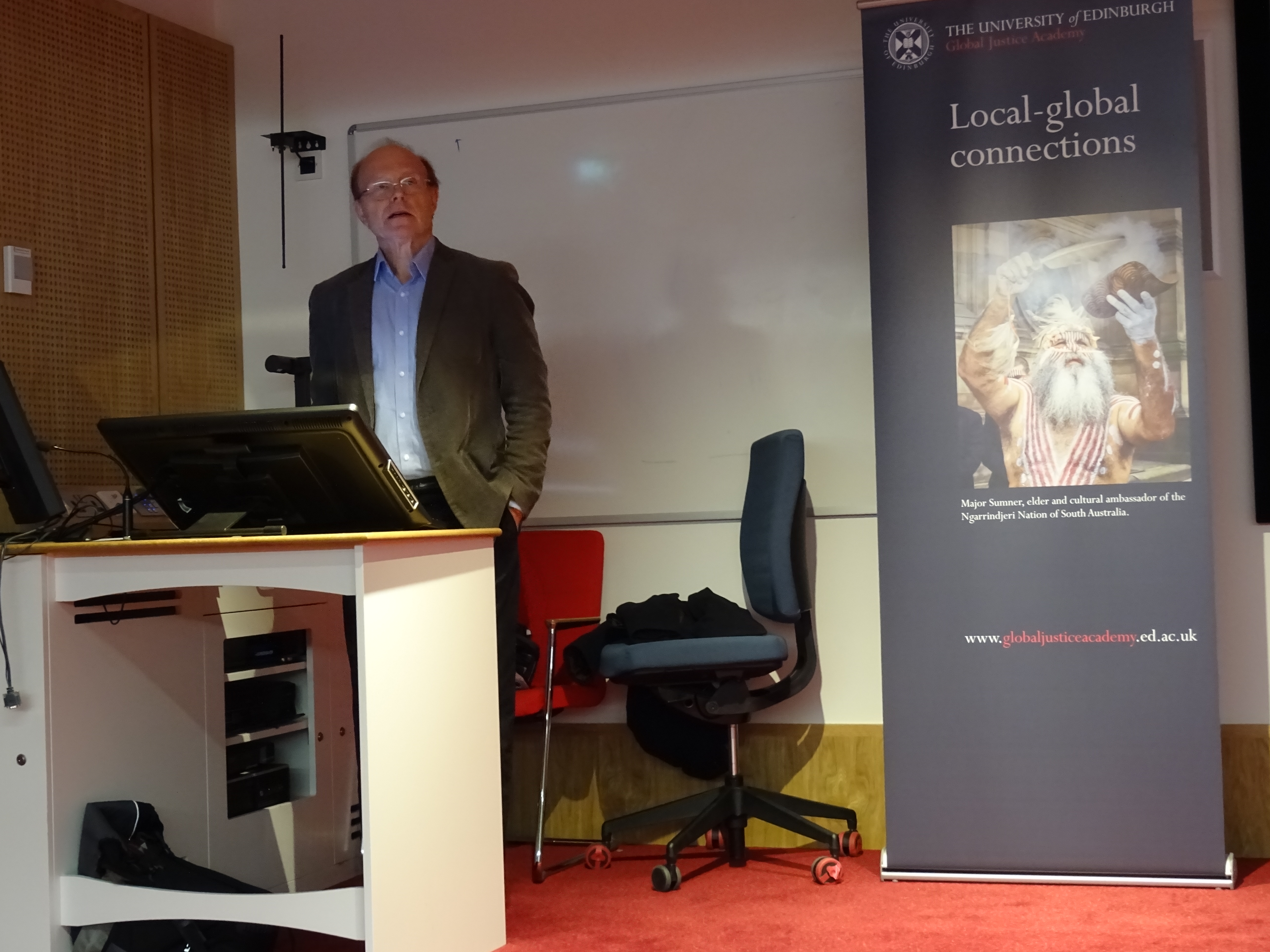
This was the question Professor David Miller from Oxford University addressed on 4 February 2016 in a well-attended lecture hosted by Edinburgh University’s Global Justice Academy and Just World Institute.

In this blog report from the lecture, Yukinori Iwaki reflects on the day’s discussion and points raised. Yukinori Iwaki is a PhD student in Politics and International Relations at the University of Edinburgh. Click here to read more about his research.

D.Miller in Edinburgh_01 Professor Miller began his talk by noting the 2014 UK government decision not to support Triton, a search-and-rescue operation proposed by the EU that could have potentially saved the lives of sea-crossing migrants, or “boat people”. The main reasoning behind this decision was the claim that search-and-rescue encourages people to attempt dangerous sea crossings in the greater expectation of being rescued, and therefore, in the long term, will bring about more deaths.  This seems to be a consequentialist argument that considers effects of alternative ways of using resources in order to minimise the loss of lives overall.  Meanwhile, critics argue that European states have stringent obligations to protect rights of migrants.  But is it true that the critics’ argument occupies the moral high ground while the UK government’s argument is morally defective?  The answer Professor Miller gave us was: ‘Not necessarily’.

Comments closed

Counter-Terrorism, Radicalisation, and the University: Debating the Prevent Strategy

On Friday 15 January 2016, the Global Justice Academy and the Centre for Security Research at The University of Edinburgh hosted a panel discussion on the Prevent Strategy obligations that have been placed on higher education institutions. GJA Student Ambassador, Rebecca Smyth, went along to the debate and outlines the debated arguments as well as her thoughts on this contentious issue in this guest post.

A thing of nothing or something more sinister?  Under section 26 of the 2015 Counter-Terrorism and Security Act universities must “have due regard to the need to prevent people being drawn into terrorism.”  The origins of this ‘Prevent’ duty, and its potential implications for staff and students, were considered at a panel discussion organised by the Global Justice Academy and Centre for Security Research last Friday.  Chaired by Akwugo Emejulu, the panel comprised Gavin Douglas, Deputy Secretary of Student Experience here at the University of Edinburgh; Richard Jones of the School of Law; Genevieve Lennon of the University of Strathclyde Law School; Urte Macikene, EUSA Vice President of Services; and Andrew Neal of the Politics and International Relations department.

Comments closed

Myths and Realities – What is the Women, Peace and Security Agenda?

Rosie Ireland is a GJA Student Ambassador for 2015-16, and is reading for an LLM in Human Rights. Rosie co-authored our first student report on international law and peace negotiations with her colleague, Siobhan Cuming. In this report, Rosie reflects on the 2015 Crystal Macmillan Lecture, which was delivered by Madeleine Rees. 

Last semester on the 26 November, the distinguished international lawyer and human rights advocate Madeline Rees, Secretary General of the Women’s International League for Peace and Freedom, delivered the second Chrystal Macmillan Lecture of 2015. The report provides a brief summary and covers some of the key points made during the lecture.

Law has developed since 1948 to address conflicts, promote peace and end war. Addressing the root causes of conflict – such as inequalities between people and nations – is essential to the prevention of future conflict.

Comments closed
css.php

Report this page

To report inappropriate content on this page, please use the form below. Upon receiving your report, we will be in touch as per the Take Down Policy of the service.

Please note that personal data collected through this form is used and stored for the purposes of processing this report and communication with you.

If you are unable to report a concern about content via this form please contact the Service Owner.

Please enter an email address you wish to be contacted on. Please describe the unacceptable content in sufficient detail to allow us to locate it, and why you consider it to be unacceptable.
By submitting this report, you accept that it is accurate and that fraudulent or nuisance complaints may result in action by the University.

  Cancel