This post continues the blog series by Dr Kasey McCall-Smith which examines some of the contentious legal issues raised in the US v. Khalid Shaikh…
Comments closedCategory: Human rights
This is the third post in a blog series by Dr Kasey McCall-Smith which examines some of the contentious legal issues raised in the US…
Comments closed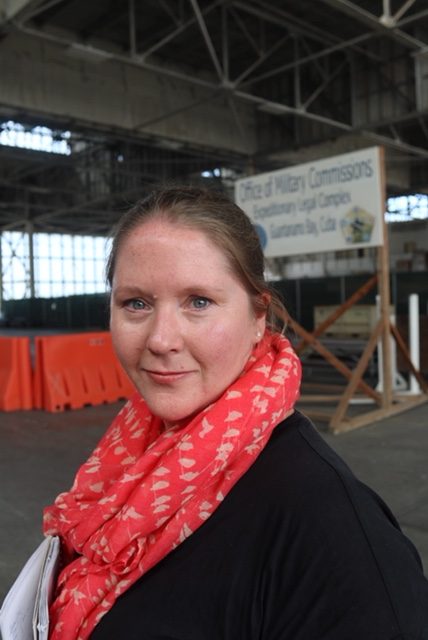 This is the second post in a blog series by Dr Kasey McCall-Smith examines some of the crucial legal issues and broader public questions raised regarding the US v. Khalid Shaikh Mohammad, et. al. military commission proceedings against the five men charged with various war crimes and terrorism in relation to the 11 September 2001 attacks on the US. The series is part of her project ‘Torture on Trial’ and funded by a grant from the Royal Society of Edinburgh.
- Read the first post: Taking a Step Back – A Primer on the International Prohibition against Torture
In the 9/11 war crimes trial taking place in Guantánamo, an array of motions have been filed regarding unlawful influence on the US v. Khalid Shaikh Mohammad, et. al.(9/11 case) proceedings. They began with complaints regarding statements by then-President Obama and continue to the present with complaints regarding President Trump, Secretary of Defense Mattis, former Attorneys General Sessions and Holder and CIA Director Gina Haspel. These motions, all based on section 949b of the 2009 Military Commissions Act, cover a range of statements and actions.
During the April-May 2018 proceedings, the influence of current US President Trump was raised as lawyers debated the influence of statements made by Trump as the commander in chief of the US military. The relevant statements focused on the president’s response to the Bowe Bergdahl v. US courts martialand also the 31 October 2017 New York incident where an alleged terrorist drove a van onto a bike path killing eight people. Trump’s statements on the campaign trail and after his election were also potentially problematic for the 9/11case and attacked the integrity of the military justice system. His statements and twitter posts explicitly called into question the administration of justice and constitutional protections in the US. Defence counsel in the 9/11 war crimes tribunal argue that collectively these successive statements by US presidents and other government officials equate to unlawful influence (UI), a concept drawn from provisions in the US Uniform Code of Military Justice prohibiting Unlawful Command Influence (UCI). UI is a concept set out in 10 USC §837 and article 37 of the UCMJ and is deemed the ‘mortal enemy’ of military justice and also violates due process as guaranteed by the US Constitution and the right to a fair trial under Article 14 of the International Covenant on Civil and Political Rights (ICCPR). The concept applies here as the governing law of the trial is the Military Commissions Act 2009 (MCA 2009) – combining rules of military, domestic and international law – and the president is the constitutional Commander-in-Chief of the US military.
Comments closedThis blog series by Dr Kasey McCall-Smith examines some of the crucial legal issues and broader public questions raised regarding the US v. Khalid Shaikh Mohammad, et. al. military commission proceedings against the five men charged with various war crimes and terrorism in relation to the 11 September 2001 attacks on the US. The military commissions are in the sixth year of the pretrial phase and taking place at a purpose-built Expeditionary Legal Complex in Camp Justiceon Naval Station Guantánamo Bay, Cuba. The series is part of her project ‘Torture on Trial’ and funded by a grant from the Royal Society of Edinburgh.
Taking a Step Back – A Primer on the International Prohibition against Torture
Many members of the public not trained in international law fail to understand why the international prohibition against torture matters or should matter in the US legal system. This post seeks to explain how international law on the prohibition against torture relates to US law and the impact of the prohibition on the military commission proceedings against the five men charged with conspiracy and war crimes in relation to the 9/11 terrorist attacks on the US in US v. Khalid Shaikh Mohammad, et. al.(9/11 case).
Comments closed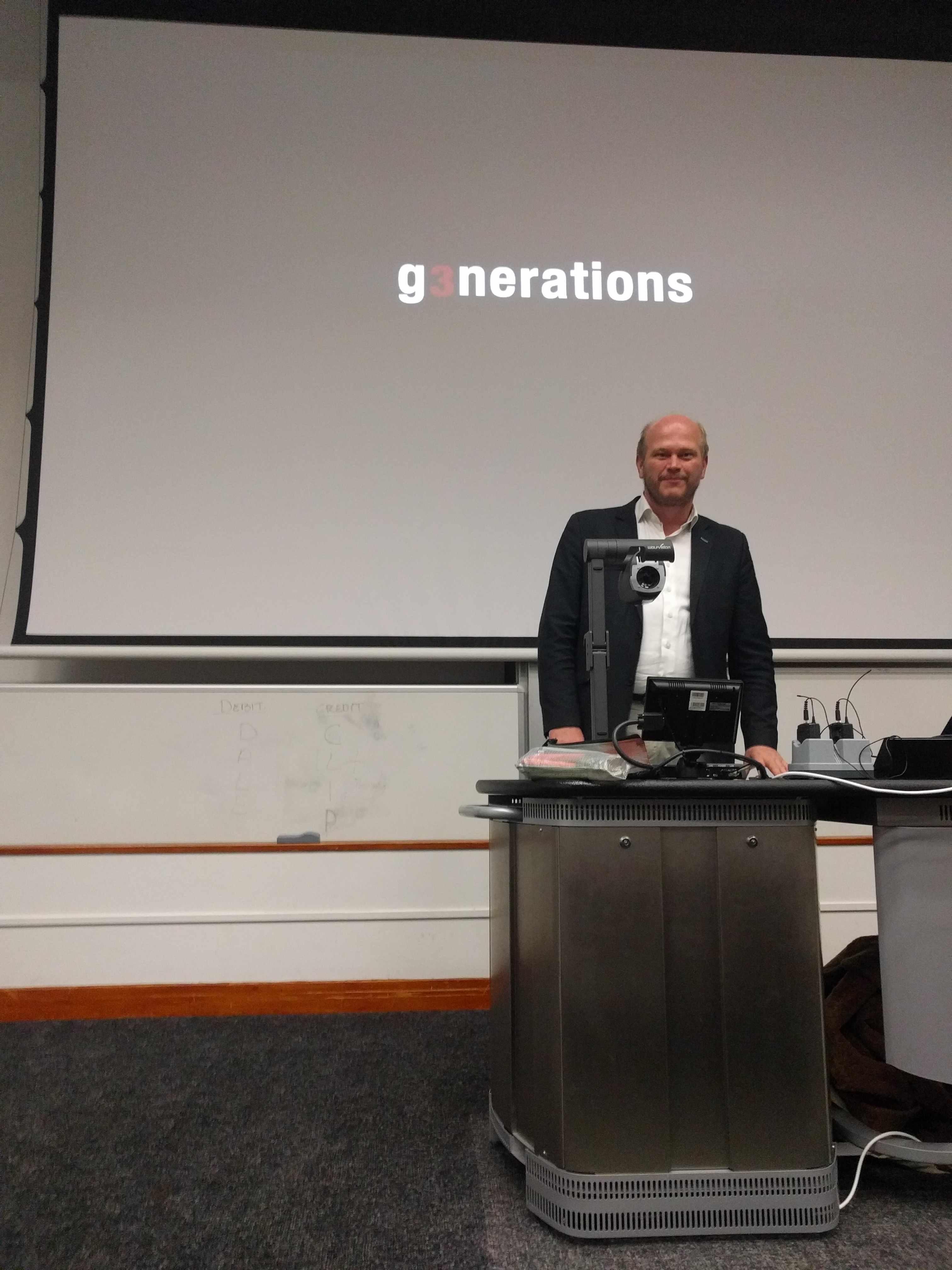 Between 13-15 October 2018, the Global Justice Academy co-hosted a weekend of events joining Relief & Reconciliation for Syria with peacebuilding communities in Scotland. This post from Dr George R. Wilkes, reflects on the series of events that took place.
The prospect of an inclusive peacebuilding process in Syria looks bleak now. From the perspective of millions of Syrians who have fled regime controlled areas, atrocity, terror and armed extortion all confront attempts to straddle divisions to talk about peace. Refugees face daily existential pressures in the face of which peace talks appear distant and untimely. Critics of regime ‘reconciliations’ see the concept reduced to the mechanics of overpowering the regime’s outlaws. In regime territory, a more inclusive embrace of populations controlled by Islamist armed groups is undercut by the sense that violence and terror were the inevitable result of a religious fundamentalism shared widely within those populations, and by the international supporters of those forces.
Comments closedGuncha Sharma is a candidate for the Global Justice Academy’s LLM in Human Rights, and a GJA Student Ambassador for 2018-19. From India, she is also one of three recipientsof the GJA’s LLM Human Rights scholarship awards for this year, and has a keen interest in gender issues, the rights of children and other vulnerable groups, and public health. In this post, Guncha reflects on the recent Ruth Adler Memorial Lecture, which was delivered by Philippe Sands QC, with a response from Scotland’s Lord Advocate James Wolffe QC.
On October 24 2018, Philippe Sands delivered the Ruth Adler Memorial Lecture with a talk based on his bestselling book East-West Street and the Making of Modern Human Rights. Phillippe Sands is one of the most successful British lawyers working in the field of International Law. He has argued many high-profile cases before International courts and tribunals, and currently directs the Project on International Courts and Tribunals from his position as Professor of Laws at UCL.
Comments closedThe G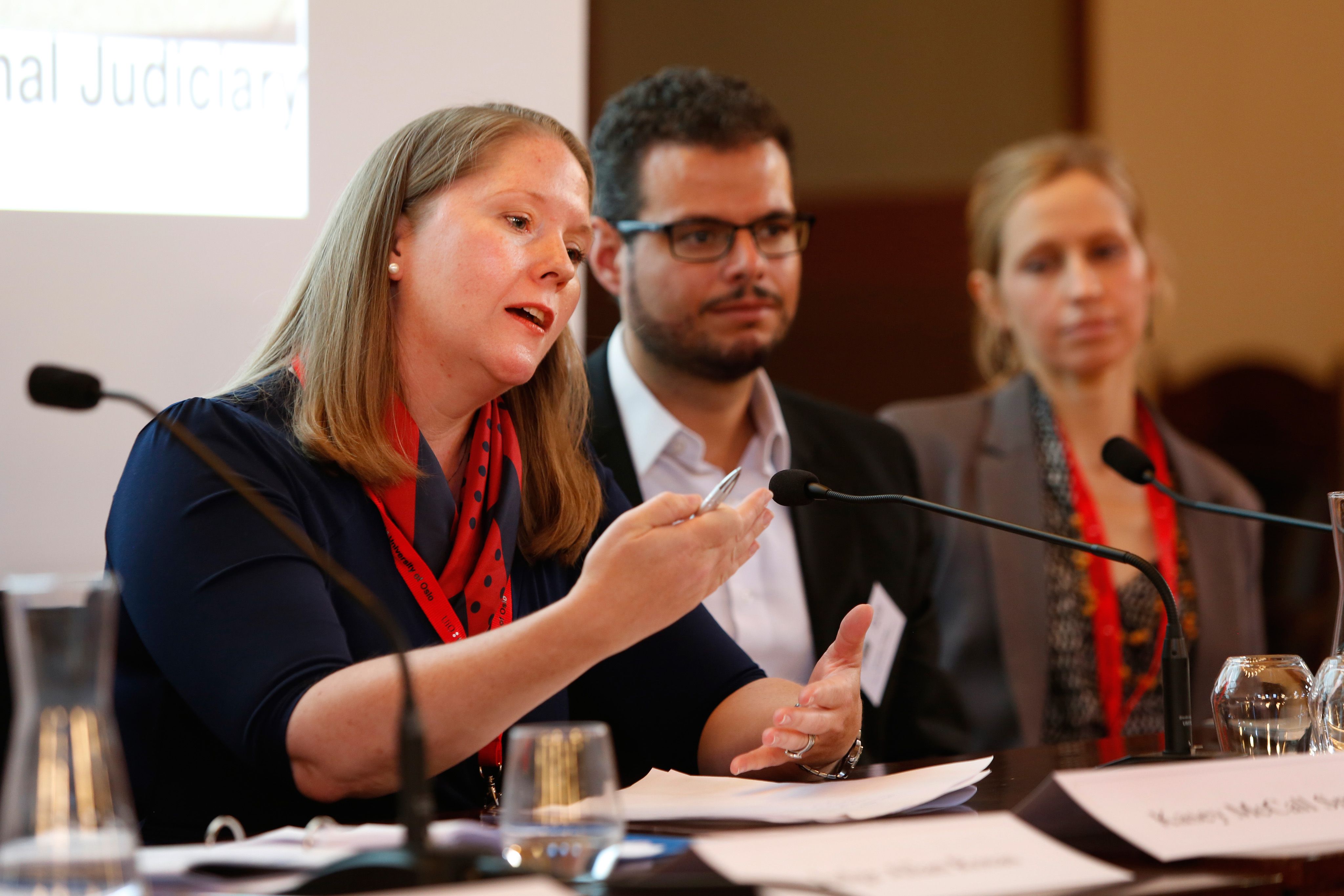 lobal Justice Academy (GJA) and Edinburgh Law School welcomed over 200 human rights academics and practitioners to the University of Edinburgh for the 2018 Association of Human Rights Institutes (AHRI) Annual Conference on the 6-8 September 2018. The GJA holds the current Secretariat of AHRI in conjunction with the Centre for the Study of Human Rights Law (CSHRL) at the University of Strathclyde. In this post, AHRI Chair and GJA Management Group member, Dr Kasey McCall-Smith, reflects on the three days.
The theme of this year’s conference was ‘Renewing Rights in Times of Transition: 70 Years of the Universal Declaration of Human Rights’. The conference began with Works in Progress sessions on 6 September followed by the launch of the Political Settlements Research Programme’s PA-X Peace Agreements database (PA-X). Professor Christine Bell delivered a public lecture entitled The Inclusion Project: Human Rights Dilemmas in the Negotiation of Peace Agreements, with a response from the UN’s Ian Martin, entitled A UN ‘Surge in Diplomacy’ in a World in Transition.
Comments closedIn this post, our Communications Intern, Jee-Young Song, reports from the second day of the recent GJA-sponsored GREYZONE summer school.
 26 June 2018 was the second day of the GREYZONE Summer School, and starting the day’s session was Danielle Celemajer, Professor of Sociology and Social Anthropology at the University of Sydney. Titled ‘The worlds that produce torture’, the main question put to us was:
“What causes torture?”
The straightforward answer to this would of course be obvious: doesn’t torture occur because a malignant perpetrator decided to inflict such an act on the victim?
However, this is an over-simplistic approach, as Professor Celemajer professed her view that there is in fact a complex map of causality for torture, with many contributory factors which extend beyond the scope of the individual perpetrator.
Comments closed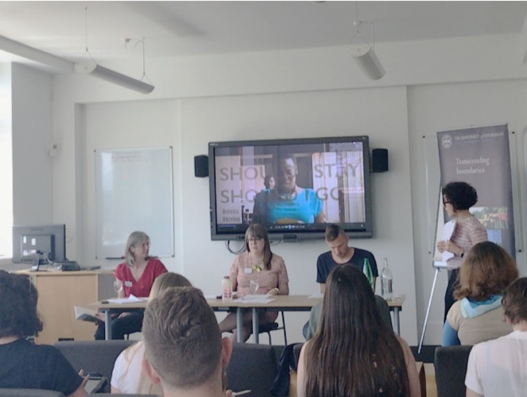 In her second post for this blog, GJA Communications Intern, Jee-Young Song, reflects on the recent GJA GREYZONE Summer School keynote session on ‘Conceptual Perspectives’.
The Summer School kick-started on Monday the 25 June, the theme this year being ‘Navigating the Grey Zone: Complicity, Resistance and Solidarity’.The following is from the ‘Conceptual Perspectives’ talks, where expert speakers from the fields of human rights, philosophy, and political theory (Ruth Kelly, Charlotte Knowles and Lukas Slothuus, pictured above) each gave their unique insight on the key issues.
Storytelling as a way to reinforce human rights
First to speak was Ruth Kelly, who focused on the potential for narrative to help communities articulate approaches to the development of human rights. To give an example of such artistic intervention, she showed footage taken at a poetry workshop in Uganda, where a woman recites a poem about struggling to choose between action and complicity, entitled ‘Should I stay? Should I go?’.
Comments closed This post, by Asil Said, first appeared on the University of Edinburgh’s Academy of Sport blog, Sport Matters. Academy of Sport Director, Professor Grant Jarvie, is a member of the Global Justice Academy Management Group.
Books and Boxers and the Right to Movement are but two interventions aiming to make a difference to the lives of youth in Palestine. This Academy of Sport-Sport Matters blog provides an evidenced insight into the struggle for sport as a human right within Palestine.
Sport, Palestine and the International Community
Sport and physical activity has international recognition as a simple, low cost and effective tool for development, and a means of achieving national and international development goals. The United Nations Agenda 2030 has provided sport with a mandate to contribute to social change.
Comments closed