
Any views expressed within media held on this service are those of the contributors, should not be taken as approved or endorsed by the University, and do not necessarily reflect the views of the University in respect of any particular issue.
Press "Enter" to skip to content

Category: Globally Just Leadership

Posts discussing global justice and leadership

‘We Need to Talk About an Injustice’: Bryan Stevenson delivers Ruth Adler Lecture at University of Edinburgh

Law PhD Candidate, Vivek Bhatt

In this guest post, Law PhD Candidate, Vivek Bhatt, reflects on Bryan Stevenson’s visit to Edinburgh Law School to give the 2019 Ruth Adler Memorial Lecture, and to receive an honorary doctorate as part of the School’s summer graduation ceremony.
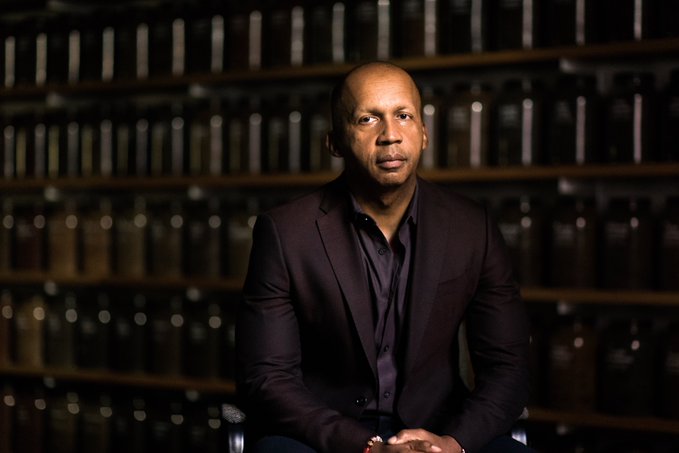
Bryan Stevenson (c) Nick Frontiero Photography 2019


On 8 July 2019, the Global Justice Academy hosted a lecture by Bryan Stevenson, recipient of an honorary doctorate at the Edinburgh Law School.  Stevenson is founder of the Equal Justice Institute (EJI) in Montgomery, Alabama, and a clinical professor at the NYU School of Law. Stevenson works as a legal representative for disadvantaged and marginalised individuals, particularly young and poor people who are on death row or serving life sentences. He and his colleagues at the EJI have achieved the exoneration or release of over 125 individuals on death row. Stevenson is also the author of Just Mercy: A Story of Justice and Redemption,[1]  which was a New York Times bestseller and won the Carnegie Medal for the best nonfiction book of 2014.

Stevenson’s lecture circulated around a question that is as succinct as it is complex: how do we, as human rights advocates, address injustice? Firstly, he said, we must create justice by becoming proximate to those suffering inequality and injustice. Recounting his relationship with his grandmother, who wished that Stevenson would always be able to feel her embracing him, the skilful orator argued that we must know and seek to understand those who suffer injustice in order to affirm their humanity and dignity. Thus, human rights practice is not about the deployment of legal arguments from afar, but rather about stepping away from one’s legal expertise and embracing those who suffer violations of dignity.

Comments closed
Will Business Interests ‘Trump’ Human Rights?

Sean Molloy is a Principal’s Scholar in Law, reading for a PhD at Edinburgh Law School. Sean researches the relationship between business and human rights, and contributes to the LLM in Human Rights as a guest lecturer. In this post, he considers what a Trump presidency might mean for human rights and how this applies to businesses in the USA.

As the world comes to terms with the shock election of Donald Trump, our thoughts quickly turn to the implications of the choice of the American people (or more precisely the electoral colleges). From issues such as US foreign policy in Syria to US relations with Russia, the rights of Muslims and Mexicans, to abortion and the rights of women, both America and the world are left in a state of unease and uncertainty as to what the next four (or possibly even eight) years hold. As the dust settles, further potential consequences on other thus far unmentioned rights-related issues become the topics of thought. One such issue is that of Business and Human Rights (BHR) and in particular what Trump’s election might mean for the protection of rights in respect of the actions of businesses both in America and in regards to American companies operating abroad (see generally Business and Human Rights Resource Centre).

Comments closed

The Apportionment of Shame: Rodrigo Duterte and the Cosmopolitan Discourse of International Criminal Law

vivek-bhatt-headshot
GJA Student Ambassador, Vivek Bhatt

The Global Justice Academy is delighted to launch the second year of its Student Ambassador programme with a guest post by Vivek Bhatt. Vivek is an incoming student reading for a PhD in Law. He recently completed the MSc in Political Theory at the London School of Economics, and holds a Bachelor of Arts (Advanced) (Honours) and Master of International Law from the University of Sydney. His primary interest is in international laws relating to counterterrorism, conflict, and human rights.  

Rodrigo Duterte’s war on drugs in the Philippines has recently been deemed an international crime. This post reflects upon issues arising from the condemnation of Duterte, asking whether international criminal law can enable the realisation of cosmopolitan ideals. 

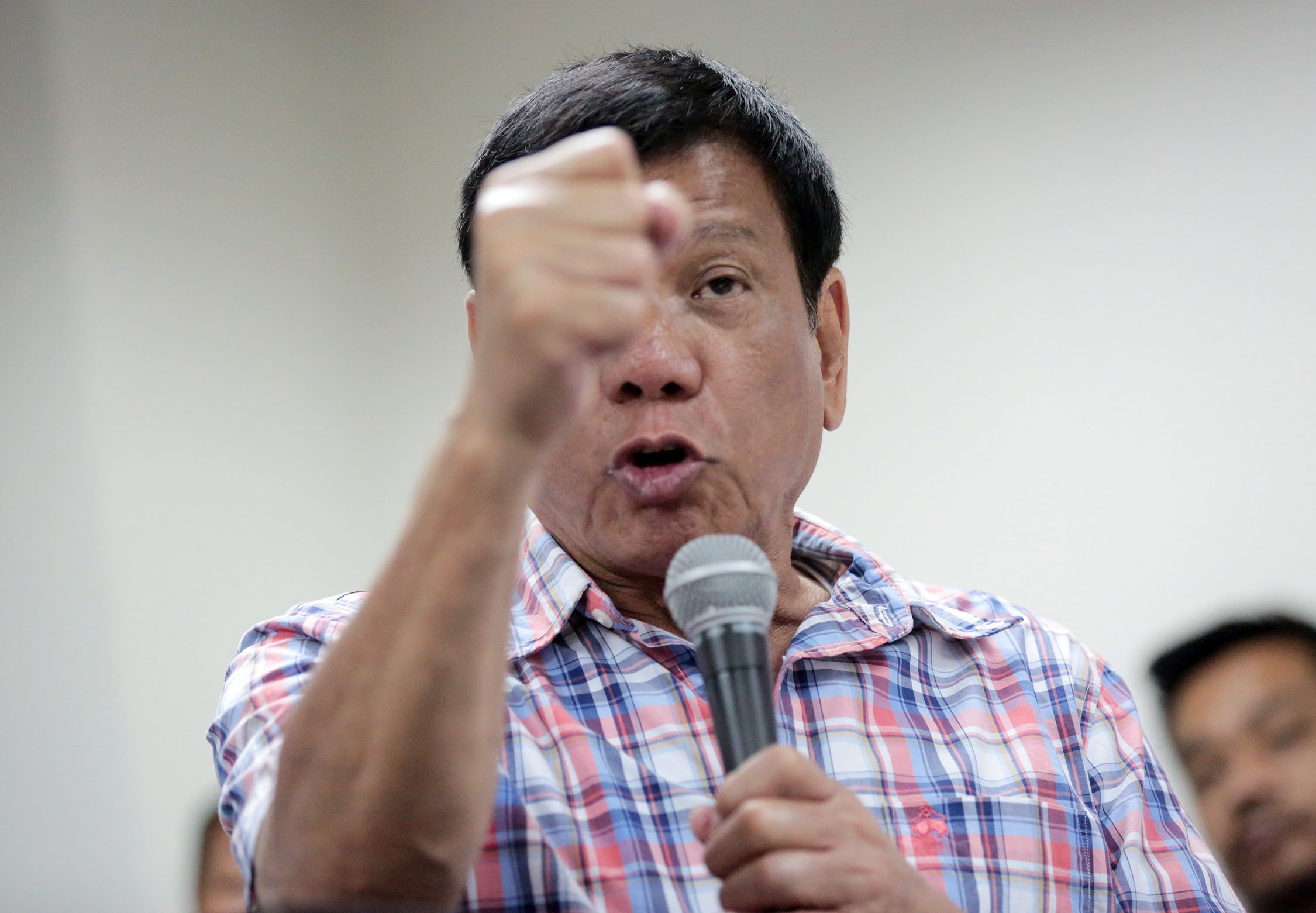
duterte
Rodrigo Duterte, President of the Philippines

When elected President of the Philippines on 9 May 2016, Rodrigo Duterte vowed to reduce rates of drug-related crime within the state. Duterte has since waged a violent anti-drug campaign, authorising the extra-judicial execution of individuals thought to use, possess, or traffic illegal substances.  The President’s “death squad” comprises select members of the police force and civilian volunteers. Most of these individuals were lured into their roles as amateur mercenaries through payment, and promises of impunity for their actions. Others were coerced into joining Duterte’s campaign; men and women were guaranteed immunity from punishment for their own drug-related offences in exchange for their services as assassins.[1] The OHCHR suggests that over 850 people have been killed since Duterte’s election, but reports that take into account unexplained deaths during that period suggest the number is closer to 3,000.[2]

Comments closed

MBA Team Syria: Making a Difference to the Community

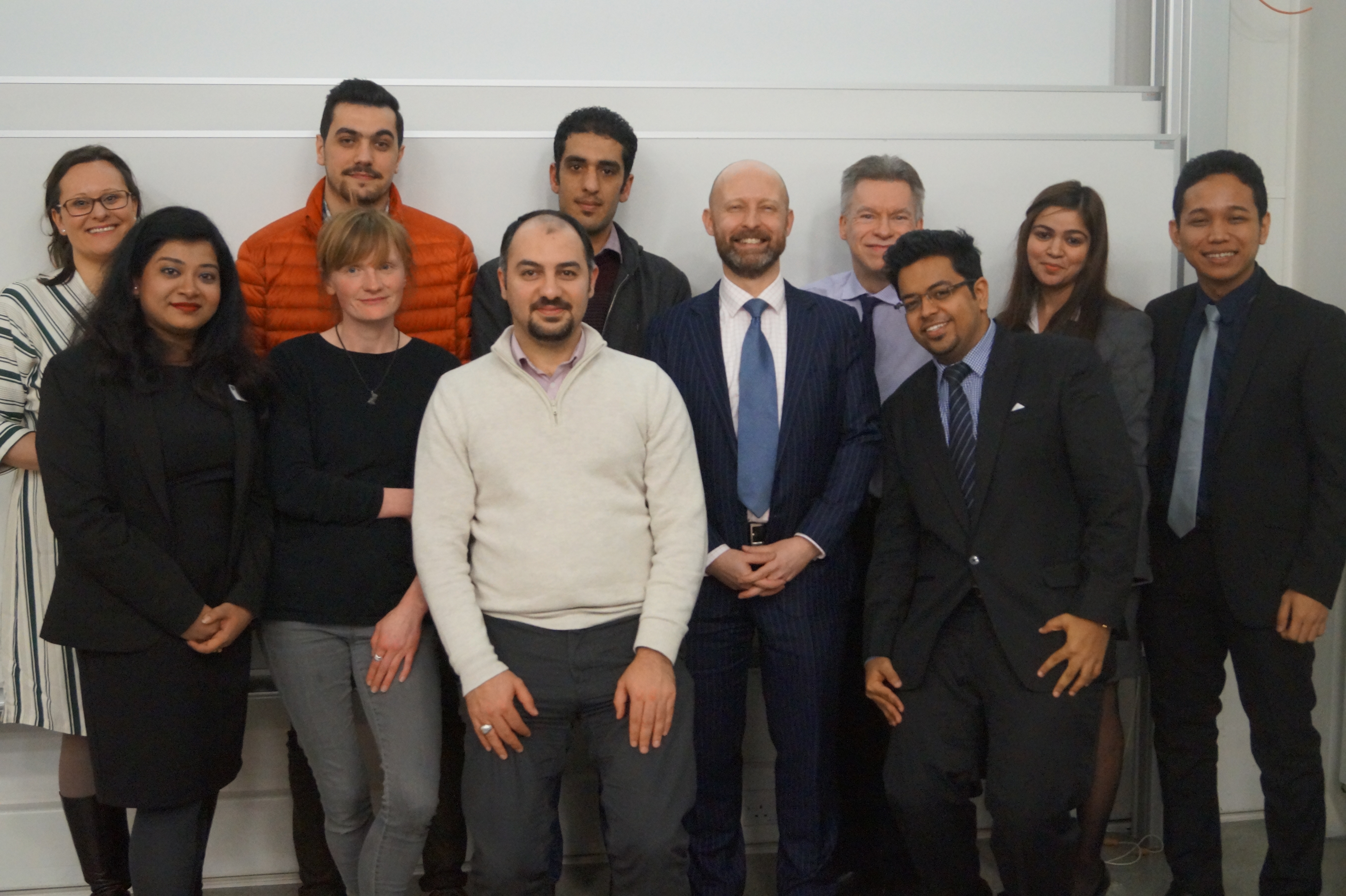
DSC00990As a part of the Strategic Leadership course on Edinburgh’s MBA programme, a group of five students organised a social event to help draw awareness to the Syrian refugee crisis. In this guest post, Debjani Paul offers an overview of the event, which centred around the the personal life experiences of three Syrians now settled in Edinburgh – Aamer Hanouf, Hussen Al Ajraf, and Amer Masri.

With the rising global concerns including climate change, an increase in global population, poverty, and terrorism, world leaders have much to focus on. It is becoming a new norm for companies to be socially responsible by promoting sustainability and contributing at least in one of the global concerns, also known as Corporate Social Responsibility. This is the ethical way to do business that every future leader should practice.

Comments closed

Responding to the moral crisis in northern Nigeria and expecting the unexpected

In this guest blog by Zoe Marks of the Centre of African Studies at the University of Edinburgh, she discusses responses to the kidnapping of nearly three hundred school girls in northern Nigeria, and argues that something can be done. This blog was written on May 6, 2014.

What is a war on terrorism if not the rescue of 276 hostages? Prisoners, forced wives, sex slaves, chattel for market, domestic servants, human trafficking victims – aspiring, diligent, brave young girls.

We are facing an urgent moral crisis and fumbling. More than 20 days have passed since over 300 schoolgirls were corralled onto lorries in the middle of the night, captured by men claiming to be soldiers there to protect them. For three weeks, the Nigerian government has punted, Western governments have stood on the sidelines, and regional allies and the African Union have not even shown up to the pitch. Nigerian President Goodluck Jonathan did not call his first strategy meeting until last Saturday (4 May). His military advisory committee was convened only today for the first time (6 May).

When abducted on 14 April, the students were already far from home. They had travelled to Chibok Government Girls Secondary School despite school closures throughout Borno State not to make a political statement, but simply to sit the same high school certificate exams being taken by their peers across West Africa.

Boko Haram
Boko Haram militants. Source: Boko Haram video.

Boko Haram, the al Qaeda-aligned insurgency that has destabilized the region, only claimed responsibility for the kidnapping yesterday (5 May). They released an hour-long video of masked men standing heavily armed and silent while their leader read a lengthy harangue. The girls were nowhere to be seen. He parroted back as threats what the news media has been recycling as fact, raising more questions than answers.

Comments closed
css.php

Report this page

To report inappropriate content on this page, please use the form below. Upon receiving your report, we will be in touch as per the Take Down Policy of the service.

Please note that personal data collected through this form is used and stored for the purposes of processing this report and communication with you.

If you are unable to report a concern about content via this form please contact the Service Owner.

Please enter an email address you wish to be contacted on. Please describe the unacceptable content in sufficient detail to allow us to locate it, and why you consider it to be unacceptable.
By submitting this report, you accept that it is accurate and that fraudulent or nuisance complaints may result in action by the University.

  Cancel