Any views expressed within media held on this service are those of the contributors, should not be taken as approved or endorsed by the University, and do not necessarily reflect the views of the University in respect of any particular issue.
Press "Enter" to skip to content

Category: Global Justice Academy

Counter-Terrorism, Radicalisation, and the University: Debating the Prevent Strategy

On Friday 15 January 2016, the Global Justice Academy and the Centre for Security Research at The University of Edinburgh hosted a panel discussion on the Prevent Strategy obligations that have been placed on higher education institutions. GJA Student Ambassador, Rebecca Smyth, went along to the debate and outlines the debated arguments as well as her thoughts on this contentious issue in this guest post.

A thing of nothing or something more sinister?  Under section 26 of the 2015 Counter-Terrorism and Security Act universities must “have due regard to the need to prevent people being drawn into terrorism.”  The origins of this ‘Prevent’ duty, and its potential implications for staff and students, were considered at a panel discussion organised by the Global Justice Academy and Centre for Security Research last Friday.  Chaired by Akwugo Emejulu, the panel comprised Gavin Douglas, Deputy Secretary of Student Experience here at the University of Edinburgh; Richard Jones of the School of Law; Genevieve Lennon of the University of Strathclyde Law School; Urte Macikene, EUSA Vice President of Services; and Andrew Neal of the Politics and International Relations department.

Comments closed

Equality and the Democratic Deficit

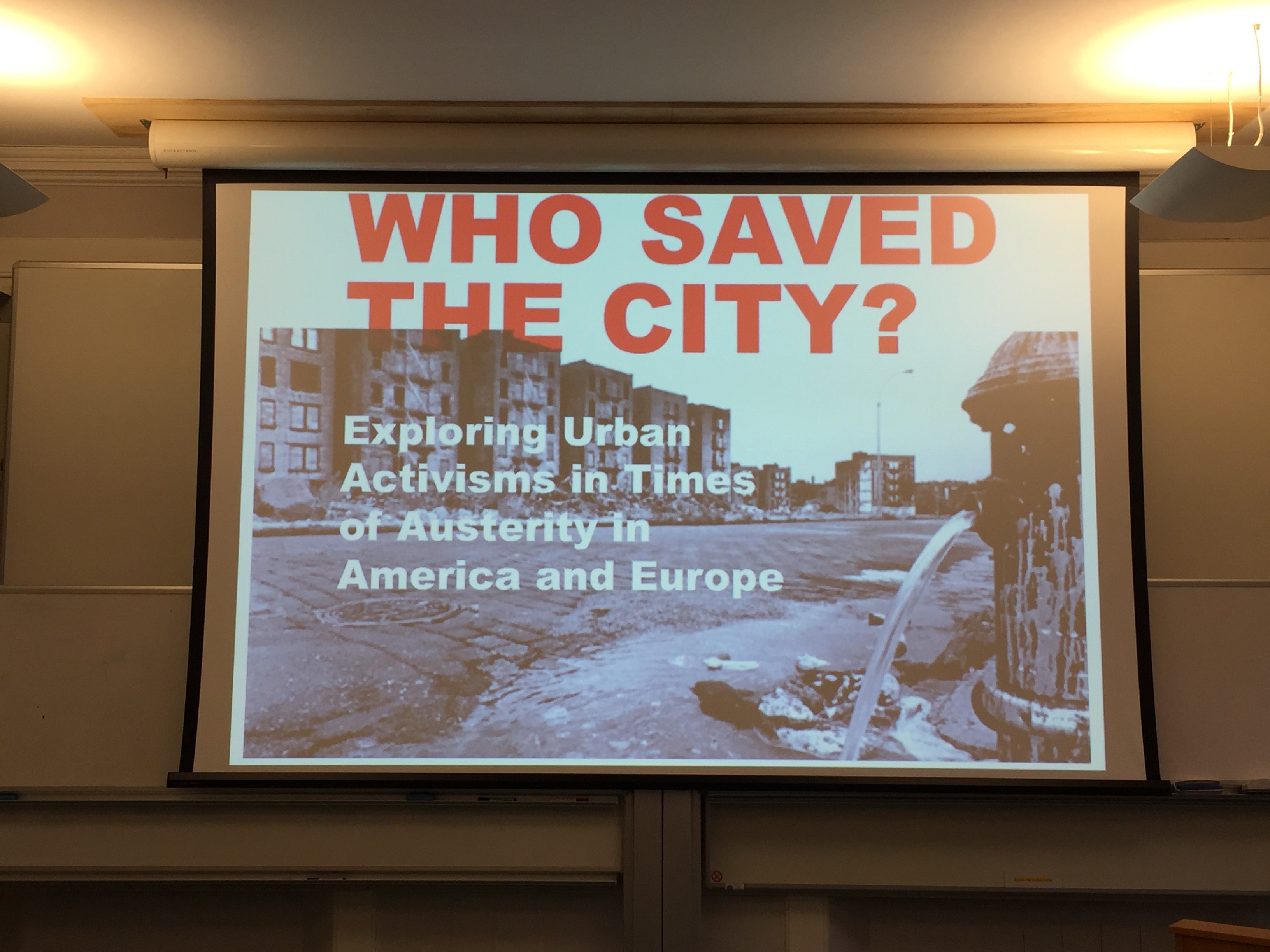
This post by Global Justice Co-Director, Dr Tahl Kaminer, reports from the first Urban Justice Lab Symposium: ‘Who Saved the City?’. Follow the link at the bottom of the post to our Lecture Library to view videos from the day and to find out more about the Urban Justice Lab and what it does.

Who Saved the City

The recent exposure of a letter by David Cameron to Oxfordshire County Council (as reported in the Oxford Mail, and The Guardian), in which the PM berates the council for front-line budget cuts, generated a minor storm on social media. Less than a fortnight earlier, Annette Hastings of the University of Glasgow presented the findings of a Rowntree Foundation report, which lucidly depicted the application of cuts to front-line budgets of city councils across the UK. Her eloquent and precise presentation demonstrated vividly why the government’s cuts necessarily hit front-line spending, and particularly the poor.

Comments closed

Democracy, Violence, and Teaching: a Summer of GJA Events

Mathias ThalerThis summer, the Global Justice Academy ran its first Summer School in conjunction with the School of Political Sciences, and the School of History, Classics and Archaeology. GJA Co-Director, Dr Mathias Thaler, reflects on the success of the three-day course, and plans to revise the Summer School for 2016. Dr Thaler also reports on  initial forays into establishing a ‘Democracy Lab’ at the University of Edinburgh, following the launch of his new honours course on democratic theory.
  1. Summer School on Political Violence

Summer School 1

From June 24 to 26, 2015, SPS organised a Summer School on political violence, in collaboration with the Global Justice Academy and HCA.

Comments closed

How should religion be addressed in attempts to prevent atrocities?

george-wilkes headshot

This guest post is by Dr George Wilkes, founding Director of the Religion and Ethics in the Making of War and Peace Project, and Research Fellow at the School of Divinity, University of Edinburgh.

In June 2014, the Global Justice Academy supported the launch of a new programme bringing scholars and civilian protection practitioners together to identify the state of the art of atrocity prevention, and the state of the academic literature addressing the impact of religion on civilian protection work.

‘Preventing Atrocity: Reasons to Engage with the Religion and Ethics of the Other’ brought specialists from across the College of Humanities and Social Science together with experts from the ICRC, DfID, the UN Office on Genocide Prevention and the Responsibility to Protect, the European Centre for the Prevention of Mass Atrocities, Human Rights Watch, Islamic Relief, the Bosnian Islamic Community and Finn Church Aid.

Comments closed

Spectating and Acting: a Workshop Report

On June 20, 2014, Mathias Thaler (University of Edinburgh) organized a workshop dedicated to the tension between spectating and acting in democratic politics. The event drew an engaged audience of about 40 participants, both from Edinburgh and from outside Scotland. Apart from Law School and School of Social and Political Science staff (such as Zenon Bankowski, Christine Bell and Jonathan Hearn), the event also attracted academics from farther abroad (like Phil Parvin from Loughborough University, Cara Nine from the University College Cork and Audra Mitchell from the University of York). Furthermore, many PhD students attended and contributed to the workshop.

Comments closed

Justice versus Peace? Syrian Atrocities and International Criminal Justice

Christine Bell, Professor of Constitutional Law and Director of the Global Justice Academy, comments on recent Human Rights developments in Syria.

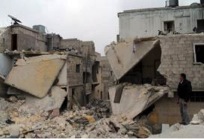
syria blog

A recent report into torture – interestingly with a connection to Scotland (one of the researches is based in Dundee University) – has provided strong evidence that the Assad regime has been involved in gross human rights violations.  The report was produced by a set of international experts in international criminal law and forensics, requested by Carter-Ruck & Co solicitors, acting for Qatar National State who apparently support the Syrian National Movement (none of this is very clear from the face of the report, which has been linked to from Carter-Ruck’s website, neither is it very clear from the Carter-Ruck press release which does not mention a client).

Comments closed
css.php

Report this page

To report inappropriate content on this page, please use the form below. Upon receiving your report, we will be in touch as per the Take Down Policy of the service.

Please note that personal data collected through this form is used and stored for the purposes of processing this report and communication with you.

If you are unable to report a concern about content via this form please contact the Service Owner.

Please enter an email address you wish to be contacted on. Please describe the unacceptable content in sufficient detail to allow us to locate it, and why you consider it to be unacceptable.
By submitting this report, you accept that it is accurate and that fraudulent or nuisance complaints may result in action by the University.

  Cancel