Any views expressed within media held on this service are those of the contributors, should not be taken as approved or endorsed by the University, and do not necessarily reflect the views of the University in respect of any particular issue.
Press "Enter" to skip to content

Category: Global Justice Academy

Philippe Sands on the Making of Modern Human Rights

Guncha Sharma is a candidate for the Global Justice Academy’s LLM in Human Rights, and a GJA Student Ambassador for 2018-19. From India, she is also one of three recipientsof the GJA’s LLM Human Rights scholarship awards for this year, and has a keen interest in gender issues, the rights of children and other vulnerable groups, and public health. In this post, Guncha reflects on the recent Ruth Adler Memorial Lecture, which was delivered by Philippe Sands QC, with a response from Scotland’s Lord Advocate James Wolffe QC.

On October 24 2018, Philippe Sands delivered the Ruth Adler Memorial Lecture with a talk based on his bestselling book East-West Street and the Making of Modern Human Rights. Phillippe Sands is one of the most successful British lawyers working in the field of International Law. He has argued many high-profile cases before International courts and tribunals, and currently directs the Project on International Courts and Tribunals from his position as Professor of Laws at UCL.

Comments closed
Inspiring Action in these Challenging Times

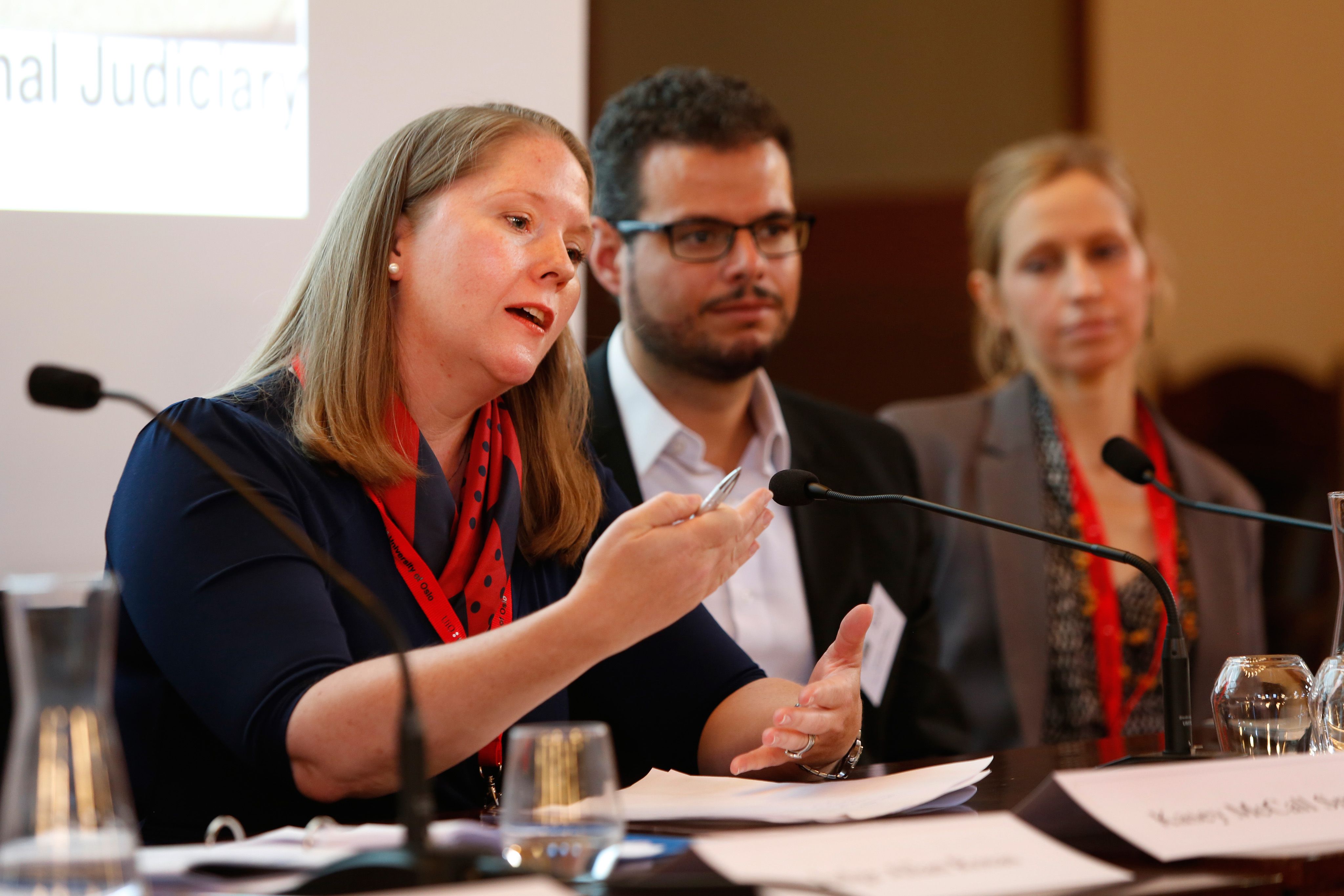
The Global Justice Academy (GJA) and Edinburgh Law School welcomed over 200 human rights academics and practitioners to the University of Edinburgh for the 2018 Association of Human Rights Institutes  (AHRI) Annual Conference on the 6-8 September 2018. The GJA holds the current Secretariat of AHRI in conjunction with the Centre for the Study of Human Rights Law (CSHRL) at the University of Strathclyde. In this post, AHRI Chair and GJA Management Group member, Dr Kasey McCall-Smith, reflects on the three days.

The theme of this year’s conference was ‘Renewing Rights in Times of Transition: 70 Years of the Universal Declaration of Human Rights’. The conference began with Works in Progress sessions on 6 September followed by the launch of the Political Settlements Research Programme’s PA-X Peace Agreements database (PA-X). Professor Christine Bell delivered a public lecture entitled The Inclusion Project: Human Rights Dilemmas in the Negotiation of Peace Agreements, with a response from the UN’s Ian Martin, entitled A UN ‘Surge in Diplomacy’ in a World in Transition

Comments closed

Why torture? Exploring our Perceptions of Torture, and What Causes It

In this post, our Communications Intern, Jee-Young Song, reports from the second day of the recent GJA-sponsored GREYZONE summer school.

26 June 2018 was the second day of the GREYZONE Summer School, and starting the day’s session was Danielle Celemajer, Professor of Sociology and Social Anthropology at the University of Sydney. Titled ‘The worlds that produce torture’, the main question put to us was:

“What causes torture?”

The straightforward answer to this would of course be obvious: doesn’t torture occur because a malignant perpetrator decided to inflict such an act on the victim?

However, this is an over-simplistic approach, as Professor Celemajer professed her view that there is in fact a complex map of causality for torture, with many contributory factors which extend beyond the scope of the individual perpetrator.

Comments closed

Complicity, Elitism and Storytelling: Exploring Moral Ambiguity in Times of Injustice

In her second post for this blog, GJA Communications Intern, Jee-Young Song, reflects on the recent GJA GREYZONE Summer School keynote session on ‘Conceptual Perspectives’.

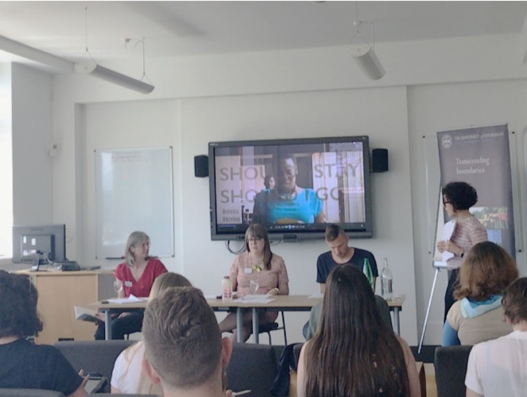
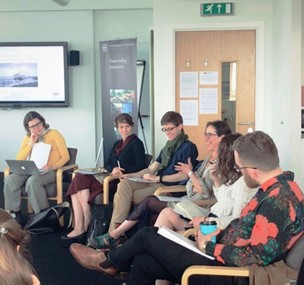
The Summer School kick-started on Monday the 25 June, the theme this year being ‘Navigating the Grey Zone: Complicity, Resistance and Solidarity’.The following is from the ‘Conceptual Perspectives’ talks, where expert speakers from the fields of human rights, philosophy, and political theory (Ruth Kelly, Charlotte Knowles and Lukas Slothuus, pictured above) each gave their unique insight on the key issues.

Storytelling as a way to reinforce human rights

First to speak was Ruth Kelly, who focused on the potential for narrative to help communities articulate approaches to the development of human rights. To give an example of such artistic intervention, she showed footage taken at a poetry workshop in Uganda, where a woman recites a poem about struggling to choose between action and complicity, entitled ‘Should I stay? Should I go?’.

Comments closed

Global Justice Academy Spring School: Using Critical Discourse Analysis in Community Settings

In April 2018, the GJA sponsored its first ‘Spring School’ in a collaboration with Moray House School of Education. In this post, Spring School Co-organiser and GJA Management Group member, Dr Callum McGregor, reflects on the Spring School’s innovative community-university partnership, which fostered strong links with local organisations and social justice practitioners. It is hoped that a similar Spring School will run again next year. Callum is also the programme director for the online MSc in Social Justice and Community Action, which is sponsored by the Global Justice Academy.

Callum McGregor

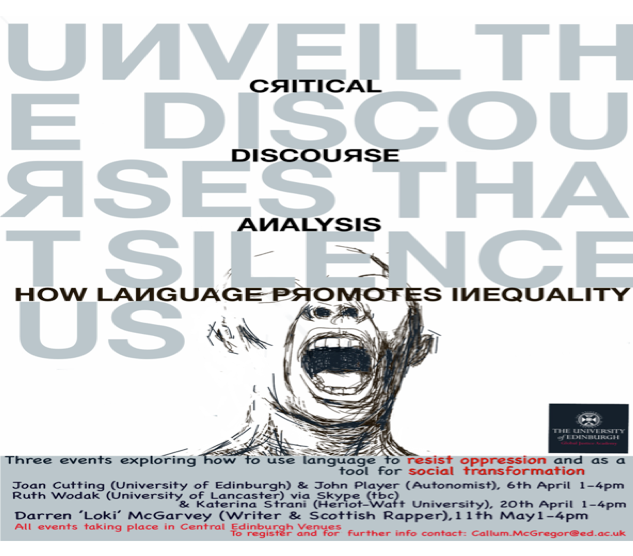
The Global Justice Academy (GJA) is an institutional forum for dialogue with practitioners engaged in justice issues locally and globally. This short blog highlights one such example of local dialogue, in the form of a series of community-university workshops on Critical Discourse Analysis (CDA). CDA is a form of critical social research, whose purpose is to analyse the ways in which language can be used to both reproduce and challenge social injustice. Discourses can be thought of as representationsof various aspects of our social lives. These representations are made up sets of rules and statements that determine whatcan be expressed within a particular context, howit can be expressed, by whom and under what conditions. Discourses are important because they have real material effects on the distribution of burdens and benefits along different axes of inequality.

Between April and May 2018, three workshops were held, with the purpose of bringing together community practitioners, community-based adult learners, activists, students and academics to learn together about CDA. Specifically, the workshops focused on how CDA can be used creatively to link education to social action, through addressing the interests and struggles of ordinary people in communities.

Comments closed

‘Hungry?’: Introducing Keris Heading’s Photography

Each year, the Global Justice Academy runs a photography competition as part of Edinburgh College of Art’s MA Photography degree programme. The 2018 competition was run in conjunction with the ERC Greyzone Project and its Summer School, ‘Navigating the Grey Zone: Complicity, Resistance, and Solidarity’. This post is the first in a short series of three, where we introduce this year’s winners, their images, and the stories behind their submissions

Series Winner: Keris Heading, ‘Hungry?’.

Q: What inspired your competition entry?

Working in a supermarket, I noticed the vast amounts of food that is wasted and thrown away, which encouraged me to research more about the exact figures of food wastage in large countries like the UK and US. The figures were astonishing. World hunger is a concept many people, or perhaps everyone, is familiar with, but perhaps it is the injustice in the distribution and usage of food that needs more attention.

Comments closed

‘The Coming Soon Land’: Introducing Amber Brown’s Photography

Each year, the Global Justice Academy runs a photography competition as part of Edinburgh College of Art’s MA Photography degree programme. The 2018 competition was run in conjunction with the ERC Greyzone Project and its Summer School, ‘Navigating the Grey Zone: Complicity, Resistance, and Solidarity’. This post is the first in a short series of three, where we introduce this year’s winners, their images, and the stories behind their submissions

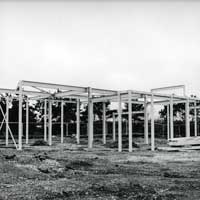
Single Image Winner: Amber Brown, ‘The Coming Soon Land’.

Q: What inspired your competition entry?

My concept of ‘The Coming Soon Land’ sprouted from the emotional disarray I found in observing a town undergoing change within development. Whilst the project grows from a frustration, the landscapes are in some sort of structural purgatory which I find aesthetically interesting, a grey zone that is not quite one nor the other, plans proposed but stuck in quicksand amidst a crisis concerning social and urban justice. Solidarity in this, comes from an accumulation of observed opinions which have been illustrated through my imagery. It feels a complex situation, one that is constantly progressing.

Comments closed

‘Bridges Not Walls’: Introducing Isobel Budler’s Photography Series

Each year, the Global Justice Academy runs a photography competition as part of Edinburgh College of Art’s MA Photography degree programme. The 2018 competition was run in conjunction with the ERC Greyzone Project and its Summer School, ‘Navigating the Grey Zone: Complicity, Resistance, and Solidarity’. This post is the first in a short series of three, where we introduce this year’s winners, their images, and the stories behind their submissions

Commended Series: Isobel Budler, ‘Bridges Not Walls’.

Q: What inspired your competition entry?

I came across the ‘Bridges Not Walls’ conference through the organiser Nancy, who I knew prior to the project. She spoke to me candidly about the work they do within the school they are employed by, challenging stereotypes and educating young people on a range of topics.

Comments closed

Shaking Hands in Dayton and Singapore: Symbolic Representations of Peace Processes

In this post, PSRP researcher Laura Wise reflects on symbolic representations of handshake moments at high-level peace summits, and what we miss when we consistently focus on comprehensive peace agreements. This is a longer version of remarks delivered at the IICR 2nd Annual Conference ‘Networked Cultures: Translations, Symbols, and Legacies’, as part of a session convened by the IICR Cultures of Peace and Violence Network. PSRP and the Global Justice Academy are proud members of this interdisciplinary network that enables discussions on how symbolic representations constrain or facilitate cultures of peace and violence, and we look forward to participating in future events. 

Kim and Trump shaking hands on the red carpet during the DPRK-USA Singapore Summit on 12 June 2018

Handshake moments are currently a hot topic, as journalists rush to interpret the symbolism of the Singapore Summit between North Korea and the United States. From the diplomatic menu to the moment the leaders of each country make physical contact, no aspects of negotiation process are above being scrutinized for what they can tell us about the potential for achieving peace. Meanwhile, participants and commentators often hail the agreements themselves as historic and comprehensive even before crucial details of a done deal are released to the public, with parties keen to credit themselves as having achieved what no other figure has managed to do thus far.

Over twenty years ago, another high-level summit was capturing the world’s attention, as leaders from the former Yugoslavia and other interested parties gathered at Wright-Patterson Air Force Base near Dayton, Ohio, to negotiate yet another comprehensive peace plan for Bosnia and Herzegovina.

Comments closed
css.php

Report this page

To report inappropriate content on this page, please use the form below. Upon receiving your report, we will be in touch as per the Take Down Policy of the service.

Please note that personal data collected through this form is used and stored for the purposes of processing this report and communication with you.

If you are unable to report a concern about content via this form please contact the Service Owner.

Please enter an email address you wish to be contacted on. Please describe the unacceptable content in sufficient detail to allow us to locate it, and why you consider it to be unacceptable.
By submitting this report, you accept that it is accurate and that fraudulent or nuisance complaints may result in action by the University.

  Cancel