This is the second blog in a series written by LLM students on the Human (In)Security course at Edinburgh Law School. The series celebrates the…
Comments closedCategory: food
Dr Dimitrios Kagiaros (Edinburgh Law School) reports on a recent workshop, ‘Specifying and Securing a Social Minimum’, held at the International Institute for the Sociology…
Comments closedDr. Leila Sinclair-Bright is a Career Development Fellow in Social Anthropology at the University of Edinburgh. In this article, she reflects on the notion of ‘the…
Comments closedIn this second guest post, Janice Brewer investigates the tomato industry in the US and what common practice means for agricultural workers and social justice.
As summer rolls through, tomatoes flourish in all sorts of varieties, colors, sizes, and tastes. As I sink my teeth into an heirloom German tomato, grown 100% organically by Green Edge Gardens in Athens, Ohio, I am blown away by the flavour. I grew up hating tomatoes! So why was this tomato so special?
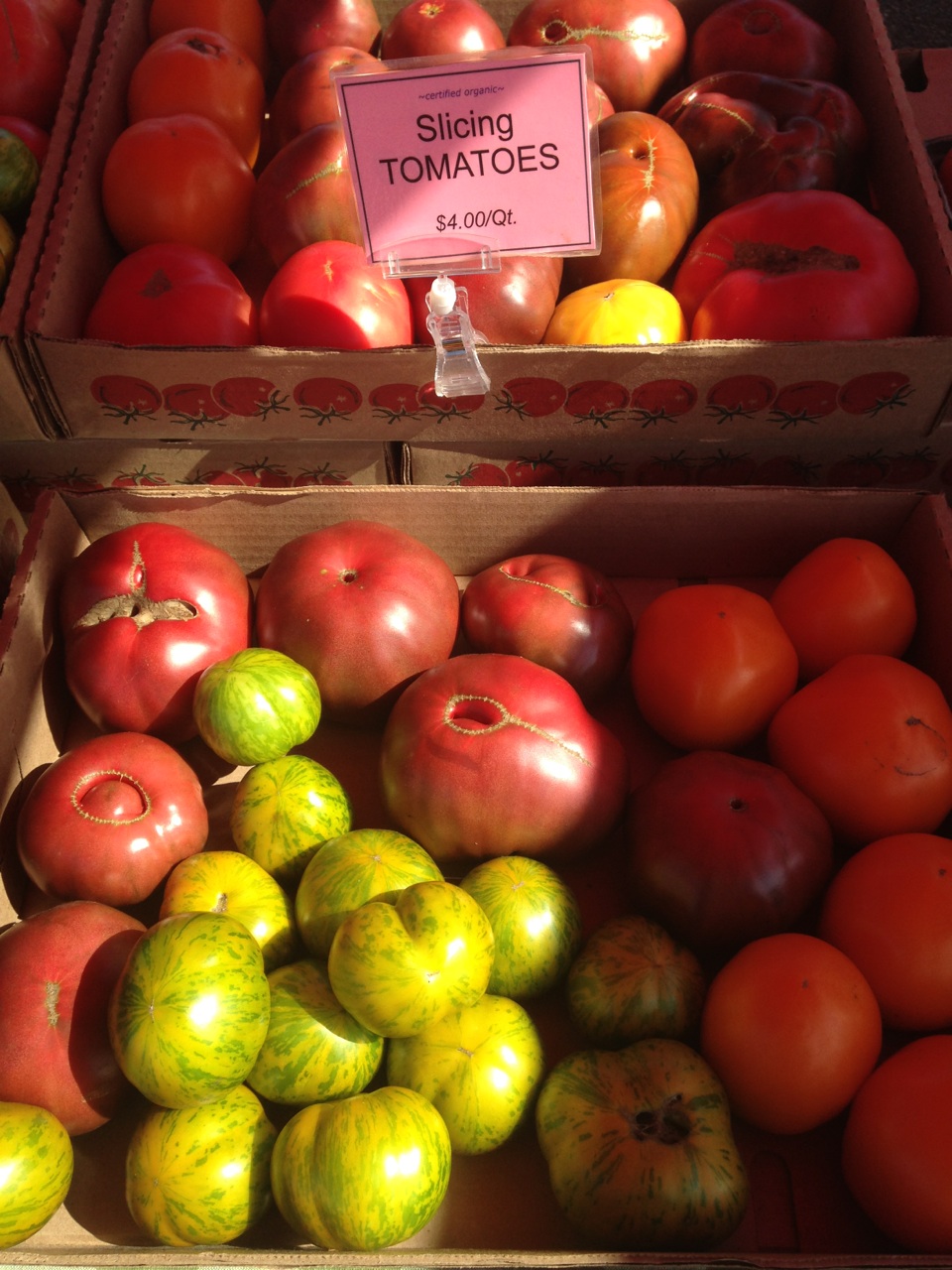
Tomatoes are thought to have originated in the Northern Andes Mountains where the weather tends to be warm and wet creating an optimal growing climate for tomatoes. When the Spanish invaded these areas they became intrigued by tomato and brought it back to Europe. Being apart of the Nightshade family – a wide group of flowering plants generally containing alkaloids – the tomato was originally thought of as poisonous and unfit for consumption but it later developed the name of the “love apple” and “golden apple” given by the French and Italians. In addition to it’s growing popularity in Europe, then North America, the tomato was found to have countless health benefits.
Comments closedThis guest post is by Janice Brewer. Janice is studying for a Bachelor’s degree in Specialised Studies at Ohio University, in Sustainable Food System Planning and Development. Janice took the ‘Place-Making and Making-Places’ summer school module at the University of Edinburgh during July 2014 – you can read more about the group and their investigations of Global Justice here. In this post, Janice recalls her visit to Eigg and what she learned about sustainability in an island setting.
While awaiting the Ferry in Mallaig I glanced across the blue waters to a special outline of an island I would soon visit.
The Inner Hebrides is sprinkled with over 30 inhabited islands, each with its own history and charm. Located just to the south of the Isle of Skye sits the Isle of Eigg stretching only 5.6 miles by 3.1 miles. Eigg is decorated with “Singing Sands” beach, dramatic climbs, and sheep Xing with every step. This seemingly “just another island” is pioneering is way out of the ordinary; 17 years ago the – now 83 – inhabitants bought the land and the island became community owned. On 1st February 2008 the island switched off the grid. Eigg is the first of its kind to develop an electricity system powered only by wind, water and solar energy. Electricity would become available 24 hours a day for the first time in this islands history. The community won first place in the Big Green Challenge to tackle climate change and received £300,000 from National Endowment for Science, Technology and the Arts (NESTA).
Comments closed