In light of the fast-paced changes already taking place in the first quarter of 2026, it is worth reflecting on the role that courts and…
Leave a CommentCategory: Democracy
On November 4th, the GJA hosted its annual Ruth Adler Lecture, welcoming Baroness Helena Kennedy, Baroness Kennedy of the Shaws, as the distinguished speaker. Baroness…
Leave a CommentOn 23 and 24 February 2022, the Global Justice Academy, together with the Strathclyde Centre for the Study of Human Rights Law and Newcastle Forum…
Comments closedThis post is by Constanza Nuñez, a Ph.D. candidate at University Carlos III of Madrid (Spain). LL.MM in Advanced Human Rights Studies (University Carlos…
Comments closed
In this guest post, Law PhD Candidate, Vivek Bhatt, reflects on Bryan Stevenson’s visit to Edinburgh Law School to give the 2019 Ruth Adler Memorial Lecture, and to receive an honorary doctorate as part of the School’s summer graduation ceremony.
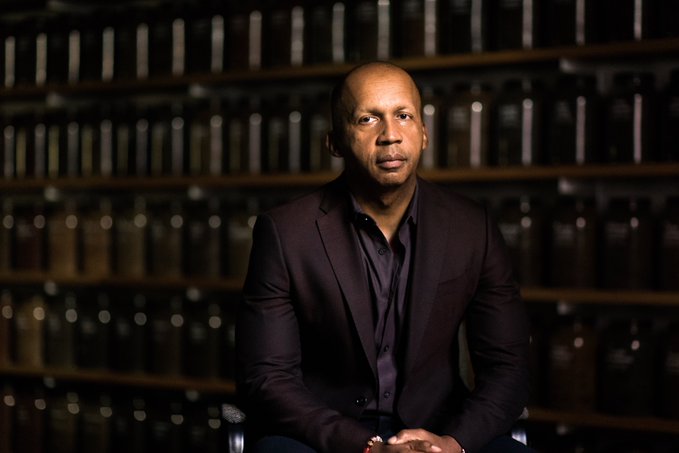
On 8 July 2019, the Global Justice Academy hosted a lecture by Bryan Stevenson, recipient of an honorary doctorate at the Edinburgh Law School. Stevenson is founder of the Equal Justice Institute (EJI) in Montgomery, Alabama, and a clinical professor at the NYU School of Law. Stevenson works as a legal representative for disadvantaged and marginalised individuals, particularly young and poor people who are on death row or serving life sentences. He and his colleagues at the EJI have achieved the exoneration or release of over 125 individuals on death row. Stevenson is also the author of Just Mercy: A Story of Justice and Redemption,[1] which was a New York Times bestseller and won the Carnegie Medal for the best nonfiction book of 2014.
Stevenson’s lecture circulated around a question that is as succinct as it is complex: how do we, as human rights advocates, address injustice? Firstly, he said, we must create justice by becoming proximate to those suffering inequality and injustice. Recounting his relationship with his grandmother, who wished that Stevenson would always be able to feel her embracing him, the skilful orator argued that we must know and seek to understand those who suffer injustice in order to affirm their humanity and dignity. Thus, human rights practice is not about the deployment of legal arguments from afar, but rather about stepping away from one’s legal expertise and embracing those who suffer violations of dignity.
Comments closedThis post was written by Sara Valencia and Alejandra Londoño. It reports from a series of recent workshops on the Colombian peace process, led by…
Comments closedOn 7 December 2016, the Global Justice and Global Development Academies supported a student-led initiative to follow the elections in Ghana, as part of their Innovative Initiative Fund. In this post, MSc student, Matthew Pflaum, reflects on the evening’s events.
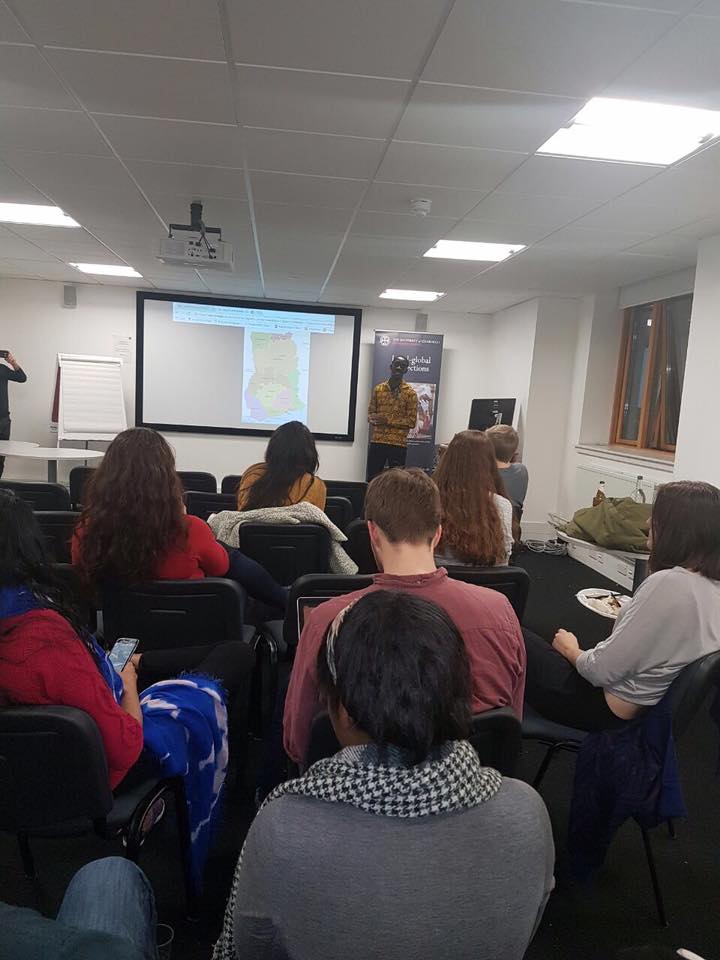 Elections are critical processes for global social and political change, leading to new policies and reforms. Certain elections, referenda, and regions receive widespread attention and coverage – the US election and Brexit, for example – while others are less covered. Elections in the Global South tend to be disregarded by much of the world, and this is a mistake. All elections are significant, principally for local citizens, but also for the rest of the world through geopolitics and trade.
During the US election, crowds gathered in tenebrous bars and sterile classrooms to watch the event unfold, their eyes festooned to the glaring screens with constant updates of results. Americans and non-Americans watched with anticipation, feeling that the event was important to their lives. But aren’t all elections important? Should we not also gather to support elections in Burma and Botswana?
Comments closed