Any views expressed within media held on this service are those of the contributors, should not be taken as approved or endorsed by the University, and do not necessarily reflect the views of the University in respect of any particular issue.
In 1994 and early 1995, I was working for a small British charity in Bosnia and Herzegovina. We, like the United Nations and many other agencies, had been trying for months to make our way through Eastern Bosnia to get food and medicine to the isolated enclave of Srebrenica. We all knew that many thousands of people had fled to the town from surrounding municipalities as a consequence of a brutal policy of “ethnic cleansing”.
The United Nations had a military presence in the town. NATO member states gathered intelligence on what was happening and the status of the enclave was consistently raised at the highest levels, by international peace envoys from the UN and the EU.
On 26-27 February 2015, the Post-Conflict Research Center from Sarajevo, Bosnia and Herzegovina, visited the University of Edinburgh to present its award-winning “Ordinary Heroes” project. “Ordinary Heroes” won first place in the 2014 UN Alliance of Civilizations and BMW Group Intercultural Innovation Award in a ceremony hosted by UN Secretary General Ban Ki-moon in Bali, Indonesia. The Global Justice Academy at the University of Edinburgh sponsored PCRC’s travel to Edinburgh.
Mina Jahić is a widowed octogenarian from Rogatica, in eastern Bosnia and Herzegovina, whose husband and two sons lost their lives in the wars that followed the violent dissolution of Yugoslavia in the early 1990s. She lives by herself in an upper floor of a prefabricated apartment block not far from the capital Sarajevo. A devout Muslim, Mina’s hope for the future of her country lies in the youth, who she believes still have the power to change the ethnocratic system that has blocked any attempts for reconciliation and reform since the end of the war in 1995. What Mina’s wartime experiences separate her from her neighbours, however, are the risks she took to save a stranger escaping his execution. Mina is an ordinary hero.
Ferid Spahić, a gas station attendant in Ilijaš, a small town to the northwest of Sarajevo, was in his mid-twenties when the first shots were fired in Bosnia by Serb paramilitary forces bent on “cleansing the land” for a “Greater Serbia” under the guise of preserving Communist Yugoslavia from dissolution. A Bosniak Muslim, too, he and his neighbours were targets of ethnonationalist destruction that quickly engulfed Bosnia’s three main ethnic groups – Serbs, Croats and Bosniaks. One day in June 1992, a Serb man from his village, whom he had seen as a trusted neighbour, rounded the local Bosniak men into buses, telling them as they were separated from their wives and children that they would be transferred to Skopje, Macedonia, and later reunited with their families.
This guest post is by Sean Molloy,a Principal’s Career Development Scholar in Law at the University of Edinburgh. Sean completed his LLB Law at Queen’s University Belfast, continuing to read for an LLM in Human Rights Law and Transitional Justice at the Transitional Justice Institute. Following a period working as a research assistant for a human rights solicitor, Sean began his PhD research at Edinburgh in September 2013. He edits the monthly Global Justice Academy Newsletter, and is a founding member of the Global Justice Society.
Freedom of Conscience in Northern Ireland
In December 2014 DUP MLA Paul Girvan introduced a Freedom of Conscience Bill aimed at allowing businesses to refuse services to a customer if they feel it is against their religious convictions. The Bill arose following the announcement of the Northern Ireland Equality Commission that they would be issuing legal proceedings against Ashers Baking Company for their refusal to accept an order for a cake with a pro-gay marriage slogan.
Professor Toby Kelly is Head of Social Anthropology at the University of Edinburgh and Deputy Director of the Global Justice Academy.
Northern Ireland MLA, Paul Givan has proposed a Freedom of Conscience Bill. Invoking a three hundred year tradition of freedom of conscience and the Universal Declaration of Human Rights, Givan calls for greater toleration of different beliefs. Yet, Amnesty International has said the bill was ‘not welcome and is not needed at all’. Indeed, it went so far as to say ‘what is proposed is not a conscience clause, it is a discrimination clause’. At first glance this appears a little surprising, given that Amnesty first came to public prominence as an organization that campaigned explicitly for freedom of conscience, and Prisoners of Conscience still play a significant part in Amnesty’s activities.
This guest post is by Dr Tom Slater, Reader in Urban Geography at the University of Edinburgh. It first appeared in January 2014 on openDemocracy, in the openSecurity: Conflict and Peacebuilding theme.
On 27 January 2014, I noticed a few tweets announcing the Guardian’s new “Cities” section. The newspaper has a track record of publishing excellent short essays addressing urban issues, especially in its “Comment is Free” section, so I confess to initial interest and perhaps even mild excitement. Then I read two of the introductory pitches by the editorial team, delivered with an intention to “start the debate”. The first was by editor Mike Herd, entitled “What makes your city so special?” the sort of emetic rubric you might expect to find a ‘Business Traveller’ section of an in-flight magazine. Here is how he invited browsers to contribute:
This guest post is by Dr George Wilkes, founding Director of the Religion and Ethics in the Making of War and Peace Project, and Research Fellow at the School of Divinity, University of Edinburgh.
In June 2014, the Global Justice Academy supported the launch of a new programme bringing scholars and civilian protection practitioners together to identify the state of the art of atrocity prevention, and the state of the academic literature addressing the impact of religion on civilian protection work.
‘Preventing Atrocity: Reasons to Engage with the Religion and Ethics of the Other’ brought specialists from across the College of Humanities and Social Science together with experts from the ICRC, DfID, the UN Office on Genocide Prevention and the Responsibility to Protect, the European Centre for the Prevention of Mass Atrocities, Human Rights Watch, Islamic Relief, the Bosnian Islamic Community and Finn Church Aid.
This guest post is by Nicaylen Rayasa. Nicaylen is studying for a Bachelor’s degree in Meteorology and Environmental Studies at Ohio University. Along with fellow GJA-blogger, Janice Brewer, Nicaylen took the ‘Place-Making and Making-Places’ summer school module at the University of Edinburgh during July 2014 – you can read more about the group and their investigations of Global Justice here. In this post, Nicaylen considered the rise of Islamic State and how this intersects with climate change.
This past winter in the Fertile Crescent was particularly harsh for farmers, in what is usually the wettest part of the year. It ended up to be the hottest and driest winter on record.
While prolonged droughts and record heat have been commonplace for many parts of the world, the Iraq-Syria region brings an interesting political dynamic to the climate regime.The region’s climate is based historically on dry summers and rainy winters. However, climate change and the uptick in temperatures has transformed land use and increased desertification during extended droughts. Extreme versions of hot, dry summers have been more prevalent.
The Iraq-Syria conflict in the Middle East has been a growing regional issue for years now. ISIS (Islamic State of Iraq and Syria), the Sunni Jihadist organisation responsible for the newfound violence in the region, arose earlier this year. Their emergence coincidently occurred during the hottest March-May period on record in Iraq.
This guest post is by Dr Ewan Stein, Lecturer in Politics and International Relations at the University of Edinburgh. A longer version of this post will appear as an article in the journal Afkar/Ideas, published by the Institut Europeu de la Mediterrània, Barcelona.
By the time of the 2010-2011 Arab uprisings Al Qaeda was a peripheral actor in regional politics. It now finds itself in competition with a new, perhaps more powerful, jihadist actor in the Islamic State (IS). But IS and Al Qaeda pursue complimentary, rather than divergent, strategies and the IS phenomenon represents a logical evolution for global jihad.
Following 9/11 and the destruction of its Afghan stronghold Al Qaeda had become a decentralised network of affiliates. The uprisings initially pushed global jihad as a strategy to improve the plight of Muslims in the Middle East even further to the margins, and the death of Osama bin Laden in June 2011 registered as a footnote to the much larger political convulsions of the time.
This guest post is by Dr Alice Gritti. Alice holds a PhD in social psychology from the University of Milano-Bicocca. Her research focuses on gender studies and international aid workers. She arrived at the University of Edinburgh as a visiting researcher in 2013.
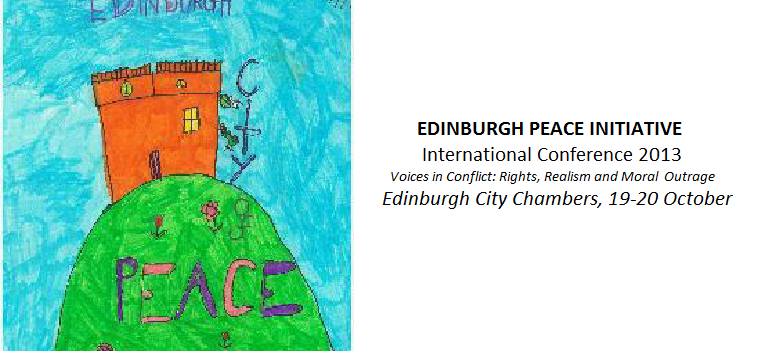
The weekend of the 19th and the 20th of October brought on exciting opportunities for individuals and organisations concerned with human rights, global justice and peace, as Edinburgh hosted the Global Citizenship Commission and the Edinburgh Peace Initiative’s Voices in Conflict: Rights, Realism and Moral Outrage conference.
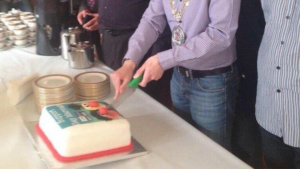 In December 2014 DUP MLA Paul Girvan introduced a Freedom of Conscience Bill aimed at allowing businesses to refuse services to a customer if they feel it is against their religious convictions. The Bill arose following the announcement of the Northern Ireland Equality Commission that they would be issuing legal proceedings against Ashers Baking Company for their refusal to accept an order for a cake with a pro-gay marriage slogan.