Any views expressed within media held on this service are those of the contributors, should not be taken as approved or endorsed by the University, and do not necessarily reflect the views of the University in respect of any particular issue.
Press "Enter" to skip to content

Category: Citizenship and Belonging

The Resilience of Neoliberal Urbanism

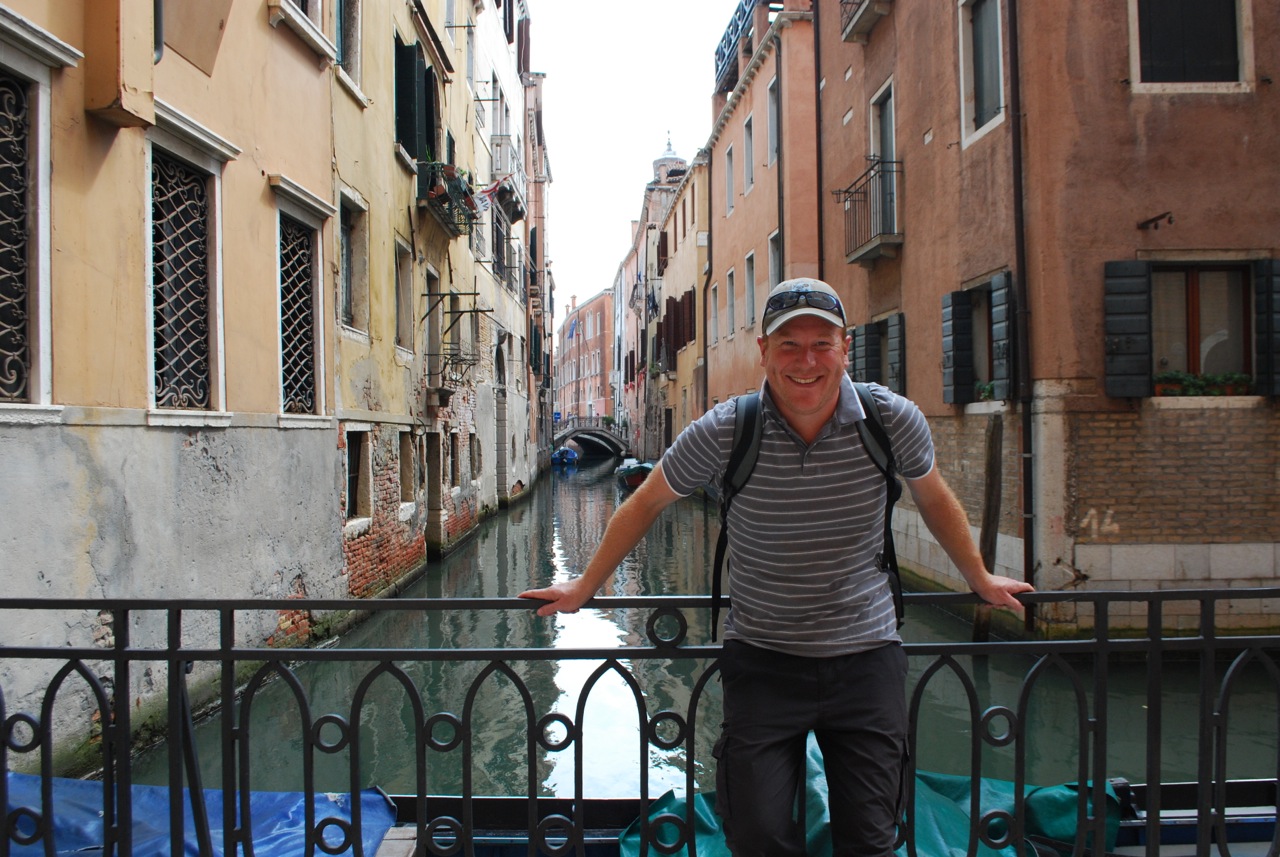
TSVeneziaThis guest post is by Dr Tom Slater, Reader in Urban Geography at the University of Edinburgh. It first appeared in January 2014 on openDemocracy, in the openSecurity: Conflict and Peacebuilding theme.

On 27 January 2014, I noticed a few tweets announcing the Guardian’s new “Cities” section. The newspaper has a track record of publishing excellent short essays addressing urban issues, especially in its “Comment is Free” section, so I confess to initial interest and perhaps even mild excitement.  Then I read two of the introductory pitches by the editorial team, delivered with an intention to “start the debate”. The first was by editor Mike Herd, entitled “What makes your city so special?” the sort of emetic rubric you might expect to find a ‘Business Traveller’ section of an in-flight magazine. Here is how he invited browsers to contribute:

Comments closed
Will Class Become Caste and Birth Become Destiny?

jeremywaldronportraitThe University of Edinburgh’s Annual Gifford Lecture Series has now begun. Professor Jeremy Waldron is University Professor at the New York University Law School. Professor Waldron’s work in jurisprudence and political theory is well known, as are his articles on constitutionalism, democracy, homelessness, judicial review, minority cultural rights, property, the rule of law, hate speech, human dignity, and torture. This post appeared originally on the Gifford Lecture Blog.

In a stimulating opening Gifford Lecture tonight, Professor Jeremy Waldron emphasised the urgency of not only eradicating ‘surface inequality’ in public legal relations, but in carrying out a theological and philosophical examination of what may underpin human equality in a world where ‘grotesque differences in economic lives’ create the risk of ‘leech and leak’ to undermine our commitment to a common humanity. We re-assure ourselves that the ‘surface inequality’ between rich and poor is compatible with an inviolate ‘basic human equality’ which underlies our mutual existence. But is that weakening in our society, such that the view may emerge that ‘the poor are not fully human’ and ‘only the prosperous live fully human lives’? Is there a danger now that a ‘conditional’ legal status due to the vicissitudes of life, such as that of an African-American in jail, becomes re-inforced as a ‘sortal’ status of permanent identity to delineate rights and all human potential, in like kind to the evils of slavery or apartheid in the past?

Comments closed

WikiLeaks Evidence in Court

Dr Laura Jeffery is a Lecturer and ESRC Research Fellow in Social Anthropology at the University of Edinburgh, specialising in forced displacement, migration, the environment, and human rights. Her academic profile can be viewed here.

In this guest blog, Laura considers how WikiLeaks evidence has been used in courts and whether documents obtained by WikiLeaks are admissable as legal evidence.

UK government policy is to ‘neither confirm nor deny’ (NCND) the authenticity of unauthorised leaked documents. The rationale for NCND is twofold: firstly, authenticating a leaked document could compound any damage already caused by the leak and secondly it rewards those involved in leaking documents. NCND is applied as a blanket policy because selective commentary would give rise to the supposition that leaked documents whose authenticity was not explicitly denied are implicitly authenticated.

Comments closed

Minority Women and Politics of Austerity in France and the United Kingdom

A guest blog by Akwugo Emejulu, University of Edinburgh and Leah Bassel, University of Leicester, in which they argue that in order to counter the asymmetrical effects of the current economic crisis, intersectional analyses and coalition building are required. They consider how researchers might capture the effects of austerity on representations of minority women’s vulnerability as well as their activism. They do so by drawing on their current empirical project, ‘Minority Women’s Activism in Tough Times’, which explores the impact of the crisis on minority women in Scotland, England and France.


At the time of writing, the UK is undergoing the most extensive reduction and restructuring of its welfare state since its enactment after the Second World War (Taylor-Gooby and Stoeker 2010; Yeates et al 2011). The Conservative-Liberal Democrat Coalition Government is presiding over a 27% cut to local government—the key mechanism for delivery of public services—and a 68% cut to the social housing budget (Taylor-Gooby 2011: 4). Whilst France was not implementing as stringent measures until the January 2014 budget was announced, a key policy aim of the Socialist government is austerity (Clift 2013). The headline of President François Hollande’s 2013 budget, which he described as ‘the biggest budget shock of the past 30 years’ (Guélaud 2012), was a commitment to cutting the deficit to 3% of GDP in 2013 (L’Express 2012). However, the beleaguered Socialist government missed this budget target (BBC 12 March 2013).

Comments closed

The Ukrainian crisis and the challenges of integration

A guest blog by Dejan Stjepanović of the University of Edinburgh on the Ukraine crisis.

The ongoing Ukrainian crisis raises a number of serious questions about the future of political relations in Europe. Until now, the primary driver of regional integration in post-socialist Europe was the European Union. The return of Russia onto the stage, and its not shying away from using its military power, caught some observers by surprise. Behind the struggle for geopolitical dominance lies a deeper problem which arises from the pervasive influence of the essentialist understanding of nation, state, sovereignty and borders.

Comments closed

Getting to Maybe: Currency, Debt, and the Pre-negotiation of Independence

This post by Christine Bell, Prof. of Constitutional Law and Director of the Global Justice Academy, first appeared on The Future of the UK and Scotland blog. 

The UK government up until now has clearly stated that it is not going to ‘pre-negotiate’ the break up of the Union.  Yet to-day apparently the UK Chancellor George Osborne, along with support from the Labour party, is to rule out in advance a currency union.

In response the Scottish government has raised that they have a card to play: a possible refusal to take on a share of the UK’s national debt.

So what is going on? 

Comments closed

UN Special Rapporteur on the Right to Adequate Housing, Queries the UK, and recommends suspending the bedroom tax

Observations by Christine Bell, Professor of Constitutional Law at the University of Edinburgh, and Director of the Global Justice Academy. She is course organiser for the new LLM in Human Rights degree, available from September 2013 at Edinburgh.

llm_global_justiceAt the start of this week, the UN Special Rapporteur on the Right to Adequate Housing has released her report into the country visit she made to the UK which investigated the right to housing across the UK, and in particular considered it against the background of current welfare reform including on the bedroom tax.

The report can be accessed in English here.  Two matters are interesting to highlight.

Comments closed

Reflections on Edinburgh Peace Initiative Conference

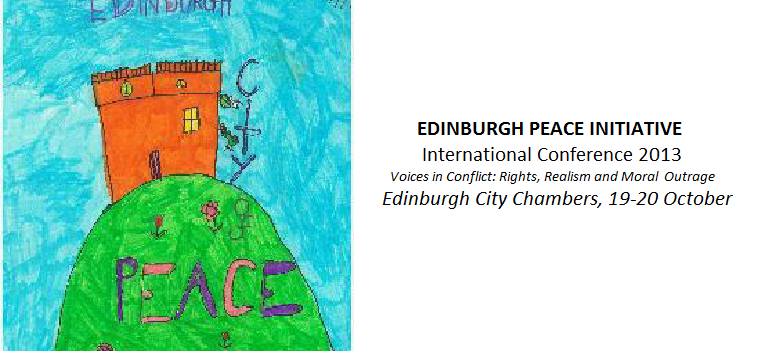
On October 19-20 the Edinburgh Peace Initiative hosted its second annual conference, with support from the Global Justice Academy. Below, Kasia Musur, Conference Rapporteur and Edinburgh student on the MSc Global Crime, Justice and Security, gives her reflections on the event.

epivoicesinconfbanner

The weekend of the 19th and the 20th of October brought on exciting opportunities for individuals and organisations concerned with human rights, global justice and peace, as Edinburgh hosted the Global Citizenship Commission and the Edinburgh Peace Initiative’s Voices in Conflict: Rights, Realism and Moral Outrage conference.

Comments closed

Lampedusa: Immigration Policy and the Death of Migrants

A guest blog from Katy Long, School of Social and Political Science, University of Edinburgh.


The counsul banged the table and said,

“If you’ve got no passport you’re officially dead”:

But we are still alive, my dear, but we are still alive.

Refugee Blues, W.H.Auden

It is easy to be outraged at the injustices suffered by refugees at the hands of their tormentors – arbitrary arrest; torture; forced conscription; rape. Horrors unimaginable in our cosseted lives bring easy waves of sympathy – but too little self-reflection.   The drowning of 359 migrants off Lampedusa’s shores on 3 October should shatter our complacency: not because it is a shocking tragedy, but because it is a cruelly predictable one.

Comments closed

Global Citizenship Workshop

Back to www.globaljusticeacademy.ed.ac.uk

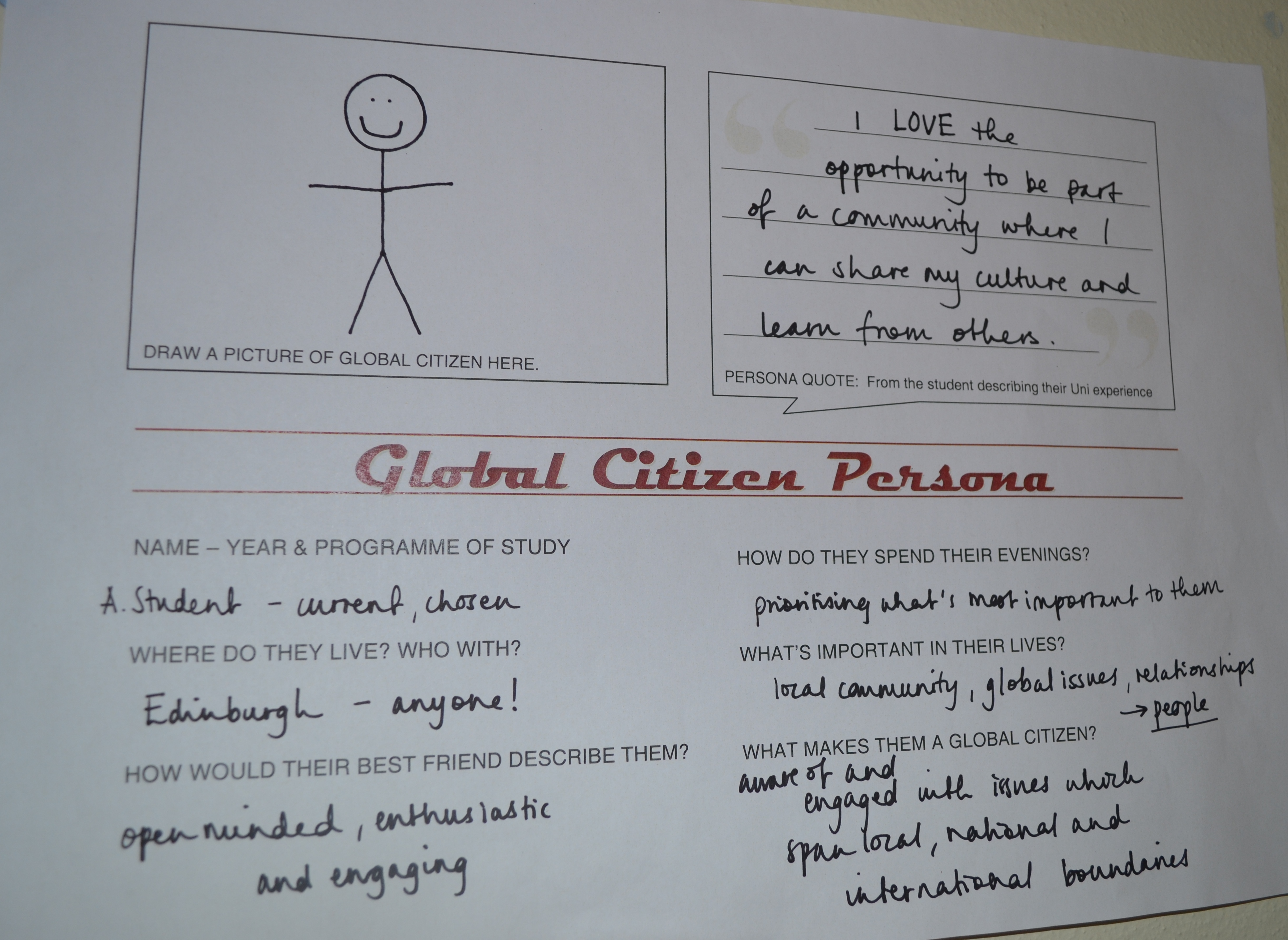
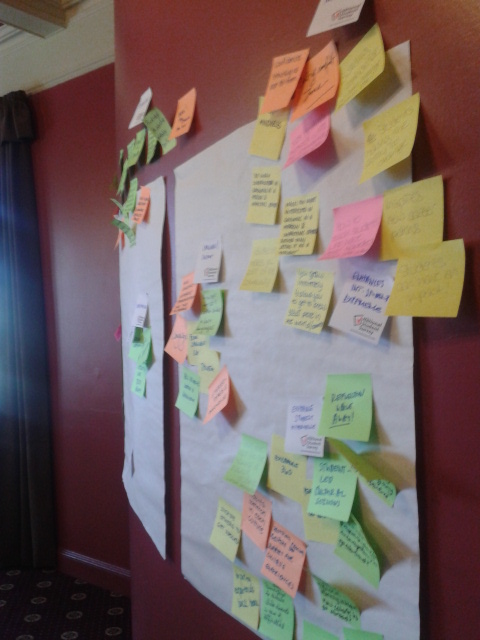
A Workshop on Global Citizenship

Global Citizenship two

Johanna Holtan, EUSA Global


It seems everyone is talking about global citizenship these days.  From education to activism – we know this plays an important role in the lives of our students and their Global Citizensip three

impact on the world, but we needed to know and learn and ask more.  How is global citizenship relevant to our students, EUSA, the greater University community, and beyond?  What does it even mean? What’s our role in developing globally just student leaders?

Comments closed
css.php

Report this page

To report inappropriate content on this page, please use the form below. Upon receiving your report, we will be in touch as per the Take Down Policy of the service.

Please note that personal data collected through this form is used and stored for the purposes of processing this report and communication with you.

If you are unable to report a concern about content via this form please contact the Service Owner.

Please enter an email address you wish to be contacted on. Please describe the unacceptable content in sufficient detail to allow us to locate it, and why you consider it to be unacceptable.
By submitting this report, you accept that it is accurate and that fraudulent or nuisance complaints may result in action by the University.

  Cancel