Any views expressed within media held on this service are those of the contributors, should not be taken as approved or endorsed by the University, and do not necessarily reflect the views of the University in respect of any particular issue.
Each year, the Global Justice Academy runs a photography competition as part of Edinburgh College of Art’s MA Photography degree programme. The 2018 competition was run in conjunction with the ERC Greyzone Project and its Summer School, ‘Navigating the Grey Zone: Complicity, Resistance, and Solidarity’. This post is the first in a short series of three, where we introduce this year’s winners, their images, and the stories behind their submissions
Series Winner: Keris Heading, ‘Hungry?’.
Q: What inspired your competition entry?
Working in a supermarket, I noticed the vast amounts of food that is wasted and thrown away, which encouraged me to research more about the exact figures of food wastage in large countries like the UK and US. The figures were astonishing. World hunger is a concept many people, or perhaps everyone, is familiar with, but perhaps it is the injustice in the distribution and usage of food that needs more attention.
Each year, the Global Justice Academy runs a photography competition as part of Edinburgh College of Art’s MA Photography degree programme. The 2018 competition was run in conjunction with the ERC Greyzone Project and its Summer School, ‘Navigating the Grey Zone: Complicity, Resistance, and Solidarity’. This post is the first in a short series of three, where we introduce this year’s winners, their images, and the stories behind their submissions
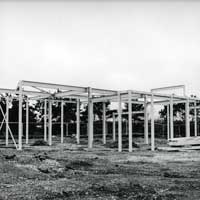
Single Image Winner: Amber Brown, ‘The Coming Soon Land’.
Q: What inspired your competition entry?
My concept of ‘The Coming Soon Land’ sprouted from the emotional disarray I found in observing a town undergoing change within development. Whilst the project grows from a frustration, the landscapes are in some sort of structural purgatory which I find aesthetically interesting, a grey zone that is not quite one nor the other, plans proposed but stuck in quicksand amidst a crisis concerning social and urban justice. Solidarity in this, comes from an accumulation of observed opinions which have been illustrated through my imagery. It feels a complex situation, one that is constantly progressing.
Each year, the Global Justice Academy runs a photography competition as part of Edinburgh College of Art’s MA Photography degree programme. The 2018 competition was run in conjunction with the ERC Greyzone Project and its Summer School, ‘Navigating the Grey Zone: Complicity, Resistance, and Solidarity’. This post is the first in a short series of three, where we introduce this year’s winners, their images, and the stories behind their submissions
Commended Series: Isobel Budler, ‘Bridges Not Walls’.
Q: What inspired your competition entry?
I came across the ‘Bridges Not Walls’ conference through the organiser Nancy, who I knew prior to the project. She spoke to me candidly about the work they do within the school they are employed by, challenging stereotypes and educating young people on a range of topics.
The Global Justice Academy (GJA) and Political Settlements Research Programme (PSRP) recently hosted a free Peace Photography Masterclass at the University of Edinburgh. The workshop…
On 26-27 February 2015, the Post-Conflict Research Center from Sarajevo, Bosnia and Herzegovina, visited the University of Edinburgh to present its award-winning “Ordinary Heroes” project. “Ordinary Heroes” won first place in the 2014 UN Alliance of Civilizations and BMW Group Intercultural Innovation Award in a ceremony hosted by UN Secretary General Ban Ki-moon in Bali, Indonesia. The Global Justice Academy at the University of Edinburgh sponsored PCRC’s travel to Edinburgh.
Mina Jahić is a widowed octogenarian from Rogatica, in eastern Bosnia and Herzegovina, whose husband and two sons lost their lives in the wars that followed the violent dissolution of Yugoslavia in the early 1990s. She lives by herself in an upper floor of a prefabricated apartment block not far from the capital Sarajevo. A devout Muslim, Mina’s hope for the future of her country lies in the youth, who she believes still have the power to change the ethnocratic system that has blocked any attempts for reconciliation and reform since the end of the war in 1995. What Mina’s wartime experiences separate her from her neighbours, however, are the risks she took to save a stranger escaping his execution. Mina is an ordinary hero.
Ferid Spahić, a gas station attendant in Ilijaš, a small town to the northwest of Sarajevo, was in his mid-twenties when the first shots were fired in Bosnia by Serb paramilitary forces bent on “cleansing the land” for a “Greater Serbia” under the guise of preserving Communist Yugoslavia from dissolution. A Bosniak Muslim, too, he and his neighbours were targets of ethnonationalist destruction that quickly engulfed Bosnia’s three main ethnic groups – Serbs, Croats and Bosniaks. One day in June 1992, a Serb man from his village, whom he had seen as a trusted neighbour, rounded the local Bosniak men into buses, telling them as they were separated from their wives and children that they would be transferred to Skopje, Macedonia, and later reunited with their families.

 Working in a supermarket, I noticed the vast amounts of food that is wasted and thrown away, which encouraged me to research more about the exact figures of food wastage in large countries like the UK and US. The figures were astonishing. World hunger is a concept many people, or perhaps everyone, is familiar with, but perhaps it is the injustice in the distribution and usage of food that needs more attention.