
The many ways of being complicit in violence and injustice An interview with Mihaela Mihai, Senior Research Fellow in Political Theory at the University of Edinburgh…
Comments closedAuthor: klowe
Eavesdropping on a roundtable conversation at the Centre for the Study of Modern Conflict… ‘Modern conflict’ is commonly used to refer to conflicts in recent…
Comments closedWhat can social and political scientists learn from data science? And what can data science contribute to the research on peace and conflict?
‘Most importantly, one has to know what questions to ask’, says Gabriele Schweikert, Research Fellow at the School of Informatics at the University of Edinburgh. ‘And secondly, one needs the necessary data to answer that question.’
For example, researchers on urban conflict might be interested to find out how different instances of violence distribute across a city over time. Available data from media on the location and intensity of violence can be harvested with the help of automatised bots searching for keywords. ‘But if researchers have only a vague idea of their question and do not know what data can do and what not, they might end up with a trivial answer’, she says, adding: ‘Such as the simple result that violent conflict in cities tends to take place in streets.’
Can data predict conflict?
Gabriele’s colleague, Guido Sanguinetti, a Reader in Machine Learning in Informatics at Edinburgh, is an expert in running prediction models, usually in the field of computational biology. But when a friend who worked as a data scientist for the New York Times sent him a visualisation of violent incidents in Afghanistan, taken from the WikiLeaks Afghan War Diaries, he realised that he could ‘do much more with the available data’.
Comments closedThe University of Edinburgh’s research expertise on peace and conflict is growing fast, making it ever more important to connect and communicate across disciplinary lines. To this effect, a new blog series titled Rethinking Peace and Conflict Research in Edinburgh will foster exchange and make this ongoing research and its challenges more visible. Its aim is to build new interdisciplinary capacity and exchange around challenges and themes that connect experts working on peace and conflict across and beyond the University.
Comments closedAs a contemporary and prominent topic, a panel event discussing the roots of the Syria crisis was always going to be well attended. In front of a packed lecture theatre, on October 6th 2015, Dr. Thomas Pierret, Dr. Manhal Alnasser, and Arek Dakessian presented their points of view on the causes and changing shapes of the crisis in Syria since the popular uprising in 2011, chaired by Dr Sarah Jane Cooper Knock. Each speaker brought their experiences as academics, practitioners and personal stories to the event.
Internal issues, not proxy war
Thomas began the discussion by raising the two prominent explanations for conflict in Syria: the first, which he subscribes to, that it was a domestic problem which became internationalised; and the second, that it was a proxy war from the outset. He argued that the conflict started with the popular uprising against Bashar al-Assad’s authoritarian regime, in which the power lies in family patronage networks rather than institutions. The immediately repressive state response, sectarian-social divides between police and protestors, and subsequent defections, all led to the formation of a crowdfunded armed movement against Assad, which was a well-established force before international actors became involved. Finally, he claimed that the regime is now compensating for its lack of manpower with increased firepower, and that this has led to mass displacement through the total destruction of rebel-held areas, especially cities.
Comments closed
On June 20, 2014, Mathias Thaler (University of Edinburgh) organized a workshop dedicated to the tension between spectating and acting in democratic politics. The event drew an engaged audience of about 40 participants, both from Edinburgh and from outside Scotland. Apart from Law School and School of Social and Political Science staff (such as Zenon Bankowski, Christine Bell and Jonathan Hearn), the event also attracted academics from farther abroad (like Phil Parvin from Loughborough University, Cara Nine from the University College Cork and Audra Mitchell from the University of York). Furthermore, many PhD students attended and contributed to the workshop.
Comments closedIn this guest blog by Zoe Marks of the Centre of African Studies at the University of Edinburgh, she discusses responses to the kidnapping of nearly three hundred school girls in northern Nigeria, and argues that something can be done. This blog was written on May 6, 2014.
What is a war on terrorism if not the rescue of 276 hostages? Prisoners, forced wives, sex slaves, chattel for market, domestic servants, human trafficking victims – aspiring, diligent, brave young girls.
We are facing an urgent moral crisis and fumbling. More than 20 days have passed since over 300 schoolgirls were corralled onto lorries in the middle of the night, captured by men claiming to be soldiers there to protect them. For three weeks, the Nigerian government has punted, Western governments have stood on the sidelines, and regional allies and the African Union have not even shown up to the pitch. Nigerian President Goodluck Jonathan did not call his first strategy meeting until last Saturday (4 May). His military advisory committee was convened only today for the first time (6 May).
When abducted on 14 April, the students were already far from home. They had travelled to Chibok Government Girls Secondary School despite school closures throughout Borno State not to make a political statement, but simply to sit the same high school certificate exams being taken by their peers across West Africa.
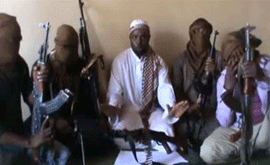
Boko Haram, the al Qaeda-aligned insurgency that has destabilized the region, only claimed responsibility for the kidnapping yesterday (5 May). They released an hour-long video of masked men standing heavily armed and silent while their leader read a lengthy harangue. The girls were nowhere to be seen. He parroted back as threats what the news media has been recycling as fact, raising more questions than answers.
Comments closedA guest blog by Akwugo Emejulu, University of Edinburgh and Leah Bassel, University of Leicester, in which they argue that in order to counter the asymmetrical effects of the current economic crisis, intersectional analyses and coalition building are required. They consider how researchers might capture the effects of austerity on representations of minority women’s vulnerability as well as their activism. They do so by drawing on their current empirical project, ‘Minority Women’s Activism in Tough Times’, which explores the impact of the crisis on minority women in Scotland, England and France.
At the time of writing, the UK is undergoing the most extensive reduction and restructuring of its welfare state since its enactment after the Second World War (Taylor-Gooby and Stoeker 2010; Yeates et al 2011). The Conservative-Liberal Democrat Coalition Government is presiding over a 27% cut to local government—the key mechanism for delivery of public services—and a 68% cut to the social housing budget (Taylor-Gooby 2011: 4). Whilst France was not implementing as stringent measures until the January 2014 budget was announced, a key policy aim of the Socialist government is austerity (Clift 2013). The headline of President François Hollande’s 2013 budget, which he described as ‘the biggest budget shock of the past 30 years’ (Guélaud 2012), was a commitment to cutting the deficit to 3% of GDP in 2013 (L’Express 2012). However, the beleaguered Socialist government missed this budget target (BBC 12 March 2013).
Comments closedA guest blog by Dejan Stjepanović of the University of Edinburgh on the Ukraine crisis.
The ongoing Ukrainian crisis raises a number of serious questions about the future of political relations in Europe. Until now, the primary driver of regional integration in post-socialist Europe was the European Union. The return of Russia onto the stage, and its not shying away from using its military power, caught some observers by surprise. Behind the struggle for geopolitical dominance lies a deeper problem which arises from the pervasive influence of the essentialist understanding of nation, state, sovereignty and borders.
Comments closed