This blog, by Valentina Rioseco Vallejos, concerns the current Chilean crisis. It aims to provide the context under which the crisis is occurring, while making…
Comments closedAuthor: klowe
In this guest post, LLM in International Law student and GJA Ambassador, Felix Mayr, reflects on a recent Edinburgh Centre for International and Global Law…
Comments closedIn this guest post, LLM in International Law student and GJA Ambassador, Felix Mayr, reflects on a recent Edinburgh Centre for International and Global Law…
Comments closedThis post by Dr Kasey McCall-Smith looks at the recent Scottish Government consultation on incorporation of the UN Convention on the Rights of the Child…
Comments closedThis post continues the blog series by Dr Kasey McCall-Smith which examines some of the contentious legal issues raised in the US v. Khalid Shaikh…
Comments closedThis is the third post in a blog series by Dr Kasey McCall-Smith which examines some of the contentious legal issues raised in the US…
Comments closed The Global Justice Academy recently sponsored the Edinburgh Legal Theory Group Past Convenors’ Colloquium in collaboration with the Edinburgh Legal Theory Research Group. In this blog post, Paul Burgess – a third year PhD candidate in the Edinburgh Law School and Co-Convenor of the Edinburgh Legal Theory Research Group – reports on the issues raised.
The Colloquium was well attended by staff and students from across The University of Edinburgh. This included several new PhD candidates who had only arrived in the university for the first time that week. Some participants and presenters had travelled from other parts of the world.
Comments closed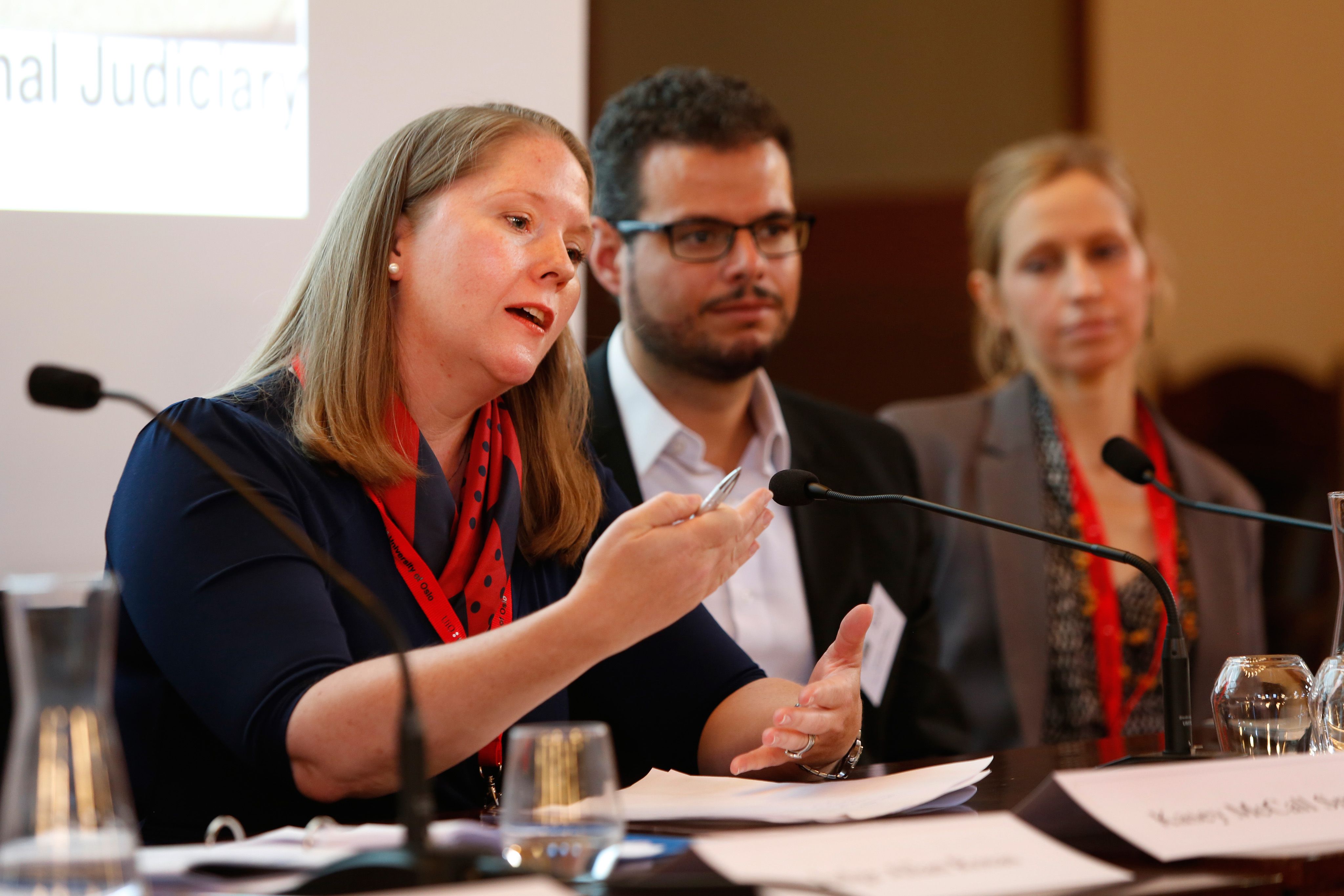 Dr Kasey McCall-Smith, Chair of the Association of Human Rights Institutes and member of the Global Justice Academy, discusses Human Trafficking and Modern Slavery in the context of the UN Global Compact for Migration.
In a previous post, I gave general overview of the UN Global Compact for Migration and a brief analysis of the Migration Compact thematic discussions on the distinctions between human smuggling and human trafficking. This note considers modern slavery, a topic with which the University of Edinburgh is highly engaged through both academic projects as well as its Modern Slavery initiatives. Following on from the distinction between migrants smuggled into a state for the sole purpose of evading legal migration and individuals trafficked into (or within) a state for purposes of exploitation, the following will present key debates about modern slavery and human trafficking that are highly relevant to the conclusion of a comprehensive Migration Compact.
Comments closedDr Kasey McCall-Smith, Chair of the Association of Human Rights Institutes and member of the Global Justice Academy, discusses recent steps towards a UN Global Compact for Migration. This is the first of two blogs from Dr McCall-Smith on the Migration Compact negotiations.
The next steps toward a UN Global Compact for Migration to combat the ever-growing legal and policy issues associated with mass and irregular migration were taken at the UN headquarters in Vienna, Austria, 4-5 September 2017. The Compact aims to deliver a comprehensive approach to human mobility as well as further clarification of and support for existing international frameworks addressing migration, refugees and trafficking, including the Refugee Convention and its Protocol, the UN Convention against Transnational Organized Crime (UNTOC), the UN Protocol to Prevent, Suppress and Punish Trafficking in Persons, Especially Women and Children (Trafficking in Persons Protocol) and the Protocol against the Smuggling of Migrants by Land, Sea and Air (Smuggling of Migrants Protocol), as well as a number of human rights instruments such as the Convention on the Elimination of all forms of Discrimination against Women (CEDAW) the Convention on the Rights of the Child (CRC), among many others.
Comments closedThe Global Justice Academy recently attended an event at the Academy of Sport with visiting professor, Professor Lucia Trimbur (City University of New York; John…
Comments closed